
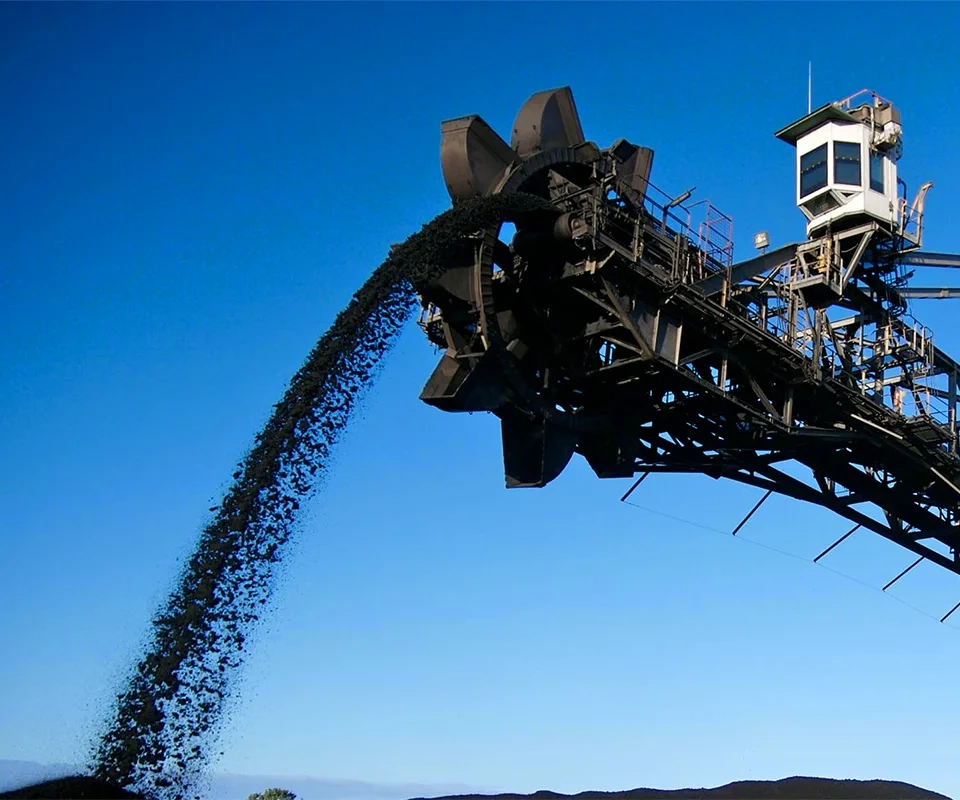
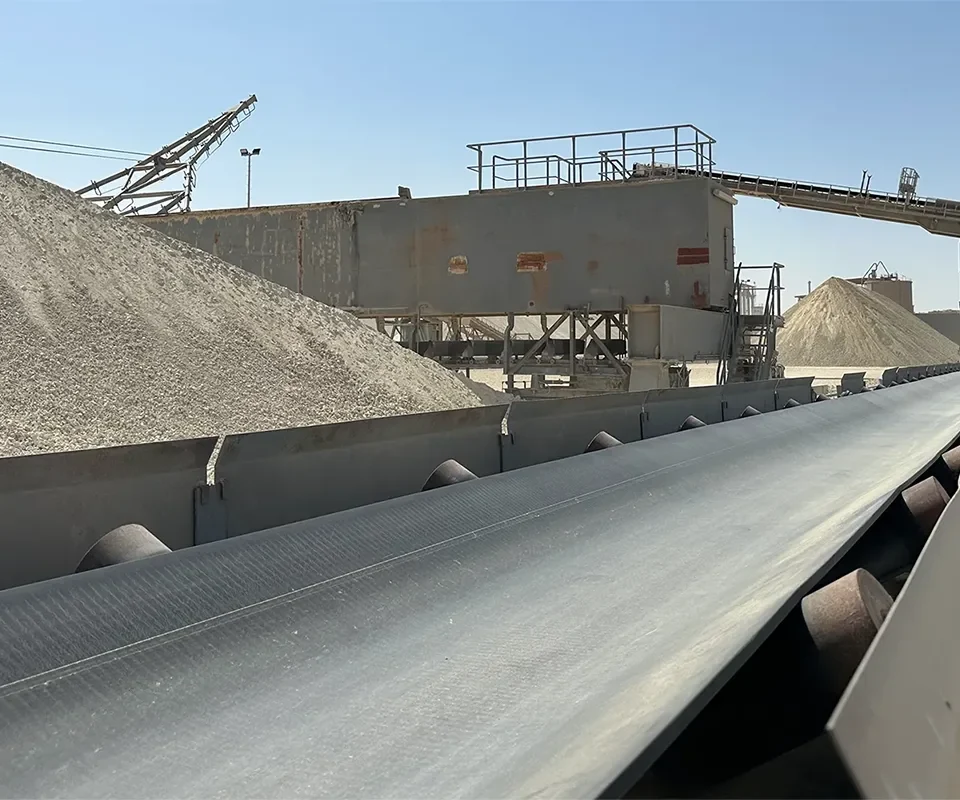
Conveyor belts in mining and cement plants operate under continuous abrasion, impact, dust, material carryback, heavy loads, and long working hours. In many plants, the belt is also one of the most expensive consumable components in the conveying system. Premature belt failure can therefore create substantial replacement costs, production losses, and maintenance work.
Extending conveyor belt service life is not achieved by selecting a thicker belt alone. Belt life depends on how the complete conveyor system handles loading impact, tracking, tension, pulleys, idlers, cleaners, transfer points, splices, and operating conditions.
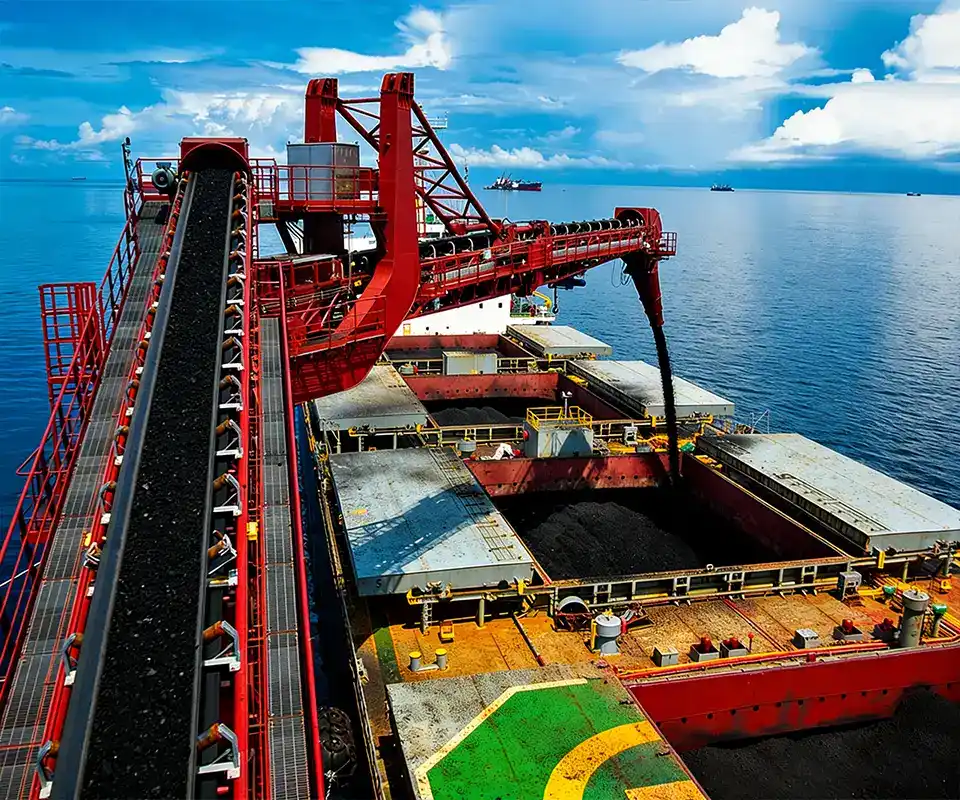
For mining conveyors, the major challenges are often large lumps, sharp ore, high impact, abrasion, long conveyor distances, and heavy belt tension. Cement plants frequently add fine abrasive dust, clinker temperature, material buildup, and contamination around rollers and pulleys. In both industries, the most effective strategy is to remove the causes of abnormal belt wear before serious damage develops.
Quick answer: To extend conveyor belt life, select the correct belt for the material, control loading impact, keep material centered, maintain correct belt tension, align pulleys and idlers, replace seized rollers, control carryback, maintain cleaners, protect transfer points, and inspect belt damage before small defects develop into major failures.
1. Start with the Correct Conveyor Belt Specification
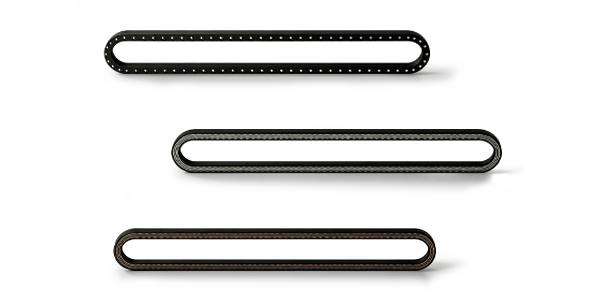
No maintenance program can fully compensate for a belt that is unsuitable for the application. Belt carcass, tensile strength, cover compound, cover thickness, splice design, and flexibility should match the conveyor duty.
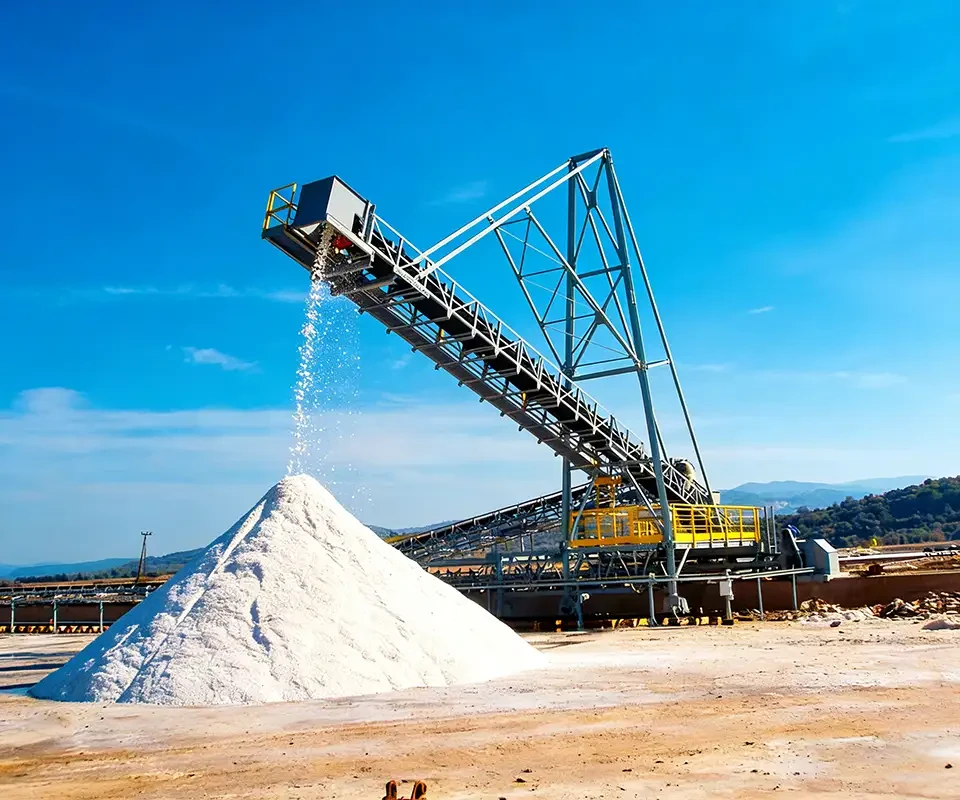
Mining conveyors carrying sharp ore or crushed rock normally require strong abrasion and impact resistance. Cement conveyors may handle limestone, raw meal, coal, clinker, gypsum, or finished cement, each creating different wear, temperature, and dust conditions.
A stronger belt is not automatically a longer-lasting belt. Excessive belt stiffness or an unsuitable carcass can create problems around pulleys and transitions. The specification should therefore be based on belt tension, material characteristics, lump size, temperature, conveyor length, and pulley diameters rather than price or belt width alone.
2. Reduce Impact at the Loading Zone
The loading point is one of the highest-risk locations for conveyor belt damage. Large material falling from excessive height can cut the belt cover, damage the carcass, and create repeated fatigue.
This is especially important in mining applications handling run-of-mine ore, crushed stone, and large lumps. Cement plants can experience similar problems around limestone crushers, clinker handling, and other transfer points.
The chute should control the direction and velocity of the material instead of allowing material to fall freely onto the belt. Impact idlers or an appropriate impact-support system should support the belt underneath the loading point.
Impact protection should also be matched to drop height, material bulk density, and maximum lump size. Installing stronger impact rollers without correcting a badly designed chute may reduce symptoms without removing the source of the problem.
3. Keep Material Loaded Near the Belt Centerline
Off-center loading is a common cause of belt mistracking. When most of the material lands on one side of the belt, the uneven load can push the belt laterally and increase edge wear.
Repeated edge contact with the conveyor structure can gradually damage the cover and carcass. Once belt edges become severely worn, repair becomes increasingly difficult.
A guide chute should direct material toward the center of the carrying profile, while skirt systems contain material without applying excessive friction to the belt. If a belt tracks correctly while empty but moves sideways immediately after loading, inspect the transfer point before adjusting multiple idlers.
For a detailed troubleshooting process, see How to Identify and Fix Conveyor Belt Tracking Issues.
4. Maintain Correct Belt Tracking
A conveyor belt should run close to the intended centerline of the pulleys and idlers. Persistent mistracking causes edge wear, spillage, damaged skirting, and friction against structural components.
Common causes include pulley misalignment, skewed idler frames, seized rollers, material buildup, off-center loading, frame distortion, incorrect tension, and belt-splice problems.
Training or self-aligning idlers can help control moderate deviation, but they should not be used to hide severe alignment problems. The maintenance team should identify where the belt first begins to move sideways and inspect the components immediately upstream of that point.
Maintenance clue: If operators repeatedly adjust the same idlers to keep the belt running, the conveyor probably has an unresolved loading, alignment, tension, or buildup problem.
5. Do Not Over-Tension the Conveyor Belt
The take-up system must maintain enough belt tension to prevent drive-pulley slip and excessive sag between idlers. However, excessive tension is also harmful.
Over-tensioning increases loads on the belt carcass, splices, pulley shafts, bearings, and idlers. It can also increase belt stress around small pulleys.
When belt slip occurs, increasing tension should not be the automatic response. Inspect pulley lagging, wrap angle, contamination, take-up movement, loading, and drive conditions first.
Gravity, screw, trolley, or winch take-up arrangements should move and operate as intended. A jammed or incorrectly adjusted take-up can shorten the life of both the belt and mechanical components.
6. Keep Conveyor Rollers Rotating Freely
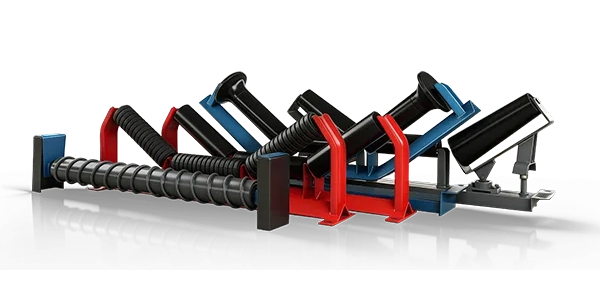
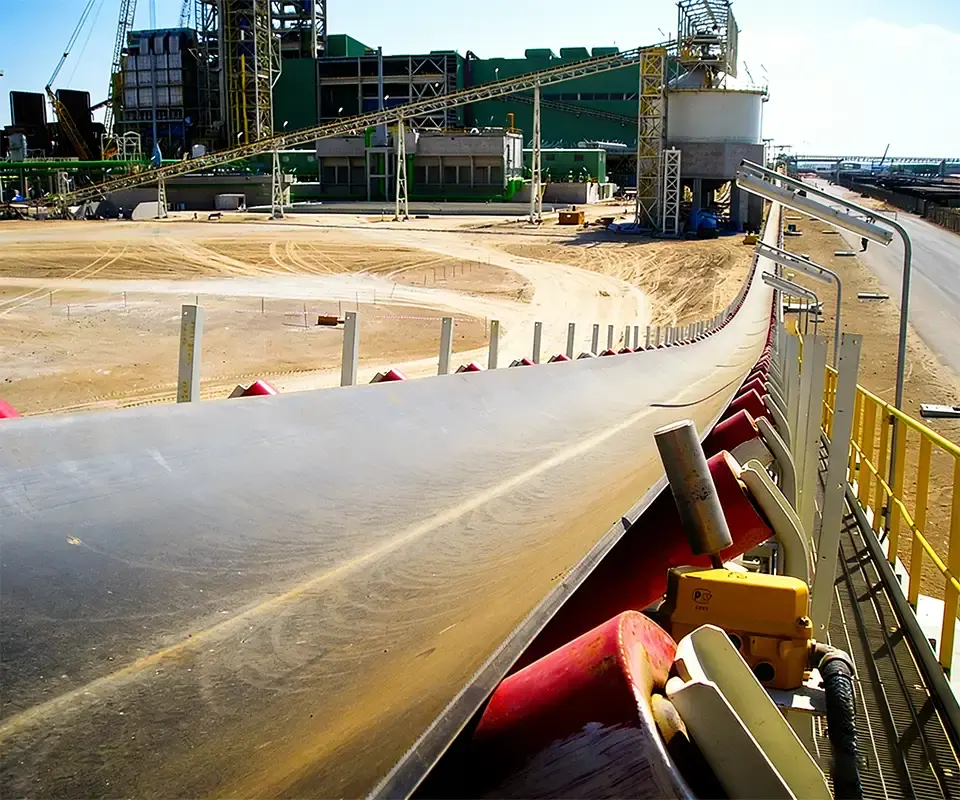
A conveyor may use hundreds or thousands of rollers. Each roller should rotate freely while supporting the belt and material load.
When a roller bearing seizes, the moving belt slides across a stationary shell instead of rolling over it. This increases friction, heat, and cover wear. A damaged roller shell can also develop sharp edges that cut the belt.
Cement plants require particular attention because fine dust can contaminate poorly sealed bearings. Mining environments can add water, mud, impact, and abrasive particles.
Roller diameter, shaft, bearing capacity, sealing system, shell strength, and application type should all match the operating condition. The Conveyor Rollers Guide explains how carrying, impact, return, and training rollers should be selected for different conveyor positions.
7. Control Carryback Before It Damages the Return Side
Carryback is material that remains attached to the belt after discharge. It is common with wet coal, clay-containing ore, cement raw materials, fine limestone, and other sticky products.
As the dirty belt travels along the return side, carryback can accumulate on return rollers and pulleys. Uneven buildup changes the effective surface geometry and can contribute to mistracking, vibration, and additional belt wear.
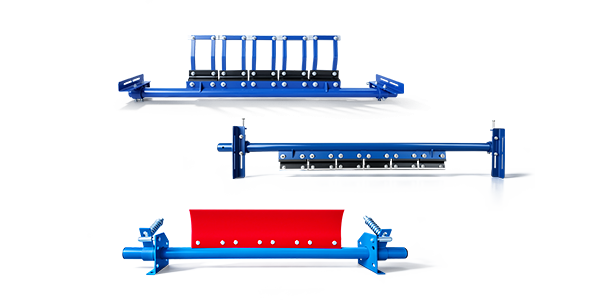
Primary and secondary cleaners should remove material as close to the discharge point as practical. Empty-section cleaning should also prevent loose material from entering tail or take-up pulleys.
Cleaner pressure requires careful adjustment. Too little contact leaves carryback, but excessive blade pressure can increase friction and belt-cover wear.
8. Maintain Pulleys, Lagging and Bearings
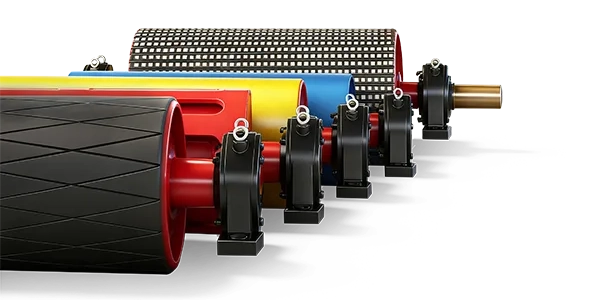
Pulleys directly influence belt tension, direction, traction, and tracking. A misaligned, contaminated, or damaged pulley can shorten belt life even when the belt itself is correctly specified.
Drive-pulley lagging should provide adequate traction without excessive slip. Worn lagging, material buildup, or poor bonding should be repaired before the condition becomes severe.
Tail and bend pulleys should also be inspected for buildup because an uneven pulley surface can steer the belt or create local stress. For more information about pulley functions and selection, see the Conveyor Pulleys Guide.
Pulley-bearing problems should not be ignored. Excessive heat, vibration, contamination, lubrication problems, or misalignment can eventually lead to pulley seizure and belt damage. The article How to Minimise Conveyor Pulley Bearing Failure provides a more detailed maintenance approach.
9. Protect the Belt Splice
The splice is a critical part of any conveyor belt. Poor splice geometry, incorrect preparation, unsuitable materials, or damage around the joint can create a weak point that repeatedly passes over every pulley and idler.
Inspect the splice regularly for opening edges, cover separation, abnormal wear, fastener damage, or local deformation. If belt deviation occurs at exactly the same belt location during every revolution, the splice and nearby belt carcass should be inspected carefully.
Cleaner compatibility should also be considered when mechanical fasteners are used, particularly where rigid secondary cleaner blades are installed.
10. Control Conveyor Speed Instead of Assuming Faster Is Better
Higher belt speed can increase conveyor capacity without increasing belt width, but it also increases material velocity, roller rotational speed, transfer-point energy, dust generation, and wear at some locations.
Large, sharp, or highly abrasive mining material may benefit from a more conservative belt speed when capacity allows. Cement and fine-powder applications may also need careful speed selection where dust control is important.
The objective is not to operate the conveyor as slowly as possible, but to select a speed that balances capacity, material behavior, wear, dust, and equipment requirements.
Mining vs Cement: Different Belt-Life Priorities
| Operating Factor | Mining | Cement Plants |
| Main Wear Risk | Sharp, abrasive ore and large lumps | Abrasive fines, clinker and dust |
| Loading Risk | High impact and large drop heights | Dust, abrasion and some hot materials |
| Common Contamination | Mud, wet fines and ore carryback | Fine cement and limestone dust |
| Important Belt-Life Focus | Impact control, abrasion resistance and heavy-duty support | Dust sealing, temperature, cleaning and roller protection |
Common Practices That Shorten Conveyor Belt Life
Running with Seized Rollers
A seized roller can turn normal rolling contact into continuous sliding friction. Replace failed rollers before they wear through the belt cover.
Ignoring Small Edge Damage
Small cuts and edge wear can become larger carcass damage if tracking problems continue. Early correction is normally easier and less expensive.
Using Excessive Belt Tension
More tension is not a universal solution for slip or tracking. Excessive tension increases stress throughout the conveyor.
Allowing Material Buildup to Continue
Buildup on pulleys and rollers changes their effective diameter and surface condition, creating tracking and wear problems.
Treating Each Component Separately
The belt, pulleys, idlers, take-up, cleaners, chutes, and drive system interact continuously. The Belt Conveyor Components Guide explains how these components work together as one system.
A Practical Belt-Life Inspection Checklist
01. Inspect belt covers for cuts, cracking, abrasion and abnormal wear.
02. Check whether material lands near the belt centerline.
03. Inspect impact idlers and loading-zone support.
04. Check belt tracking along carrying and return sections.
05. Replace seized, damaged, or heavily built-up rollers.
06. Inspect drive-pulley lagging and pulley alignment.
07. Confirm the take-up moves correctly and tension is not excessive.
08. Check belt cleaners and carryback accumulation.
09. Inspect the splice and damaged belt areas regularly.
10. Record repeated failures and correct the underlying cause instead of repeatedly replacing damaged parts.
Improve Belt Life by Coordinating Conveyor Components
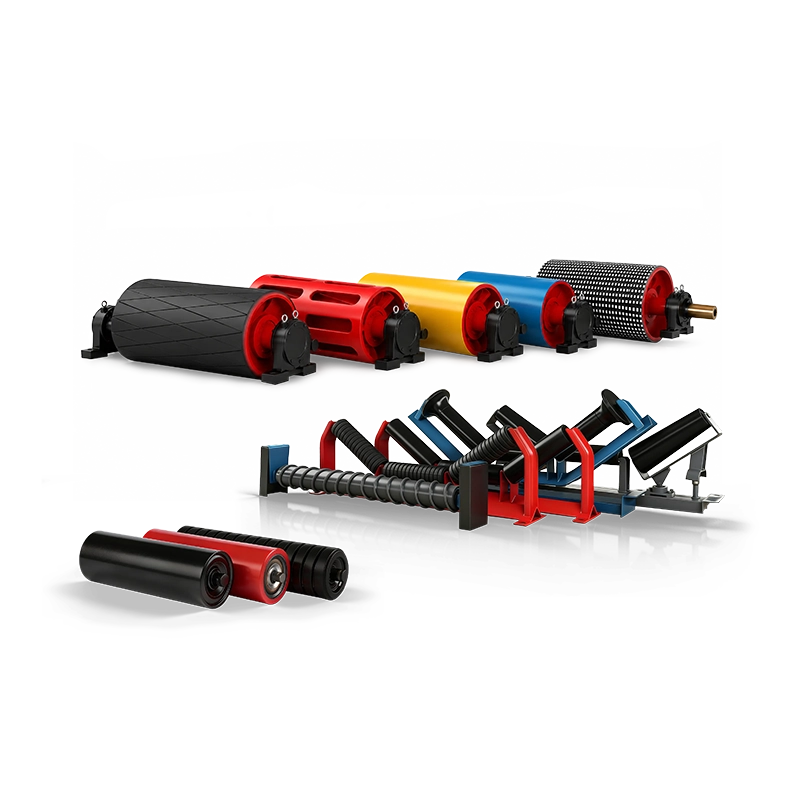
SHENGYUAN supplies conveyor rollers, idlers, pulleys, belts, cleaners, frames, and related components for mining, quarrying, cement, coal handling, ports, steel plants, power stations, and other heavy-duty bulk-material handling systems.
For belt-life improvement projects, individual components should be evaluated according to the actual failure mechanism. Repeated belt-edge damage may require alignment or loading corrections. Excessive bottom-cover wear may indicate seized rollers or pulley problems. Carryback may require improved cleaning, while repeated puncture damage may require loading-zone redesign.
Through custom conveyor solutions, replacement rollers, idlers, pulleys, cleaners, and related parts can be coordinated with existing conveyor dimensions and project operating conditions.
Is your conveyor belt wearing out too quickly?
Provide the belt width, belt speed, material, bulk density, lump size, loading height, belt specification, pulley and idler arrangement, take-up type, cleaner configuration, photos of the damaged belt, and information about where wear occurs. The location and pattern of belt damage often provide important clues about the underlying conveyor problem.
Conclusion: Conveyor Belt Life Depends on the Whole System
Extending conveyor belt service life in mining and cement plants requires more than purchasing a heavier belt. The loading zone must control impact, material should be centered, pulleys and idlers must remain aligned, rollers must rotate freely, belt tension must remain appropriate, and carryback should be controlled before it contaminates the return system.
Mining operations should pay particular attention to impact, sharp lumps, abrasion, and high belt loads. Cement plants should also focus on abrasive dust, material buildup, temperature, cleaner performance, and bearing protection.
The most effective belt-life strategy is preventive: inspect the conveyor regularly, identify abnormal wear patterns early, and correct the mechanical cause before a small defect develops into a damaged splice, torn belt, or unplanned shutdown.