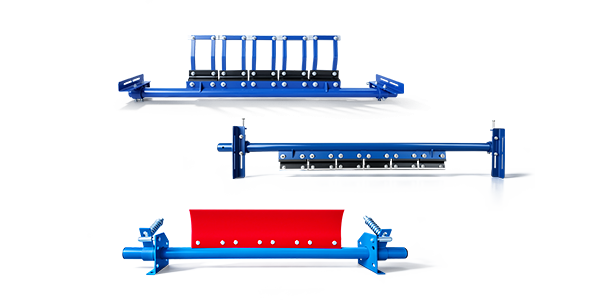



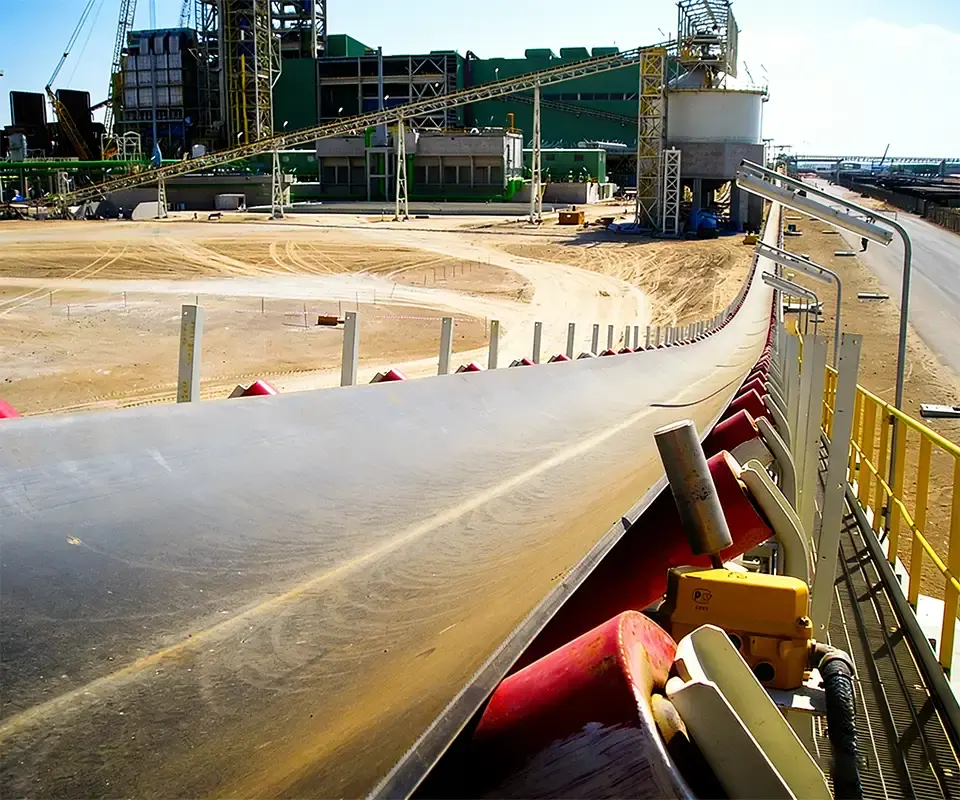
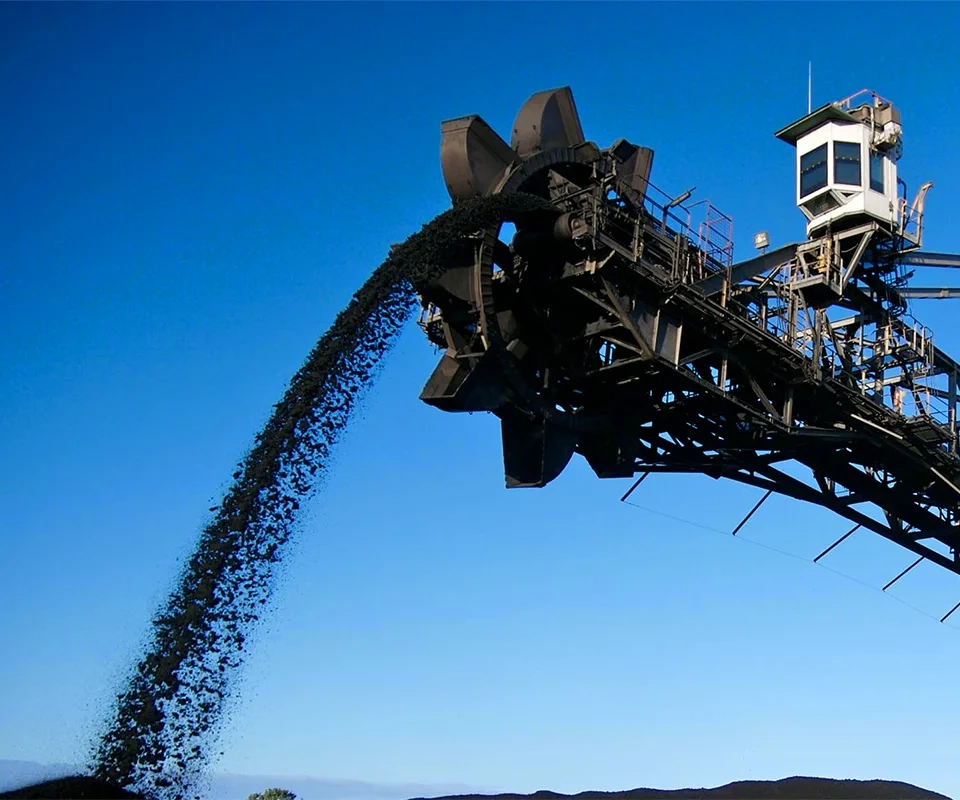
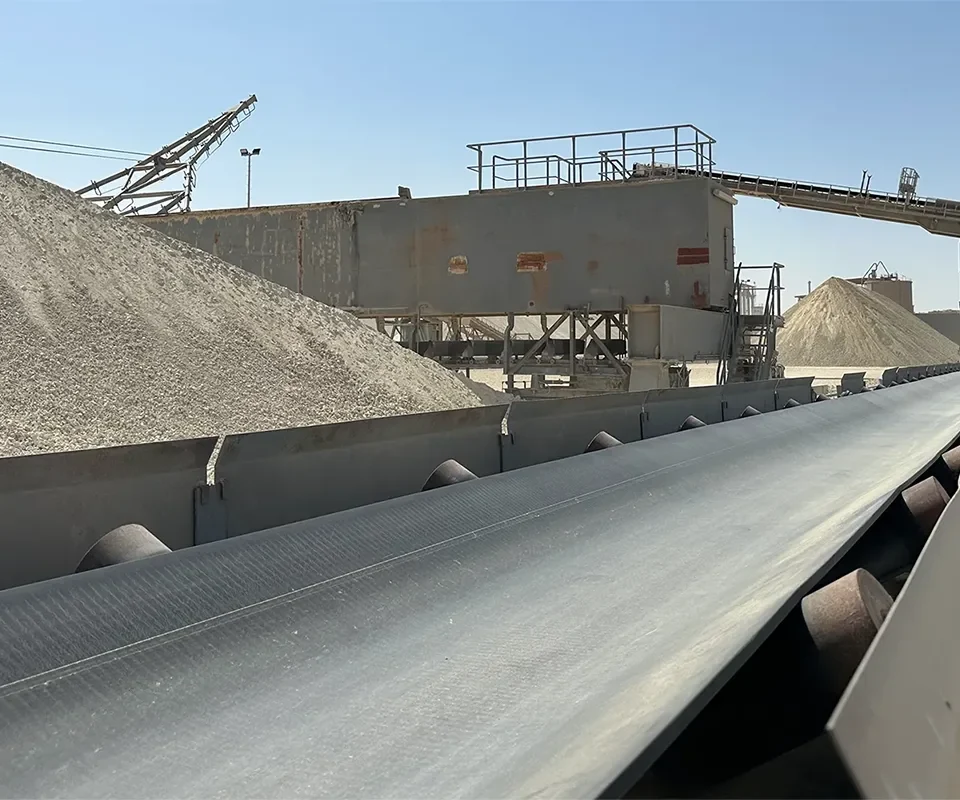
Selecting a conveyor belt cleaner blade is not simply a choice between a softer material and a harder material. Polyurethane and tungsten carbide blades interact with the belt in very different ways, so the correct choice depends on the belt surface, splice type, conveyed material, abrasion level, cleaner position, and required contact pressure.
In mining, quarrying, cement, coal handling, aggregates, ports, steel plants, and power stations, poor blade selection can create two opposite problems. A blade that is too forgiving may leave excessive carryback, while a blade that is too aggressive for the belt condition can accelerate belt wear, damage splices, generate heat, or increase maintenance requirements.
A practical selection principle is that polyurethane blades are generally more forgiving and suitable for primary cleaning and uneven belt conditions, while tungsten carbide blades provide a sharper, more wear-resistant cleaning edge for demanding secondary cleaning on suitable belt surfaces.
Quick answer: Choose polyurethane where the cleaner must tolerate belt irregularities, larger particles, vibration, or more demanding splice conditions. Choose tungsten carbide where a stable belt surface, fine sticky carryback, and high abrasion resistance make a sharper secondary cleaning edge valuable. On many heavy-duty conveyors, the best arrangement is not polyurethane versus carbide, but a polyurethane primary cleaner followed by a tungsten carbide secondary cleaner.
What Is the Main Difference Between Polyurethane and Tungsten Carbide Cleaner Blades?
Polyurethane is an elastomeric material. It can flex and deform slightly as it contacts the moving conveyor belt. This flexibility helps the blade accommodate small changes in belt surface condition and makes it comparatively forgiving when the belt is not perfectly smooth.
Tungsten carbide is extremely hard and highly wear resistant. A carbide cleaning tip maintains a relatively sharp scraping edge for a long period, which can improve removal of thin, sticky, or strongly adhering carryback.
That hardness is also why carbide selection requires more attention. The belt surface, splice, blade angle, cleaner mounting, and contact pressure all need to be appropriate. A blade with excellent abrasion resistance is not automatically the safest choice for every conveyor belt.
Polyurethane vs Tungsten Carbide at a Glance
| Selection Factor | Polyurethane Blade | Tungsten Carbide Blade |
| Blade Behavior | Flexible and forgiving | Hard and rigid cleaning edge |
| Typical Cleaner Position | Commonly primary; also used in other suitable designs | Commonly secondary cleaning |
| Belt Surface Tolerance | Better tolerance of minor irregularities | Prefers stable, consistent belt contact |
| Abrasion Resistance | Good, depending on formulation | Very high |
| Typical Carryback | Coarse or general carryback | Fine, sticky residual material |
| Adjustment Sensitivity | More tolerant | Requires careful contact and alignment |
1. Start with the Conveyor Belt Surface
Before selecting a cleaner blade, inspect the actual conveyor belt. A belt that appears suitable on a specification sheet may have cuts, cover wear, repairs, raised areas, edge damage, or surface irregularities after years of service.
Polyurethane can flex when it encounters minor surface variation, which generally makes it a safer starting point where the belt condition is not perfectly uniform.
A carbide blade has a much harder cleaning edge. It works best when the contact surface is sufficiently smooth and stable for the blade to maintain controlled contact without repeatedly striking raised defects.
Practical rule: The more irregular or damaged the belt surface is, the more carefully a rigid carbide cleaner should be evaluated. Do not select the blade material only from the conveyed material.
2. Belt Splices Can Determine Which Blade Is Suitable
The belt splice is one of the most important boundaries in cleaner selection. A vulcanized splice can provide a relatively smooth transition across the cleaner when properly made, while a mechanically fastened splice may present raised metal components or other surface discontinuities.
Polyurethane blades are generally more tolerant when a cleaner must pass over minor belt or splice irregularities because the blade can deflect to some degree.
Tungsten carbide blades require greater caution around raised mechanical fasteners or damaged splices. Depending on the cleaner design, a rigid edge can strike an irregularity instead of smoothly passing over it.
Before installing a carbide cleaner, confirm the splice type and follow the cleaner manufacturer’s compatibility requirements. Where a mechanically fastened belt is involved, cleaner geometry and splice compatibility should be checked specifically rather than assumed.
3. Match the Blade to Carryback Characteristics
Carryback can vary from relatively large particles to an extremely thin film of sticky fines. These conditions require different cleaning behavior.
Coarse Carryback
The primary cleaner normally removes the larger portion of material immediately around the discharge pulley. A polyurethane blade is widely suited to this duty because it provides useful cleaning pressure while remaining resilient enough for continuous contact with the belt.
Fine and Sticky Carryback
After the primary cleaner removes the bulk of the material, a thin layer may remain attached to the belt. Wet coal fines, fine ore, clay-containing materials, cement raw materials, and similar products can form a stubborn film.
A tungsten carbide secondary blade can provide a sharper scraping action against this residual material. Its high wear resistance is especially valuable when the remaining carryback is both abrasive and difficult to remove.
4. How Abrasion Changes Blade Selection
Highly abrasive materials gradually wear every component they contact. Iron ore, hard rock fines, sand-rich material, clinker, and some mineral products can produce substantial cleaner blade wear.
Polyurethane provides good wear performance in many applications, but wear rate depends on the polyurethane formulation, material abrasiveness, pressure, belt speed, temperature, and cleaner geometry.
Tungsten carbide provides significantly greater hardness and can maintain its cleaning edge for longer in abrasive secondary-cleaning applications. This is one of the strongest reasons to consider carbide when a conventional blade is wearing too rapidly.
Important: Higher wear resistance does not automatically mean a better cleaner. The blade still has to be compatible with the belt, splice, mounting position, and tensioning system.
5. Primary and Secondary Cleaner Positions Matter
Blade material should always be considered together with cleaner position.
A primary cleaner is generally positioned around the head pulley where the belt is still supported by the pulley surface. Its job is to remove the majority of adhering material immediately after discharge.
Polyurethane is commonly used here because it can maintain cleaning contact while tolerating vibration, larger particles, and normal belt movement.
A secondary cleaner normally operates farther along the return belt after the belt leaves the pulley. Its task is to remove the thinner layer that remains after primary cleaning. Tungsten carbide blades are widely suited to this position when the belt and splice conditions permit controlled rigid contact.
Why a Two-Stage Cleaning System Often Works Better
For demanding bulk-material conveyors, trying to remove all carryback with one extremely aggressive cleaner is often less effective than dividing the cleaning duty between two stages.
| Cleaning Stage | Typical Blade Choice | Main Function |
| Primary Cleaning | Polyurethane | Remove the majority of carryback |
| Secondary Cleaning | Tungsten carbide where suitable | Remove residual fine or sticky material |
This arrangement allows each cleaner to perform a more specific task. The polyurethane primary cleaner handles the heavier initial material load, while the carbide secondary cleaner performs more precise final cleaning.
6. Cleaner Contact Pressure Is as Important as Blade Material
A correctly selected blade can still perform poorly if the contact pressure is wrong. Cleaner adjustment must stay within an effective operating range.
Too Little Pressure
If contact pressure is insufficient, the blade cannot maintain effective contact across the belt. Carryback passes beneath the blade and cleaning performance deteriorates.
Too Much Pressure
More pressure does not automatically produce better cleaning. Excessive pressure increases friction and can accelerate blade wear, increase belt-cover wear, generate unnecessary heat, and overload cleaner mounting or tensioning components.
For tungsten carbide blades, controlled adjustment is particularly important because the cleaning edge is much harder than polyurethane.
Adjustment principle: Use enough pressure to maintain consistent cleaning contact, but not more pressure than the cleaner design requires. Follow the specified tensioner setting rather than tightening the cleaner until carryback temporarily disappears.
7. Check Contact Across the Entire Cleaning Width
Cleaner performance should be evaluated across the complete blade contact area rather than at one point.
If the belt is cupped, worn unevenly, or poorly supported, one portion of the blade may contact correctly while another section allows carryback to pass underneath.
Uneven blade wear can provide useful diagnostic information. If one side of the cleaner wears significantly faster, inspect cleaner alignment, belt tracking, mounting geometry, and material distribution before simply replacing the blade.
8. Belt Speed and Temperature Also Matter
Cleaner blades operate continuously against a moving surface, so belt speed influences friction, heat generation, wear rate, and dynamic behavior.
Operating temperature can also affect blade performance. Polyurethane properties vary with formulation and temperature, while the complete carbide cleaner still contains holders, tensioners, elastomer components, and mounting parts that may have their own operating limits.
High-temperature conveyor applications should therefore be checked against the complete cleaner specification rather than selecting a blade based solely on abrasion resistance.
When Is Polyurethane Usually the Better Choice?
Consider polyurethane when:
the cleaner is performing primary cleaning around the head pulley;
the belt surface has minor irregularities;
the cleaner must tolerate vibration or larger particles;
a more flexible contact edge is preferred;
the splice or belt condition requires a more forgiving cleaner design.
When Is Tungsten Carbide Usually the Better Choice?
Consider tungsten carbide when:
the cleaner is performing secondary cleaning;
fine sticky material remains after primary cleaning;
the conveyed material is highly abrasive;
long blade-edge wear life is important;
the belt surface and splice are compatible with a rigid cleaning edge.
Common Blade Selection and Adjustment Mistakes
Mistake 1: Choosing Carbide Simply Because It Is Harder
Hardness is useful for wear resistance, but compatibility with the belt is more important. A damaged or highly irregular belt may not be suitable for the same rigid cleaning arrangement as a smooth belt.
Mistake 2: Ignoring the Belt Splice
Cleaner selection should always include splice information. Mechanically fastened belts require particular attention before using rigid cleaning edges.
Mistake 3: Increasing Pressure to Compensate for a Worn Blade
Excessive tension can increase friction without restoring the correct cleaning geometry. A worn blade should be inspected and replaced when it reaches its service limit.
Mistake 4: Using One Cleaner to Handle Every Stage
Severe carryback can often be controlled more effectively with staged cleaning. Asking one blade to remove both heavy initial carryback and the final thin film can result in unnecessary contact pressure and rapid wear.
Mistake 5: Replacing Blades Without Inspecting Belt Condition
Unusual blade wear may be caused by belt damage, mistracking, poor mounting alignment, unstable tension, or uneven material accumulation. Replacing the blade alone may not solve the underlying problem.
A Practical Cleaner Blade Selection Process
01. Confirm whether the cleaner is primary or secondary.
02. Inspect the belt cover for cuts, repairs, cupping, or uneven wear.
03. Confirm whether the belt uses a vulcanized or mechanical splice.
04. Identify whether carryback is coarse, fine, wet, sticky, or abrasive.
05. Confirm belt speed and operating temperature.
06. Consider polyurethane for forgiving primary cleaning.
07. Consider carbide for precise abrasive secondary cleaning where compatible.
08. Set cleaner contact according to the tensioning-system requirement.
09. Inspect cleaning performance and blade wear across the full belt width.
10. Adjust or replace the cleaner before excessive carryback or blade wear develops.
What Information Should You Provide When Ordering Cleaner Blades?
Provide: conveyor belt width;
belt speed;
belt type and cover condition;
splice type;
conveyed material;
moisture and stickiness;
material abrasiveness;
primary or secondary cleaning position;
existing cleaner model and mounting dimensions;
photos, drawings, and current carryback problems.
Why Choose SHENGYUAN Conveyor Belt Cleaning Components?
SHENGYUAN supplies conveyor belt cleaners together with rollers, idlers, pulleys, belts, and related components for heavy-duty bulk material handling systems.
Cleaner configurations can be selected according to belt width, material characteristics, installation position, and site operating conditions. Polyurethane and carbide cleaning solutions can be considered for different stages of the cleaning system rather than relying on one blade material for every application.
Through custom conveyor solutions, mounting dimensions and cleaner structures can be matched to customer drawings and existing equipment. This is particularly useful for replacement projects where installation space or frame dimensions differ from standard arrangements.
Cleaner selection can also be coordinated with return rollers, pulleys, and belt condition when solving persistent carryback or material-buildup problems.
Not sure whether to use polyurethane or tungsten carbide?
Provide the belt width, belt speed, splice type, belt-surface condition, conveyed material, moisture, abrasion level, current cleaner position, blade wear pattern, photos, and drawings. These details make it easier to determine whether a more forgiving polyurethane cleaner, a wear-resistant carbide secondary cleaner, or a two-stage cleaning arrangement is more appropriate.
Conclusion: Match Blade Hardness to the Belt, Not Just the Material
Polyurethane and tungsten carbide cleaner blades each have clear advantages, but they should not be judged only by hardness or expected wear life.
Polyurethane provides flexible, forgiving contact and is widely suited to primary cleaning, belts with minor surface variation, and applications where the blade must tolerate vibration and larger carryback particles.
Tungsten carbide provides a hard, sharp, wear-resistant cleaning edge that can be highly effective for secondary cleaning of fine, sticky, and abrasive carryback when the belt surface and splice are compatible.
Contact pressure is equally important. Too little pressure leaves carryback; too much pressure increases friction, blade wear, and possible belt damage.
For many heavy-duty conveyors, the most effective solution is a staged system: use polyurethane to remove the bulk of the carryback at the primary cleaning position, then use a correctly adjusted tungsten carbide secondary cleaner to remove the remaining fine material.