
Conveyor belt slippage occurs when the drive pulley rotates without moving the conveyor belt at the corresponding surface speed. In a properly operating belt conveyor, the drive pulley transfers motor torque to the belt through friction. When available traction becomes insufficient, relative movement develops between the pulley lagging and the belt.
Slippage is more than a minor efficiency problem. Persistent slip can generate heat, wear the belt bottom cover, damage pulley lagging, reduce conveyor capacity, interrupt material flow, and eventually create serious equipment or safety problems. In mining, quarrying, cement, coal handling, ports, steel plants, and power stations, repeated drive-pulley slip should therefore be investigated rather than temporarily corrected by simply increasing belt tension.
The most common causes are insufficient belt tension, worn or contaminated pulley lagging, inadequate wrap angle, excessive loading, take-up problems, wet conditions, startup torque, and mechanical resistance elsewhere in the conveyor.
Quick answer: Conveyor belt slip happens when the drive pulley cannot generate enough traction to overcome the belt’s required operating tension. The correct solution is to identify why traction is insufficient: check take-up tension, pulley lagging, moisture and contamination, wrap angle, conveyor loading, startup conditions, pulley alignment, and abnormal mechanical resistance before increasing tension.
What Is Conveyor Belt Slippage?
The drive pulley receives torque from the motor and gearbox and transfers that force to the conveyor belt. Under normal conditions, the belt moves with the pulley surface without significant relative motion.
When traction becomes insufficient, the pulley may continue rotating while the belt moves more slowly, fails to accelerate correctly, or stops while the pulley continues turning. This condition is commonly described as belt slip.
Slippage is most likely to occur around the drive pulley because this is where torque is transmitted. However, the underlying cause may originate elsewhere in the conveyor, including the take-up system, loading point, bearings, rollers, belt cleaners, or material buildup.
Why Does Conveyor Belt Traction Matter?
Drive traction depends on several interacting factors. Belt tension on the tight and slack sides, friction between the belt and pulley surface, and the amount of belt wrap around the drive pulley all influence how much torque can be transmitted before slipping begins.
This explains why there is rarely one universal solution to conveyor slip. A conveyor with inadequate tension may need take-up adjustment, while another conveyor with sufficient tension may slip because the pulley lagging is wet, worn, contaminated, or poorly selected.
Key principle: Belt slip is a traction problem. Increasing tension is only one way to influence traction and should not be treated as the automatic solution for every slipping conveyor.
1. Insufficient Belt Tension
Insufficient tension is one of the most common causes of conveyor belt slip. The take-up system should maintain enough tension for the drive pulley to transfer the required torque while also limiting excessive belt sag between idlers.
If the belt becomes too loose because of stretch, incorrect adjustment, take-up travel problems, or insufficient counterweight force, traction at the drive pulley can decrease.
Symptoms may include slip during startup, slip when the conveyor is heavily loaded, excessive belt sag, unstable tracking, or a slipping alarm from the speed-monitoring system.
However, increasing tension beyond the required level can overload the belt, splice, pulley shafts, bearings, and idlers. The goal is correct operating tension, not maximum tension.
2. Take-Up System Problems
The take-up system is responsible for maintaining and compensating belt tension as the belt stretches and operating conditions change.
Screw take-ups can lose correct adjustment. Gravity take-ups may become obstructed or reach the limit of available travel. Trolley systems can suffer from binding or alignment problems, while winch-type systems require correct control and positioning.
A conveyor that repeatedly needs manual tension adjustment should be inspected for belt elongation, take-up travel, mechanical obstruction, and whether the installed take-up type remains suitable for the conveyor duty.
3. Worn Pulley Lagging
Drive-pulley lagging improves traction and provides a replaceable wear surface between the steel shell and conveyor belt. As lagging wears, hardens, becomes polished, cracks, or separates from the pulley, its ability to maintain reliable belt contact can decrease.
Inspect the entire circumference of the drive pulley. Uneven wear can indicate belt mistracking or poor alignment, while local debonding may indicate bonding failure or contamination beneath the lagging.
Replacing worn lagging can restore traction, but the original cause of abnormal lagging wear should also be investigated.
4. Water, Coal Dust and Other Contamination
Water and contamination can significantly change the contact condition between belt and pulley. Outdoor mining, coal, port, and aggregate conveyors may be exposed to rain, washdown water, wet material, mud, or fine carryback.
A layer of moisture or fines between the belt and drive pulley can reduce effective traction. Patterned lagging can provide channels for water and contamination to escape from the contact area.
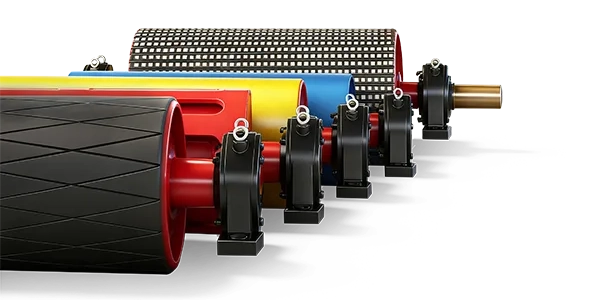
For one-direction wet conveyors, herringbone rubber lagging can be considered. Diamond lagging is useful where non-directional drainage or reversible operation is required. Severe high-tension and slip-sensitive applications may justify evaluating ceramic lagging.
The correct lagging should be selected for the complete conveyor duty rather than using the most aggressive surface available.
5. Insufficient Drive-Pulley Wrap Angle
Wrap angle is the amount of the drive pulley circumference contacted by the conveyor belt. Greater effective belt contact can increase the traction available for transmitting torque.
A snub pulley is commonly installed near the drive pulley to modify the belt path and increase wrap. If conveyor modifications have changed pulley positions or the belt path, the available wrap may no longer be suitable for the required drive duty.
Where repeated slip occurs despite acceptable tension and lagging condition, drive-pulley wrap should be included in the investigation.
Important: Increasing wrap can improve traction, but pulley positions should not be changed casually. Snub, bend, and drive pulley geometry affects belt tensions, bearing loads, belt bending, cleaners, guarding, and the overall conveyor layout.
6. Conveyor Overloading
A conveyor designed for one operating load may begin slipping if substantially more material is placed on the belt. Overloading increases the force required from the drive system.
Temporary surge loads can be especially difficult because the drive may operate normally most of the time but slip during peak feeding conditions.
Check whether actual throughput, material bulk density, conveyor incline, and loading conditions still match the original design assumptions. A process change upstream can create a conveyor traction problem even when no conveyor component has been changed.
7. Excessive Startup Load
Starting a heavily loaded conveyor can require substantially more torque than steady-state operation. If acceleration is too aggressive or belt tension is marginal, slipping may occur mainly during startup.
The drive system, coupling, starting method, take-up response, and conveyor loading should be considered together. In some applications, controlled acceleration helps reduce shock loading and traction demand during startup.
A conveyor that slips only when starting should therefore be diagnosed differently from one that begins slipping after several hours of operation in wet conditions.
8. Seized Rollers and Excessive Conveyor Resistance
Slip can be caused by a problem far away from the drive pulley. Seized rollers, damaged bearings, material buildup, belt rubbing against structures, or badly misaligned components increase conveyor resistance.
The drive must produce additional force to overcome this resistance. If the required traction exceeds what the pulley-belt interface can transmit, slip may begin.
Inspect conveyor rollers and idlers for seized bearings, damaged shells, heavy buildup, or incorrect alignment. A large conveyor can contain hundreds of rollers, so several deteriorated components can collectively increase operating resistance.
9. Material Buildup on the Drive Pulley
Carryback and fine material can accumulate around pulley surfaces, especially where belt cleaning is ineffective.
Buildup can alter the effective pulley surface, interfere with lagging grooves, create uneven contact, and contribute to both traction and tracking problems.
A proper cleaning system should remove carryback close to the discharge point. Primary and secondary cleaners may be used according to material characteristics and required cleanliness.
Persistent contamination should also prompt inspection of cleaner blade condition, tensioning, belt surface, splice compatibility, and chute arrangement.
10. Pulley or Belt Misalignment
The drive pulley should be correctly aligned with the conveyor structure and belt path. Misalignment can create uneven pressure across the belt width and reduce stable contact.
Pulley alignment problems can also contribute to belt mistracking, which may create additional friction elsewhere in the conveyor.
If slip occurs together with uneven lagging wear or repeated belt deviation, inspect alignment rather than treating the two symptoms as unrelated problems.
What Are the Risks of Conveyor Belt Slippage?
| Risk | Possible Result |
| Frictional Heat | Heat buildup at the belt-pulley interface |
| Lagging Wear | Polishing, abrasion, cracking or debonding |
| Belt Wear | Damage to bottom cover and possible localized overheating |
| Reduced Capacity | Belt moves slower than intended or cannot accelerate |
| Material Spillage | Unstable material flow during speed changes |
| Production Downtime | Repeated alarms, shutdowns and maintenance |
Can Belt Slip Create a Fire Risk?
Persistent friction between a rotating drive pulley and a slipping belt can generate significant heat. In applications involving combustible material, dust, enclosed structures, or other fire-sensitive conditions, uncontrolled slip can therefore become a safety concern.
This is one reason many industrial conveyors use speed or slip monitoring. The system compares belt movement with drive-pulley rotation and can generate an alarm or stop the conveyor when the difference exceeds the permitted condition.
Protection settings and fire-control requirements should follow the actual conveyor design, site risk assessment, and applicable safety standards.
Why Simply Tightening the Belt Can Make Things Worse
Increasing belt tension can improve traction when the belt is genuinely under-tensioned. However, excessive tension is not a harmless adjustment.
Higher tension increases load on the conveyor belt carcass, splice, pulley shafts and bearings, and supporting idlers. It may also accelerate fatigue around pulleys.
If the true cause is wet lagging, inadequate wrap, contamination, overloading, or seized rollers, excessive tension may only hide the symptom while increasing stress elsewhere.
Do not use this troubleshooting method: belt slips → increase tension → belt slips again → increase tension again. Check the complete traction system before changing take-up force beyond the intended operating condition.
A Practical Conveyor Belt Slippage Troubleshooting Process
01. Confirm whether true drive-pulley slip is occurring.
02. Determine whether slip occurs during startup, full load, wet weather, or continuously.
03. Inspect belt tension and take-up position.
04. Inspect drive-pulley lagging for wear, polishing, contamination, or debonding.
05. Check whether water, mud, coal fines, or carryback are entering the contact area.
06. Confirm pulley wrap and snub-pulley arrangement.
07. Compare actual conveyor load with the intended design capacity.
08. Inspect rollers, pulleys, cleaners and the belt path for abnormal resistance.
09. Check drive and startup conditions.
10. Correct the identified cause and verify operation under normal load.
How to Choose Pulley Lagging When Slip Is the Main Problem
Lagging selection should start with operating conditions rather than simply replacing the existing surface with a more aggressive material.
| Condition | Lagging to Evaluate |
| Moderate, relatively dry duty | Plain rubber |
| Wet, one-direction conveyor | Herringbone rubber |
| Wet or reversible conveyor | Diamond rubber |
| High-tension, severe, slip-sensitive duty | Ceramic lagging where suitable |
For a broader comparison of lagging patterns, see SWCONS conveyor technical resources when evaluating plain, herringbone, diamond, or ceramic lagging for a replacement drive pulley.
Preventing Conveyor Belt Slip
Preventive maintenance is usually more effective than waiting for a slip alarm. A few routine checks can reduce the likelihood of traction problems becoming serious.
Check regularly:
take-up position and available travel;
belt sag and operating tension;
drive-pulley lagging wear;
water and material contamination around the drive;
belt cleaner condition;
snub and drive pulley alignment;
seized or damaged rollers;
unexpected changes in throughput;
slip-monitor or speed-sensor alarms.
What Information Is Needed to Diagnose Repeated Belt Slip?
A supplier or conveyor engineer can provide more useful recommendations when the actual operating information is available.
Provide: conveyor length and layout;
belt width and belt speed;
drive power and drive arrangement;
drive-pulley diameter and face width;
pulley lagging type and condition;
belt wrap angle where available;
take-up type, force, position and remaining travel;
material and conveyor capacity;
whether slip occurs during startup, wet conditions, or full load;
photos, drawings and maintenance history.
Solving Belt Slip with the Complete Conveyor System in Mind
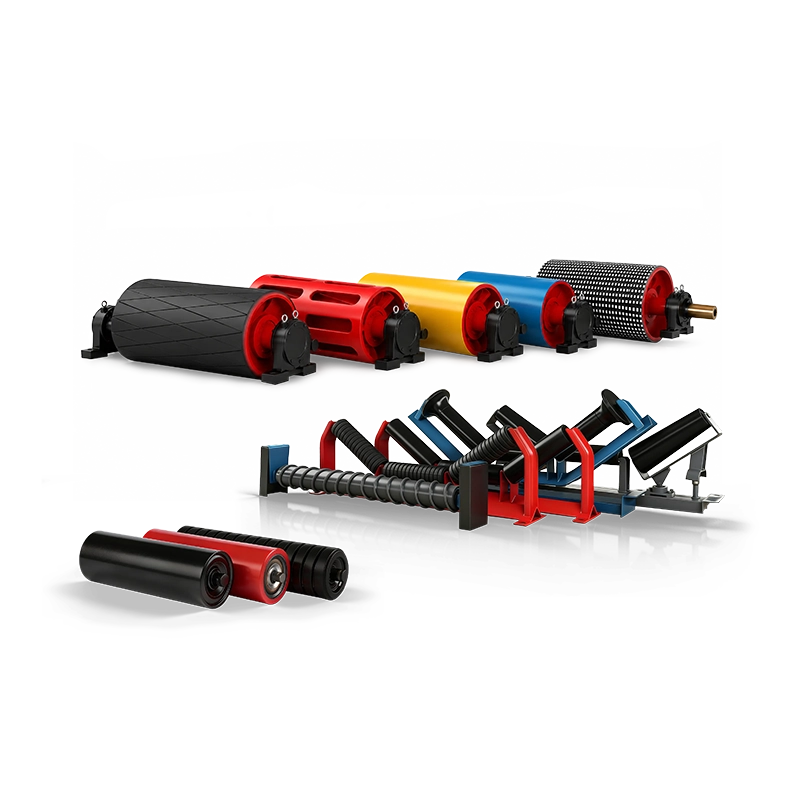
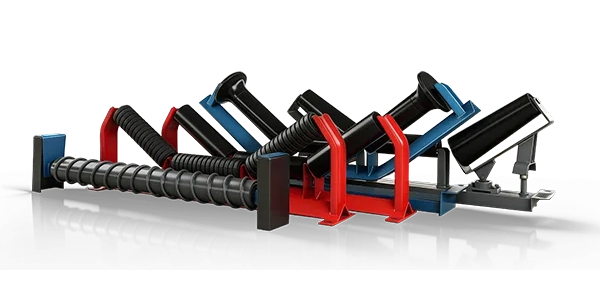
SHENGYUAN supplies conveyor pulleys, rollers, idlers, belts, cleaners, frames, and related components for mining, quarrying, aggregates, cement, coal handling, ports, steel plants, power stations, and other heavy-duty bulk-material handling systems.
Repeated slip problems should be evaluated as a system rather than as a pulley-only fault. A replacement drive pulley may require the correct lagging, but take-up condition, snub-pulley position, belt cleaners, conveyor resistance, and operating load should also be reviewed.
Through custom conveyor solutions, drive, bend, snub, tail, and take-up pulleys can be matched to existing conveyor drawings and operating requirements, including different rubber and ceramic lagging configurations.
Where slip is related to excessive conveyor resistance or carryback, replacement rollers, idlers, and cleaning components can also be evaluated together with the pulley rather than treating each component separately.
Is your drive pulley slipping?
Provide the belt width, speed, drive power, pulley dimensions, lagging type, take-up arrangement, material, throughput, wrap angle, operating conditions, photos, and information about exactly when the slip occurs. Whether the problem appears during startup, heavy loading, or wet weather is often an important diagnostic clue.
Conclusion: Find the Cause Before Increasing Belt Tension
Conveyor belt slippage occurs when the drive pulley cannot transmit enough traction to move the belt at the required speed. Insufficient belt tension is an important cause, but it is only one of several possibilities.
Worn or contaminated lagging, water, inadequate wrap angle, overloading, take-up problems, excessive startup torque, seized rollers, material buildup, and alignment problems can all contribute to slip.
Repeated slip can damage the belt and lagging, create heat, reduce capacity, and cause unplanned shutdowns. Speed and slip monitoring can provide early warning, but the mechanical cause still needs to be corrected.
The correct troubleshooting sequence is to check tension, take-up operation, lagging, contamination, wrap angle, loading, and conveyor resistance before making major changes. Increasing belt tension should be the result of a diagnosis, not the diagnosis itself.