
A coal conveyor that slips after rain does not necessarily need ceramic lagging. A pulley whose rubber separates from the shell may have a bonding problem rather than an unsuitable surface pattern. Identifying the failure mechanism before ordering replacement lagging helps avoid repeating the same repair.
The best pulley lagging for a coal conveyor must suit its traction requirements, contamination, belt condition, and maintenance arrangements. Supplier selection should therefore consider the proposed material together with application review, installation controls, and acceptance records.
Quick answer: First distinguish belt slip, surface wear, contamination, and lagging separation. Then verify belt tension, pulley wrap, and operating conditions before selecting rubber or ceramic. The purchase specification should identify the exact lagging system, belt compatibility, installation method, inspection requirements, and permitted return-to-service conditions.
Identify the Failure Before Choosing Replacement Lagging
Record when the problem occurs: during a loaded restart, after rainfall, following washdown, or throughout normal operation. These observations help narrow the investigation, but no single symptom proves its cause.
| Observed Problem | Items to Investigate | Implication for Purchasing |
| Slip during loaded starts | Starting demand, take-up operation, tension, and available traction | Request review of starting conditions, not only steady running. |
| Slip after rain or washdown | Water entry, blocked grooves, coal fines, and belt condition | Evaluate wet traction and contamination control together. |
| Rubber lifting from the shell | Surface preparation, adhesive compatibility, curing, and water ingress | Investigate the bond before changing surface material. |
| Uneven wear across the face | Tracking, alignment, buildup, and pulley geometry | Include dimensional and alignment checks. |
| Missing tiles or damaged belt bottom cover | Slip, trapped material, tile retention, and contact compatibility | Review the belt and lagging as a matched system. |
Inspection safety: Physical inspection and cleaning require isolation and control of stored energy, including take-up movement. Do not touch lagging, clear grooves, or adjust components while the conveyor is running. Abnormal heating, smoke, or sustained slip requires action under the site’s shutdown procedures.
Trace How Water and Coal Fines Reach the Pulley
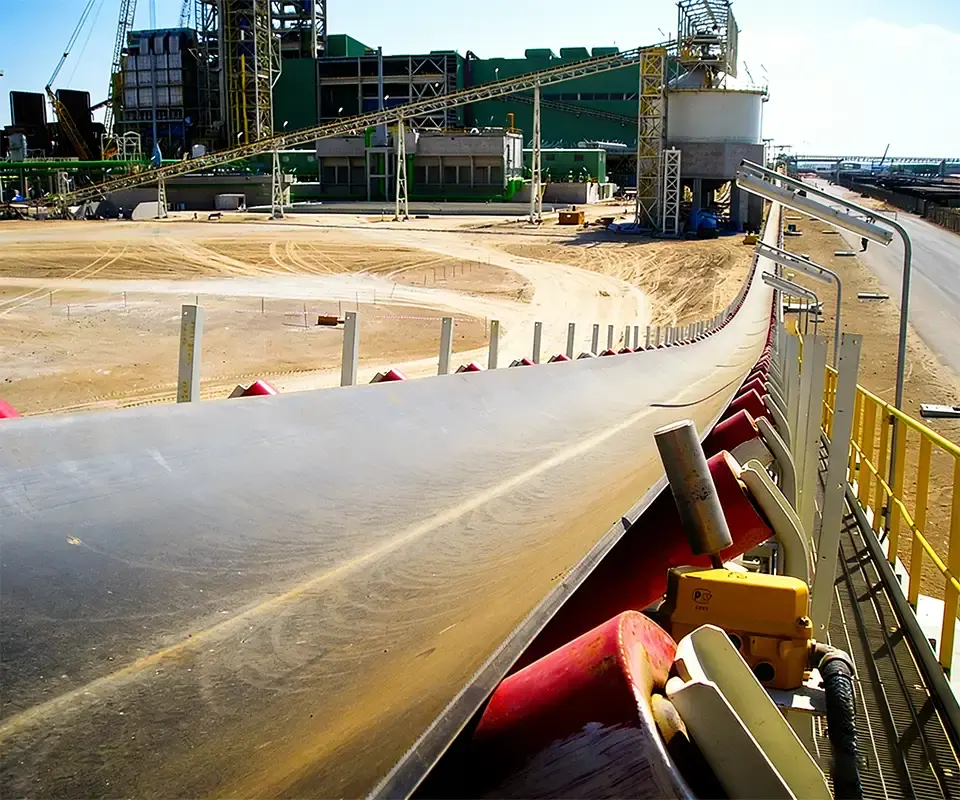
A wet conveyor is not a complete description of the contact conditions. Determine whether water reaches the pulley from rainfall, washdown, drainage, or the belt itself. Inspect whether fine coal has filled the lagging grooves or formed deposits that disturb belt contact.
Distinguish carryback on the carrying surface from contamination on the pulley-contact surface. Head cleaners, return-side cleaning arrangements, and spillage control address different material paths. Improving one does not automatically eliminate contamination at the drive.
Record the actual contamination route before specifying more aggressive lagging. Otherwise, the replacement may encounter the same blocked drainage channels and trapped particles.
When Rubber or Ceramic Lagging Makes Sense
Rubber Lagging for Suitable Traction and Drainage
Rubber remains a candidate where the selected compound and pattern provide sufficient traction and wear performance. Wet service requires attention to drainage, while reversible operation requires confirmation that the complete surface arrangement is suitable in both directions.
Running direction alone cannot determine the best pattern. For the basic differences, see our plain, herringbone, and diamond lagging comparison. The coal application still needs its own traction and contamination review.
Ceramic Lagging for Verified Traction or Wear Requirements
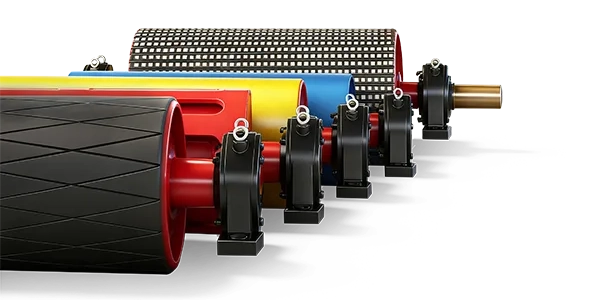
Ceramic lagging deserves evaluation when the operating duty requires performance that the proposed rubber system cannot provide. Specify tile profile, coverage, backing material, total thickness, and suitability for the particular pulley position.
Flexco’s ceramic lagging guidance notes that dimpled ceramic can damage the belt’s bottom cover when slip occurs, depending on conveyor design. Higher traction should therefore be evaluated alongside belt compatibility, rather than treated as an unconditional upgrade.
Drive and non-drive pulleys need separate assessment: A drive pulley transmits torque. A non-drive pulley may primarily need wear protection and suitable belt contact. Do not automatically apply the drive pulley’s high-traction specification to every pulley.
Check Tension and Wrap Before Increasing Grip
Available traction depends on the belt-pulley contact conditions, wrap angle, and belt tensions. A restricted take-up, changed loading duty, or unsuitable starting profile can contribute to slip even when the lagging is relatively new.
Ask the responsible engineer to review normal running and relevant transient conditions. Do not add take-up weight or increase tension simply until slip stops: the belt, splice, pulleys, bearings, and structure all have load limits.
Treat Bonding Quality as Part of the Product
Hot-vulcanized and cold-bonded lagging use different installation processes. Neither description alone guarantees a reliable result. The selected system must suit the shell, lagging material, working environment, and available maintenance window.
For example, REMA TIP TOP’s SC2000 bonding procedure specifies surface preparation and environmental controls, including humidity and substrate temperature relative to dew point. These are product-specific instructions, not universal limits for every adhesive.
01. Identify the approved preparation and installation procedure.
02. Record lagging, primer, adhesive, and hardener identification where applicable.
03. Check storage history, shelf life, and compatibility of the supplied materials.
04. Record environmental conditions and relevant process times.
05. Obtain written curing and return-to-service requirements.
Handling strength is not necessarily full operating readiness. A short shutdown does not justify shortening the specified cure period. Plan installation and recommissioning around the selected system’s requirements.
Define Coal-Site Safety Requirements Explicitly
Identify whether the installation is underground, enclosed, outdoors, or subject to a specific fire and explosion risk assessment. Ask the site’s responsible specialist to define applicable flame-resistance, electrical-resistance, and approval requirements.
A label such as “FRAS” is not a complete acceptance specification. Request the relevant test method, report, product identification, and approval scope. Do not assume that a certificate for the conveyor belt also covers its pulley lagging or installation materials.
Make Supplier Quotations Directly Comparable
Give each supplier the same pulley drawing, belt specification, operating data, and failure photographs. State whether the purchase covers lagging material only, relagging an existing pulley, or supplying a complete assembly.
Technical scope: pulley function, diameter, face width, belt direction, speed, tensions, and wrap angle.
Lagging specification: compound, pattern, thickness, ceramic details if applicable, and belt compatibility.
Installation scope: removal, shell inspection, preparation, bonding or vulcanization, and curing.
Acceptance scope: dimensional tolerances, inspection records, applicable tests, documentation, and warranty conditions.
For an existing pulley, agree how corrosion or shell damage discovered after stripping will be assessed and priced. This avoids treating structural refurbishment as an unexpected addition to a lagging-only quotation.
Check Finished Dimensions and Operating Results
Specify whether diameter means the bare shell or the finished surface. As an illustrative calculation, an 800 mm shell with 12 mm radial lagging thickness has a nominal finished diameter of 824 mm. Replacing 10 mm lagging with 12 mm adds 4 mm to the finished diameter.
Review the resulting geometry and clearances. Acceptance should also cover pattern orientation, joints, visible defects, and agreed thickness or runout measurements. Appearance alone cannot prove bond strength.
After approved commissioning, record slip events, handled tonnage, lagging wear, and belt bottom-cover condition under comparable duty. A dry, unloaded run does not demonstrate performance during wet, loaded starts.
Discuss Coal Conveyor Pulley Requirements with SHENGYUAN
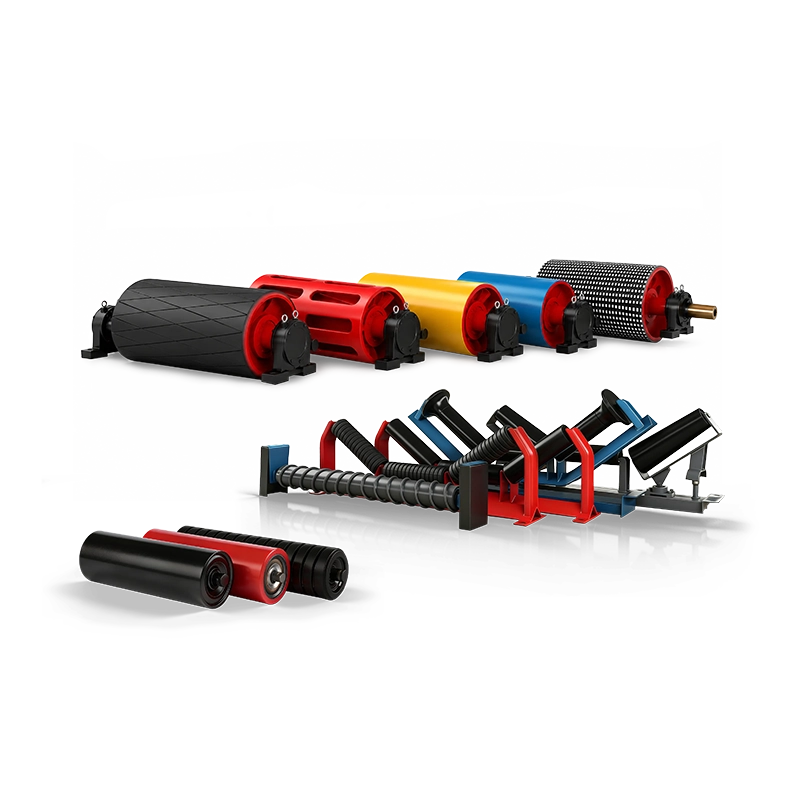
SHENGYUAN supplies conveyor pulleys alongside other bulk-handling components. Its custom solutions service supports technical requirement discussions, manufacturing coordination, and finished-product inspection.
This allows buyers to discuss pulley dimensions and lagging requirements together. Confirm the proposed materials, installation process, inspection documents, and any site-specific approvals in the quotation rather than assuming they are included.
Request a proposal based on the failure conditions
Provide the pulley drawing, belt details, operating conditions, photographs, and available shutdown time. Explain when slip, wear, or separation occurs so the recommendation addresses the actual problem.
Conclusion
Reliable coal conveyor lagging depends on correct diagnosis, suitable contact materials, controlled installation, and documented acceptance. Resolve contamination and drive-system issues before selecting a more aggressive surface. Compare suppliers on the complete technical proposal, including how performance will be verified after installation.