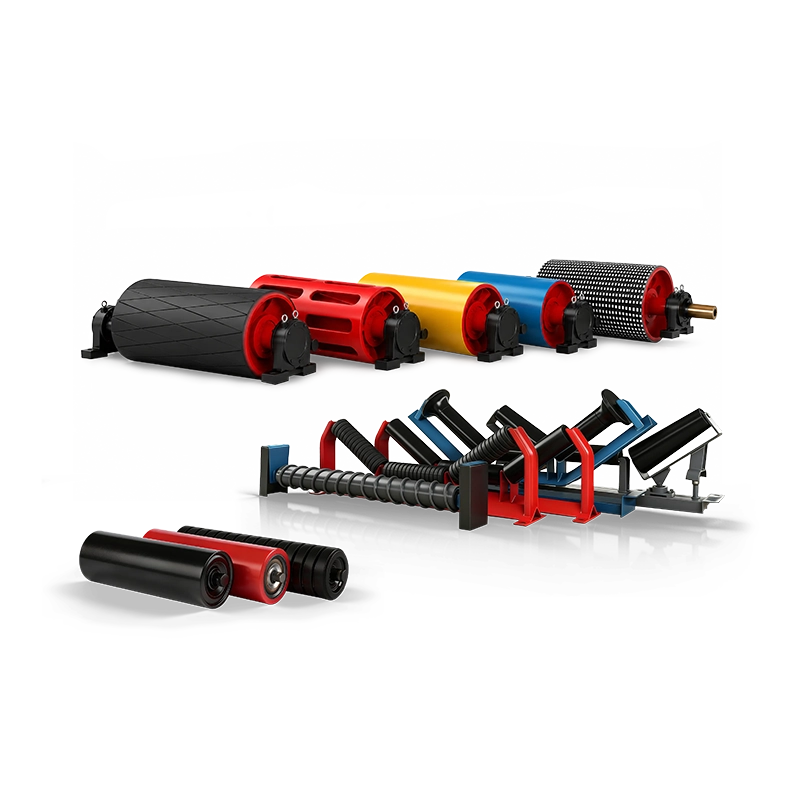

Conveyor rollers are essential components in belt conveyor systems. They support the conveyor belt, carry material load, reduce running resistance, absorb impact, guide belt movement, and help maintain stable operation. In heavy-duty industries such as mining, quarrying, cement, coal, steel, power plants, ports, and bulk material handling, the correct conveyor roller selection can directly affect belt life, energy consumption, maintenance frequency, and unplanned downtime.
Many conveyor problems begin with rollers that are not suitable for the working condition. A roller may look simple, but its performance depends on shell strength, bearing quality, sealing structure, shaft design, surface material, installation accuracy, and maintenance environment. This guide explains the main types of conveyor rollers, key selection factors, and common industrial applications to help buyers, engineers, and maintenance teams make more reliable decisions.
Quick answer: The main conveyor roller types include carrying rollers, return rollers, impact rollers, troughing rollers, training rollers, guide rollers, rubber disc return rollers, spiral return rollers, HDPE rollers, steel rollers, and custom rollers for special conveyor systems.
What Are Conveyor Rollers?
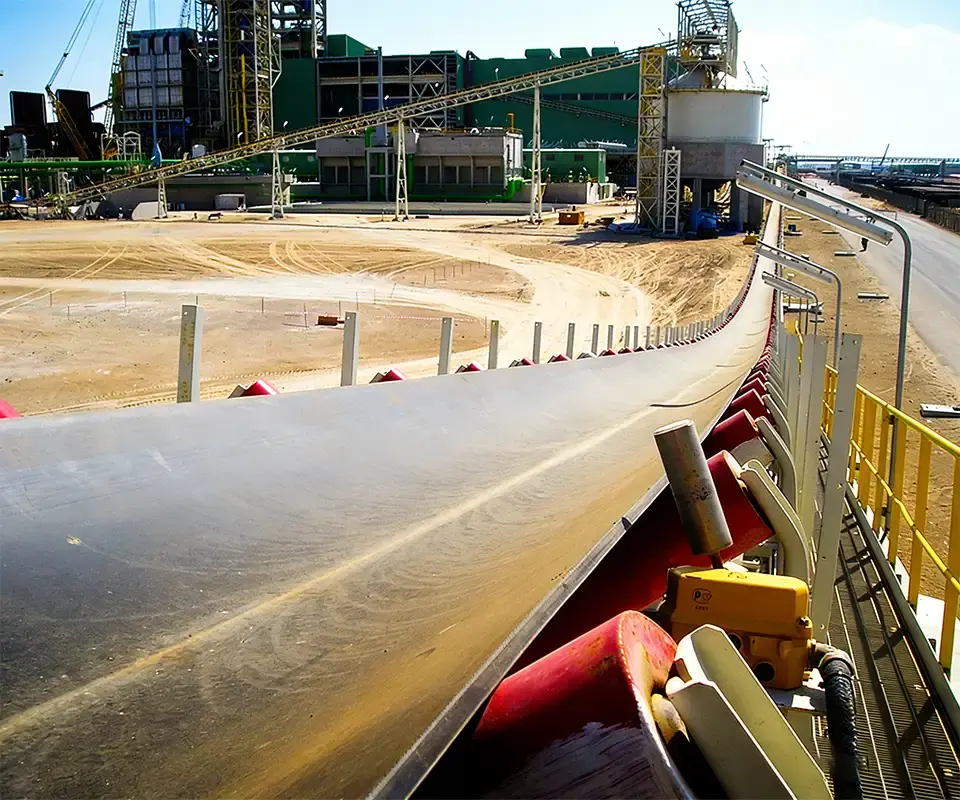
Conveyor rollers are rotating cylindrical components used to support and guide a conveyor belt. In a belt conveyor, the belt moves continuously over a series of rollers and pulleys. The rollers reduce friction between the moving belt and the support structure, allowing materials to be transported efficiently over short or long distances.
A conveyor roller normally includes a steel or polymer shell, shaft, bearings, seals, bearing seats, and end caps. For heavy-duty belt conveyors, the internal bearing and sealing system is particularly important because dust, water, mud, and abrasive particles can easily shorten roller service life. A well-designed roller should rotate smoothly, resist contamination, support the required load, and match the belt width and conveyor layout.
For buyers looking for industrial conveyor rollers, conveyor rollers should be selected according to the actual working condition rather than only price or appearance. The right roller type can reduce belt wear, improve tracking, and lower total operating cost.
Why Conveyor Roller Selection Matters
In bulk material handling, a single conveyor may use hundreds or thousands of rollers. If rollers fail frequently, the system may suffer from belt damage, material spillage, increased power consumption, abnormal noise, bearing overheating, and emergency shutdowns. Roller replacement also requires labour, spare parts, and sometimes production stoppage. Therefore, conveyor roller selection is not only a technical issue but also a business decision.
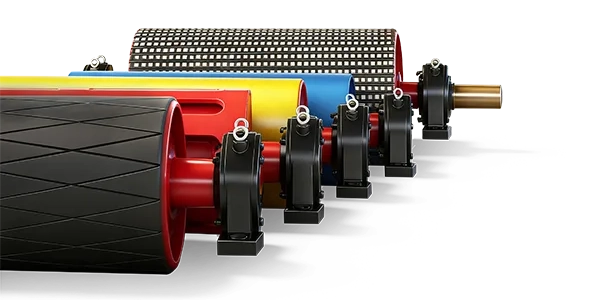
The correct roller reduces friction and keeps the belt properly supported. It also helps protect other conveyor components, including conveyor pulleys, idler frames, cleaners, bearings, and the conveyor structure. When rollers are properly matched to belt speed, load, environment, and material type, the conveyor can run more smoothly and safely.
Lower Maintenance Cost
Reliable rollers reduce replacement frequency, belt damage, and unexpected shutdown risk.
Better Belt Protection
Correct roller support helps prevent belt sagging, edge wear, and mistracking.
Stable Production
Smooth roller rotation supports continuous material handling in demanding industries.
Main Types of Conveyor Rollers
Different conveyor positions require different roller types. A roller used under the loaded belt may not be suitable for the return side. A roller used at the loading point must handle impact, while a roller used for belt tracking must help guide the belt. Understanding these differences is the first step toward reliable conveyor design.
| Roller Type | Main Function | Typical Position |
| Carrying Roller | Supports the loaded belt and conveyed material | Carrying side |
| Return Roller | Supports the empty belt on the return path | Return side |
| Impact Roller | Absorbs shock from falling material | Loading point |
| Training Roller | Helps correct minor belt mistracking | Tracking-sensitive areas |
| Spiral Return Roller | Reduces sticky material buildup on the return belt | Return side |
Carrying Rollers for Loaded Belt Support
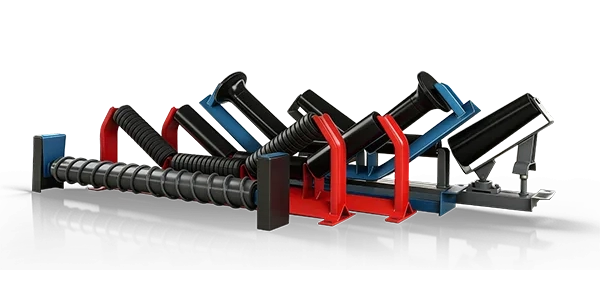
Carrying rollers are installed on the loaded side of a conveyor. Their main role is to support the conveyor belt and the material being transported. In many bulk material systems, carrying rollers are arranged in troughing idler sets to form the belt into a trough shape. This helps the belt carry more material and reduces the risk of spillage.
A carrying roller must be strong enough to support belt load, material weight, and dynamic forces caused by vibration or uneven loading. Selection should consider belt width, material density, roller spacing, belt speed, troughing angle, and environmental conditions. In mining, cement, aggregate, and coal conveyors, carrying rollers usually require heavy-duty steel shells, reliable bearings, and effective seals.
Return Rollers for the Empty Belt Side
Return rollers support the conveyor belt after material has been discharged. Although the return side normally carries less load than the carrying side, return rollers still influence belt tracking, running resistance, and cleanliness. If return rollers seize or become covered with material buildup, they can damage the belt and increase operating cost.
Flat return rollers are common in many systems. For sticky materials, rubber disc return rollers and spiral return rollers can help reduce material accumulation. In wet, corrosive, or dusty environments, the roller surface material, seal design, and bearing protection should be carefully reviewed.
Impact Rollers for Loading Zones
Impact rollers are installed at conveyor loading points where material falls onto the belt. Their purpose is to absorb shock and protect the belt from damage. These rollers usually have rubber rings or impact-resistant coverings to reduce the force transferred to the belt.
Impact rollers are especially important for handling large lumps, sharp stones, ore, coal, clinker, and other abrasive materials. Without proper impact support, the belt may suffer punctures, cuts, cover damage, or early fatigue. If impact rollers fail frequently, the material drop height, chute angle, impact bed, and loading control should also be inspected.
Training and Guide Rollers for Belt Tracking
Training rollers, self-aligning rollers, and guide rollers help control belt movement. A training roller can help guide the belt back toward the center when minor deviation occurs. Guide rollers are often installed near the belt edge to limit excessive side movement.
However, these rollers should not be used to hide serious alignment problems. If the belt continuously pushes against guide rollers, the root cause may be pulley misalignment, skewed idlers, off-center loading, material buildup, frame distortion, or poor belt splicing. Training rollers work best when the conveyor structure is already correctly aligned.
A belt tracking roller should support belt stability, not force a badly aligned belt to stay in place. Correct alignment remains the foundation of reliable belt tracking.
Steel, HDPE, Rubber and Polyurethane Roller Options
Conveyor rollers can be manufactured from different materials. Steel conveyor rollers are widely used in heavy-duty belt conveyors because they provide high strength and good load capacity. HDPE conveyor rollers are lighter and may offer corrosion resistance and lower noise in some environments. Rubber conveyor rollers are useful where impact absorption or belt protection is needed. Polyurethane rollers can provide wear resistance, flexibility, and stable performance in specific applications.
The best material depends on the actual working condition. For example, mining conveyor rollers usually need strength and sealing performance. Cement plant conveyor rollers may require dust resistance. Port conveyor rollers may face moisture and corrosion. Aggregate conveyor rollers need abrasion resistance and impact durability.
Key Factors for Selecting Conveyor Rollers
The correct conveyor roller should be selected according to both mechanical requirements and site conditions. Important information includes belt width, belt speed, material type, material density, lump size, moisture level, conveyor capacity, roller position, installation angle, operating hours, and maintenance access. For replacement rollers, drawings or original dimensions are especially important.
Selection checklist
- Confirm whether the roller is for carrying, return, impact, tracking, or transition use.
- Match roller diameter, shell thickness, and shaft size with the load requirement.
- Choose bearing and sealing according to dust, water, and abrasive conditions.
- Check installation dimensions, frame design, and troughing angle before ordering.
- Review total service life instead of comparing only unit price.
Bearing quality and sealing design are two of the most important technical factors. Dust and water contamination can quickly shorten bearing life. If a roller stops rotating, the moving belt may rub against the fixed roller shell, creating heat, belt cover wear, and possible belt damage. For long conveyors or high-capacity systems, low rotation resistance can also help reduce energy consumption.
Industrial Applications of Conveyor Rollers
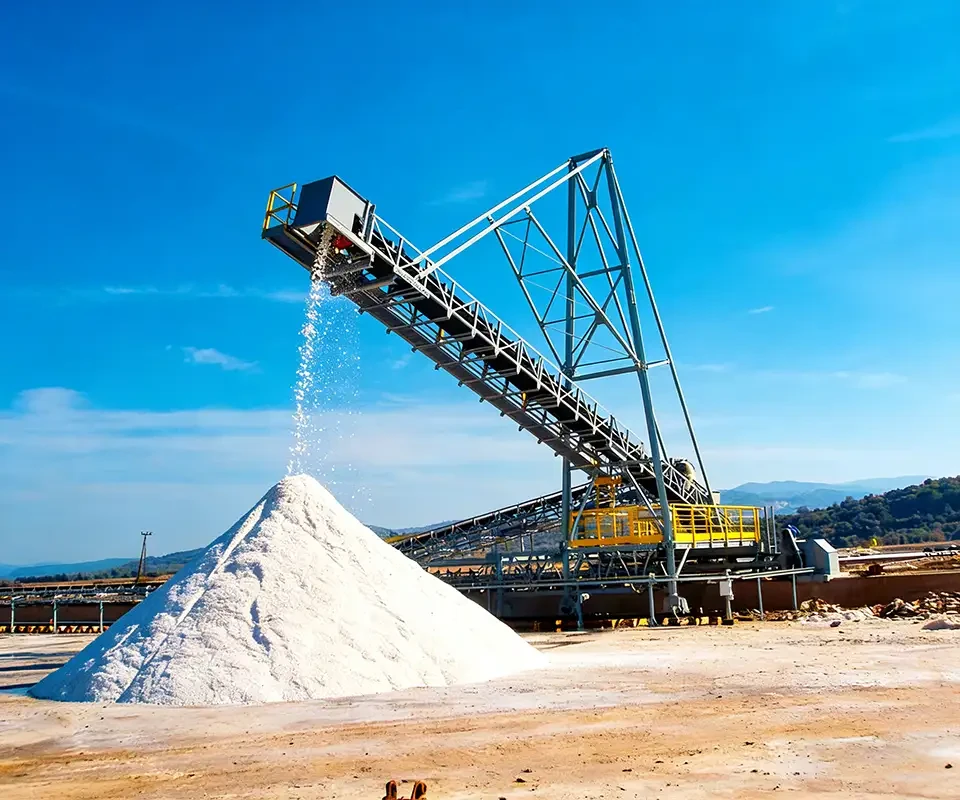
Conveyor rollers are used across many industries where bulk materials must be moved continuously. In mining and coal handling, rollers must work under heavy load, dust, impact, and long operating hours. In quarry and aggregate plants, rollers face abrasive stone, vibration, and outdoor conditions. In cement plants, fine powder and high dust levels require good sealing and regular maintenance.
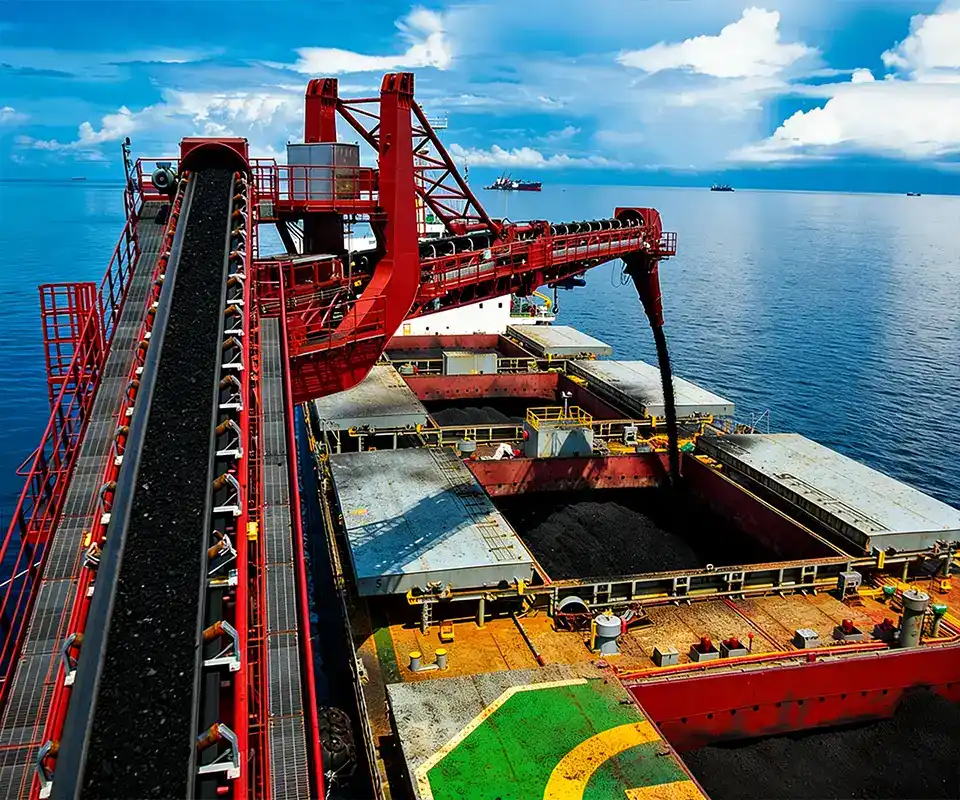
In ports and terminals, conveyor rollers support high-capacity bulk material transfer for coal, ore, grain, fertilizer, and other materials. In steel plants and power plants, conveyor systems often run continuously, so roller reliability is critical. In recycling and construction waste handling, rollers may face irregular material size, impact, and contamination.
| Industry | Typical Roller Requirement |
| Mining and Coal | Heavy-duty load capacity, strong seals, impact resistance |
| Cement and Aggregate | Dust resistance, abrasion resistance, stable rotation |
| Ports and Terminals | High-capacity operation, corrosion protection, reliable delivery |
| Power and Steel Plants | Continuous operation, low maintenance, stable bearing performance |
Custom Conveyor Roller Solutions
Many belt conveyor systems require customized rollers because conveyor layouts, belt widths, frame dimensions, shaft ends, bearing requirements, and working environments vary from project to project. Standard rollers may not fit replacement projects or special applications. In these cases, custom conveyor solutions can help match roller design with real operating conditions.
Custom options may include roller diameter, roller length, shaft diameter, shaft end design, bearing brand, seal structure, wall thickness, surface material, coating, rubber rings, HDPE shell, polyurethane covering, or special frame matching. For OEM and replacement projects, accurate drawings, photos, belt width, and installation measurements can reduce mistakes and improve delivery efficiency.
Working with SHENGYUAN for Conveyor Roller Projects
SHENGYUAN specializes in conveyor rollers, conveyor pulleys, idler sets, and related conveyor components for heavy-duty bulk material handling systems. The company serves applications such as mining, coal, cement, quarries, ports, steel plants, power plants, aggregates, and industrial material handling.
In addition to conveyor rollers, related components such as conveyor pulleys, idler frames, belt cleaners, and customized conveyor parts should also be considered when improving system reliability. A roller problem may be connected with pulley misalignment, belt mistracking, poor loading, material buildup, or unsuitable conveyor structure.
For export and engineering projects, professional communication, secure packaging, and delivery coordination are also important. Buyers can review service and logistics support when planning bulk orders, replacement parts, or customized conveyor roller shipments.
Conclusion: The Right Conveyor Roller Improves the Whole System
Conveyor rollers are small compared with the full conveyor system, but their role is critical. Carrying rollers support loaded belts, return rollers support empty belts, impact rollers protect loading zones, training rollers help control belt tracking, and special rollers such as spiral return rollers or rubber disc rollers solve specific material buildup problems.
The most reliable selection process starts from the actual working condition. Belt width, speed, load, material type, dust, moisture, impact, corrosion, and maintenance access should all be considered. A good conveyor roller manufacturer should help buyers choose not only the right product name, but also the right structure, bearing, seal, material, and dimensions for long-term operation.
Need conveyor rollers for your project?
Send your belt width, belt speed, roller drawings, material type, conveyor position, and working environment. SHENGYUAN can help recommend carrying rollers, return rollers, impact rollers, guide rollers, idler sets, or customized roller solutions for heavy-duty belt conveyor systems.
FAQ: Conveyor Rollers
These questions summarize common concerns from conveyor buyers, engineers, and maintenance teams when selecting industrial conveyor rollers.