
Specifying conveyor components for a Chilean copper concentrate line requires a different approach from selecting components for coarse run-of-mine ore. Copper concentrate is generally much finer, can retain moisture, may adhere to the belt, and can create persistent carryback around pulleys, return rollers, cleaners, and transfer points. Depending on the project location, the conveyor may also operate in dry desert conditions, at high altitude, outdoors under strong ultraviolet exposure, or near a coastal export terminal.
For this reason, belts, idlers, pulleys, cleaners, bearings, seals, and chute interfaces should be specified from the complete operating environment rather than selected independently. A conveyor that performs well in a dry inland aggregate plant may require different materials and sealing arrangements when handling moist copper concentrate continuously in northern Chile or near a port.
A practical specification should define concentrate moisture, bulk density, capacity, belt width, belt speed, conveyor length, lift, operating altitude, temperature range, dust conditions, carryback tendency, pulley tensions, idler loads, corrosion exposure, and transfer-point geometry.
Quick answer: For a Chilean copper concentrate conveyor, prioritize containment, cleaning, sealing, corrosion resistance, and reliable operation over simply maximizing belt speed. Select the belt from tension, moisture, abrasion, and splice requirements; choose idlers with suitable bearings and seals for fine dust; size pulleys from actual tension and torque; and coordinate chute, skirt, cleaner, and return-side components to control concentrate carryback.
Understand the Copper Concentrate Handling Duty First
Copper concentrate should not be treated like large-lump copper ore. After crushing, grinding, flotation, thickening, and filtration, the conveyed material is normally much finer. This changes the dominant conveyor problems.
Instead of large-lump impact being the primary concern, concentrate conveyors often require greater attention to fine material containment, moisture, belt adhesion, carryback, skirt sealing, dust control, and buildup on return-side components.
The specification should therefore begin with actual concentrate properties at the conveyor loading point rather than using data from upstream copper ore.
Provide: bulk density;
normal and maximum moisture condition;
particle-size characteristics;
normal and peak capacity;
material temperature;
adhesion and carryback tendency;
whether the conveyor is at the mine, concentrator, storage facility, or port.
1. Select Belt Width from Capacity and Containment Requirements
Because copper concentrate is fine, maximum lump size is usually less important for belt-width selection than it is on primary ore conveyors. Capacity, material cross-section, trough angle, belt speed, and edge clearance become more important.
Avoid selecting the narrowest belt that can theoretically carry the required tonnes per hour. A wider belt operating at a moderate speed may provide better containment, lower material depth, easier skirt sealing, and more stable transfer behavior.
This can be particularly useful where concentrate loss or spillage must be minimized around transfer stations and storage areas.
2. Do Not Use Excessive Belt Speed to Increase Capacity
Higher belt speed can increase conveyor capacity, but fine concentrate can become more difficult to control at high speed. Faster transfer can increase material turbulence, dust generation, chute wear, and the difficulty of keeping the material stream centered.
For moist concentrate, excessive speed can also complicate discharge and cleaning because material may remain attached to the belt after passing the head pulley.
Belt speed should therefore be selected together with required capacity, transfer geometry, moisture, belt width, and cleaning performance rather than used as the only method of increasing throughput.
For additional selection factors, see the Conveyor Belt Speed Selection Guide.
3. Specify the Belt Carcass from Actual Tension
Belt tensile strength should be selected from calculated conveyor tension rather than from capacity alone.
Important inputs include conveyor length, vertical lift, belt weight, material load, drive arrangement, frictional resistance, take-up condition, and startup requirements.
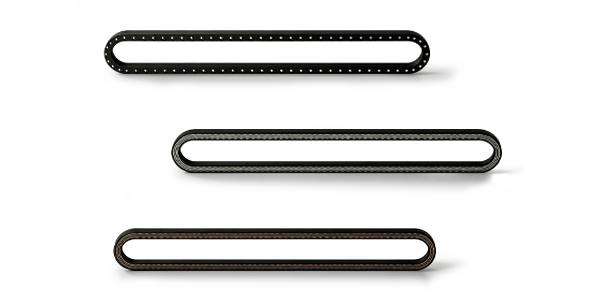
EP fabric belts are commonly suitable for many bulk-material conveyors because they offer a practical balance of tensile strength, flexibility, and dimensional stability. Long, high-lift, or high-tension conveyors may require a stronger construction depending on the calculated duty.
For a broader comparison of conveyor-belt constructions, see How to Choose Rubber Conveyor Belts for Heavy-Duty Handling.
4. Choose the Cover Grade for Abrasion and Moist Concentrate
Copper concentrate is fine but can still be abrasive. The belt cover must resist continuous material contact while remaining compatible with the selected pulley diameters and splice method.
Top-cover thickness should provide sufficient wear reserve without making the belt unnecessarily heavy or stiff. The supplier should also understand whether the concentrate is continuously damp, occasionally wet, or exposed to process water during transfer.
If chemical additives or unusual process residues can contact the belt, provide this information so compatibility can be reviewed rather than assuming a standard abrasion-resistant compound is automatically suitable.
5. Confirm Pulley Diameters Against the Final Belt
Drive, tail, bend, snub, and take-up pulley diameters should be selected together with the final belt construction.
A stronger or thicker belt may need larger pulleys to avoid excessive bending stress. Changing belt specification after pulley fabrication can therefore create an interface problem even when each component is individually well manufactured.
The final purchasing package should clearly state belt carcass, belt thickness, pulley function, pulley diameter, face width, and operating tension.
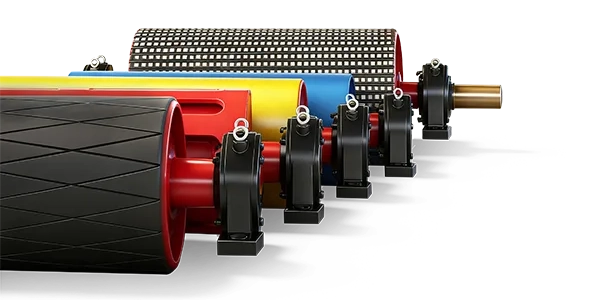
6. Specify Drive Pulleys from Torque, Tension and Traction
The drive pulley must transmit enough torque to move the loaded belt without excessive slip. This requires coordination between belt tension, wrap angle, lagging, take-up force, and environmental conditions.
Moist concentrate and fine contamination can migrate into the conveyor system, so drive-pulley traction should not be evaluated only for clean and dry conditions.
A pulley specification should include drive power, belt speed, torque, tight-side and slack-side tensions, wrap angle, shell diameter, face width, shaft arrangement, bearings, and lagging.
7. Select Pulley Lagging for the Actual Environment
Plain rubber lagging may be suitable for moderate dry duty, while patterned rubber lagging can help where water or fine contamination is present.
Herringbone lagging is generally associated with one-direction operation and drainage requirements. Diamond patterns are non-directional and can be considered where reversible operation or multidirectional drainage is required. Ceramic lagging may be evaluated for severe, high-tension, slip-sensitive drives.
The choice should reflect conveyor tension, operating direction, moisture, wrap angle, and actual slipping risk rather than simply selecting the most aggressive surface available.
8. Use Idlers Designed for Fine Dust and Long Operating Hours
Fine concentrate and surrounding mine dust can create demanding conditions for roller bearings. Roller service life depends not only on shell thickness but also on shaft design, bearing selection, sealing, manufacturing accuracy, and rotational resistance.
Labyrinth-type sealing arrangements are commonly used to create multiple barriers against contamination. For dusty Chilean mining environments, the supplier should explain the complete seal configuration rather than simply describing a roller as “dustproof.”
Where conveyors are outdoors, moisture and washdown exposure should be included in the same specification.
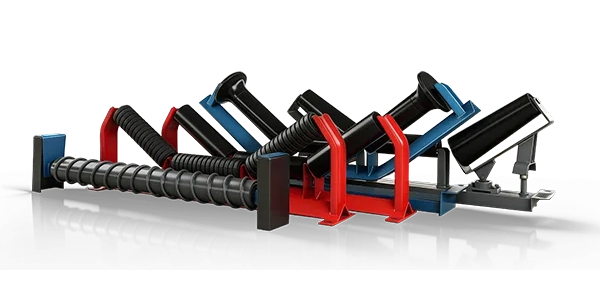
9. Choose the Correct Carrying and Return Idler Arrangement
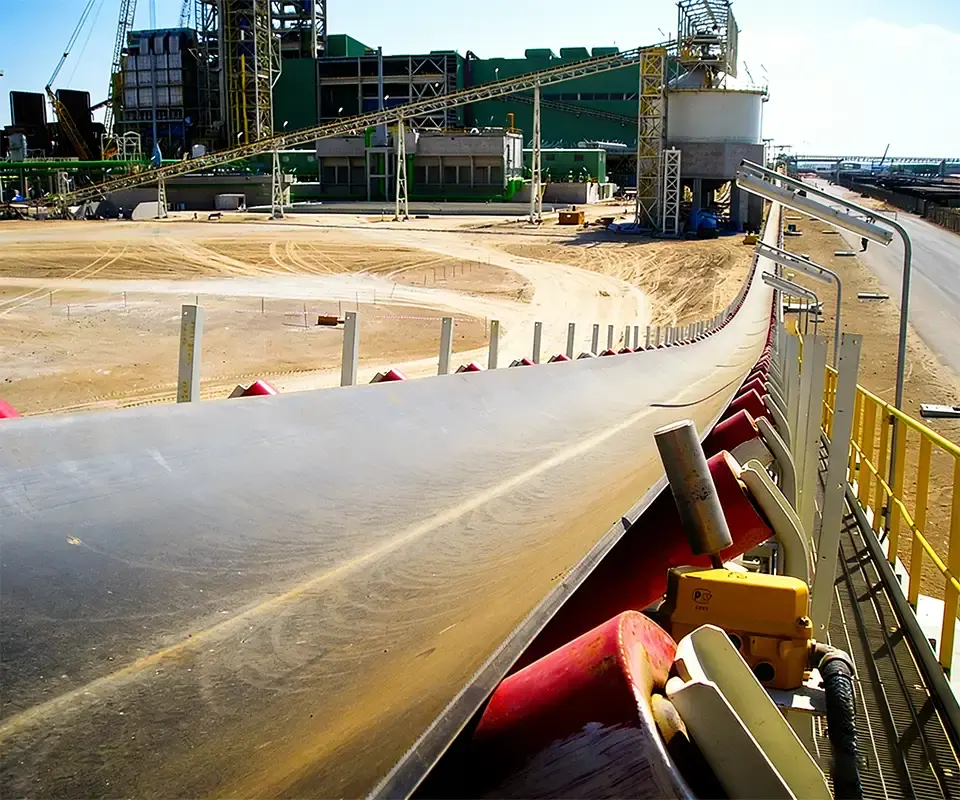
Normal carrying sections commonly use troughing idler sets, while the return strand may use flat or V-return arrangements depending on the conveyor design.
Common trough angles include 20°, 30°, 35°, and 45°. A 35° trough is widely used in bulk-material handling, but the final angle should match required capacity, belt construction, transfer design, and structural layout.
Where carryback is significant, spiral or disc-type return rollers may be considered at selected positions. They should complement the belt-cleaning system rather than replace it.
More information on idler functions is available in the Conveyor Idler Types and Applications Guide.
10. Control Carryback at the Head Pulley
Carryback can be one of the most important maintenance problems on a moist concentrate conveyor. Fine material remaining on the belt after discharge can accumulate on return rollers, structures, walkways, and around the tail pulley.
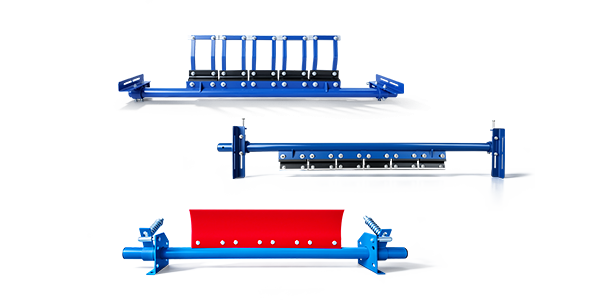
A primary cleaner at the head pulley should remove the majority of adhering material where practical. A secondary cleaner may be added when cleaner discharge, belt condition, and splice design permit.
Cleaner selection should consider belt surface condition, splice type, material moisture, belt speed, and the amount of residual fines. Proper tension is equally important: too little contact reduces cleaning, while excessive pressure can increase blade and belt wear.
Design principle: On a concentrate conveyor, belt cleaning should be designed as part of the conveyor system before the head chute is finalized. Do not leave the cleaner as an accessory to be fitted into whatever space remains.
11. Protect the Tail and Take-Up Pulleys from Concentrate Buildup
Material that escapes the head cleaning system can travel along the return strand and enter the tail or take-up pulley area.
If concentrate becomes trapped between the belt and pulley, it can create local buildup, change pulley diameter unevenly, influence belt tracking, and increase belt stress.
Return-side or empty-section cleaners can be used before vulnerable pulleys where the application requires them. Their mounting locations should be coordinated with guards and maintenance access.
12. Design Loading Chutes for Fine, Moist Material
The transfer chute should load concentrate near the belt centerline and in the direction of belt travel where possible.
Off-center loading can cause belt mistracking even when the pulleys and idlers are correctly aligned. Concentrated flow against one skirt can also accelerate localized wear and increase spillage.
Fine moist material may adhere to chute surfaces, so the design should also consider buildup, inspection access, wear liners, and practical cleaning.
13. Coordinate Skirt Boards, Belt Support and Sealing
Skirt sealing becomes more effective when the belt is firmly supported beneath the loading zone. If the belt repeatedly deflects between idlers, gaps can open under the skirt rubber and allow fine concentrate to escape.
The loading-zone idler arrangement should therefore be selected together with skirt-board length, belt profile, chute width, and material settling distance.
For fine concentrate, reducing leakage is often more important than providing extreme impact capacity.
14. Consider Chilean High-Altitude Mine Conditions
Some Chilean copper operations are located at high elevations in the Andes. Where this applies, the component specification should include actual site altitude, ambient temperature range, ultraviolet exposure, wind, dust, and maintenance access.
Outdoor rubber and polymer components should be suitable for the expected environmental exposure. Lubricants, seals, motors, and other equipment should also be reviewed by the appropriate suppliers for the site’s operating conditions.
Do not use generic “Chile” environmental data. A high-altitude mine and a coastal concentrate terminal can have very different requirements.
15. Consider Coastal Corrosion for Export-Terminal Conveyors
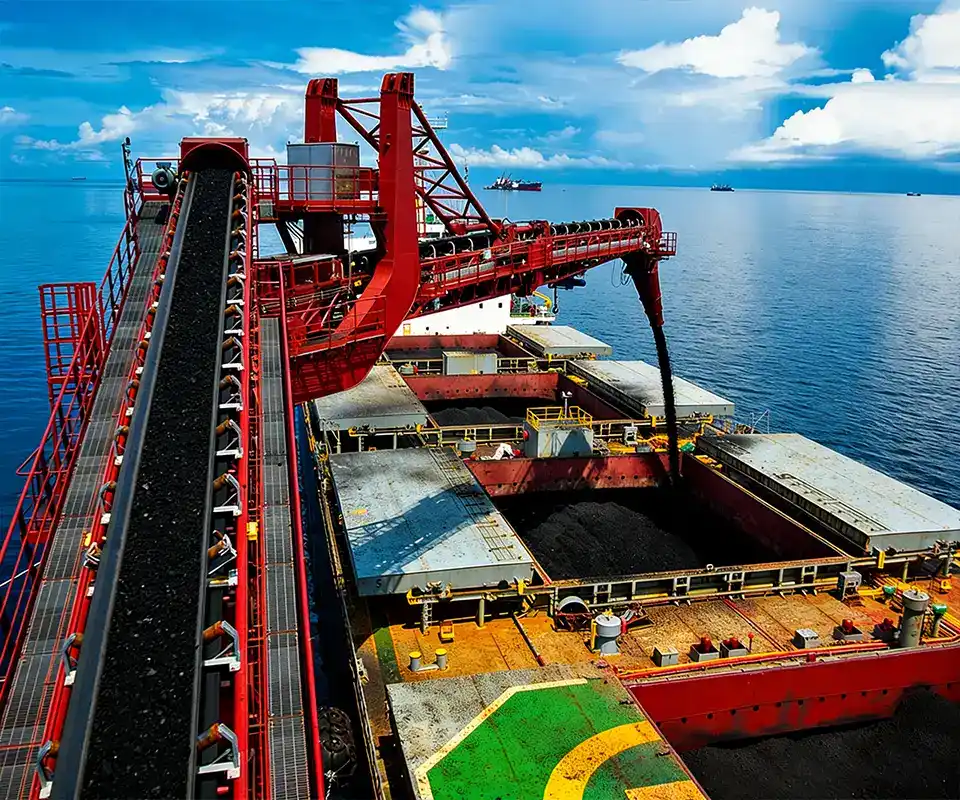
Where concentrate is transported or stored near Chile’s Pacific coast, humidity and salt-containing air may increase corrosion risk for exposed steel components.
Roller shafts, frames, pulley surfaces, bearing housings, fasteners, guards, and supporting structures should therefore be specified with the actual coastal environment in mind.
Surface protection should be considered as part of the complete component specification rather than added only after corrosion begins.
16. Coordinate Belt Tracking Before Adding Training Idlers
Self-aligning idlers can help correct moderate belt deviation, but they should not compensate for incorrect conveyor geometry.
The pulley centerlines, idler frames, chute centerline, belt tension, and structural alignment should be checked first. Material buildup on return rollers and pulleys should also be removed because uneven buildup can steer the belt.
If the belt tracks correctly when empty but moves sideways when loaded, the transfer chute and loading position should be investigated before changing the tracking hardware.
Common Specification Mistakes on Copper Concentrate Conveyors
Mistake 1: Using Coarse-Ore Conveyor Specifications
Fine concentrate creates different problems from large rock. Carryback, sealing, contamination, and buildup may be more important than impact resistance.
Mistake 2: Specifying Only Tonnes per Hour
Bulk density, moisture, belt speed, conveyor geometry, and material behavior are also required.
Mistake 3: Ignoring Carryback Until Commissioning
Cleaner mounting positions, chute clearance, return-side protection, and maintenance access should be included in the original layout.
Mistake 4: Choosing Idlers by Diameter Alone
Bearings, shaft diameter, seals, rotational resistance, frame construction, and environmental protection also determine reliability.
Mistake 5: Treating Every Chilean Site as the Same Environment
High-altitude inland mines and coastal export terminals can have very different temperature, UV, moisture, corrosion, and maintenance requirements.
What Should Be Included in the RFQ?
| Category | Information to Provide |
| Material | Bulk density, moisture, particle condition, temperature |
| Capacity | Normal and peak tonnes per hour |
| Conveyor | Length, lift, incline, belt width, speed |
| Belt | Carcass, covers, tensile strength, splice method |
| Idlers | Trough angle, spacing, roller diameter, bearings, seals |
| Pulleys | Function, diameter, face width, tension, torque, lagging |
| Cleaning | Primary, secondary, and return-side cleaner requirements |
| Site Conditions | Altitude, temperature, UV, dust, moisture, coastal exposure |
A Practical Chile Copper Concentrate Conveyor Checklist
01. Confirm concentrate bulk density and moisture.
02. Define normal and peak capacity.
03. Select belt width and speed together.
04. Calculate belt tension before selecting carcass strength.
05. Confirm all pulley diameters against the belt.
06. Select drive lagging from tension, moisture, and wrap angle.
07. Specify idler bearings and seals for fine dust.
08. Design primary and secondary cleaning before chute approval.
09. Protect tail and take-up pulleys from carryback.
10. Center the loading stream and stabilize the skirt area.
11. Specify actual altitude and outdoor environment.
12. Include coastal corrosion protection where the site requires it.
Specifying Chilean Mining Conveyor Components with SHENGYUAN
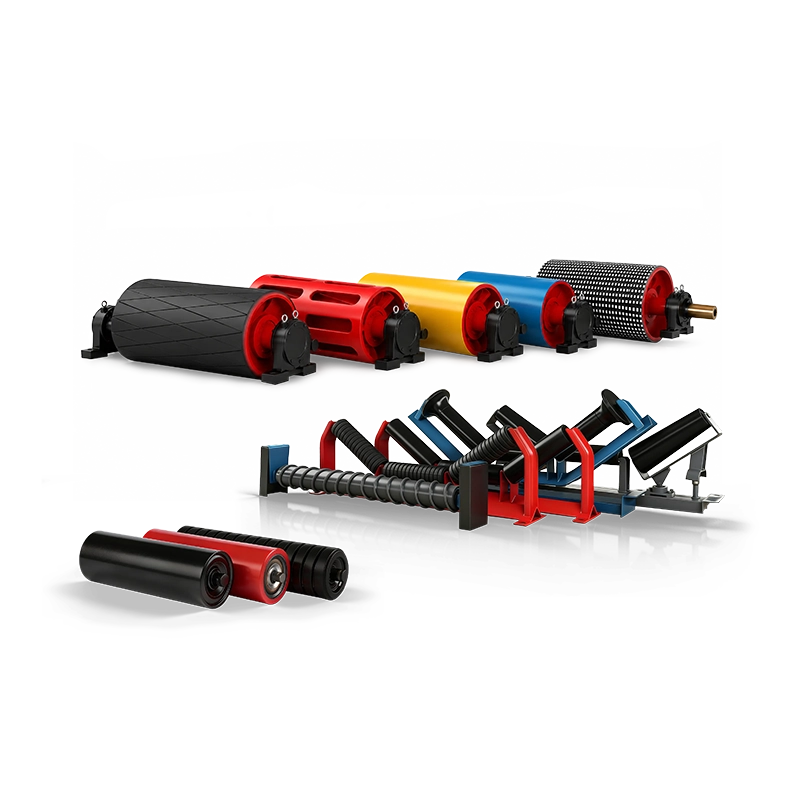
SHENGYUAN supplies conveyor rollers, idlers, pulleys, belts, cleaners, frames, and related components for mining, mineral processing, quarrying, cement, ports, power plants, and other bulk-material handling applications.
For copper concentrate projects, component selection can be coordinated from common operating data rather than treating belts, idlers, pulleys, and cleaners as unrelated purchases. This is particularly useful where belt dimensions, pulley geometry, cleaning systems, and frame interfaces must remain compatible.
The conveyor roller and idler range covers multiple carrying, return, impact, self-aligning, and special return configurations for different conveyor conditions.
Through custom conveyor solutions, rollers, idler frames, pulleys, belts, and related components can be produced according to project drawings, installation dimensions, operating conditions, and replacement requirements.
Planning a copper concentrate conveyor project in Chile?
Send the concentrate bulk density and moisture, required capacity, conveyor length and lift, belt width and speed, drive data, pulley tensions, idler arrangement, chute drawings, cleaning requirements, altitude, temperature range, dust conditions, and coastal exposure where applicable. These details provide a stronger basis for component selection than a general equipment list alone.
Conclusion: Specify for Concentrate Behavior and Site Conditions
Copper concentrate conveyors require a different specification strategy from coarse-ore conveyors. Fine material, moisture, carryback, dust, and buildup can become more important than large-lump impact.
The belt should be selected from capacity, tension, abrasion, moisture, and pulley compatibility. Idlers should provide reliable support with bearings and seals suited to the actual contamination level. Pulleys should be designed from tension, torque, wrap, and bearing load, while cleaning equipment should be integrated into the head and return-side layout from the beginning.
Chile also requires site-specific environmental thinking. High-altitude inland conveyors and coastal export conveyors should not automatically receive the same component specification.
The most reliable specification combines concentrate characteristics, conveyor mechanics, cleaning performance, and the actual Chilean site environment into one coordinated component package.