
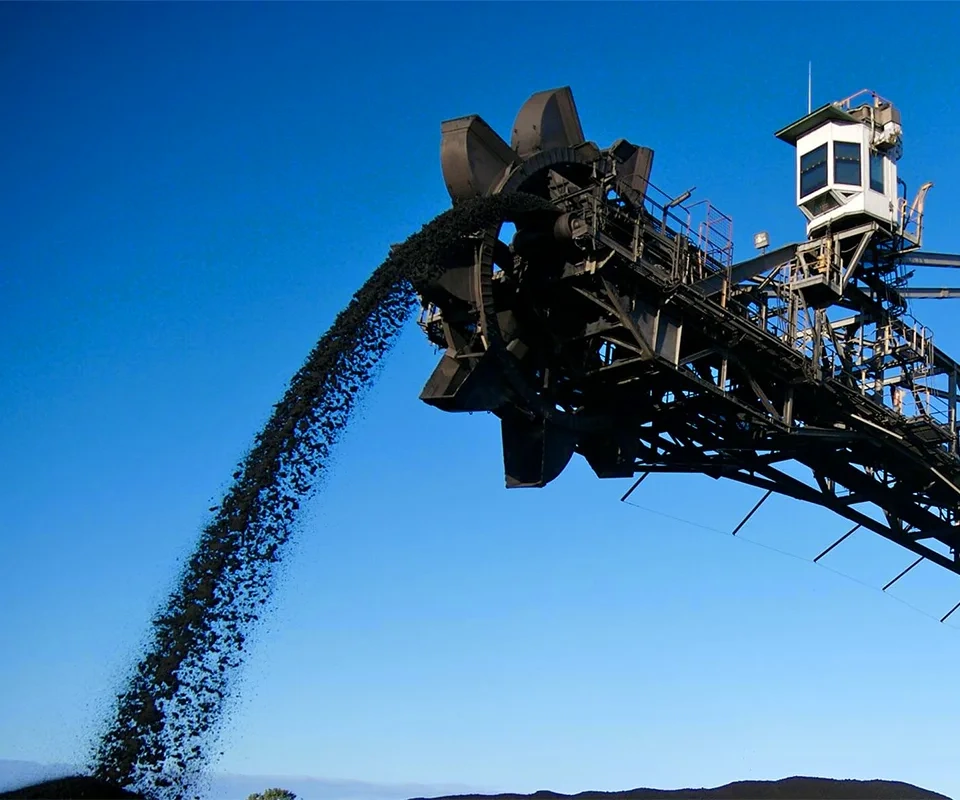
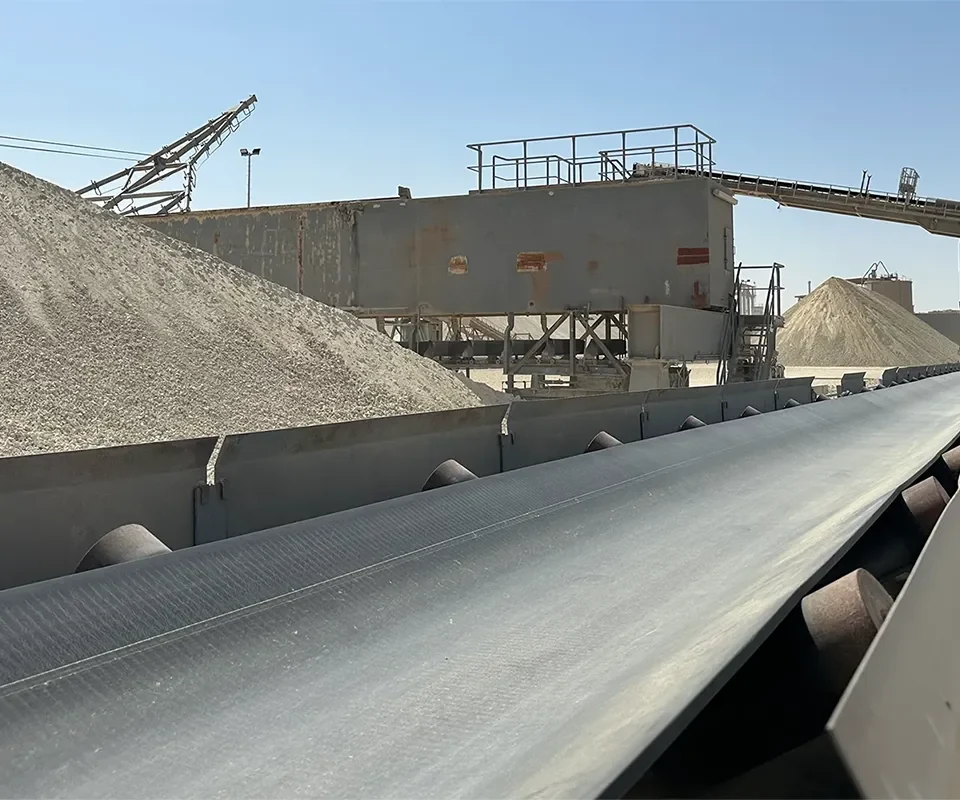
“Should we simply run the conveyor faster to increase capacity?” This is one of the most common questions asked when selecting a bulk material belt conveyor. At first glance, the logic seems reasonable: if the belt moves faster, more material can pass through the conveyor every hour. In practice, however, the highest possible belt speed is rarely the same as the best belt speed.
Belt speed affects conveying capacity, belt width, loading stability, dust generation, material degradation, impact at transfer points, roller rotational speed, pulley operation, belt wear, and maintenance requirements. A speed that works well for fine coal on a long-distance conveyor may be unsuitable for large abrasive rock on a short transfer conveyor.
For mining, quarrying, cement, aggregates, coal handling, steel plants, ports, and power stations, the correct belt speed should therefore be selected according to the complete operating duty. Long-distance, high-capacity conveyors can generally justify higher speeds, while steep, short-distance conveyors and systems handling large, abrasive, fragile, or dusty materials normally benefit from more moderate speeds.
Quick answer: Belt speed is not “the faster, the better.” Higher speed increases theoretical capacity for a given belt width, but it can also increase material disturbance, dust, impact, wear, and sensitivity to poor loading. Select speed according to required capacity, belt width, lump size, material properties, conveyor length, inclination, loading method, and operating environment.
What Does Conveyor Belt Speed Mean?
Belt speed is the linear speed at which the conveyor belt travels, normally expressed in metres per second (m/s). Common reference speeds for bulk material conveyors include approximately 0.8, 1.0, 1.25, 1.6, 2.0, 2.5, and 3.15 m/s, although larger engineered conveyor systems may operate outside this range.
The appropriate value depends on the application rather than on one universal standard. A 1.6 m/s conveyor can be fast for one material and conservative for another. This is why buyers should avoid specifying belt speed before defining the material and required throughput.
How Belt Speed Affects Conveyor Capacity
For the same belt width and material cross-section, increasing belt speed increases theoretical volumetric capacity approximately in direct proportion.
Basic capacity relationship: Qv = A × v × 3600
Qv = volumetric capacity in m³/h
A = loaded material cross-sectional area in m²
v = belt speed in m/s
For example, under the same loading geometry, increasing belt speed from 1.0 m/s to 2.0 m/s approximately doubles theoretical volumetric capacity. This makes higher speed attractive when a project requires increased throughput without significantly increasing belt width.
However, this calculation describes capacity only. It does not tell us whether the material can be loaded, transported, and discharged reliably at that speed. That distinction is essential in real conveyor design.
Why Faster Is Not Always Better
A conveyor does not transport perfectly uniform material in ideal laboratory conditions. Real bulk materials may contain large lumps, fines, moisture, sharp particles, irregular shapes, and variable loading. As belt speed increases, these characteristics become increasingly important.
More Dust Can Be Generated
Fine coal, cement raw materials, dry ore fines, ash, and powders can generate significant dust when accelerated, transferred, or discharged at high speed. Faster conveying can increase air movement and material disturbance at transfer points.
For dusty materials, reducing speed can sometimes improve containment and make chute and sealing systems easier to manage. Dust control, enclosure, belt cleaning, and transfer design should still be considered as part of the complete system.
Large Lumps Become More Difficult to Control
Large pieces of rock, ore, coal, limestone, or aggregate have greater momentum when travelling at higher speed. At loading and discharge points, this can increase impact and make material flow more difficult to control.
For conveyors handling coarse material, a somewhat wider belt operating at a moderate speed may provide more stable material handling than a narrow belt operating at high speed.
Abrasive Materials Can Accelerate Wear
Iron ore, crushed granite, clinker, hard limestone, and similar materials can be highly abrasive. Wear occurs not only on the conveyor belt but also at loading chutes, skirt systems, cleaners, and discharge points.
Higher speed can increase sliding and impact severity in certain locations. For abrasive applications, the objective should be dependable throughput with controlled wear rather than maximizing speed.
Fragile Material May Degrade
Some conveyed products should not be excessively broken during transportation. Higher discharge velocity and more aggressive transfer conditions can increase degradation. Where particle integrity matters, lower or moderate belt speed may be preferred.
When Is a Higher Belt Speed Appropriate?
Higher belt speed is particularly attractive when the conveyor is long, carries large volumes, and handles material that can be transported stably. Long-distance mine conveyors are a typical example.
Increasing speed can allow a given belt width to achieve higher capacity. In some projects, this can reduce the belt width that would otherwise be needed, which may also reduce idler length, pulley face width, conveyor structure width, and some capital costs.
| Operating Condition | Speed Direction | Reason |
| Long-distance conveyor | Higher may be suitable | Supports high throughput and efficient use of belt width |
| High-capacity conveyor | Higher may be suitable | Increases volumetric capacity |
| Wide belt with stable material | Higher may be considered | Suitable for large bulk-flow applications |
| Large or abrasive lumps | Lower generally preferred | Reduces impact and material instability |
| Dusty or fragile material | Lower generally preferred | Helps control dust and degradation |
| Short conveyor | Lower may be more practical | Very high speed may provide limited practical benefit |
Why Short Conveyors Often Do Not Need High Speed
A short conveyor often has frequent loading and discharge activity relative to its total length. Accelerating material to a very high belt speed only to discharge it a short distance later can increase transfer-point difficulty without creating the same economic benefit that high speed can provide on a long-distance conveyor.
Short conveyors are also frequently used as feeders, transfer conveyors, crusher discharge conveyors, or plant connection conveyors. These applications may involve large lumps, impact loading, and variable feed, all of which can justify a more conservative speed.
Why Inclined Conveyors May Need Lower Speed
As conveyor inclination increases, material stability becomes more important. Rounded particles and large lumps may tend to roll or move relative to the belt, while fine material may shift depending on moisture and internal friction.
Operating at an unnecessarily high speed can make loading and material containment more difficult. For this reason, greater conveyor inclination generally supports a more conservative speed selection unless a detailed engineering analysis confirms otherwise.
Very steep applications may require specialized belt surfaces, cleats, sidewalls, or other conveying methods rather than simply changing belt speed.
Belt Speed and Maximum Lump Size Must Be Evaluated Together
Maximum lump size establishes an important physical limitation for belt selection. A narrow belt cannot safely carry very large pieces simply because it is operating at a high speed.
As a practical selection reference, materials with maximum lump sizes around 100, 150, 200, 300, and 350 mm normally require progressively wider belts starting around 500, 650, 800, 1000, and 1200 mm respectively.
Consider a conveyor handling 250 mm crushed rock. A capacity calculation might suggest that a relatively narrow belt at high speed can meet the required tons per hour. However, the maximum lump size may require a wider belt regardless of theoretical capacity. Speed cannot compensate for inadequate physical space on the belt.
Example 1: Long-Distance Coal Conveyor
Consider a long-distance conveyor transporting relatively uniform coal at high capacity. The material is reasonably controlled, the conveyor has a moderate inclination, and transfer points are properly designed.
In this situation, increasing belt speed may be commercially attractive because the project can achieve high throughput without continuously increasing belt width. A speed in the upper part of the normal operating range may therefore deserve evaluation.
The final speed still depends on belt width, capacity, dust-control requirements, pulley diameter, roller performance, drive design, and transfer geometry.
Example 2: Quarry Conveyor with Large Abrasive Rock
Now consider a short quarry conveyor carrying large, sharp crushed stone. The conveyor receives material from a crusher, the loading zone experiences substantial impact, and the rock is highly abrasive.
Although increasing belt speed would improve theoretical throughput, it could also increase impact at the discharge and make large lumps more difficult to stabilize. A wider belt operating at a moderate speed may provide better long-term performance.
Commercial lesson: The lowest-cost conveyor on the quotation sheet is not always the lowest-cost conveyor to operate. Increasing belt width may raise initial equipment cost but can sometimes reduce the need to push difficult material at an unnecessarily high speed.
Example 3: Dusty Cement or Fine Material
Fine dry material can be relatively easy to carry from a capacity perspective, but dust control may become the governing factor. High belt speed can increase material disturbance at loading and discharge points.
In such applications, a moderate belt speed combined with well-designed chutes, proper skirting, belt cleaners, and enclosed transfer areas may produce better overall plant performance than maximizing conveyor velocity.
Belt Speed Also Affects Rollers and Idlers
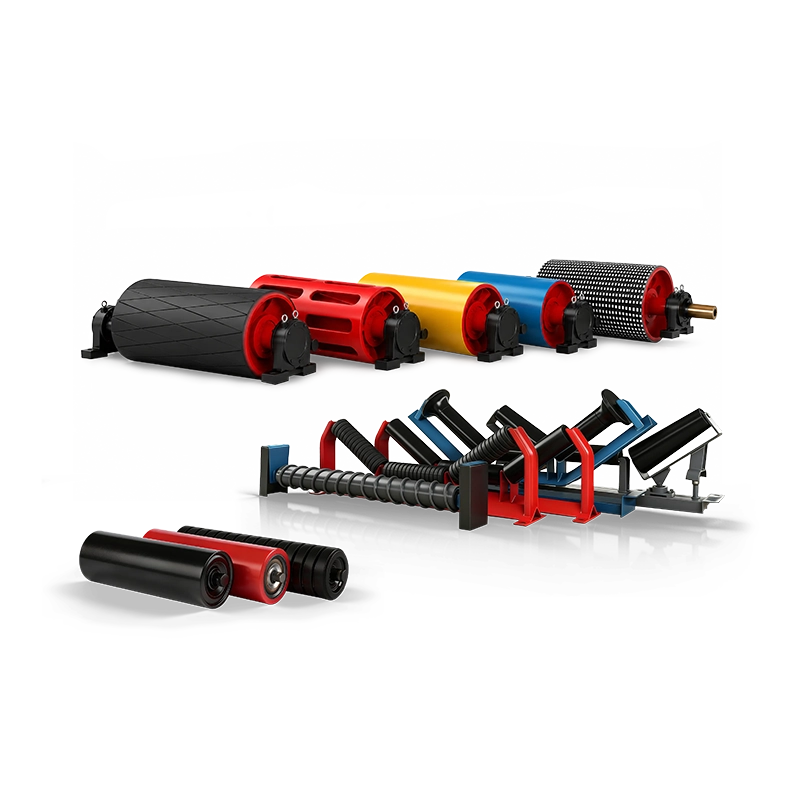
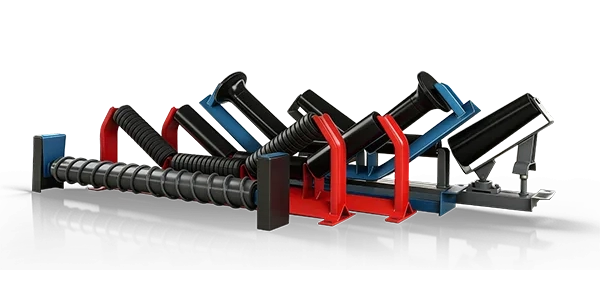
Increasing belt speed directly increases the rotational speed of conveyor rollers. This makes roller quality increasingly important. Bearing selection, sealing, tube roundness, shaft alignment, runout, rotational resistance, and balance all influence performance.
For mining and heavy bulk handling applications, conveyor rollers and idlers should be selected according to belt speed as well as load, belt width, environment, material, and required service conditions.
At higher speeds, poor roller concentricity or failing bearings can contribute to vibration, noise, heat, and belt damage. Therefore, a high-speed conveyor should not be designed by increasing motor speed while leaving supporting components unchanged.
Belt Speed and Pulley Selection
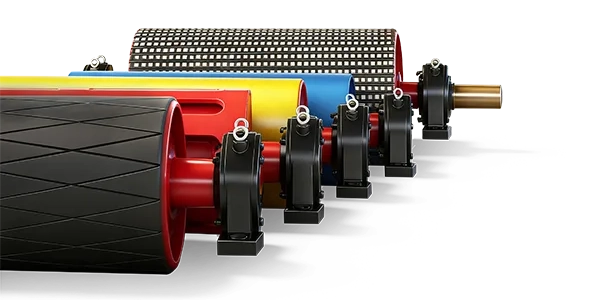
The conveyor pulley system must also be matched to belt speed, belt tension, drive torque, belt construction, and operating duty.
Drive pulleys must provide sufficient traction without excessive slip. Pulley diameter must also be compatible with the belt construction and required bending conditions. In demanding wet applications, rubber or ceramic lagging may be used to improve traction, while appropriate bearing and shaft configurations help support heavy-duty operation.
For high-capacity conveyors, speed selection should therefore be coordinated with pulley diameter, drive power, tension, wrap angle, lagging, and take-up arrangements rather than treated as a separate parameter.
Special Operating Conditions Can Limit Belt Speed
Certain operating methods require more conservative speed limits. Conveyors using traveling trippers, plow discharge devices, manual sorting, or transporting individual packaged items are examples where high speed may be unsuitable.
| Application | Typical Speed Guidance |
| Traveling tripper discharge | Generally not more than about 2.5 m/s |
| Plow discharge | Generally not more than about 2.0 m/s |
| Individual packaged goods | Typically not more than about 1.25 m/s |
| Manual sorting conveyor | Very low speed, around 0.3 m/s in typical applications |
These values should be treated as practical selection references rather than universal limits. Actual project requirements, equipment design, safety rules, and applicable standards must always be checked before finalizing operating speed.
How to Select Belt Speed Step by Step
01. Define normal and peak conveying capacity in t/h.
02. Confirm material bulk density.
03. Determine maximum lump size and particle-size distribution.
04. Establish the minimum practical belt width.
05. Compare several belt width and belt speed combinations.
06. Evaluate conveyor length and inclination.
07. Review abrasiveness, moisture, dust, fragility, and material shape.
08. Check loading height, chute geometry, and discharge arrangement.
09. Verify rollers, idlers, pulleys, belt cleaners, drive, and take-up system.
10. Select a speed that balances capacity, reliability, maintenance, and total operating cost.
Common Belt Speed Selection Mistakes
Mistake 1: Choosing the Highest Available Speed
A higher number does not automatically represent a better conveyor. Speed should match the material and system duty. Excessive speed can create unnecessary operating problems without providing meaningful commercial benefit.
Mistake 2: Selecting Speed Before Belt Width
Belt width and speed should be selected together. Maximum lump size may establish a minimum belt width, while capacity determines whether that width needs to be increased or operated faster.
Mistake 3: Ignoring Transfer Points
The conveyor may operate perfectly along its straight section but experience severe wear, dust, spillage, or impact at the loading and discharge points. Transfer conditions should be considered before increasing speed.
Mistake 4: Ignoring Existing Components During an Upgrade
Increasing the belt speed of an existing conveyor may affect rollers, bearings, pulleys, cleaners, drive equipment, belt tracking, and chute performance. Capacity upgrades should be evaluated as a system rather than as a simple speed change.
Why Work with SHENGYUAN for Heavy-Duty Conveyor Components?
SHENGYUAN focuses on heavy-duty conveyor components for mining, quarrying, cement, coal handling, ports, steel plants, power stations, and other bulk material handling applications.
Belt speed directly influences the selection and operating conditions of the supporting components. SHENGYUAN can coordinate conveyor rollers, idlers, pulleys, belts, and cleaners according to belt width, speed, material characteristics, load, and project requirements rather than treating each component independently.
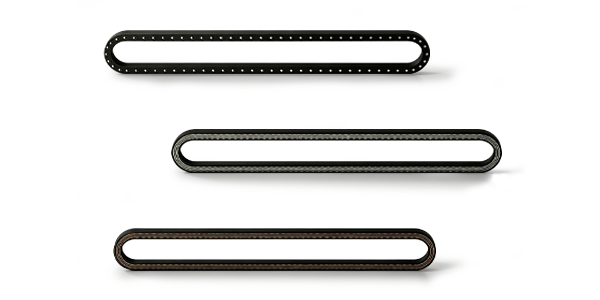
For belt selection, the company’s conveyor belt solutions can be matched to bulk material type, capacity, operating environment, temperature, abrasion, and required belt construction.
For non-standard mining and industrial applications, custom conveyor solutions allow roller dimensions, pulley specifications, lagging, shafts, bearings, frames, and related components to be coordinated with the conveyor operating duty.
For a more accurate belt speed recommendation, provide:
Required normal and peak capacity, material type, bulk density, maximum lump size, particle-size distribution, belt width, conveyor length, horizontal distance, lift height, inclination, loading height, material temperature, moisture, abrasiveness, dust conditions, operating hours, discharge method, pulley data, and existing drawings where available.
Conclusion: The Best Belt Speed Is the Right Speed for the Material
Higher belt speed can increase conveyor capacity and is often valuable for long-distance, high-capacity conveying. It can also help achieve high throughput without continuously increasing belt width.
However, high speed is not automatically better. Large lumps, abrasive material, fragile products, dust-generating materials, steep inclines, short conveying distances, difficult loading conditions, and special discharge equipment can all justify a lower operating speed.
The correct selection method is to evaluate capacity, belt width, belt speed, lump size, bulk density, material characteristics, conveyor length, inclination, and supporting components together. The objective is not to make the belt run as fast as possible, but to achieve the required throughput with stable material handling, reasonable wear, reliable operation, and competitive life-cycle cost.