
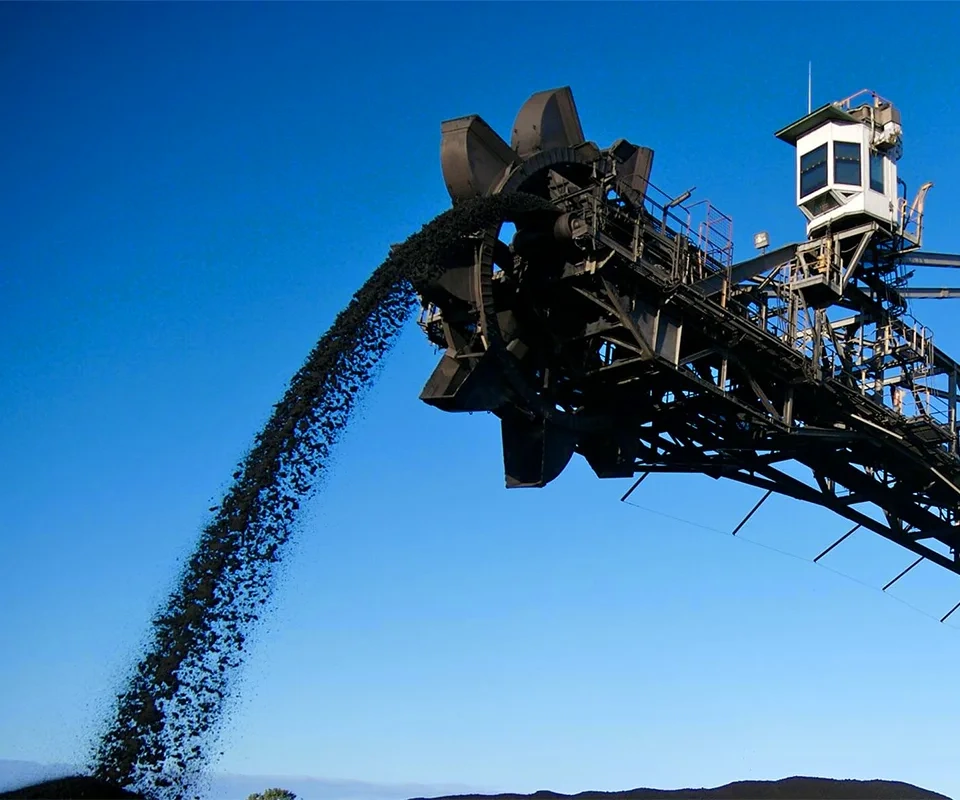
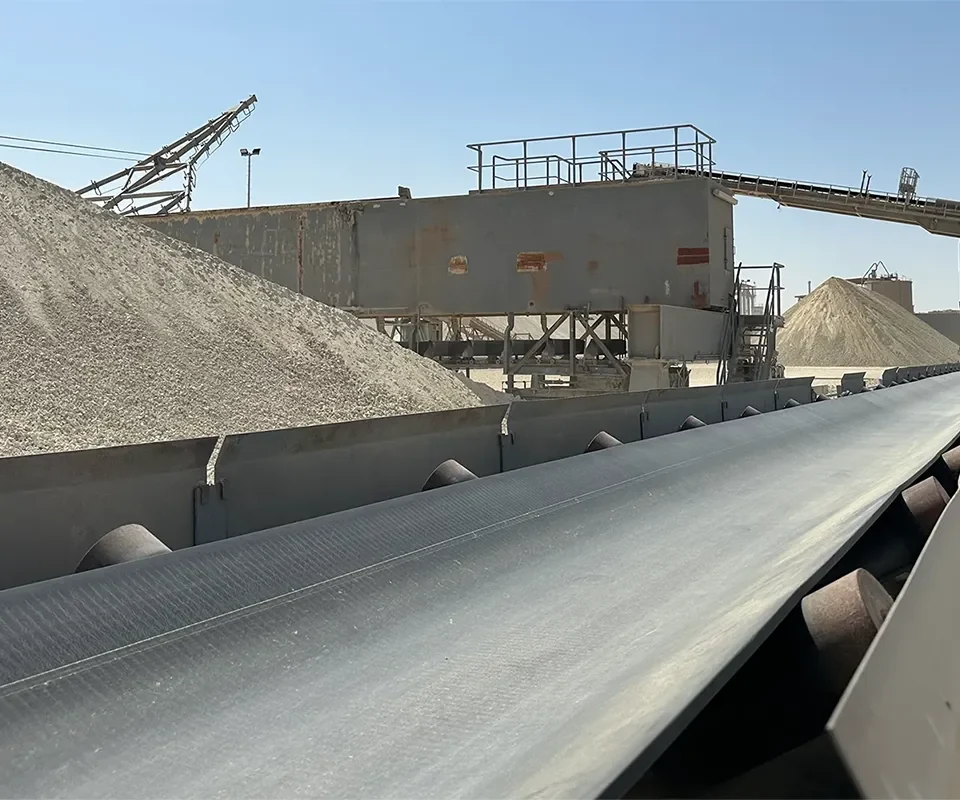
Conveyor roller seals are among the most important components affecting roller reliability in high-dust mining environments. Although seals represent only a small part of a conveyor roller assembly, their performance can determine how effectively the bearings are protected against fine mineral particles, abrasive dust, moisture, and other contamination.
Mining conveyors operate in demanding conditions, especially around crushers, screening plants, transfer stations, underground workings, and ore-processing facilities. Fine dust can accumulate around roller ends, enter poorly protected bearing housings, contaminate lubricant, and accelerate bearing wear. Once a bearing begins to deteriorate, rotational resistance may increase until the roller becomes noisy, overheats, or seizes.
For procurement teams, selecting the right conveyor roller sealing system involves more than requesting a “dustproof roller.” Buyers should evaluate labyrinth seal construction, bearing protection, sealing materials, shaft and housing tolerances, rotational resistance, dust exposure, moisture conditions, operating speed, and supplier inspection procedures.
Quick answer: When buying conveyor roller seals for high-dust mining sites, specify the complete sealing arrangement rather than selecting a seal only by diameter or material. Confirm the type of dust, operating speed, bearing model, shaft dimensions, seal construction, grease protection, moisture exposure, temperature, and required service conditions. Ask suppliers for sectional drawings, material details, manufacturing controls, and relevant sealing-performance evidence before placing a bulk order.
Why Roller Seals Matter in High-Dust Mining Sites
Mining dust can contain fine particles of rock, ore, coal, limestone, silica-bearing minerals, and other abrasive materials. Its characteristics depend on the mine and the processing operation.
Coarse particles may accumulate around roller ends, while very fine airborne dust can penetrate small openings and reach internal components if the sealing arrangement is unsuitable.
When contamination reaches the bearing lubricant, it can increase abrasive wear on rolling elements and raceways. The resulting deterioration may produce vibration, excessive noise, higher rotational resistance, and premature bearing failure.
In severe cases, a seized conveyor roller may remain stationary while the moving belt slides over its shell. This creates frictional heat and can damage the belt’s bottom cover. In combustible-dust environments, abnormal friction and overheating also require particular attention under the site’s safety procedures.
A properly selected sealing system helps protect the bearing, preserve lubricant condition, reduce contamination-related failures, and support reliable roller rotation.
1. Understand the Main Types of Conveyor Roller Seals
Conveyor rollers may use different sealing arrangements depending on their construction, operating environment, and intended service life.
Labyrinth Seals
Labyrinth seals are widely used in industrial conveyor rollers. They create a series of narrow passages and directional changes between stationary and rotating components, making it more difficult for dust and moisture to reach the bearing.
Many labyrinth designs use non-contacting elements, which can provide contamination resistance with relatively low additional friction. Some designs incorporate grease barriers or other sealing elements to improve performance.
Contact Seals
Contact seals use a flexible sealing lip or another contacting surface to restrict contamination entry. They can provide an additional barrier against dirt and moisture when correctly designed and installed.
However, contact pressure introduces friction and can influence rotational resistance, heat generation, and seal wear. The materials and contact geometry must therefore be suitable for the roller’s operating speed and temperature.
Combined Sealing Systems
Heavy-duty rollers may combine labyrinth passages, contacting elements, grease barriers, and sealed bearings. These features perform different functions and should be considered as a complete system rather than as independent accessories.
| Seal Type | Main Advantage | Procurement Consideration |
| Labyrinth | Multi-stage contamination path with potentially low friction | Geometry, clearances, assembly accuracy, and exposure conditions |
| Contact Lip | Additional physical barrier against contaminants | Wear, friction, material compatibility, and temperature |
| Combined System | Multiple protection mechanisms | Overall performance, complexity, installation, and cost |
2. Do Not Assume Every Labyrinth Seal Performs Equally
Two suppliers may both describe their products as labyrinth-sealed rollers, yet the internal designs can be substantially different.
Differences may include the number of labyrinth stages, path geometry, radial and axial clearances, end-cap construction, material selection, grease arrangement, and the position of the seal relative to the bearing.
A poorly controlled gap may reduce sealing effectiveness. Conversely, unintended contact between rotating and stationary components can increase resistance and wear.
Buying principle: The term “multi-stage labyrinth seal” describes a design approach, not a guaranteed performance level. Ask for the actual construction and evidence relevant to the intended mining conditions.
3. Specify the Actual Dust Environment
High-dust mining sites are not all the same. Dust from an underground coal operation may differ considerably from the abrasive fines surrounding an iron ore crusher or a dry limestone processing plant.
Provide the conveyed material, surrounding dust conditions, and whether contamination is primarily airborne, deposited around the roller ends, or mixed with moisture.
Where dust is exceptionally fine, suppliers should understand that ordinary visible-dust protection may not be sufficient. If abrasive mineral particles are present, the seal also needs to tolerate possible wear at exposed surfaces.
Information about dust concentration, particle characteristics, and exposure duration can help suppliers evaluate sealing requirements more accurately than a general statement such as “heavy mining dust.”
4. Distinguish Dry Dust from Wet Contamination
A seal that performs satisfactorily in dry dust may face different challenges in wet mining conditions.
Water can combine with mineral fines to form abrasive slurry or sticky deposits around the roller ends. Repeated wetting and drying may leave hardened material near the sealing interfaces.
Rainfall, washdown, water spray systems, and mud accumulation should therefore be specified separately from dry dust exposure.
If rollers are exposed to direct water jets, ask whether the proposed sealing system has been evaluated for that type of exposure. Do not assume that a dust-resistant roller is automatically suitable for high-pressure washdown or prolonged submersion.
5. Check Seal Materials and Their Environmental Limits
Conveyor roller seals may contain engineered polymer components, elastomeric elements, metal parts, or combinations of materials.
Material selection should consider wear resistance, dimensional stability, temperature, moisture, chemical exposure, and compatibility with lubricants.
For outdoor mining conveyors, ultraviolet exposure and extreme ambient temperatures may also be relevant, especially for exposed polymer components.
Ask suppliers to identify the proposed seal material and its recommended operating conditions. A generic description such as “high-quality plastic” does not provide enough information for a critical purchasing decision.
6. Coordinate the Seal with the Bearing Arrangement
External roller seals and internal bearing seals perform related but different functions. A bearing with integrated seals may provide an additional contamination barrier, but the external roller-end design remains important.
The bearing model, bore size, housing geometry, seal location, and lubrication arrangement should be selected as one assembly.
An incorrectly positioned external seal can interfere with bearing installation or fail to provide the intended protection. Poor internal fits can also compromise bearing operation even when the external seal is effective.
For additional information on the relationship between roller construction, bearings, shafts, and operating conditions, see Key Factors for Choosing Conveyor Rollers.
7. Shaft and Housing Accuracy Affect Sealing Performance
Even a well-designed seal may perform poorly if the shaft, bearing housing, end cap, and seal components are not manufactured and assembled accurately.
Excessive runout, incorrect housing dimensions, damaged shaft surfaces, and poor axial positioning can create uneven gaps or unwanted contact.
For replacement projects, confirm whether the seal is supplied as part of a complete roller or as an individual replacement component. Not all roller designs have seals intended for field replacement.
If individual seals are being purchased, provide the original manufacturer’s part number or a verified drawing showing all mating dimensions and the installation arrangement.
8. Consider Belt Speed and Roller Rotational Resistance
Roller rotational speed is determined by conveyor belt speed and roller diameter. At the same belt speed, smaller rollers generally rotate faster than larger rollers.
Sealing performance should therefore be evaluated at the intended operating speed. Contact seals may generate additional friction, while some non-contacting designs can provide lower rotational resistance.
On long conveyors containing hundreds or thousands of rollers, unnecessary rotational resistance can contribute to the overall conveyor running resistance.
A good sealing design balances protection against contamination with acceptable friction, temperature rise, and service life. Maximum sealing contact is not automatically the best solution for every conveyor.
9. Ask How Sealing Performance Is Verified
Suppliers may advertise their conveyor rollers as dustproof, waterproof, or suitable for severe mining conditions. These claims should be supported by relevant design information and test evidence.
When reviewing test results, determine what was actually tested. A laboratory dust test performed at low rotational speed may not represent a high-speed roller operating with abrasive dust and intermittent water exposure.
| Verification Item | Questions to Ask |
| Dust Exposure | What dust type, particle size, concentration, and duration were used? |
| Water Exposure | Was the test conducted with spray, immersion, or another defined condition? |
| Rotational Speed | Does the tested speed represent the intended conveyor duty? |
| Bearing Condition | Was internal contamination or lubricant condition evaluated? |
| Rotational Resistance | Were resistance and temperature measured under defined conditions? |
| Acceptance Criteria | What measurable result was required to pass the test? |
Where ingress-protection ratings or standards are quoted, verify that the rating applies to the relevant complete assembly and actual test conditions. A rating associated with one component should not automatically be assumed to describe the entire conveyor roller.
10. Inspect Seal Assembly Quality Before Bulk Purchasing
Sealing performance depends not only on design but also on consistent manufacturing and assembly.
Incorrectly seated components, damaged sealing lips, debris introduced during assembly, poor grease control, or improperly fitted end caps can reduce reliability.
For substantial orders, consider requesting sample rollers and reviewing their construction before approving mass production. The inspection scope may include seal condition, assembly dimensions, free rotation, abnormal noise, axial clearance, and applicable test results.
The supplier should also have a method for identifying and separating defective assemblies before shipment.
11. Avoid Selecting Roller Seals by Price Alone
A less expensive sealing system may reduce the initial roller purchase cost but increase the frequency of bearing-related maintenance if it is unsuitable for the site.
For high-dust operations, evaluate the complete cost of replacement, including the roller, maintenance labor, isolation time, access equipment, lost production, and possible belt damage caused by failed rollers.
A more robust seal may provide value in difficult environments, but additional complexity does not guarantee longer life. Real operating suitability and manufacturing consistency remain the main selection factors.
12. Match Sealing Requirements to Roller Position
Dust exposure is not always uniform across the conveyor. Rollers around crushers, screens, loading points, and transfer chutes may experience much higher contamination than rollers in cleaner sections.
Return rollers can also be exposed to carryback from the belt surface, while impact rollers experience shock loads that influence the complete bearing and shaft assembly.
It may therefore be reasonable to use different roller constructions in particularly demanding zones, provided the specifications remain compatible with the conveyor’s operating and maintenance requirements.
For broader guidance on carrying, return, impact, and other conveyor idler arrangements, see How to Choose Idlers for Heavy-Duty Belt Conveyors.
13. Check Sealing Performance During Maintenance
The condition of existing rollers can help identify whether the current sealing design is adequate.
Frequent bearing noise, lubricant contamination, corrosion around the bearing area, uneven rotation, or repeated failures in dusty locations may indicate a need to review the seal construction.
However, these symptoms are not proof of sealing failure by themselves. Excessive load, poor bearing fits, misalignment, manufacturing defects, and unsuitable lubrication can create similar problems.
Where a failed roller is safely removed, inspecting the bearing, lubricant, and seal components can help identify whether contamination contributed to the failure.
Common Conveyor Roller Seal Procurement Mistakes
Mistake 1: Specifying “Dustproof” Without Defining Dust Conditions
Fine airborne mineral dust, coarse deposits, wet slurry, and washdown exposure require different considerations.
Mistake 2: Comparing Only the Number of Labyrinth Stages
Seal geometry, clearances, materials, assembly accuracy, and actual test performance matter more than stage count alone.
Mistake 3: Ignoring Rotational Resistance
A seal that creates excessive friction may affect temperature, efficiency, and wear even when it provides strong contamination protection.
Mistake 4: Assuming a Sealed Bearing Eliminates the Need for External Protection
Integrated bearing seals may provide useful protection, but the roller-end environment and external sealing arrangement still matter.
Mistake 5: Ordering Replacement Seals Without Verified Dimensions
Seal compatibility depends on the shaft, housing, end-cap design, and assembly arrangement, not simply the roller’s outside diameter.
Mistake 6: Accepting Performance Claims Without Test Details
A useful test result should identify conditions, methods, duration, and measurable acceptance criteria.
What Information Should Be Included in the RFQ?
| Category | Information Required |
| Operating Environment | Dust type, contamination level, water exposure, ambient temperature |
| Conveyor Duty | Belt width, speed, operating hours, material, roller position |
| Roller Construction | Roller diameter, face length, shaft size, housing design |
| Bearing Arrangement | Bearing model, seals, lubrication, load requirements |
| Sealing System | Seal type, sectional drawing, materials, installation method |
| Quality Verification | Inspection methods, dust and moisture tests, acceptance criteria |
| Procurement | Quantities, drawings, sample requirements, delivery schedule |
How to Compare Conveyor Roller Seal Suppliers
A reliable supplier should be able to explain how the sealing system protects the bearing and why it is suitable for the intended environment.
Compare the complete seal arrangement, bearing design, materials, dimensional control, rotational resistance, manufacturing consistency, and available test results rather than focusing on a single advertised feature.
For large orders, request product drawings and confirm whether sample evaluation, dimensional inspection, or site trials are appropriate before full procurement.
If a supplier proposes an alternative to the existing sealing arrangement, verify that it remains compatible with the roller’s bearings, shaft, housing, operating speed, and installation dimensions.
Conveyor Roller Solutions for High-Dust Mining Sites from SHENGYUAN
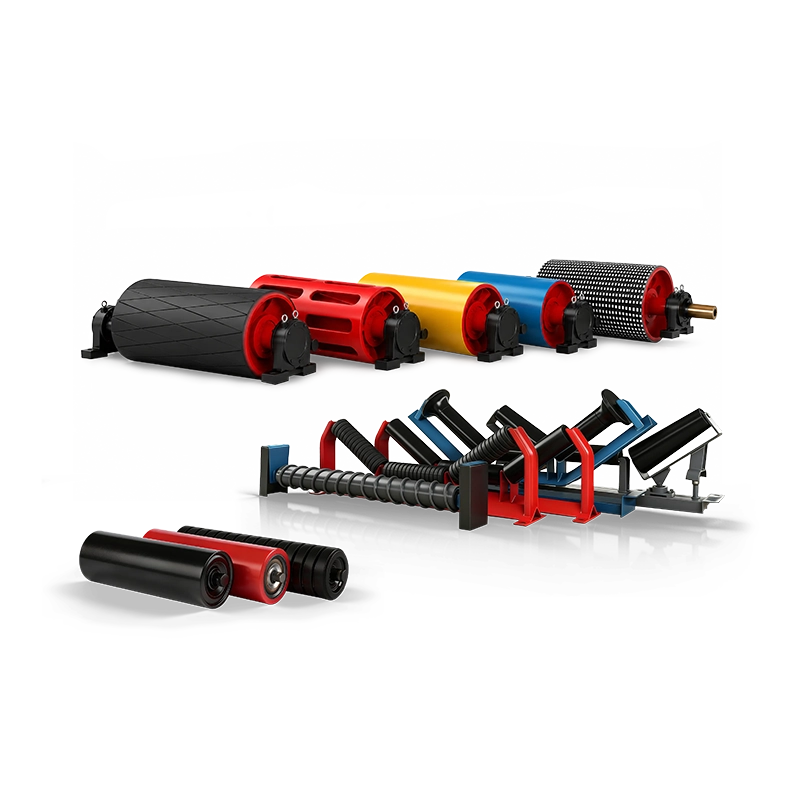
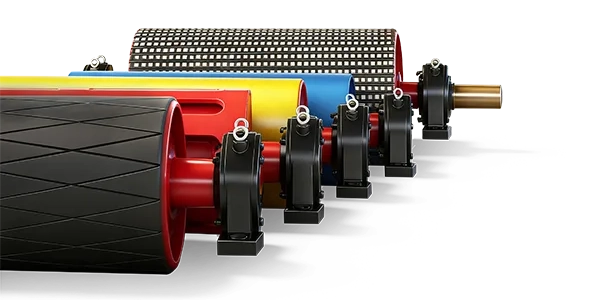
SHENGYUAN supplies conveyor rollers, idlers, pulleys, belts, cleaners, frames, and related components for mining, quarrying, cement, coal handling, ports, steel plants, power stations, and other bulk-material handling applications.
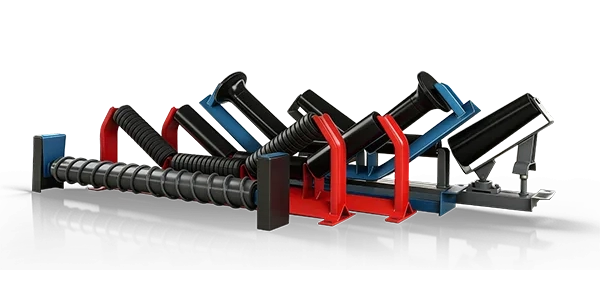
The conveyor roller range includes carrying, return, impact, self-aligning, spiral, HDPE, polyurethane, and other roller configurations for different operating conditions.
For high-dust mining projects, roller specifications can be coordinated around bearing requirements, sealing construction, shaft dimensions, operating speed, load, dust exposure, moisture, and installation compatibility.
Through custom conveyor solutions, replacement rollers and idler assemblies can be specified from customer drawings, existing samples, site measurements, and project operating requirements.
Need conveyor rollers for a high-dust mining site?
Send the roller dimensions, bearing information, belt width and speed, roller type, conveyed material, dust conditions, moisture exposure, ambient temperature, installation drawings, required quantities, and any existing bearing failure history. These details help establish a more suitable sealing specification than simply requesting dustproof rollers.
Conclusion: Buy Verified Bearing Protection, Not Just a Seal Description
High-dust mining environments place demanding requirements on conveyor roller seals. Fine mineral particles, abrasive contamination, water, and repeated operation can shorten bearing life when the sealing arrangement is unsuitable or poorly assembled.
A reliable procurement specification should cover the complete system: seal type, labyrinth geometry, materials, bearing construction, shaft and housing accuracy, lubrication, rotational resistance, and actual exposure conditions.
Supplier comparisons should also consider dimensional compatibility, assembly quality, relevant performance testing, and inspection records. Where failures occur repeatedly, examine the complete roller and its operating environment before changing the seal design alone.
The best conveyor roller sealing system is not necessarily the one with the most sealing stages or the highest advertised protection. It is the complete design that provides reliable bearing protection, acceptable rotational resistance, and proven suitability for the actual mining conditions.