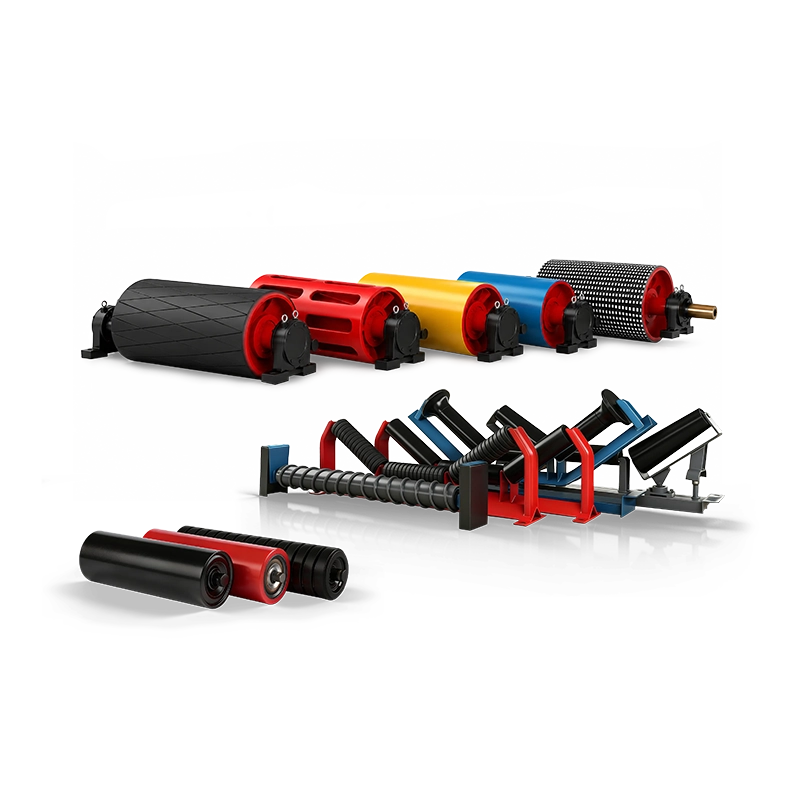

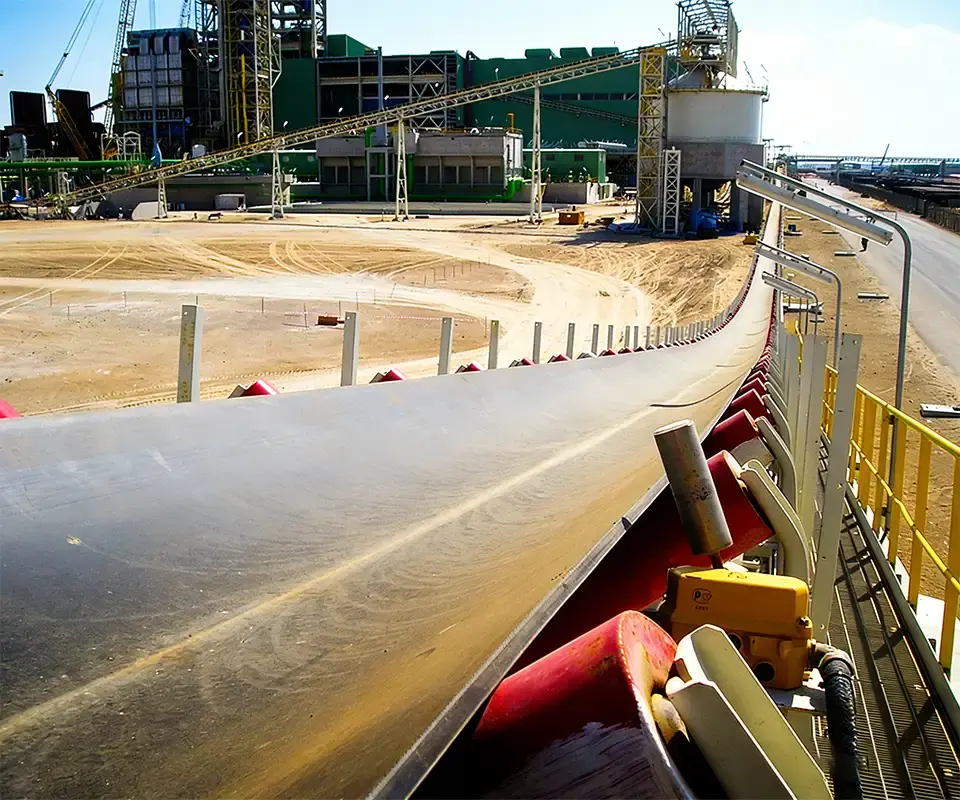
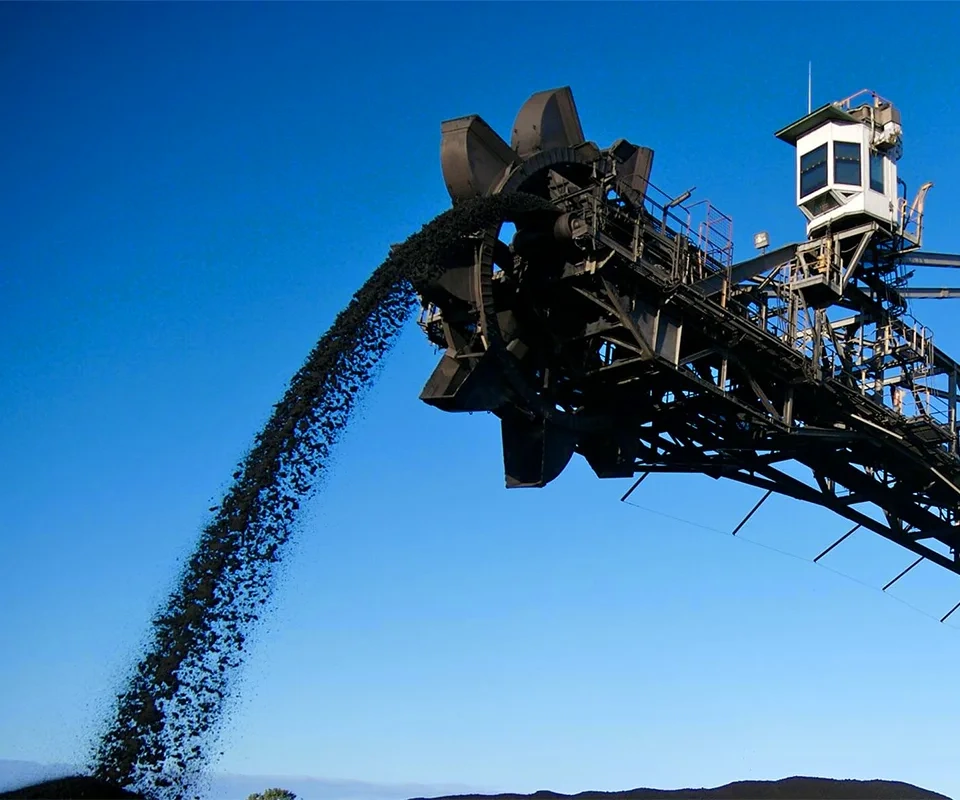
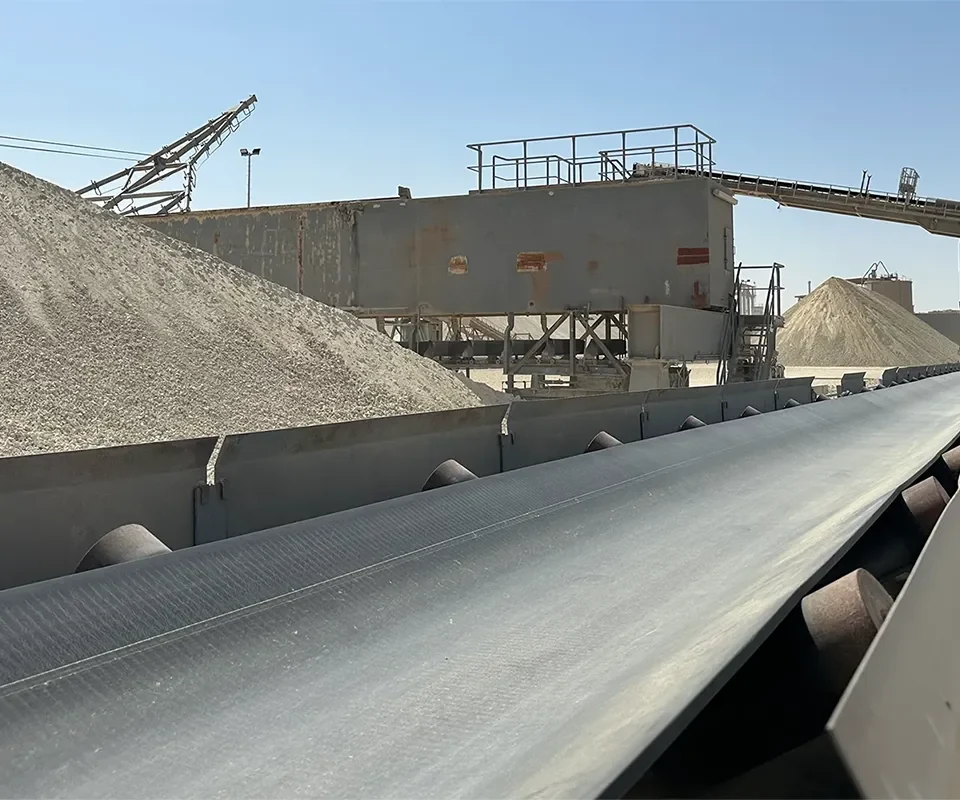
Belt conveyor idlers support the belt, carry the material load, maintain the required belt profile, and help the conveyor operate with controlled resistance. In mining, quarrying, cement, coal handling, ports, power plants, and aggregate processing, one conveyor may contain hundreds or thousands of idler rollers. Their combined performance can influence belt tracking, power consumption, material spillage, belt wear, maintenance frequency, and production continuity.
Idler selection is therefore more complex than choosing a roller diameter and belt width. A heavy-duty conveyor must match the idler type, trough angle, load rating, spacing, roller diameter, tube thickness, shaft strength, bearings, seals, frame construction, and surface protection with the conveyed material and operating environment.
A low-priced idler may reduce the initial purchasing cost, but premature bearing failure, excessive rotational resistance, weak frames, inaccurate dimensions, or poor sealing can create much larger operating costs. The correct objective is not to buy the cheapest idler set. It is to select an idler system that provides reliable belt support at an acceptable cost per operating hour.
This guide explains how to choose belt conveyor idlers for heavy-duty belt conveyors and how to evaluate a supplier before placing an order. It also shows how application-based customization can improve compatibility, service life, and maintenance planning.
Quick answer: Choose heavy-duty belt conveyor idlers by matching the idler type, trough angle, roller spacing, load capacity, roller diameter, tube thickness, shaft, bearings, seals, frame accuracy, and corrosion protection with belt width, belt speed, material density, lump size, impact, moisture, dust, and operating hours.
What Is a Belt Conveyor Idler?
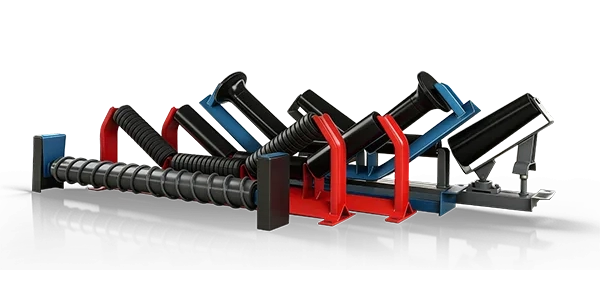
A conveyor roller is an individual rotating component. A conveyor idler normally refers to a complete supporting assembly that includes one or more rollers, a frame, brackets, and mounting points. A three-roll troughing idler, for example, typically contains one centre roller and two wing rollers mounted at an angle to form the belt into a trough.
The trough shape increases the amount of bulk material the belt can carry and helps contain material between the belt edges. Return idlers support the empty belt after discharge, while impact idlers protect the belt at loading areas. Training idlers may be used to respond to developing belt deviation.
The idler system must support both static and dynamic forces. Static load comes from the belt and conveyed material. Dynamic force may result from falling lumps, uneven loading, belt vibration, mistracking, seized rollers, or changing conveyor speed. Heavy-duty selection must consider both conditions.
Start with the Conveyor Application
Idler selection should begin with the conveyor duty rather than a supplier catalogue. A coal conveyor operating outdoors in heavy rain has different requirements from an indoor cement conveyor handling dry powder. An iron ore conveyor carrying large, dense lumps requires stronger rollers and frames than a conveyor transporting a lighter material at the same belt width.
| Application Data | Why It Matters |
| Material and bulk density | Determine the load supported by each idler station. |
| Maximum lump size | Influences impact force, roller diameter, spacing, and loading-zone design. |
| Belt width and speed | Affect roller length, rotational speed, bearing duty, and frame dimensions. |
| Conveyor capacity | Higher throughput can increase material load and dynamic operating forces. |
| Dust, moisture and corrosion | Influence sealing, tube material, coating, bearings, and expected service life. |
Operating hours should also be confirmed. A conveyor running occasionally in a quarry does not have the same life-cycle requirement as a mine or port conveyor operating continuously. The supplier should understand expected daily operating time, maintenance access, shutdown frequency, and spare-part strategy.
Choose the Correct Idler Type
Troughing Carrying Idlers
Troughing idlers support the loaded belt and form it into a carrying profile. Three-roll arrangements are common in heavy-duty bulk handling. The centre roller supports the central load, while the wing rollers raise the belt edges.
Common trough angles include 20, 30, 35, and 45 degrees, although the correct angle depends on belt construction, material characteristics, capacity, loading stability, and conveyor design. A deeper trough can increase carrying capacity, but it may also increase stress near the belt edges and require suitable transition distances.
Impact Idlers
Impact idlers are installed beneath loading and transfer points. Rubber rings or resilient coverings absorb part of the energy created when material falls onto the belt. They help protect the belt carcass, roller shell, bearings, and supporting structure.
Selection should consider lump size, material density, drop height, loading frequency, rubber hardness, shaft strength, bearing capacity, and idler spacing. Severe loading zones may also require impact beds, improved chute geometry, and controlled material flow. Stronger impact idlers cannot fully compensate for a badly designed chute.
Return Idlers
Return idlers support the empty belt after the material has been discharged. Smooth steel rollers are suitable for many clean applications. Rubber-disc return rollers reduce continuous contact with the dirty side of the belt, while spiral return rollers may help disturb certain types of carryback.
The return roller should be selected according to belt cleanliness and material behaviour. Sticky clay, wet coal, fine cement, and abrasive ore do not create the same return-side conditions. Belt cleaners remain the primary carryback-control equipment; special return rollers should support the cleaning system rather than replace it.
Training and Self-Aligning Idlers
Training idlers respond to belt movement and help guide the belt toward its intended path. They can be useful when installed at appropriate positions, but they should not be used to hide a fundamental conveyor problem.
Common root causes of mistracking include off-centre loading, misaligned pulleys, distorted structures, seized rollers, uneven take-up tension, material buildup, damaged belt edges, and incorrect splices. These issues should be corrected before additional training idlers are installed.
Transition Idlers
Transition idlers gradually change the belt from a flat profile at a pulley to the full trough profile used on the carrying section. If this transition occurs over an insufficient distance, the belt edges and central carcass may experience uneven stress.
The required transition arrangement depends on belt width, belt construction, trough angle, pulley position, belt tension, and manufacturer recommendations. Transition idlers should therefore be reviewed together with the belt and pulley layout.
Select the Trough Angle and Idler Arrangement
Trough angle influences conveyor capacity, material stability, belt stress, roller loading, and transition design. A higher angle can carry more material within a given belt width, but it should only be used when the belt and material are suitable.
Fine, free-flowing material may behave differently from large, irregular lumps. The loading chute must place material near the belt centre and within the trough. Off-centre loading creates unequal forces on the wing rollers and is a common cause of belt deviation and material spillage.
Practical principle: Do not increase the trough angle only to gain capacity. Confirm belt flexibility, edge stress, transition distance, material behaviour, idler loading, and loading-chute performance before changing the idler arrangement.
Calculate Idler Load and Spacing
Each idler station supports a section of the belt and material. The load depends on bulk density, material cross-section, belt weight, idler spacing, conveyor incline, and dynamic factors. Wider spacing means that each idler carries a larger portion of the load.
Reducing spacing can improve belt support and limit belt sag, but it increases the number of idlers, installation work, maintenance points, and purchasing cost. The correct spacing balances belt support, loading conditions, roller capacity, and life-cycle cost.
Loading zones normally require closer spacing than standard carrying sections because impact and dynamic loading are greater. Return idlers can often use wider spacing because they support the empty belt, although belt weight, width, tension, and sag must still be considered.
The cumulative effect is important. A conveyor with 1,000 three-roll carrying stations contains 3,000 carrying rollers before return rollers and special idlers are counted. A small increase in rotational resistance or failure rate can therefore create a significant system-wide maintenance and energy impact.
Compare Roller Diameter, Tube and Shaft Construction
Roller Diameter
Roller diameter influences rotational speed, bearing speed, shell strength, belt contact, and service life. At the same belt speed, a larger roller rotates fewer times per minute than a smaller roller. This can reduce bearing rotational cycles, but the larger roller also weighs and costs more.
Diameter should be selected according to belt speed, roller length, load, lump size, project standard, and maintenance requirements. Common sizes alone do not determine suitability for a particular conveyor.
Tube Material and Wall Thickness
Steel is widely used for heavy-duty idler rollers because it provides strong load capacity and stable dimensions. HDPE may be selected where lower weight, corrosion resistance, or reduced operating noise is important. Rubber-covered, polyurethane, and ceramic options may suit impact, wear, or specialized environmental conditions.
Wall thickness must match roller length and load. A thin tube may reduce unit cost but can increase deflection, denting, wear, vibration, and runout. Buyers should confirm actual tube thickness and material rather than compare quotations only by external diameter.
Shaft Strength and Mounting Dimensions
The shaft transfers roller load into the idler frame. Its diameter, material, machining accuracy, bearing seats, and end design must be suitable for the calculated duty.
For replacement projects, buyers should confirm total shaft length, flat dimensions, slot width, thread, shoulder position, and mounting arrangement. A roller can be structurally strong but still be unusable if its shaft ends do not fit the existing frame.
Examine Bearings, Housings and Sealing Systems
Bearings affect load capacity, rotational resistance, temperature, noise, and service life. Selection should consider roller load, belt speed, impact, operating hours, lubrication, internal clearance, and environmental contamination.
Bearing brand is only one factor. Housing accuracy, shaft fit, bearing installation, alignment, grease, and sealing quality are equally important. A recognized bearing installed in an inaccurate housing may still fail prematurely.
Multi-stage labyrinth seals are commonly used in bulk handling because they create a difficult path for dust and water while avoiding excessive contact friction. The exact sealing structure should reflect the environment. Dry cement dust, wet coal, coastal salt air, abrasive ore fines, and washdown conditions create different contamination risks.
Ask the supplier to confirm:
Bearing size, type, clearance and lubrication
Bearing housing material and manufacturing method
Labyrinth seal stages and external protective covers
Suitability for dust, moisture, temperature and corrosion exposure
Check Frame Strength and Manufacturing Accuracy
The frame holds the rollers at the correct position and trough angle. Weak or distorted frames can change roller alignment, create unequal belt support, increase edge loading, and contribute to mistracking.
Buyers should confirm steel section sizes, plate thickness, welding quality, mounting-hole positions, overall dimensions, trough angle, coating, and compatibility with the conveyor structure. Galvanizing or stronger coating systems may be needed for coastal, chemical, fertilizer, salt, or outdoor environments.
For replacement idler sets, frame drawings are particularly important. Small differences in mounting centres, base height, roller position, or trough geometry can create installation delays and belt-profile changes.
Specify Runout and Rotational Performance
Radial runout describes variation in the roller surface as it rotates. Excessive runout can create repeated belt movement, vibration, noise, and uneven loading. Tube straightness, bearing alignment, welding, housing accuracy, and assembly control all influence runout.
Rotational resistance is the force required to turn the roller. On a short conveyor, a small difference may appear unimportant. On a long-distance conveyor with thousands of rollers, the combined effect can influence drive power, belt tension, and energy consumption.
The required performance should be agreed before production and linked to an applicable project standard where necessary. Buyers may also specify noise, axial movement, coating thickness, dimensional tolerance, and water- or dust-resistance testing.
Consider the Operating Environment
Abrasive Material
Review tube wear, shell thickness, impact protection and replacement accessibility.
Wet Conditions
Prioritize effective sealing, corrosion protection and suitable bearing lubrication.
High Temperature
Confirm bearings, grease, seals, rubber parts and coatings for the actual temperature.
Corrosive Sites
Consider HDPE, stainless steel, galvanizing or application-specific protective coatings.
Ambient temperature and material temperature should be stated separately. A conveyor near a furnace may experience high surrounding heat even when the material is cooler. An outdoor conveyor in a cold region may require grease, seals, and materials that remain functional at low temperatures.
How to Compare Idler Suppliers
A professional supplier should ask detailed questions before recommending a product. A quotation based only on belt width and roller diameter may overlook load, speed, impact, sealing, trough angle, mounting dimensions, and environmental conditions.
| Supplier Capability | Questions for the Buyer to Ask |
| Engineering review | Can the supplier review load, speed, spacing, trough angle and operating conditions? |
| Manufacturing control | Are tube processing, shaft machining, bearing assembly, sealing and frame welding controlled? |
| Customization | Can rollers and frames be manufactured from drawings, samples or replacement dimensions? |
| Quality documentation | Can it provide approved drawings, inspection records, markings and packing details? |
| Delivery support | Are lead time, packaging, shipment coordination, warranty and after-sales responsibilities clear? |
Avoid Common Idler Selection Mistakes
Buying by Price Alone
A lower price may reflect thinner tubes, smaller shafts, different bearings, simpler seals, lighter frames, reduced coating, or limited inspection. Quotations should be compared against the same approved specification.
Using One Idler Design Everywhere
Loading zones, carrying sections, transitions, return sections, and tracking positions perform different functions. Excessive standardization may reduce initial purchasing complexity but increase failures in critical sections.
Copying an Old Specification Without Review
Production capacity, belt speed, material type, loading height, or environmental conditions may have changed since the original conveyor was commissioned. A replacement programme is an opportunity to confirm whether the existing design remains suitable.
Ignoring Packaging and Product Identification
Large projects may include several roller lengths, shaft ends, frame types, and trough angles. Weak identification can cause installation errors. Each package should clearly reference the purchase order, drawing number, product type, quantity, and intended conveyor position.
Why Choose SHENGYUAN Belt Conveyor Idlers?
SHENGYUAN, the brand of Hebei Shengwen Mining Machinery Co., Ltd., focuses on conveyor rollers, idlers, pulleys, and related components for heavy-duty bulk material handling. Its products serve mining, coal, cement, aggregate, ports, steel plants, power plants, and industrial conveyor systems.
Complete Roller and Idler Options
The SHENGYUAN conveyor roller range includes carrying rollers, return rollers, impact rollers, guide rollers, self-aligning rollers, spiral return rollers, rubber impact rollers, HDPE rollers, ceramic-covered rollers, conical rollers, and customized heavy-duty products.
Rollers can be supplied individually or assembled with troughing, return, impact, transition, and training frames. This allows customers to source complete idler sets instead of coordinating rollers and structures from unrelated manufacturers.
Drawing-Based Customization
Through its custom conveyor solutions, SHENGYUAN can review customer drawings, samples, existing dimensions, belt information, and operating conditions before production.
Customization may include roller diameter, tube thickness, face length, shaft material, bearing type, sealing structure, shaft ends, trough angle, frame dimensions, steel thickness, rubber-ring arrangement, coating, galvanizing, identification, and packaging.
Factory-Direct Communication
Direct communication between the customer, technical team, and production factory helps reduce dimensional errors and information loss. It is particularly valuable for non-standard replacement idlers, OEM projects, mixed-size orders, and systems where existing drawings are incomplete.
Coordinated Conveyor Component Supply
Idlers can be ordered together with conveyor pulleys, belt cleaners, conveyor belts, frames, and related spare parts. Coordinated sourcing can simplify technical review, inspection, packing lists, container loading, and project documentation.
International Service and Logistics Support
Heavy idler sets and mixed roller orders require secure packaging and clear identification. SHENGYUAN’s customer service and logistics support covers requirement communication, production coordination, finished-product inspection, export packaging, delivery planning, and after-sales assistance.
Why SHENGYUAN can be a strong idler supplier:
SHENGYUAN combines heavy-duty conveyor specialization, factory-direct production, customized roller and frame manufacturing, broad product coverage, coordinated component sourcing, and export-oriented service. It is particularly suitable for mines, cement plants, ports, power plants, steel plants, distributors, EPC contractors, and OEM customers planning repeat or project-based orders.
Information Required for an Accurate Idler Quotation
01. Idler type and installation position
02. Belt width, belt speed and belt construction
03. Conveyor capacity and material bulk density
04. Maximum lump size and loading-drop height
05. Trough angle, roller spacing and frame arrangement
06. Roller diameter, length, tube thickness and shaft dimensions
07. Bearing, sealing, coating and material requirements
08. Dust, moisture, corrosion and temperature conditions
09. Drawings, standards, quantity, inspection scope and delivery date
Conclusion: Select Idlers as Part of the Complete Conveyor System
Heavy-duty belt conveyor idlers should not be selected only by belt width, roller diameter, or unit price. The correct design must account for material load, lump size, belt speed, trough angle, spacing, impact, operating environment, maintenance access, and expected service life.
Roller construction, bearings, seals, shafts, frames, runout, and rotational resistance all influence conveyor performance. Loading-zone idlers, carrying idlers, transition idlers, return idlers, and training idlers should be matched to their individual functions rather than treated as interchangeable components.
The most reliable buying process is to provide complete operating data, compare technically equivalent quotations, approve drawings before production, inspect trial orders, and evaluate total life-cycle cost. For projects requiring factory-direct manufacturing, customized dimensions, mixed idler configurations, or coordinated component sourcing, SHENGYUAN provides a practical solution for heavy-duty conveyor construction and maintenance programmes.
Request a technically accurate idler quotation
Send your belt width, belt speed, conveyor capacity, material data, trough angle, roller spacing, roller and frame drawings, bearing requirements, sealing conditions, operating environment, quantity, and required delivery date. Complete information allows the manufacturer to propose a safer, more durable, and commercially realistic solution.