


One of the most common questions in bulk material handling is: “I need to transport a certain number of tons per hour. What belt width and belt speed should I choose?” The answer cannot be determined from tonnage alone. Belt width, belt speed, material bulk density, maximum lump size, trough angle, conveyor inclination, loading conditions, and operating environment all influence the final conveying capacity.
In practical conveyor selection, belt width determines how much material can be carried across the belt, while belt speed determines how quickly that material moves through the conveyor. A wider belt provides a larger carrying cross-section. A faster belt increases the amount of material transported in a given time. However, increasing either parameter also affects equipment cost, wear, dust generation, impact, rollers, pulleys, drive requirements, and maintenance.
For mining, quarrying, cement, coal handling, power plants, steel plants, ports, and aggregate applications, the correct approach is to convert the required tons per hour into volumetric capacity, check the minimum belt width required by material size, and then compare suitable combinations of belt width and belt speed.
Quick answer: First convert the required tons per hour into cubic metres per hour using the material bulk density. Then compare the required volumetric capacity with suitable belt width and belt speed combinations. Finally, verify maximum lump size, material characteristics, incline, loading impact, belt construction, idlers, pulleys, and operating conditions before confirming the final conveyor specification.
What Is the Relationship Between Belt Width, Belt Speed and Capacity?
The basic relationship is straightforward. Bulk material forms a cross-sectional area on the troughed conveyor belt. The larger this area and the faster the belt moves, the greater the theoretical conveying capacity.
Volumetric capacity: Qv = A × v × 3600
Qv = volumetric conveying capacity in m³/h
A = loaded material cross-sectional area in m²
v = belt speed in m/s
For the same belt width, trough geometry, and loading profile, increasing belt speed increases theoretical capacity approximately in direct proportion. For example, an 800 mm belt can provide approximately 248 m³/h at 1.0 m/s, 310 m³/h at 1.25 m/s, 397 m³/h at 1.6 m/s, 496 m³/h at 2.0 m/s, and 620 m³/h at 2.5 m/s under typical reference conditions.
This demonstrates an important selection principle: conveyor capacity is not determined by belt width alone. The same belt width can deliver very different throughput depending on operating speed and material loading.
Why Tons per Hour Cannot Determine Belt Width Directly
Customers normally describe production requirements in tons per hour, but conveyor carrying capacity is fundamentally related to material volume. This means bulk density must be known before selecting the belt width.
Mass capacity: Qm = Qv × ρ
Qm = mass capacity in t/h
Qv = volumetric capacity in m³/h
ρ = loose bulk density in t/m³
Consider a conveyor required to transport 600 t/h. If the material bulk density is 1.2 t/m³, the conveyor must handle approximately 500 m³/h. If the same 600 t/h material has a bulk density of 2.0 t/m³, the required volume falls to approximately 300 m³/h.
Therefore, asking “What belt width do I need for 600 t/h?” does not provide enough information. The supplier should also ask what material is being transported and what its loose bulk density is.
Typical Belt Width and Belt Speed Capacity Reference
The following values can be used as an initial engineering reference for horizontal bulk material conveying with a typical 35° trough configuration. Actual project capacity should always be verified according to the specific material, loading profile, surcharge angle, inclination, and conveyor configuration.
| Belt Width | 1.0 m/s | 1.25 m/s | 1.6 m/s | 2.0 m/s | 2.5 m/s |
| 500 mm | 87 m³/h | 108 m³/h | 139 m³/h | 174 m³/h | 217 m³/h |
| 650 mm | 159 m³/h | 198 m³/h | 254 m³/h | 318 m³/h | 397 m³/h |
| 800 mm | 248 m³/h | 310 m³/h | 397 m³/h | 496 m³/h | 620 m³/h |
| 1000 mm | 405 m³/h | 507 m³/h | 649 m³/h | 811 m³/h | 1014 m³/h |
| 1200 mm | 593 m³/h | 742 m³/h | 951 m³/h | 1188 m³/h | 1486 m³/h |
| 1400 mm | 825 m³/h | 1032 m³/h | 1321 m³/h | 1652 m³/h | 2065 m³/h |
Should You Choose a Narrower Fast Belt or a Wider Slow Belt?
In many applications, more than one width-speed combination can satisfy the required capacity. This creates an important engineering and commercial decision.
A narrower belt running at a higher speed may reduce belt width, idler length, pulley face width, frame size, and structural weight. This can reduce initial equipment cost. It is often attractive for long-distance conveyors handling relatively uniform material under controlled loading conditions.
However, higher belt speed can increase dust generation, loading and discharge impact, material disturbance, and wear in some applications. Large lumps and irregular material may also become more difficult to control at higher speed.
A wider belt operating at a lower speed usually provides more physical space for the material and may improve handling stability for coarse, abrasive, fragile, wet, or dusty materials. The trade-off is a larger belt, wider rollers, larger pulleys, wider supporting structure, and higher initial component cost.
Practical selection principle: Do not automatically increase belt speed to achieve the required capacity. For coarse, abrasive, fragile, dusty, or difficult-to-control materials, a wider belt operating at a moderate speed may offer better long-term reliability.
Example 1: Selecting a Conveyor for 600 t/h
Assume a customer needs to transport 600 t/h of crushed material with a loose bulk density of 1.2 t/m³.
Required volumetric capacity = 600 ÷ 1.2 = 500 m³/h
An 800 mm belt at 2.0 m/s provides approximately 496 m³/h, which is slightly below the theoretical requirement. Increasing speed to 2.5 m/s raises capacity to approximately 620 m³/h.
Another option is a 1000 mm belt at 1.25 m/s, which provides approximately 507 m³/h. Both options are close to the required capacity, but they have different operating characteristics.
If the material is relatively fine and suitable for faster conveying, the 800 mm belt may be considered. If the material contains larger, abrasive lumps or creates significant dust, the 1000 mm belt operating at a lower speed may provide better stability.
Example 2: Selecting a Conveyor for 1,200 t/h
Now assume a mining conveyor must handle 1,200 t/h of material with a bulk density of 1.5 t/m³.
Required volumetric capacity = 1,200 ÷ 1.5 = 800 m³/h
A 1000 mm belt at 2.0 m/s provides approximately 811 m³/h and therefore satisfies the theoretical volume requirement. A 1200 mm belt at 1.6 m/s provides approximately 951 m³/h and offers additional capacity margin at a lower belt speed.
The 1000 mm option may provide lower initial equipment cost, while the 1200 mm option may offer greater operating margin and improved handling of coarse material. The final decision should consider maximum lump size, conveyor length, material characteristics, loading conditions, and total life-cycle cost.
Example 3: Selecting a Conveyor for 2,000 t/h
Consider a heavy-duty system transporting 2,000 t/h of material with a bulk density of 1.8 t/m³.
Required volumetric capacity = 2,000 ÷ 1.8 ≈ 1,111 m³/h
A 1200 mm belt at 2.0 m/s provides approximately 1,188 m³/h. A 1400 mm belt at 1.6 m/s provides approximately 1,321 m³/h. Both combinations can exceed the theoretical requirement under the reference conditions.
The 1200 mm belt may be more compact and economical, while the 1400 mm option offers greater carrying area at a lower speed. If the conveyor handles large-lump ore, wet material, or highly abrasive rock, the wider option may be worth considering despite its higher initial cost.
Maximum Lump Size Must Be Checked Separately
A belt can satisfy the capacity requirement and still be too narrow for the maximum material size. This is one of the most common mistakes when selecting a conveyor from tons per hour alone.
As a practical reference, maximum lump sizes of approximately 100, 150, 200, 300, and 350 mm correspond to minimum starting belt widths of about 500, 650, 800, 1000, and 1200 mm respectively. A 1400 mm belt also remains within the 350 mm maximum-lump category in this reference range.
For example, an 800 mm belt running at a high speed may theoretically provide enough capacity for a project. If the conveyor must regularly handle 250 mm rock, however, an 800 mm belt should not be selected purely because the capacity calculation passes.
Correct selection sequence: Check maximum lump size → calculate required volumetric capacity → compare belt width and belt speed combinations → evaluate material and operating conditions → confirm the complete conveyor system.
How Trough Angle Influences Conveyor Capacity
Troughing idlers shape the belt into a carrying profile and allow it to hold more bulk material than a flat belt of the same width. A 35° trough angle is widely used in general heavy-duty bulk material conveyor applications.
Changing trough angle changes the material cross-sectional area and therefore affects theoretical capacity. However, increasing trough angle should not be treated as a simple way to increase tonnage. Belt flexibility, edge tension, transition distance, material flow behaviour, idler loading, and chute design should also be considered.
The belt, idler frame, transition idlers, pulleys, and loading zone must work as a coordinated system. A capacity increase achieved at one point in the conveyor should not create excessive stress somewhere else.
How Conveyor Inclination Affects Capacity
Horizontal conveyor capacity values should not be copied directly to inclined conveyors without additional review. As conveyor inclination increases, the stability of the material on the belt becomes more important.
Material with rounded particles, low internal friction, high moisture, or irregular large lumps may behave differently on an inclined belt. Depending on the application, the designer may need to apply a capacity correction, reduce belt speed, increase width, change belt surface, or use a specialized belt construction.
How Material Characteristics Affect Belt Speed
Higher belt speeds are often useful for long-distance and high-capacity conveyors, but not every material is suitable for high-speed operation.
| Material Condition | Typical Speed Consideration |
| Fine and uniform material | Higher speed may be practical with good loading and dust control. |
| Large lumps | Moderate speed can improve material stability and reduce impact severity. |
| Abrasive material | Speed should be reviewed carefully because wear may increase. |
| Dusty material | Lower speed may help reduce dust at transfer and discharge points. |
| Fragile material | Lower speed may reduce degradation at transfer points. |
A Practical Selection Process for Tons per Hour
01. Define normal and peak capacity requirements in t/h.
02. Confirm the loose bulk density of the material.
03. Convert required t/h into m³/h.
04. Check maximum lump size to establish the minimum belt width.
05. Compare several realistic belt-width and speed combinations.
06. Review abrasiveness, moisture, dust, fragility, and particle shape.
07. Check inclination, trough angle, chute design, and impact conditions.
08. Match belt width with rollers, idlers, pulleys, cleaners, and structure.
09. Confirm drive power, tension, operating margin, and life-cycle cost.
Common Belt Width and Speed Selection Mistakes
Selecting Belt Width from Tons per Hour Alone
Without bulk density, tons per hour does not indicate how much volume must physically fit on the conveyor. Always convert mass throughput into volumetric capacity.
Using High Speed to Compensate for an Undersized Belt
Higher speed can increase capacity, but it cannot solve every design problem. If the belt is too narrow for the maximum lump size or loading conditions, simply increasing speed may make operation less stable.
Ignoring Peak Production
A conveyor designed only for average plant output may overload during short production surges. Buyers should provide both normal and peak throughput requirements whenever possible.
Choosing an Oversized Belt Without Considering Total Cost
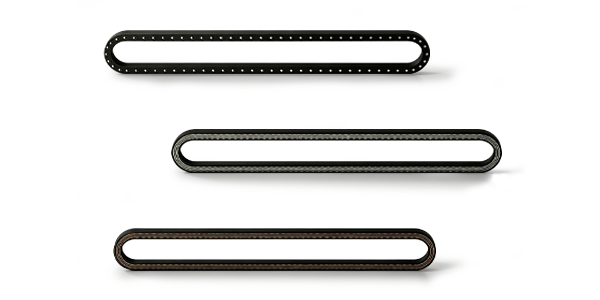
A wider belt creates additional operating margin, but unnecessary oversizing increases the cost of the belt, rollers, idler frames, pulleys, cleaners, steel structure, drive equipment, and replacement parts. The goal is not to select the widest belt possible, but to identify the most economical width-speed combination that provides reliable operation.
Why the Complete Conveyor System Matters
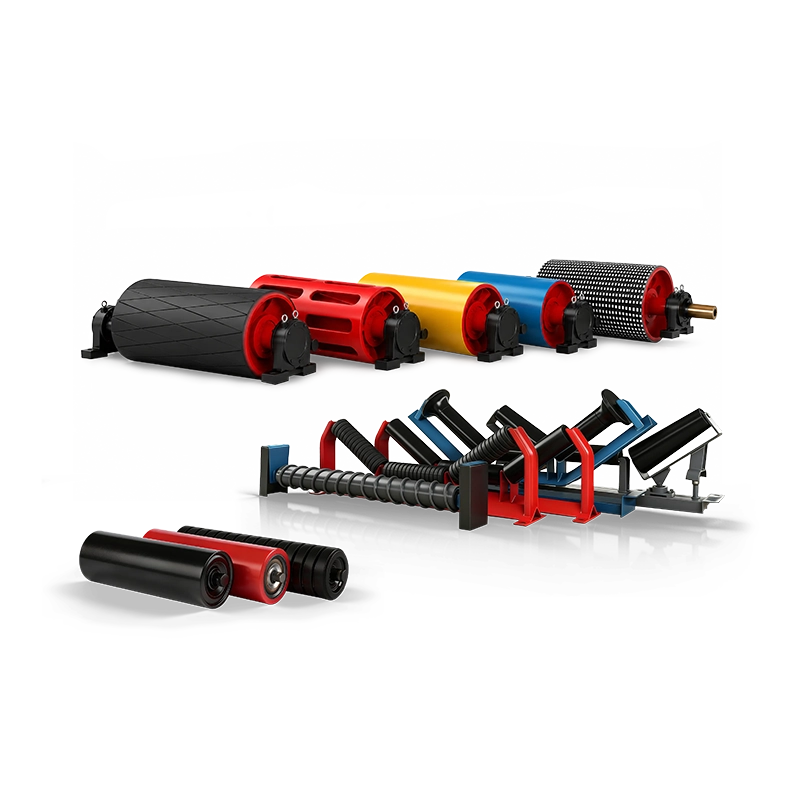
SHENGYUAN focuses on heavy-duty conveyor components for mining, quarrying, cement, coal handling, ports, power plants, steel plants, and other bulk material handling applications.
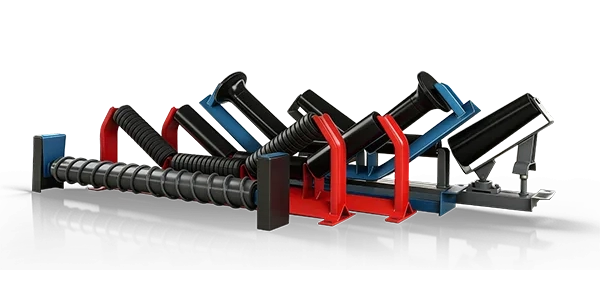
Selecting a wider belt affects more than the conveyor belt itself. The supporting conveyor rollers and idlers must match the belt width, loading conditions, trough configuration, and required carrying capacity.
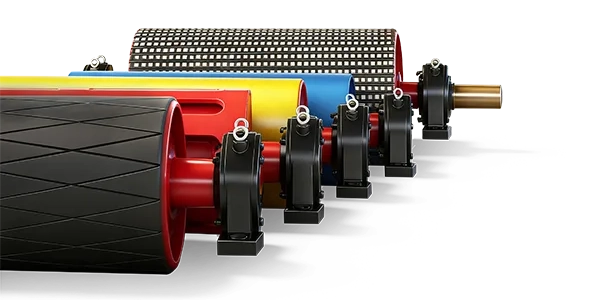
The conveyor pulleys must also be selected according to belt width, belt tension, drive torque, wrap angle, shaft load, bearing arrangement, and operating environment. Increasing belt width or capacity may require larger pulley face widths, heavier shafts, different bearing configurations, or upgraded lagging.
For projects where standard configurations are not suitable, SHENGYUAN provides custom conveyor component solutions based on drawings, material conditions, belt data, operating requirements, and project specifications.
This coordinated approach is particularly useful for mining companies, EPC contractors, equipment manufacturers, distributors, and maintenance teams upgrading an existing conveyor. Instead of changing the belt width without checking surrounding components, the belt, rollers, pulleys, frames, cleaners, and drive requirements can be reviewed together.
Information to provide for conveyor selection:
Required normal and peak capacity, material name, loose bulk density, maximum lump size, particle-size distribution, conveyor length, lift height, inclination, expected belt speed, trough angle, operating hours, temperature, moisture, abrasiveness, dust conditions, loading height, existing belt dimensions, and drawings where available.
Conclusion: Choose the Right Width-Speed Combination, Not Just a Belt Size
The relationship between belt width, belt speed, and conveyor capacity can be summarized clearly: a wider belt increases the available material cross-section, while a faster belt moves that cross-section more quickly. Both can increase throughput, but neither parameter should be selected independently.
When a customer provides a capacity requirement in tons per hour, the first step is to convert it into cubic metres per hour using the material bulk density. Maximum lump size should then establish the minimum practical belt width. Several width-speed combinations can subsequently be compared according to operating conditions and project economics.
The final selection should consider material size, abrasiveness, dust, moisture, inclination, trough angle, impact, peak capacity, belt construction, rollers, pulleys, cleaners, drive power, and total life-cycle cost. For many heavy-duty applications, the most reliable conveyor is not the narrowest belt operating at the highest possible speed, but the combination that provides sufficient capacity with stable material handling and long-term component reliability.