

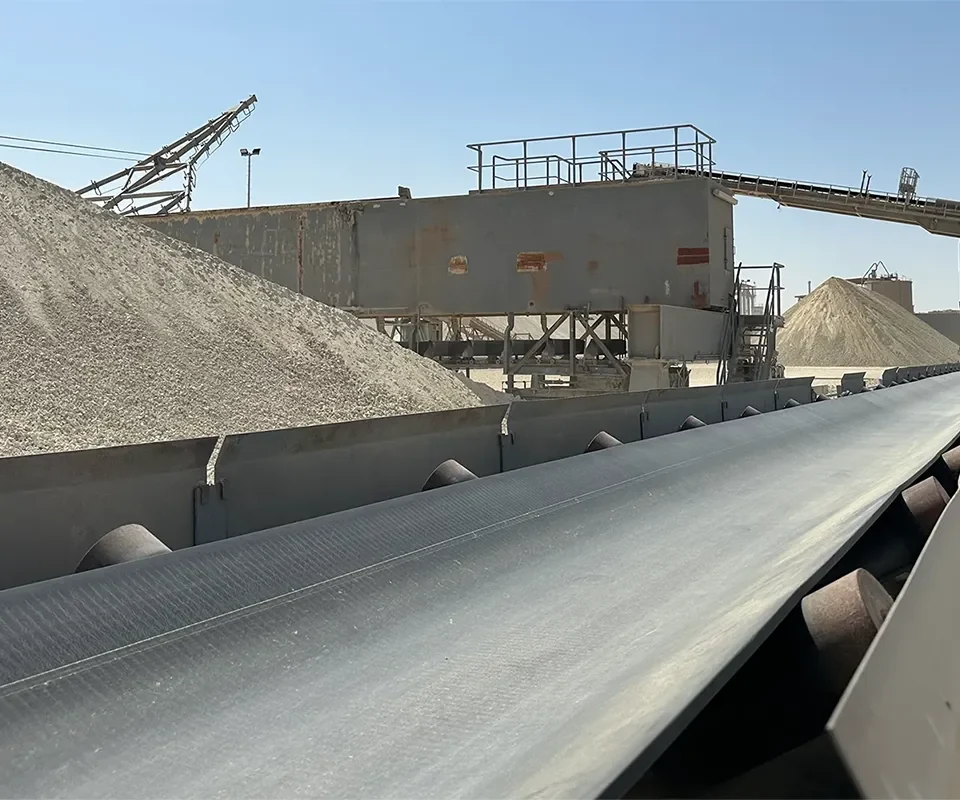
Maximum lump size is one of the first parameters that should be checked when selecting the belt width of a bulk material conveyor. If the belt is too narrow for the largest pieces of material, large lumps can become unstable on the belt, strike skirt boards, create uneven loading, increase spillage, and contribute to belt mistracking or impact damage. On the other hand, selecting an unnecessarily wide belt increases the cost of the belt, idlers, pulleys, frames, drive system, and supporting structure.
For mining, coal, aggregate, cement, quarry, port, and power plant applications, belt width should therefore be selected through a two-stage process. First, determine the minimum width required by the maximum lump size. Second, verify that this width also satisfies capacity, belt speed, material characteristics, loading conditions, and conveyor layout requirements.
The DTII(A)-based training selection table provides a practical starting point: belt widths of 500, 650, 800, 1000, 1200, and 1400 mm correspond to maximum lump sizes of approximately 100, 150, 200, 300, 350, and 350 mm respectively. In this table, lump size means the maximum linear dimension of the material.
Quick answer: If the maximum lump size is 100 mm, start with at least a 500 mm belt; 150 mm generally requires 650 mm; 200 mm requires 800 mm; 300 mm requires 1000 mm; and lumps up to 350 mm require at least 1200 mm according to the referenced selection table. Belt width must then be checked again against required conveying capacity, belt speed, material distribution, impact conditions, and the complete conveyor design.
Maximum Lump Size and Belt Width Selection Table
| Maximum Lump Size | Minimum Belt Width from the Table | Typical Selection Interpretation |
| ≤100 mm | 500 mm | Suitable as the first screening width where required capacity is relatively low. |
| ≤150 mm | 650 mm | Common starting point for medium-sized bulk material. |
| ≤200 mm | 800 mm | Suitable starting width for larger coal, ore, stone, or aggregate lumps. |
| ≤300 mm | 1000 mm | Moves selection into a heavier bulk-handling conveyor class. |
| ≤350 mm | 1200 mm | Minimum table selection; capacity may justify a wider belt. |
| ≤350 mm | 1400 mm | Provides additional capacity, but does not increase the table’s maximum lump size beyond 350 mm. |
Important: This table is best used as an initial screening tool. It does not mean that maximum lump size is the only parameter used to determine belt width.
Step 1: Measure the Maximum Lump Correctly
The first mistake in belt-width selection is often an incorrect definition of material size. Maximum lump size should refer to the largest linear dimension of the material, not its average particle size. A piece of rock measuring approximately 260 × 170 × 120 mm should therefore be treated as having a maximum lump size of about 260 mm for this initial selection method.
This distinction matters because bulk material streams rarely contain particles of one uniform size. A crusher discharge described as “0–150 mm” may contain a large percentage of fine particles together with occasional pieces approaching 150 mm. Conveyor design must accommodate the largest expected pieces, not just the average size.
For existing plants, measurements should be taken under real operating conditions. If oversize material occasionally bypasses a screen or crusher, this abnormal but realistic operating condition should be discussed with the conveyor designer instead of being ignored.
Step 2: Use Maximum Lump Size to Establish the Minimum Belt Width
Once the maximum linear dimension is known, the table can be used to identify the first candidate belt width.
Example: 90 mm Lump
The material is below the 100 mm limit. A 500 mm belt passes the initial lump-size check.
Example: 130 mm Lump
A 500 mm belt is no longer the table selection. The first suitable width becomes 650 mm.
Example: 180 mm Lump
The table indicates a minimum belt width of 800 mm.
The same method applies to larger material. A maximum lump of 260 mm moves the initial selection to a 1000 mm belt, while a 320 mm lump requires at least a 1200 mm belt according to the table.
The 1200 mm and 1400 mm entries are particularly important: both show a maximum lump size of 350 mm. Therefore, moving from 1200 to 1400 mm in this table increases available belt width and potential carrying capacity, but does not automatically authorize material larger than 350 mm.
What If the Maximum Lump Is Larger Than 350 mm?
If the material exceeds the 350 mm limit shown in the referenced table, the correct response is not simply to assume that the next standard belt width will solve the problem. The provided table does not define the allowable lump size for 1600, 1800, or wider belts.
Instead, the conveyor should receive an application-specific engineering review. Possible solutions may include selecting a wider conveyor after calculation, reducing maximum lump size with upstream crushing or screening, modifying the loading chute, reducing impact height, or redesigning the material transfer arrangement.
Example: If a quarry regularly handles 360–400 mm rock, the 500–1400 mm selection table is no longer sufficient for final belt sizing. The project should move from simple table selection to engineering calculation.
Step 3: Verify the Required Conveyor Capacity
Passing the lump-size check does not mean the selected belt is wide enough for the required tonnage. A 100 mm maximum lump may technically fit the 500 mm table criterion, but a high-capacity mine may still require an 800, 1000, 1200 mm, or wider belt.
Capacity depends on belt width, belt speed, trough geometry, material cross-section, bulk density, incline, and loading conditions. The training material, for example, provides a separate capacity table based on horizontal conveying, a 20° dynamic surcharge angle, and a 35° idler trough angle, demonstrating why belt width and belt speed must be evaluated together rather than independently.
Selection logic: Lump size establishes a minimum acceptable belt width. Required capacity may force you to select a wider belt than that minimum.
Step 4: Consider Belt Speed and Material Size Together
Increasing belt speed is one way to increase conveyor capacity, but it is not always the best solution when the conveyed material contains large lumps. The course material identifies common belt speeds including 0.8, 1.0, 1.25, 1.6, 2.0, 2.5, and 3.15 m/s and specifically recommends lower speeds for coarse, abrasive, fragile, or dust-generating materials.
This is an important commercial design decision. Suppose increasing throughput can be achieved either by keeping a narrow belt and increasing speed or by selecting a wider belt at a more moderate speed. With large, abrasive rock, the wider and slower solution may provide better material stability and lower impact severity, although the final decision requires conveyor calculations.
Higher speed can increase the frequency of material impact at loading and discharge points, accelerate wear in certain applications, and make uncontrolled large lumps more difficult to manage. Therefore, belt width and belt speed should always be reviewed as a pair.
Step 5: Consider Material Shape, Not Only Nominal Size
Two materials with the same 200 mm maximum dimension may behave very differently. Rounded coal lumps can settle relatively predictably, while long, flat, or sharp rock pieces may rotate, bridge against skirt plates, or contact the belt at concentrated points.
Irregular material therefore deserves additional design margin. Sharp ore, blasted rock, clinker, scrap-like material, and similarly difficult products may require greater attention to belt cover grade, loading-zone support, skirt design, impact idlers, and chute geometry even when the nominal lump size remains within the table limit.
Step 6: Check the Percentage of Large Lumps
Maximum lump size tells the designer the largest expected piece, but it does not describe the complete particle-size distribution. A stream consisting mostly of fines with occasional 200 mm lumps behaves differently from material where a large proportion of the load consists of 150–200 mm rock.
When coarse lumps make up a significant percentage of the material, they require more physical space on the belt and can create greater dynamic loading. In such cases, selecting only the absolute minimum width from the table may not provide the best operating margin.
A professional RFQ should therefore include both maximum lump size and, where available, a particle-size distribution or a simple description of the percentage of coarse material.
Step 7: Evaluate the Loading Zone
Large lumps usually create their greatest mechanical stress where they enter the conveyor. A 250 mm piece falling 200 mm onto the belt does not create the same impact as the same piece falling several metres through an uncontrolled transfer chute.
The loading system should guide material toward the centre of the belt and reduce unnecessary vertical impact. Off-centre loading is particularly damaging because it places uneven force on the belt and idlers and can initiate mistracking immediately after the loading zone.
Large-lump conveyors may therefore require more robust impact rollers or impact beds, closer support spacing, stronger skirt arrangements, and improved chute design. Selecting a wider belt without correcting poor loading geometry does not solve the underlying problem.
Step 8: Match the Belt with Idlers and Pulleys
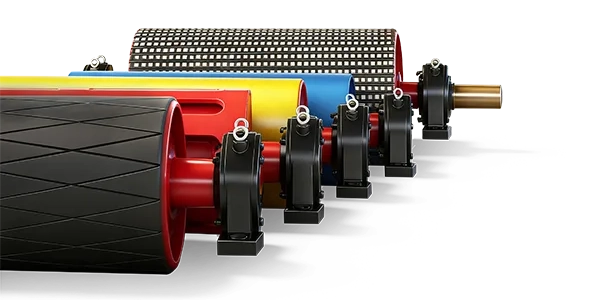
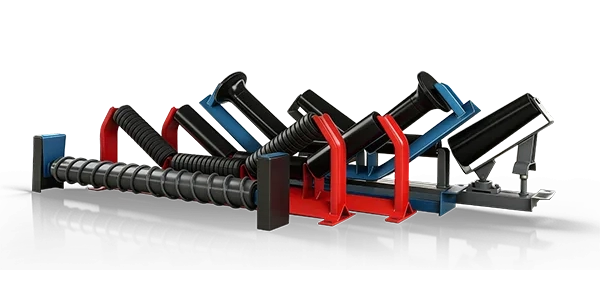
Increasing belt width changes much more than the rubber belt itself. The idler dimensions, frame width, pulley face width, shaft loads, conveyor structure, cleaners, loading chute, and sometimes drive requirements must also be reconsidered.
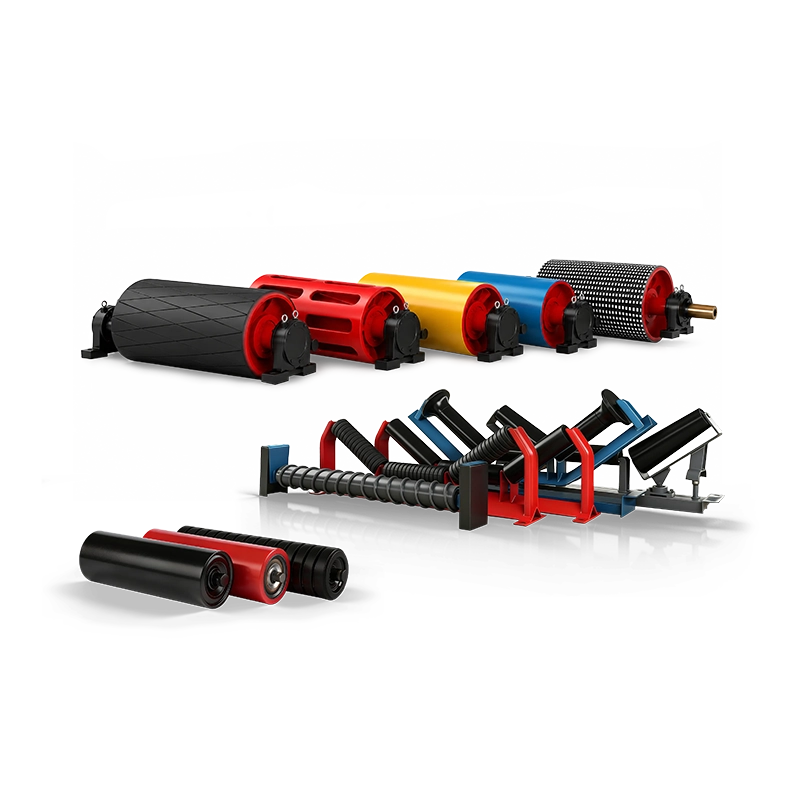
For this reason, belt selection should be treated as part of the complete conveyor system. SHENGYUAN focuses on heavy-duty bulk material handling components and supplies conveyor belts together with rollers, pulleys, and idler-related solutions.
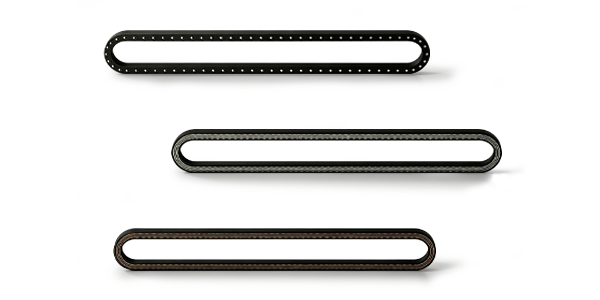
The company’s conveyor belt range covers applications in mining, coal, cement, aggregates, power plants, ports, terminals, and other bulk material handling systems, with belt selection based on factors such as material, capacity, conveyor length, incline, temperature, and safety requirements.
A Practical Belt Width Selection Workflow
01. Determine the maximum linear dimension of the material.
02. Use the lump-size table to establish the minimum candidate belt width.
03. Calculate required capacity using material bulk density and target throughput.
04. Select a suitable belt speed for the material characteristics.
05. Review the percentage, shape, and abrasiveness of large lumps.
06. Check loading height, chute geometry, and impact conditions.
07. Verify trough angle, idler spacing, belt sag, and transition requirements.
08. Match pulley face widths and related conveyor components.
09. Confirm the final belt specification through system-level engineering review.
Example 1: Crushed Stone with a Maximum Lump Size of 180 mm
Assume a quarry needs to transport crushed stone with a maximum linear dimension of 180 mm. According to the selection table, 650 mm is limited to 150 mm lumps, so it should not be the initial selection. The next width, 800 mm, permits a maximum lump size of 200 mm and therefore passes the first screening check.
However, the engineering process should not stop at 800 mm. If production requires high tonnage, or if a large percentage of the material is close to 180 mm, capacity and loading calculations may justify selecting 1000 mm instead. In other words, 800 mm is the minimum based on lump size, not necessarily the final optimum width.
Example 2: Iron Ore with a Maximum Lump Size of 280 mm
For iron ore with a maximum lump size of 280 mm, an 800 mm belt does not satisfy the 200 mm table limit. The 1000 mm belt, with a maximum lump-size value of 300 mm, becomes the minimum candidate.
Because iron ore can also be dense and abrasive, the buyer should then review tonnage, loading height, belt cover properties, impact support, idler strength, and belt speed. A 1200 mm belt may ultimately be more appropriate where required throughput is high even though the lump-size table alone points to 1000 mm.
Example 3: 320 mm Limestone for a High-Capacity Plant
A limestone conveyor handling lumps up to 320 mm requires at least a 1200 mm belt according to the table because the 1000 mm width is associated with a maximum lump size of 300 mm.
Both 1200 and 1400 mm widths remain within the 350 mm maximum-lump category. Therefore, the decision between them should be driven mainly by capacity, belt speed, material cross-section, operating margin, structure, and total project economics rather than by maximum lump size alone.
Common Mistakes When Selecting Belt Width
Selecting Only by Tonnes per Hour
A capacity calculation may indicate that a narrow high-speed belt can theoretically carry the required tonnage. If the material contains large lumps, however, that narrow belt may still be unsuitable from a physical handling perspective.
Selecting Only by Maximum Lump Size
The opposite mistake is equally common. A 500 mm belt may satisfy a 90 mm lump-size criterion but still be much too small for the required capacity. Both checks are mandatory.
Ignoring Occasional Oversize Material
Occasional oversize lumps can cause some of the most severe operating problems. If crusher bypasses, screen failures, or abnormal feed conditions can realistically produce larger pieces, the designer should know this before the conveyor is specified.
Increasing Speed Instead of Reviewing Belt Width
Higher belt speed can increase capacity, but coarse, abrasive, fragile, and dust-generating materials often favour more moderate speeds. Capacity optimization should consider both width and speed rather than automatically increasing speed.
Why Work with SHENGYUAN on Belt Selection?
A major advantage of working with a conveyor component specialist is the ability to consider more than the belt itself. SHENGYUAN states that it can support belt selection together with rollers, pulleys, idler sets, and belt cleaners, helping buyers evaluate the components that directly influence belt operation and service life.
For example, moving from an 800 mm belt to a 1200 mm belt may also change roller dimensions, idler frames, pulley face width, cleaner width, structural dimensions, and potentially the drive requirement. Coordinating these details reduces the risk of purchasing individually correct components that do not work together as a complete system.
Through its custom solutions, SHENGYUAN focuses on tailored heavy-duty conveyor component applications rather than limiting buyers to one fixed catalogue configuration.
Customers selecting a belt can also evaluate the supporting conveyor rollers required for heavy loads, impact zones, dust, moisture, abrasion, and other demanding bulk material handling conditions.
For a more accurate belt-width recommendation, provide:
Maximum lump size, particle-size distribution, bulk density, required capacity, belt speed, conveyor length, lift height, incline, material temperature, moisture, abrasiveness, loading height, current belt width, trough angle, pulley data, and drawings where available.
Conclusion: Maximum Lump Size Sets the Starting Point, Not the Final Answer
Maximum lump size provides a simple and useful first filter for belt-width selection. Based on the referenced table, 100, 150, 200, 300, and 350 mm maximum lumps correspond to minimum starting belt widths of approximately 500, 650, 800, 1000, and 1200 mm. A 1400 mm belt remains within the same 350 mm maximum-lump category in that table.
The final belt width must then be verified against capacity, belt speed, bulk density, particle-size distribution, material shape, loading impact, trough geometry, idler arrangement, pulley dimensions, and the complete conveyor operating environment.
The most important purchasing principle is therefore simple: do not choose belt width from only one number. Use maximum lump size to establish the minimum acceptable width, then complete the engineering calculation to determine the belt that provides the best combination of capacity, reliability, safety, and life-cycle cost.