
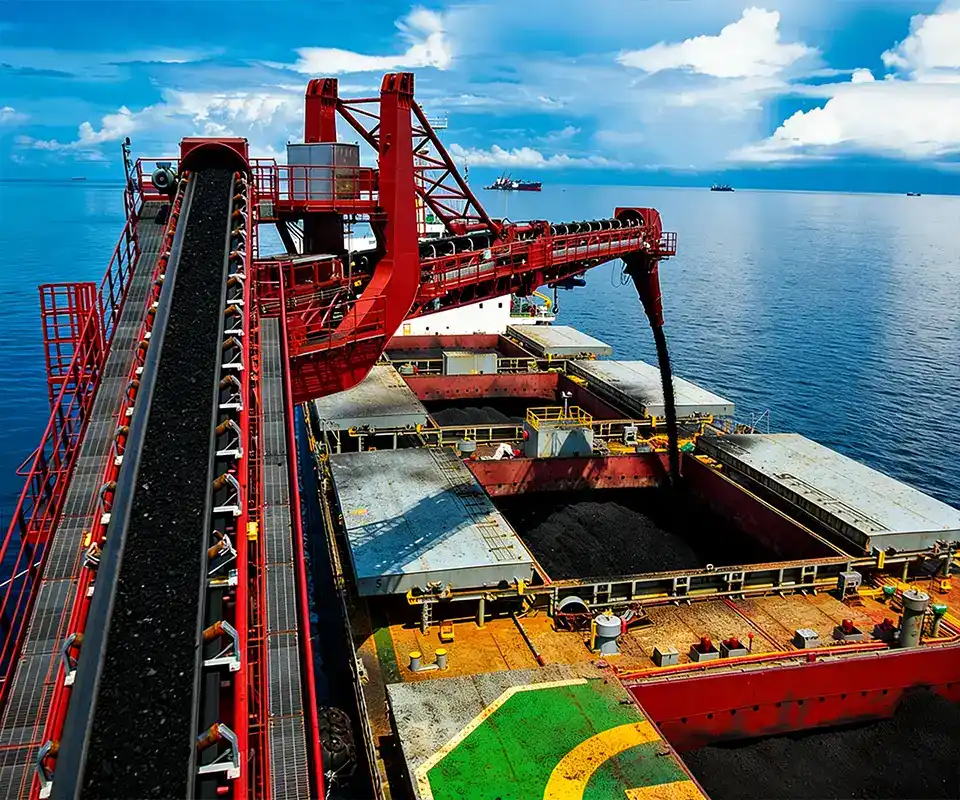
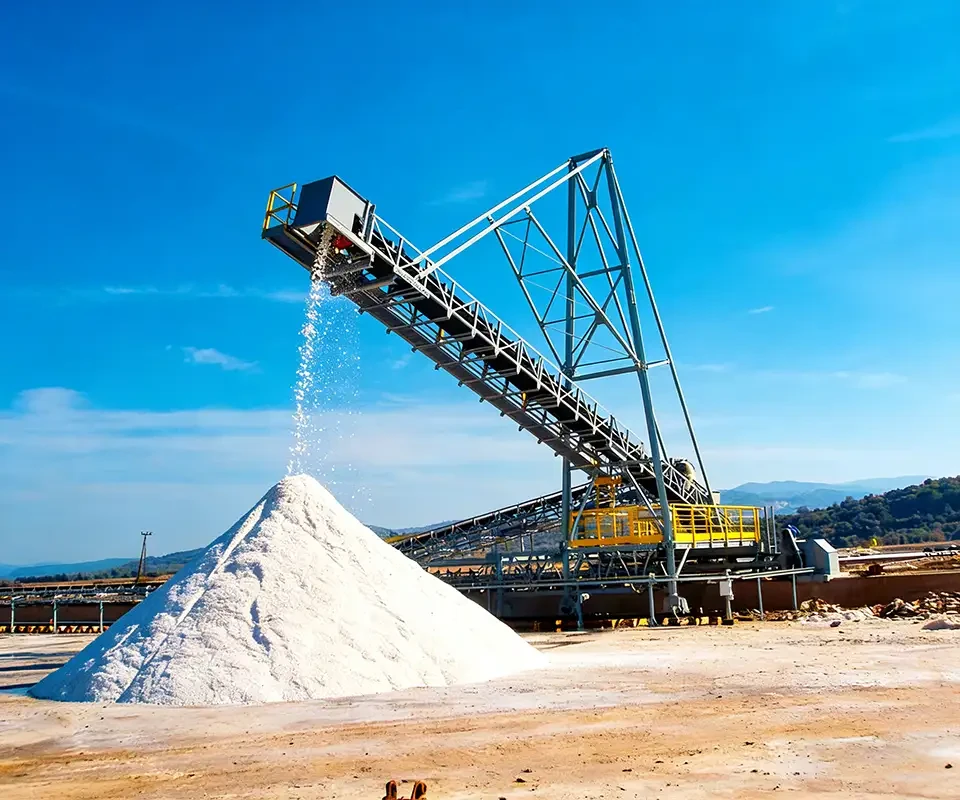
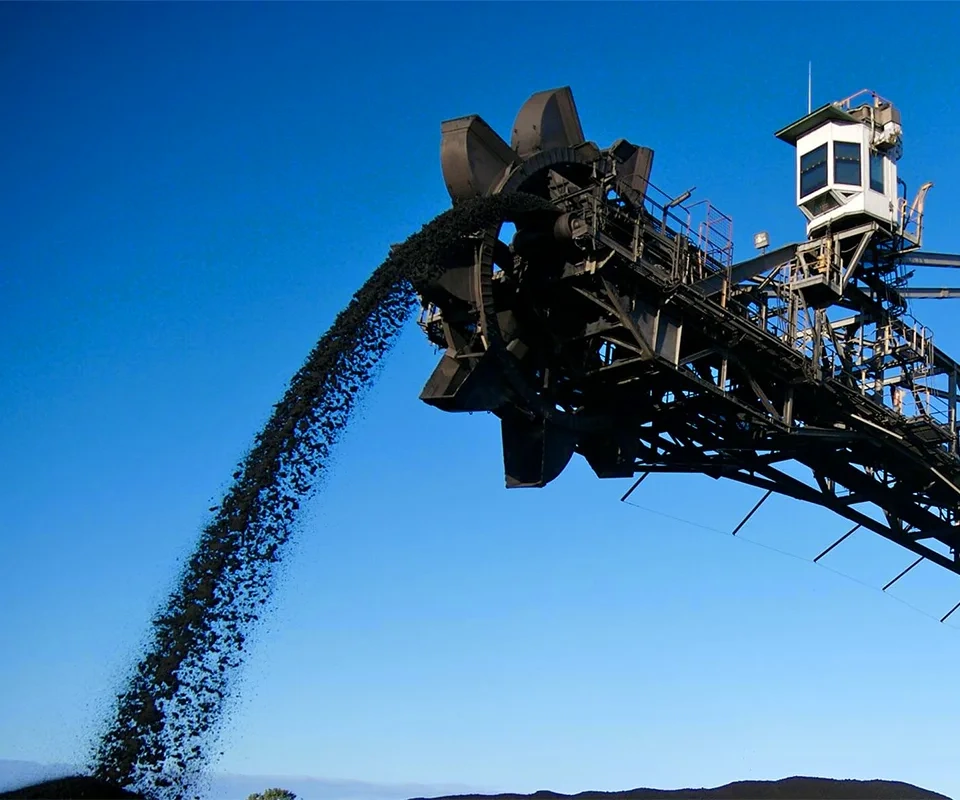
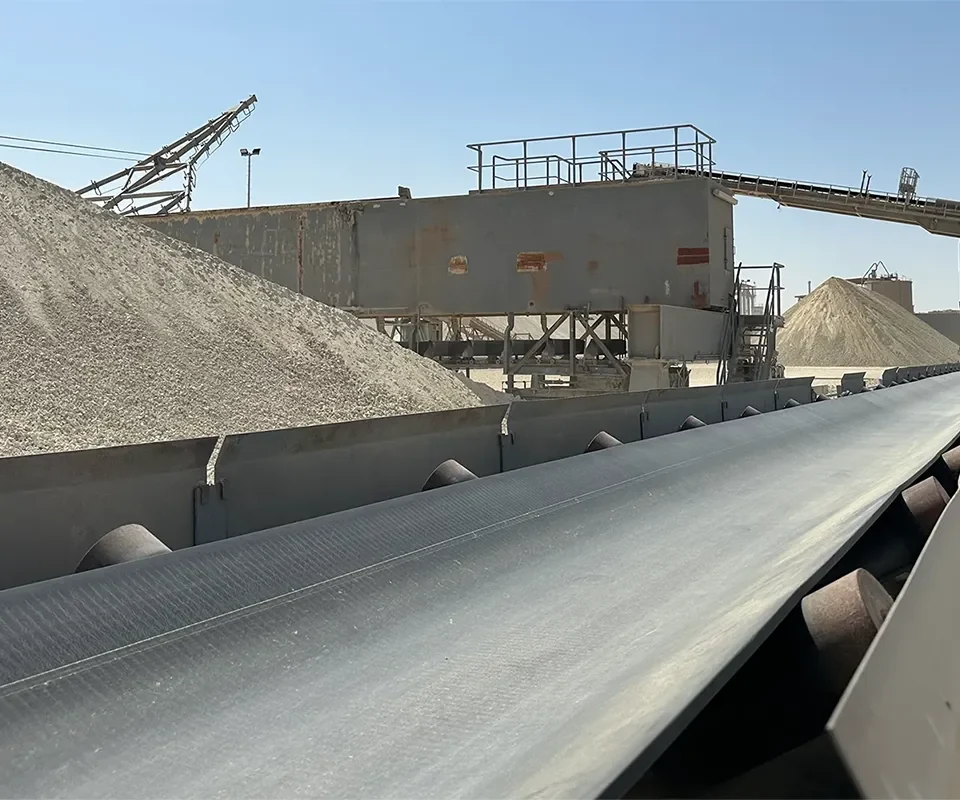
A belt conveyor may appear simple from a distance: a continuous belt moves material from one point to another. In reality, a reliable industrial conveyor is a coordinated mechanical system made up of many components. The conveyor belt carries the material, the drive system provides power, pulleys guide and transmit tension, idlers support the belt, the take-up system maintains tension, and structures, chutes, cleaners, and protection devices keep the system operating safely and efficiently.
In mining, quarrying, cement, coal handling, ports, steel plants, power stations, and other bulk material applications, understanding these components is important for equipment selection, maintenance, spare-parts planning, and troubleshooting. A failure in one relatively small component can affect the entire conveyor. A damaged roller, poorly selected pulley, ineffective cleaner, or incorrect take-up setting may eventually cause belt mistracking, spillage, abnormal wear, or an unplanned shutdown.
Quick answer: A typical belt conveyor consists of the conveyor belt, drive unit, drive and non-drive pulleys, carrying and return idlers, take-up system, head and tail structures, intermediate frames, loading hopper, transfer and loading chutes, belt cleaners, discharge equipment, and safety or monitoring devices. These components must be selected as one system rather than as independent parts.
Main Components of a Belt Conveyor at a Glance
| Component | Main Function | Why It Matters |
| Conveyor Belt | Carries bulk material | Determines load capacity, wear resistance, and material compatibility |
| Drive Unit | Provides mechanical power | Controls starting, operating speed, and available drive torque |
| Conveyor Pulleys | Drive, redirect, and tension the belt | Critical to traction, belt tension, tracking, and belt life |
| Idlers and Rollers | Support the loaded and return belt | Influence resistance, belt shape, tracking, impact protection, and maintenance |
| Take-Up System | Maintains adequate belt tension | Helps prevent drive slip and excessive belt sag |
| Frames and Structure | Support conveyor components | Maintains alignment and structural stability |
| Hoppers and Chutes | Control material loading and transfer | Affects impact, dust, spillage, wear, and belt tracking |
| Belt Cleaners | Remove carryback from the belt | Reduces buildup, contamination, and maintenance |
| Protection Devices | Monitor abnormal operating conditions | Helps protect personnel, belt, drive, and mechanical equipment |
1. Conveyor Belt: The Main Carrying Component
The conveyor belt forms the continuous carrying surface of the system. It supports the material and transfers the drive force generated at the drive pulley throughout the conveyor.
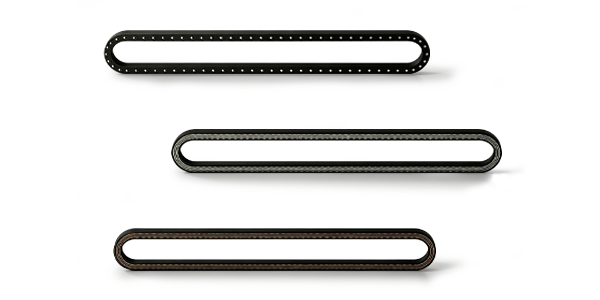
Different applications require different belt constructions. Fabric belts are widely used in general mining, aggregate, cement, and industrial conveying. Steel-cord belts are commonly considered for long-distance, high-tension, or high-capacity systems. Special belts may be required for heat, flame, oil, chemicals, cold environments, steep inclines, or difficult material containment.
Selecting the belt requires more than choosing a width. Engineers should consider capacity, maximum lump size, belt speed, tension, conveyor length, lift height, material temperature, abrasion, impact, splice method, and pulley diameter.
SHENGYUAN supplies conveyor belt solutions for heavy-duty bulk material applications, allowing the belt specification to be coordinated with the surrounding rollers, pulleys, and other conveyor components.
2. Drive Unit: Where Conveyor Power Comes From
The drive system generates the mechanical power required to move the belt and its load. A typical industrial drive arrangement may include an electric motor, coupling, gearbox, brake, backstop, and drive pulley.
Motor power is not selected simply according to belt width. The required power depends on conveyor capacity, belt speed, conveyor length, lift height, rolling resistance, material load, pulley arrangement, starting conditions, and mechanical efficiency.
Inclined conveyors may also require a backstop to prevent the loaded belt from running backward after the drive stops. High-inertia systems may use controlled starting arrangements to reduce starting shock and mechanical stress.
Important: Increasing conveyor capacity or belt speed can change drive torque and power requirements. A capacity upgrade should therefore include a review of the complete drive system rather than only the belt.
3. Conveyor Pulleys: Drive, Redirect, and Tension the Belt
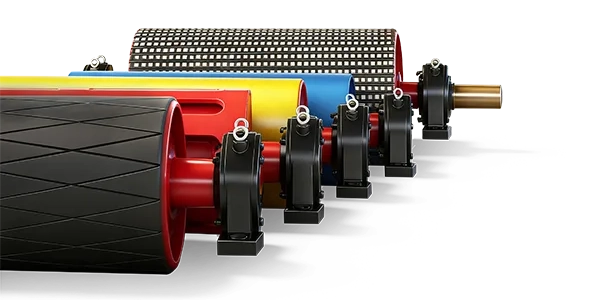
Pulleys are among the most heavily loaded rotating components in a belt conveyor. Different pulley positions perform different functions, and their shaft, shell, bearing, and surface designs should reflect those duties.
Drive or Head Pulley
The drive pulley transfers torque from the drive system to the conveyor belt. Traction between the belt and pulley surface is critical. Rubber or ceramic lagging may be used to improve friction and reduce the risk of slip in demanding conditions.
Tail Pulley
The tail pulley normally redirects the return belt back toward the carrying side. Because it is often located near the loading zone, material buildup and contamination around the pulley require careful attention.
Bend and Snub Pulleys
Bend pulleys change the belt direction. Snub pulleys are commonly used to increase the belt wrap around a drive pulley, helping improve traction where required.
Take-Up Pulley
The take-up pulley forms part of the belt tensioning arrangement and moves as the take-up system compensates for belt stretch and operating changes.
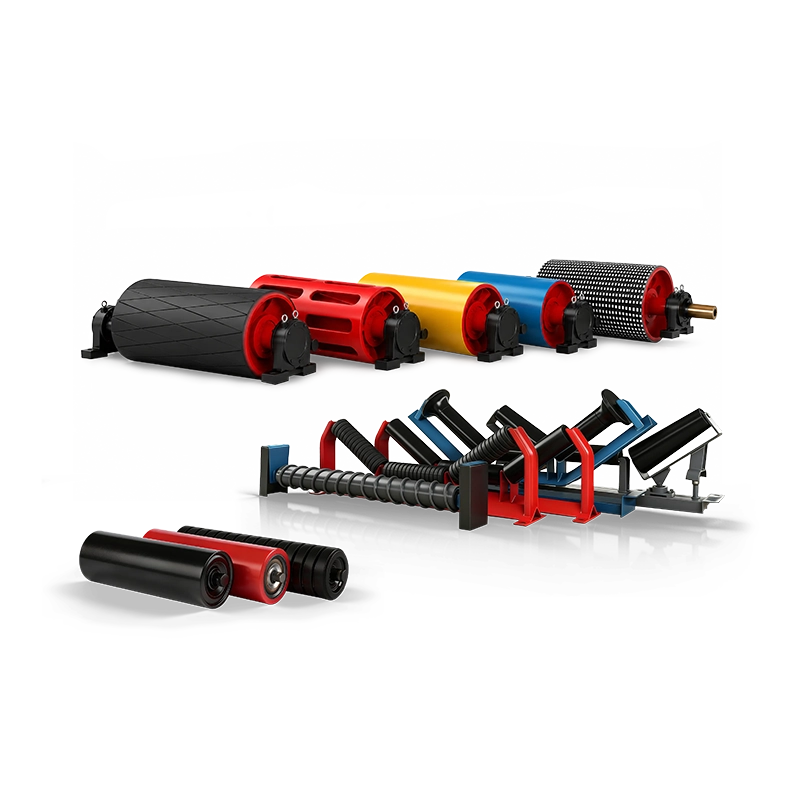
The SHENGYUAN conveyor pulley range includes drive, head, tail, take-up, bend, snub, self-cleaning, rubber-lagged, ceramic-lagged, polyurethane-lagged, and customized pulley configurations for heavy-duty conveyor applications.
4. Idlers and Rollers: Continuous Support Along the Conveyor
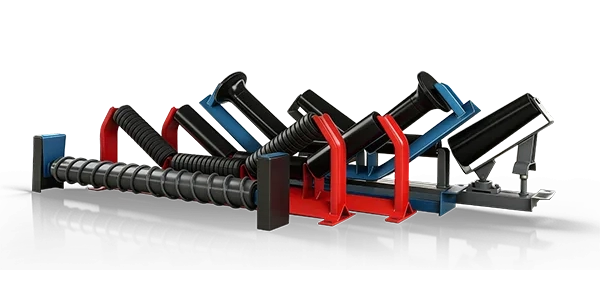
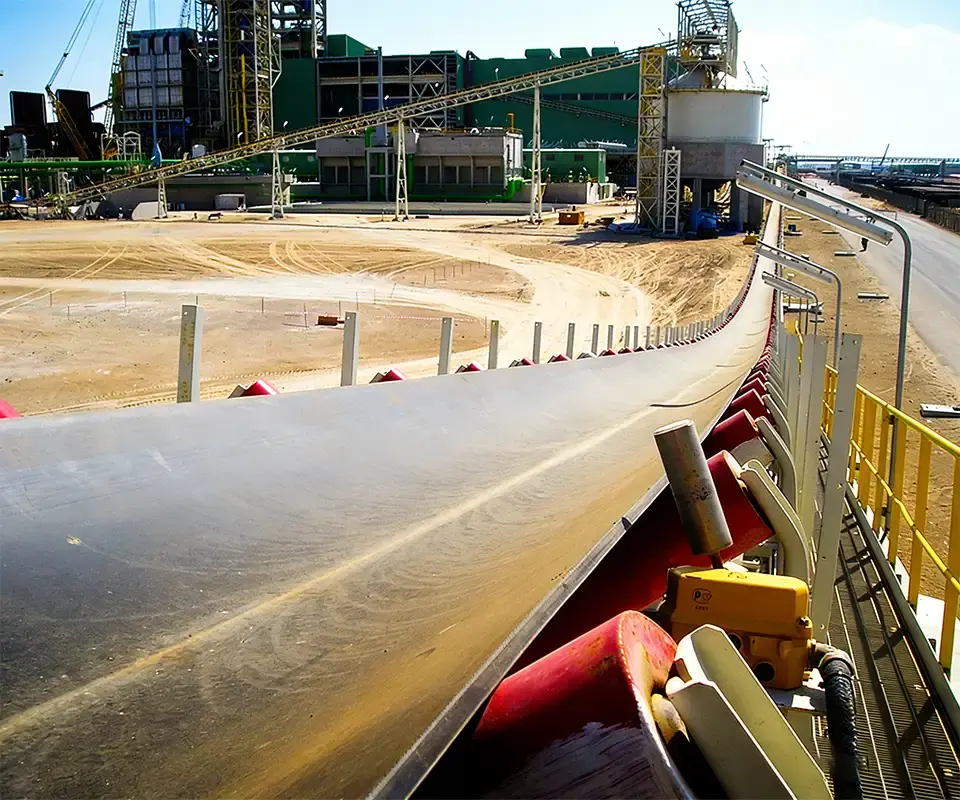
Conveyor rollers and idler sets support the belt across most of the conveyor length. Because a long conveyor can contain hundreds or thousands of rollers, their reliability has a major effect on operating resistance and maintenance workload.
Troughing Carrying Idlers
Troughing idlers support the loaded belt and form it into a trough so that more bulk material can be carried safely. The selected trough angle affects material cross-section, belt behaviour, and conveyor capacity.
Impact Idlers
Impact rollers are installed around loading zones where falling material can create high shock loads. Rubber rings or other resilient elements help absorb impact and protect the conveyor belt.
Return Idlers
Return rollers support the empty belt on its return journey. Depending on the material and operating conditions, flat return, V-return, rubber-disc, spiral, or other specialized configurations may be used.
Training and Self-Aligning Idlers
Self-aligning idlers can help correct moderate belt tracking deviations. They should not, however, be treated as a substitute for correct pulley alignment, loading, structure alignment, and belt tension.
SHENGYUAN manufactures a broad range of conveyor rollers and idlers, including carrying, return, impact, self-aligning, spiral, HDPE, rubber, polyurethane, ceramic, and customized roller solutions.
5. Take-Up System: Maintaining Correct Belt Tension
The take-up system maintains the belt tension required for stable conveyor operation. Sufficient tension helps create traction at the drive pulley and controls excessive belt sag between idler sets.
Common arrangements include screw take-ups for relatively short conveyors, gravity take-ups that automatically compensate for changes in belt length, and winch-based systems used where longer travel or higher tension is required.
Incorrect tension can create several problems. Too little tension may cause drive slip and excessive sag, while excessive tension can increase loads on the belt, shafts, pulleys, bearings, and supporting structures. This is why take-up design should be based on actual conveyor calculations.
6. Conveyor Frames and Supporting Structure
The conveyor structure supports the pulleys, idlers, drive unit, belt, and material load while maintaining alignment along the conveyor route.
Typical structural sections include head frames, tail frames, drive frames, take-up structures, intermediate frames, and supporting legs. Long-distance systems may also include galleries, trestles, elevated sections, and special structures for horizontal or vertical curves.
Structural accuracy matters because belt alignment depends partly on pulley and idler alignment. Even high-quality rollers cannot completely compensate for a conveyor structure that is twisted or incorrectly installed.
7. Loading Hopper and Transfer Chute
A hopper receives or temporarily collects material, while transfer chutes guide material from upstream equipment onto the conveyor or from one conveyor to another.
Good chute design does more than direct material downward. It should control material velocity, reduce unnecessary impact, guide the load toward the belt centre, minimize dust, and reduce abrasive sliding wherever practical.
Poor transfer design is a common source of conveyor problems. Off-centre loading can cause belt mistracking, excessive impact can shorten belt and roller life, and uncontrolled flow can increase dust and spillage.
A useful troubleshooting principle: If a conveyor repeatedly mistracks immediately after the loading zone, do not examine the tracking idlers alone. Check whether the material is entering the belt centrally and in the correct direction.
8. Loading Chute and Skirt System
The loading chute helps concentrate incoming material onto the centre region of the conveyor belt. Skirt rubber installed along the loading zone helps contain material until the load stabilizes on the belt.
Skirting should provide effective sealing without creating excessive friction against the moving belt. Poorly adjusted skirt rubber can wear the belt cover, while insufficient sealing allows fine material to escape along both sides of the conveyor.
For coarse and heavy material, the loading zone should also be coordinated with impact idlers or impact beds to control shock loading.
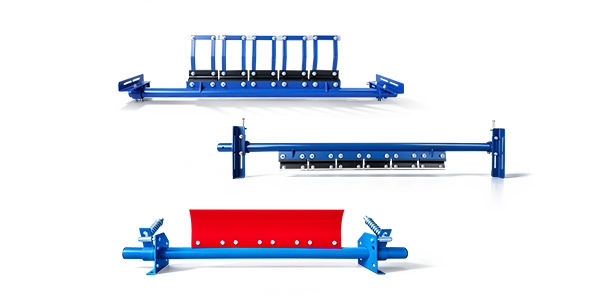
9. Belt Cleaners: Controlling Carryback
Not all material leaves the belt when it passes around the head pulley. Moist, sticky, or fine material can remain attached to the belt surface and travel onto the return side. This residual material is known as carryback.
Primary and secondary belt cleaners remove carryback around the discharge pulley area. Additional return-side or V-plow cleaners can help prevent loose material from becoming trapped between the return belt and tail or take-up pulleys.
Effective cleaning reduces material accumulation on return rollers, reduces housekeeping requirements, and helps protect pulleys and belt surfaces. Cleaner blade material and pressure should be matched to the belt and conveyed material rather than adjusted simply for maximum contact force.
10. Safety and Monitoring Devices
Industrial belt conveyors often operate continuously and may extend over long distances, making monitoring and protection important parts of the overall system.
Typical protection systems may monitor belt mistracking, belt slip, abnormal speed, blockage, belt damage, emergency-stop conditions, bearing temperature, or other project-specific risks.
Guards are also required around appropriate rotating and pinch-point areas. The exact safety arrangement should follow the applicable project specifications, local regulations, and site risk assessment.
How the Components Work Together
The easiest way to understand a belt conveyor is to follow the material through the system. Material enters through a hopper or transfer chute and is directed onto the centre of the conveyor belt. Impact idlers support the belt beneath the loading zone, while troughing idlers form the carrying profile along the conveyor route.
The drive unit rotates the drive pulley, and friction between the pulley surface and belt moves the belt forward. At the discharge end, material leaves the belt and enters the next process through a chute or hopper. Belt cleaners remove residual carryback before the empty belt travels back on return rollers.
The belt then passes around tail, bend, snub, or take-up pulleys depending on the conveyor arrangement. Throughout this cycle, the take-up system maintains appropriate tension while protection devices monitor abnormal operating conditions.
The key principle: Belt conveyors should be treated as complete systems. Belt width influences idlers and pulley face widths; belt speed influences roller rotational speed; higher capacity changes belt tension and drive requirements; larger lumps increase impact loading; and poor cleaning can affect return rollers, pulleys, and belt tracking.
Which Conveyor Components Require the Most Maintenance?
Maintenance frequency depends on the application, but rollers, cleaners, belt surfaces, pulley lagging, bearings, skirt systems, and loading-zone components deserve regular inspection because they experience continuous movement, contamination, wear, or impact.
A failed roller should be replaced before its shell damages the belt. Worn pulley lagging should be addressed before persistent slip develops. Cleaner blades should be adjusted or replaced before carryback becomes excessive. Likewise, recurring mistracking should be investigated at the loading, structure, pulley, and tensioning levels rather than corrected only with temporary adjustment.
Why Component Compatibility Matters When Purchasing
A common procurement mistake is purchasing components independently without checking their interfaces. A replacement pulley may have the correct diameter but the wrong shaft extension. An idler frame may match the belt width but use an incorrect mounting dimension. A cleaner may be wide enough but unsuitable for the belt surface or pulley arrangement.
For replacement and new-project purchasing, buyers should provide belt width, belt speed, capacity, material, maximum lump size, conveyor position, installation dimensions, drawings, bearing requirements, pulley data, operating environment, and expected service conditions.
SHENGYUAN provides custom conveyor component solutions that allow rollers, idlers, pulleys, belts, cleaners, and related components to be coordinated according to customer drawings and operating requirements.
Why Choose SHENGYUAN for Conveyor Components?
SHENGYUAN focuses on conveyor components for heavy-duty bulk material handling applications, including mining, quarrying, aggregates, cement, ports, steel plants, power stations, and industrial material transport.
One of the practical advantages of working with a specialist component manufacturer is coordinated sourcing. Instead of purchasing rollers, idlers, pulleys, belts, and cleaners from unrelated suppliers, customers can communicate key conveyor parameters through one technical interface.
This is particularly useful for distributors, EPC contractors, OEMs, maintenance companies, and mines preparing annual replacement programmes. Drawing-based customization can help match non-standard shaft ends, roller dimensions, pulley face widths, bearing configurations, lagging systems, and other details to an existing conveyor.
Factory-direct communication also helps reduce information loss between the purchaser and production team. For international orders, coordinated component identification, export packaging, and mixed-product shipment planning can simplify procurement and reduce the number of supplier interfaces.
For a conveyor component quotation, provide:
Conveyor capacity, material, bulk density, maximum lump size, belt width, belt speed, conveyor length, inclination, pulley dimensions, roller dimensions, trough angle, loading conditions, operating environment, component drawings, required quantity, and replacement or project schedule.
Conclusion: A Belt Conveyor Is a Coordinated System
A belt conveyor is made up of much more than a belt and motor. The conveyor belt carries the material, the drive unit supplies power, pulleys transfer torque and control belt direction, idlers support the belt, the take-up system maintains tension, and the structure keeps everything correctly positioned.
At the same time, hoppers and chutes control material flow, loading-zone components reduce impact and spillage, belt cleaners manage carryback, and safety devices help detect abnormal operation.
The most reliable conveyor is therefore not created by selecting each component independently. Belt, rollers, idlers, pulleys, drive, take-up, loading system, cleaners, structure, and protection devices should be designed and maintained as one integrated system. Understanding the role of each component makes it easier to select equipment correctly, diagnose problems, plan spare parts, and reduce the total cost of conveyor operation.