
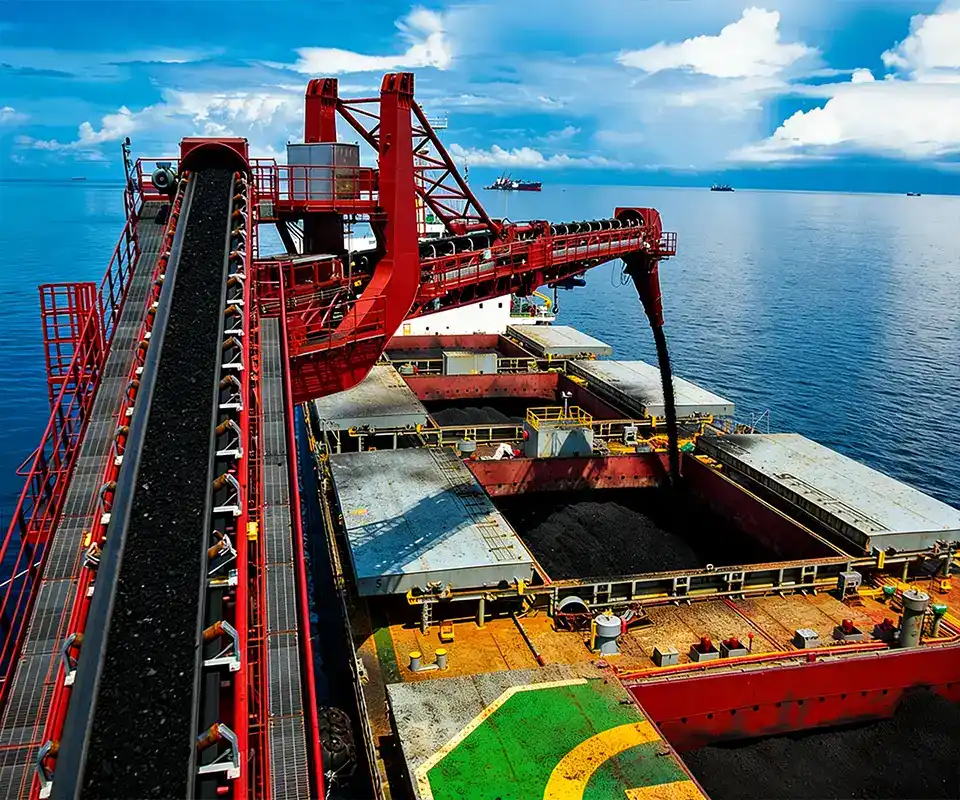
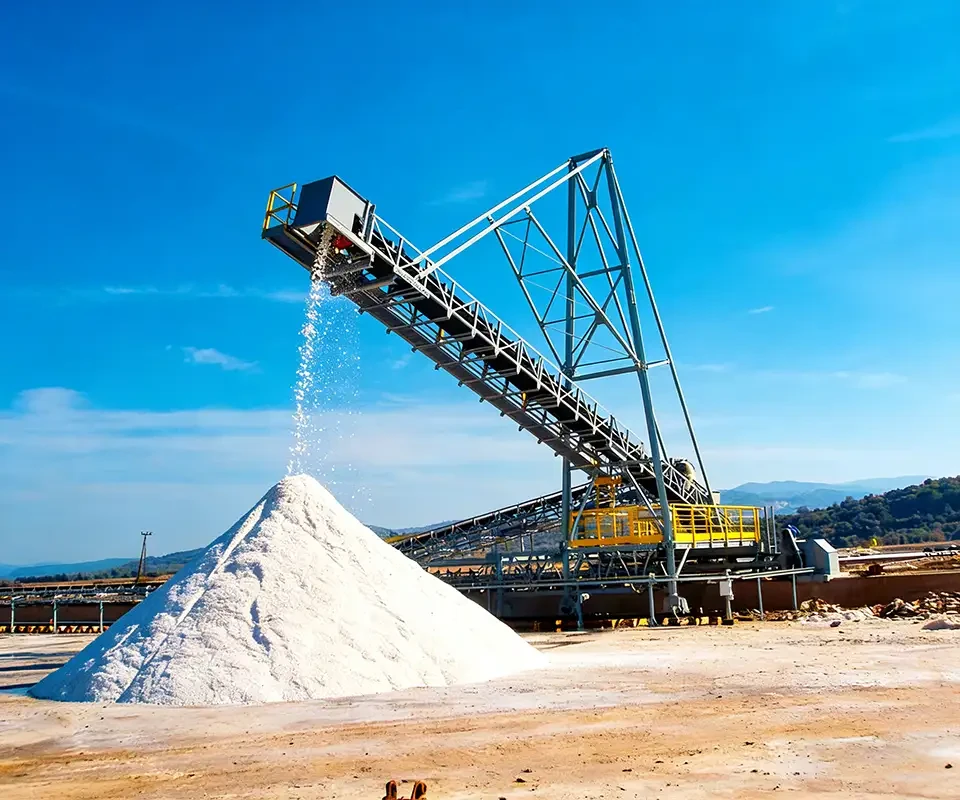
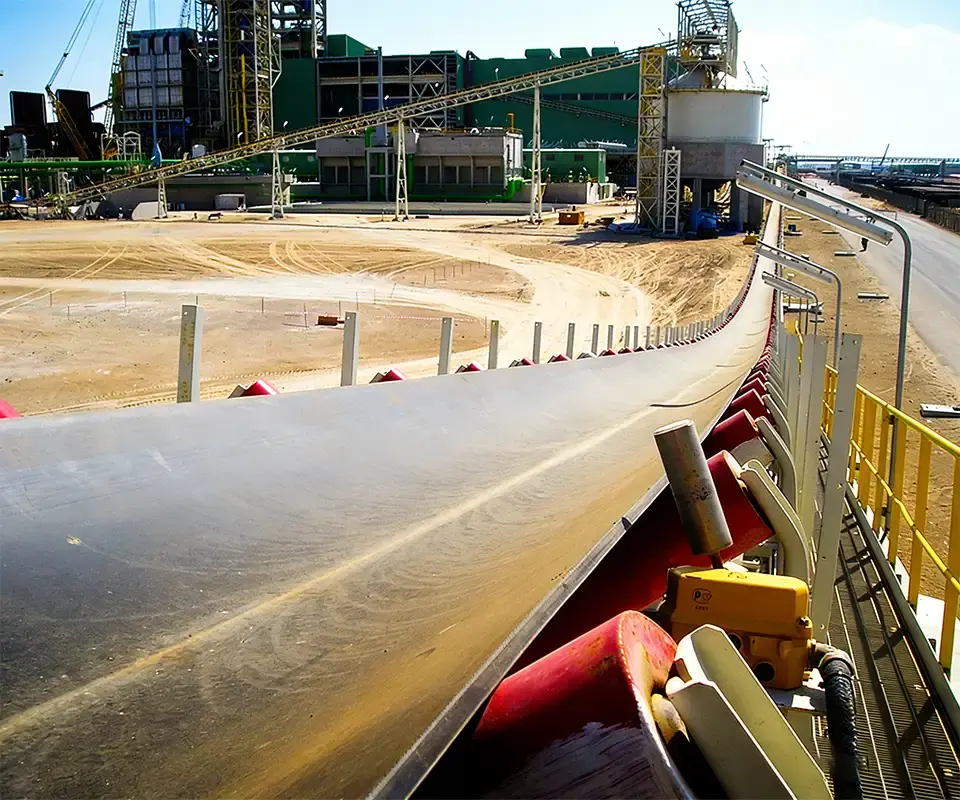
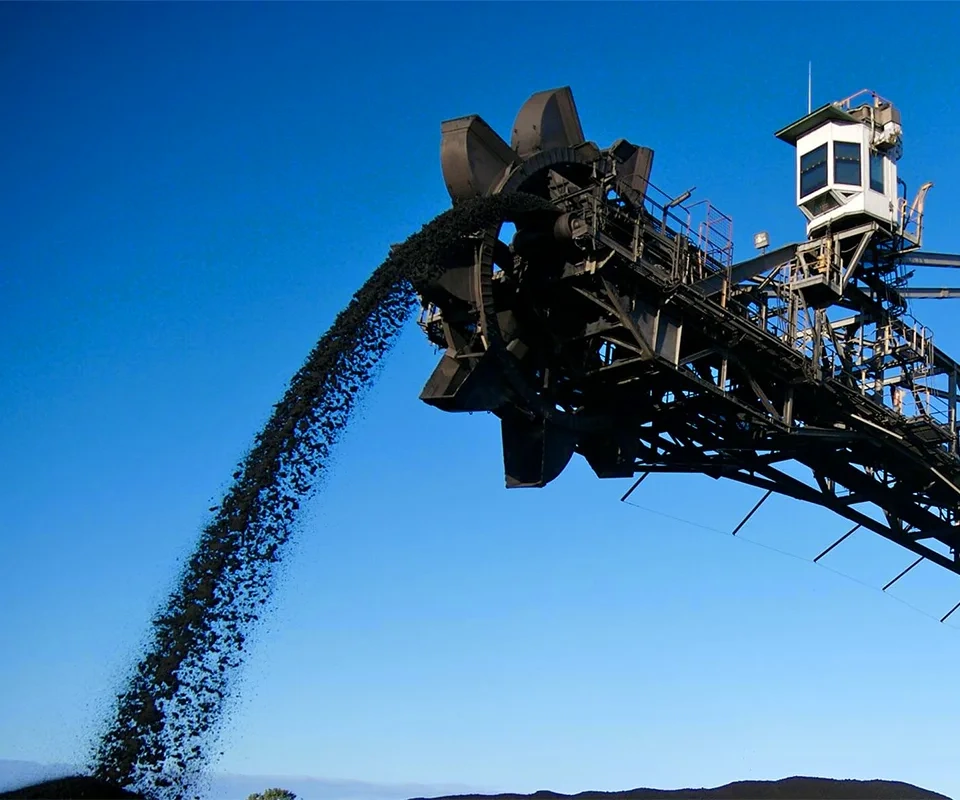
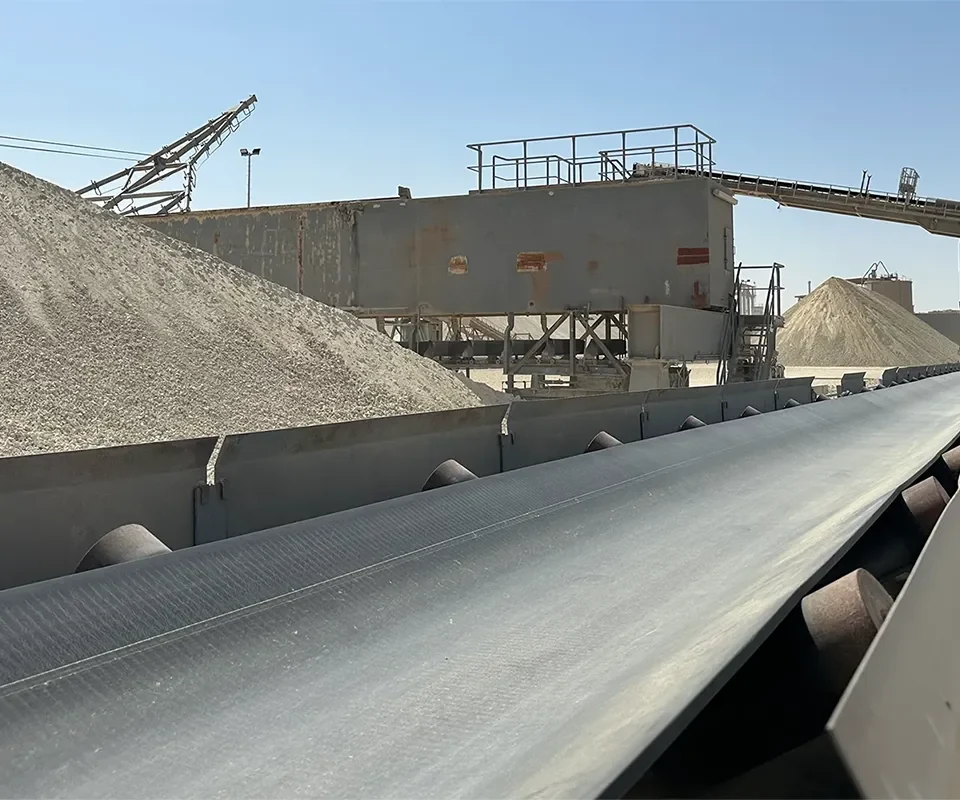
Rubber conveyor belts are the main carrying medium in many heavy-duty bulk material handling systems. They transport coal, ore, limestone, aggregate, cement clinker, fertilizer, salt, grain, coke, and other materials through mines, quarries, cement plants, ports, steel plants, power stations, and processing facilities.
Although rubber conveyor belts may look similar from the outside, their internal structures and performance can differ significantly. Carcass material, tensile strength, number of plies, rubber cover grade, cover thickness, splice method, belt width, and resistance to heat, oil, flame, chemicals, abrasion, and cold conditions all influence service life.
Selecting a belt only by width and price can result in premature cover wear, carcass damage, splice failure, excessive elongation, belt slip, mistracking, or unplanned shutdowns. The correct belt should be selected according to the conveyor design, material characteristics, operating environment, safety requirements, and maintenance strategy.
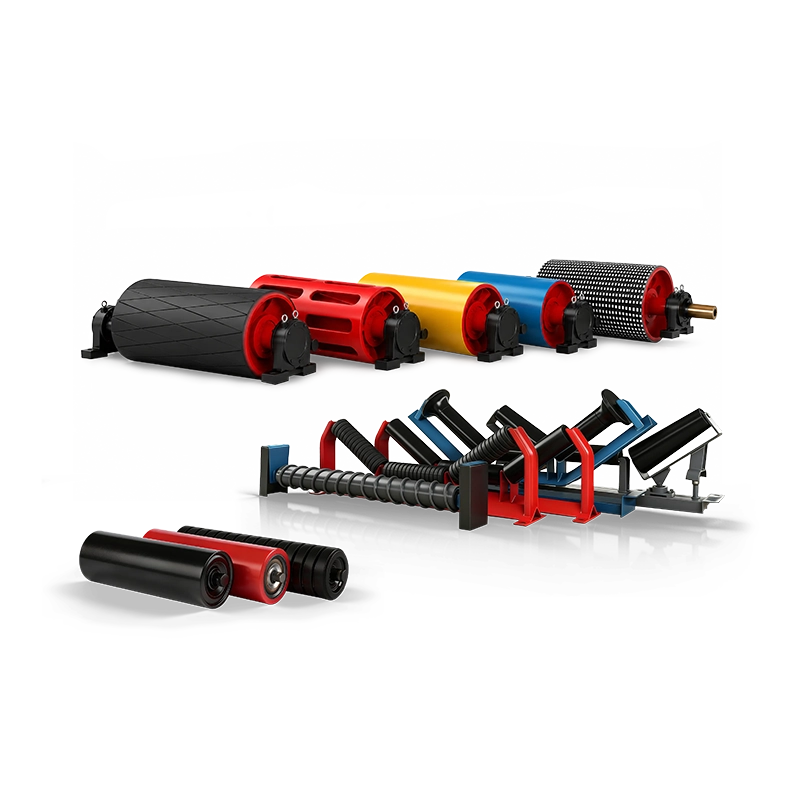
This guide explains the principal types of rubber conveyor belts, important technical specifications, common industrial applications, and practical purchasing considerations. It also shows why the belt should be evaluated together with rollers, idlers, pulleys, cleaners, and loading equipment rather than treated as an isolated product.
Quick answer: Choose a rubber conveyor belt by matching the carcass, tensile rating, belt width, cover grade, cover thickness, splice method, temperature range, safety properties, and resistance to abrasion, impact, oil, chemicals, moisture, and fire with the actual conveyor duty.
How a Rubber Conveyor Belt Is Constructed
A rubber conveyor belt normally consists of a load-bearing carcass positioned between top and bottom rubber covers. Each part performs a different function and must be selected according to the application.
Top Cover
The top cover is in direct contact with the conveyed material. It protects the carcass against abrasion, impact, cutting, moisture, heat, oil, and chemical exposure. Its compound and thickness should reflect the severity of the material and loading conditions.
Sharp ore, crushed rock, clinker, and large lumps generally require stronger abrasion and impact protection than dry grain or packaged material. Increasing cover thickness can provide additional wear allowance, but excessive thickness adds weight and cost and may affect belt flexibility.
Carcass
The carcass carries the operating tension and provides structural strength. Common carcass materials include EP fabric, nylon fabric, steel cords, and solid-woven structures. The correct choice depends on conveyor length, belt tension, impact, elongation limits, pulley diameter, and installation conditions.
Bottom Cover
The bottom cover contacts pulleys and idler rollers. It protects the carcass against friction, moisture, and mechanical damage. It is usually thinner than the top cover because it does not carry the bulk material directly, although drive conditions and pulley contact must still be considered.
Main Types of Rubber Conveyor Belts
General-Purpose EP Fabric Conveyor Belts
EP belts use polyester fibres in the longitudinal direction and polyamide fibres across the belt. They combine useful tensile strength, dimensional stability, flexibility, and relatively controlled elongation, making them a common choice for mining, cement, aggregate, coal, ports, and general industrial conveying.
EP belts are available in different ratings, such as EP100, EP150, EP200, EP250, and higher-strength constructions. The number describes the nominal strength per fabric ply, but the final belt selection must also consider the number of plies, total tensile rating, cover thickness, and conveyor tension.
Nylon Conveyor Belts
Nylon belts are known for flexibility, impact resistance, and resistance to repeated bending. They are often considered for conveyors with heavy loading impact, shorter centre distances, and applications where good troughing performance is important.
A nylon belt may elongate more than an EP belt under load, so the available take-up travel and tensioning arrangement should be reviewed. NN100, NN150, NN200, and similar designations refer to the nominal strength of each nylon fabric layer.
Steel Cord Conveyor Belts
Steel cord conveyor belts use longitudinal steel cables as the main load-carrying structure. They are generally selected for long-distance, high-capacity, high-tension, and high-lift conveyors where a fabric belt would require an impractical construction.
Their advantages include high tensile strength and relatively low elongation. However, steel cord belts require appropriate pulleys, splice procedures, inspection methods, and protection against longitudinal tearing. They are commonly used in large mines, ports, overland conveyors, and major bulk terminals.
Heat-Resistant Conveyor Belts
Heat-resistant belts use rubber compounds and carcass structures designed to withstand elevated material temperatures. Typical applications include cement clinker, hot coke, sinter, foundry sand, slag, and other heated bulk materials.
The inquiry should state the continuous material temperature, temporary peak temperature, lump size, loading frequency, and ambient conditions. Selecting a belt from the average temperature alone can be misleading because hot lumps may create concentrated surface damage.
Flame-Resistant Conveyor Belts
Flame-resistant belts are used where fire risk must be controlled, particularly in coal handling, underground mines, enclosed galleries, tunnels, and power plants. Depending on the application, anti-static properties may also be required.
The required standard and test method must be confirmed before quotation. Above-ground coal conveyors, enclosed plant conveyors, and underground mines may be subject to different safety requirements, so one flame-resistant designation should not be assumed to cover every installation.
Oil-Resistant Conveyor Belts
Ordinary rubber can swell, soften, or lose adhesion when exposed to oils and greases. Oil-resistant belts use specialized compounds for materials such as oily metal parts, petroleum coke, waste products, wood chips containing resin, and industrial materials contaminated with lubricants.
Buyers should provide the type of oil, concentration, material temperature, and contact duration. Different mineral, animal, and vegetable oils can affect rubber compounds differently.
Chemical-Resistant Conveyor Belts
Acid- and alkali-resistant belts are used in fertilizer, salt, chemical, sugar, mineral processing, and waste-treatment applications. The compound should be selected according to the actual chemical, concentration, moisture level, contact duration, and operating temperature.
No rubber compound should be described as resistant to every chemical. Accurate chemical information is essential before the manufacturer confirms suitability.
Chevron and Sidewall Conveyor Belts
Chevron belts use raised surface profiles to improve material retention on inclined conveyors. They are commonly used for coal, sand, aggregate, grain, fertilizer, and packaged material where a smooth belt would allow the load to slide backward.
Sidewall belts use flexible corrugated sidewalls and transverse cleats to carry material at steep angles. They can reduce the horizontal space required for elevation, but require carefully matched pulleys, transition arrangements, loading equipment, and return-side support.
Rubber Conveyor Belt Type Comparison
| Belt Type | Primary Advantage | Typical Application |
| EP fabric belt | Balanced strength, stability, and flexibility | Mining, cement, coal, aggregate, and ports |
| Nylon belt | Impact resistance and flexible troughing | Quarries, loading zones, and short heavy-duty conveyors |
| Steel cord belt | High strength and low elongation | Long-distance and high-tension conveyors |
| Heat-resistant belt | Resistance to elevated material temperature | Clinker, coke, sinter, slag, and foundry material |
| Flame-resistant belt | Reduced flame propagation risk | Coal mines, tunnels, galleries, and power plants |
| Chevron or sidewall belt | Improved inclined material handling | Inclined and space-limited conveyor systems |
Technical Specifications Buyers Should Understand
Belt Width
Belt width influences capacity, material cross-section, idler dimensions, pulley face width, and conveyor structure. Heavy-duty rubber belts are available in a broad range of widths. The SHENGYUAN general-purpose rubber conveyor belt page presents a typical customisable width range of 400 to 2,200 mm.
A wider belt does not automatically solve a capacity problem. Belt speed, trough angle, material density, lump size, loading stability, and available structure must also be reviewed.
Tensile Strength and Number of Plies
Tensile strength indicates the belt’s ability to withstand operating tension. Fabric belts may be identified by carcass type, strength per ply, and number of plies. For example, an EP200 construction has a nominal strength of 200 N/mm per fabric layer.
Adding plies can increase total strength, but it also changes belt thickness, flexibility, weight, splice design, and minimum pulley diameter. The correct rating should come from conveyor tension calculations rather than simply selecting the strongest available belt.
Top and Bottom Cover Thickness
Top cover thickness is selected according to abrasion, cutting, impact, and required wear allowance. Bottom cover thickness depends on pulley and idler contact, loading conditions, and carcass protection.
For general fabric belts, typical top covers may range from approximately 1.5 to 10 mm, while bottom covers may range from approximately 1.5 to 6 mm. More demanding applications may require different constructions.
Rubber Cover Grade
Cover grade should be matched to the main damage mechanism. Abrasion-resistant rubber is used where surface wear is dominant. Cut- and gouge-resistant compounds are more suitable for sharp, heavy lumps. Heat-, oil-, flame-, cold-, and chemical-resistant compounds address specific operating risks.
Important selection principle: A special-purpose belt is not automatically superior to a general-purpose belt. The best cover is the compound that addresses the actual failure mechanism without adding unnecessary cost or reducing another required property.
Pulley Diameter and Belt Flexibility
The belt repeatedly bends around drive, tail, bend, snub, and take-up pulleys. A pulley that is too small for the belt construction can create excessive carcass and splice stress. Minimum pulley diameter depends on belt type, strength, carcass thickness, splice, tension, and pulley position.
Splice Method
Rubber conveyor belts may use hot vulcanised splices, cold-bonded splices, or mechanical fasteners. Hot vulcanising generally provides a smooth, durable connection when performed correctly, while mechanical fasteners may support faster installation and emergency repair.
The splice should be selected according to belt construction, tension, operating environment, maintenance resources, downtime limits, and pulley compatibility.
Industrial Applications of Rubber Conveyor Belts
Mining and Quarrying
Abrasion-resistant EP, nylon, and steel cord belts move ore, coal, overburden, and crushed rock.
Cement and Aggregates
Belts carry limestone, raw meal, clinker, sand, gravel, and finished aggregate between process stages.
Steel and Power Plants
Special belts handle coal, coke, ore, sinter, limestone, slag, biomass, and gypsum.
Ports and Terminals
Long conveyors require reliable belt tracking, corrosion-aware selection, and strong resistance to continuous loading.
Why Belt Performance Depends on Other Conveyor Components
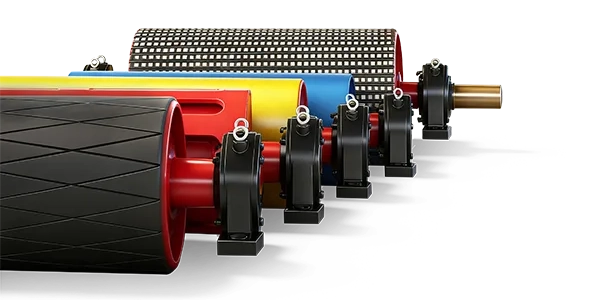
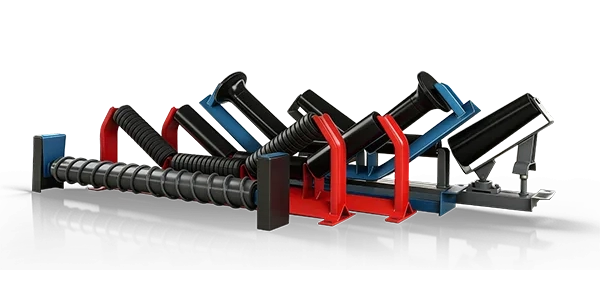
A correctly specified belt can still fail early when the surrounding conveyor components are unsuitable. Seized rollers create friction and concentrated heating. Misaligned idler frames cause mistracking. Worn pulley lagging causes slip, while undersized pulleys create excessive bending stress.
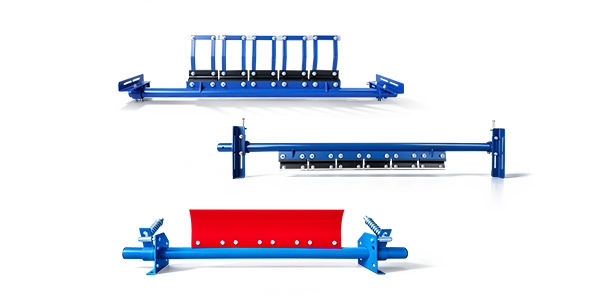
Incorrect belt-cleaner pressure may damage the cover, but insufficient cleaning allows carryback to accumulate around rollers and pulleys. Poor transfer-chute design can create off-centre loading, impact damage, and material spillage.
For this reason, SHENGYUAN presents a coordinated conveyor belt range that can be evaluated together with rollers, pulleys, idler sets, and belt cleaners. System compatibility helps reduce the risk of selecting each component independently.
Practical Buying Tips
Provide Complete Operating Data
An accurate inquiry should include belt width, centre distance, lift height, belt speed, capacity, material type, bulk density, lump size, loading impact, operating tension, pulley diameters, trough angle, temperature, moisture, safety standards, current belt specification, and required length.
Compare Equivalent Specifications
Two quotations may describe belts with the same width and total tensile strength but use different carcass materials, cover compounds, cover thicknesses, adhesion levels, tolerances, or inspection requirements. Compare technical data line by line before comparing price.
Investigate the Existing Failure Mode
When replacing a failed belt, identify why it failed. Smooth cover wear may indicate normal abrasion, while local cuts may point to sharp material or loading problems. Edge damage may indicate mistracking, and repeated splice failure may relate to tension, pulley diameter, workmanship, or belt selection.
Evaluate Total Ownership Cost
The real cost includes the belt, freight, splicing, installation labour, planned shutdown time, maintenance, cleaning, energy use, and production losses. A lower-priced belt is not economical if it requires more frequent replacement or creates additional downtime.
Why Choose SHENGYUAN Rubber Conveyor Belts?
SHENGYUAN, the brand of Hebei Shengwen Mining Machinery Co., Ltd., supplies conveyor components for heavy-duty bulk material handling. Its application areas include mining, coal, cement, aggregates, ports, steel plants, power plants, chemical processing, and industrial conveying.
Broad Product Coverage
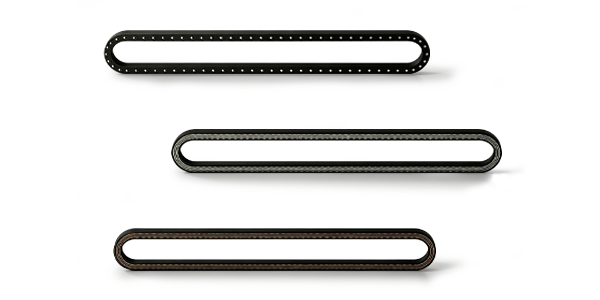
The available belt range includes general rubber fabric belts, EP belts, nylon belts, steel cord belts, heat-resistant belts, flame-resistant belts, oil-resistant belts, cold-resistant belts, acid- and alkali-resistant belts, chevron belts, sidewall belts, pipe conveyor belts, and PVC/PVG solid-woven belts.
Application-Based Customization
Through its custom conveyor solutions, SHENGYUAN can review belt width, carcass rating, ply number, rubber grade, top and bottom cover thickness, total length, edge construction, surface profile, splice method, and operating environment.
Coordinated Component Sourcing
Customers can coordinate belts with conveyor rollers, idler frames, drive pulleys, tail pulleys, take-up pulleys, pulley lagging, and cleaners. This can simplify technical communication, improve dimensional compatibility, and reduce the number of suppliers involved in a project.
Factory-Direct and Export-Oriented Support
SHENGYUAN supports technical confirmation, production communication, product identification, export packaging, shipment coordination, and after-sales service. This model is particularly suitable for distributors, EPC contractors, mines, cement plants, ports, and industrial customers preparing planned replacement or project orders.
Why SHENGYUAN can be a strong conveyor belt supplier:
SHENGYUAN combines a broad belt range, application-based selection, customized specifications, factory-direct communication, coordinated roller and pulley supply, and international project support. Buyers receive a solution designed around the complete conveyor duty rather than a belt selected only from a catalogue.
Conclusion: Select the Belt According to the Complete Operating Duty
Rubber conveyor belt selection requires more than choosing a width and tensile rating. The carcass, covers, splice, temperature resistance, safety properties, pulley compatibility, loading conditions, and maintenance environment all influence performance.
EP and nylon belts meet many general heavy-duty requirements, while steel cord belts suit long and high-tension conveyors. Heat-, flame-, oil-, cold-, and chemical-resistant belts address specific risks. Chevron and sidewall belts provide practical solutions for inclined conveying.
The best purchasing decision begins with complete operating information, technically equivalent quotation comparisons, and an analysis of previous belt failures. Working with a supplier such as SHENGYUAN also allows the belt to be matched with pulleys, rollers, idlers, and cleaners for more reliable long-term operation.
Request an accurate rubber conveyor belt quotation
Provide the current belt specification, belt width, length, carcass type, tensile rating, ply number, cover thickness, conveyed material, capacity, speed, pulley diameters, temperature, working environment, safety standard, splice preference, quantity, and required delivery date.