
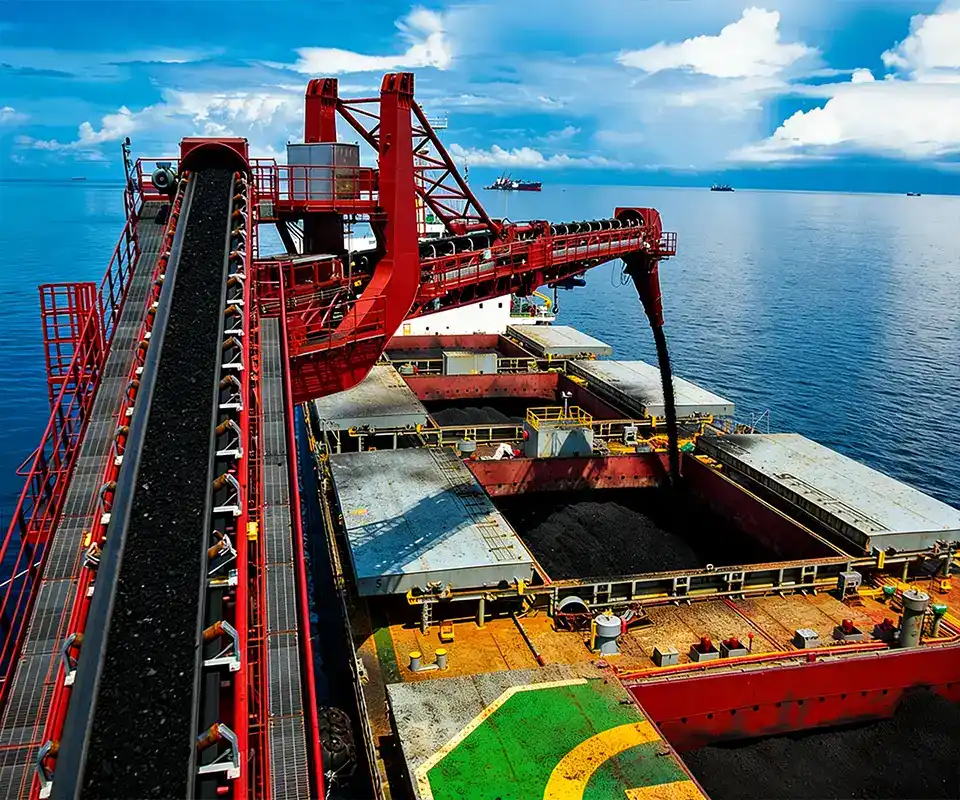
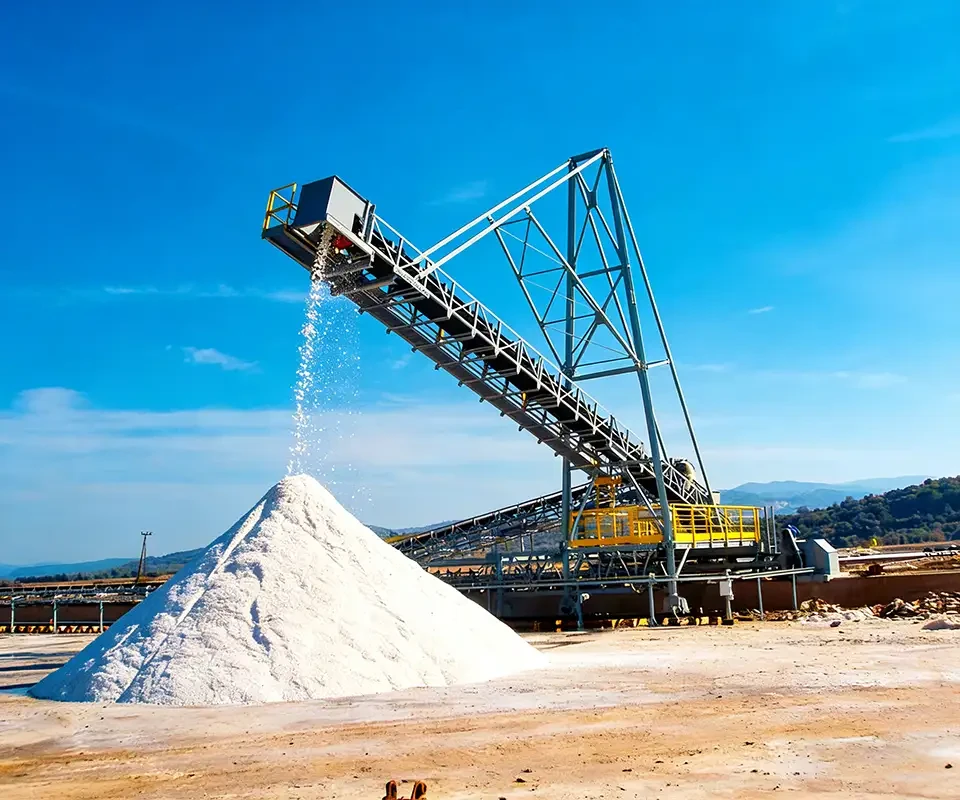
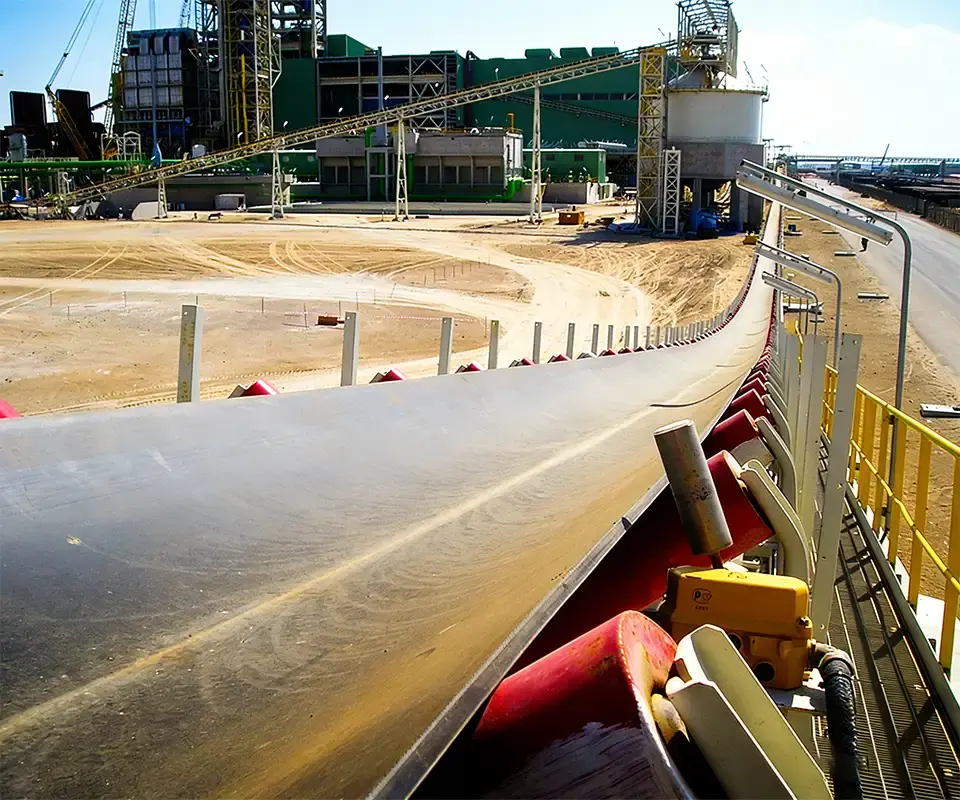
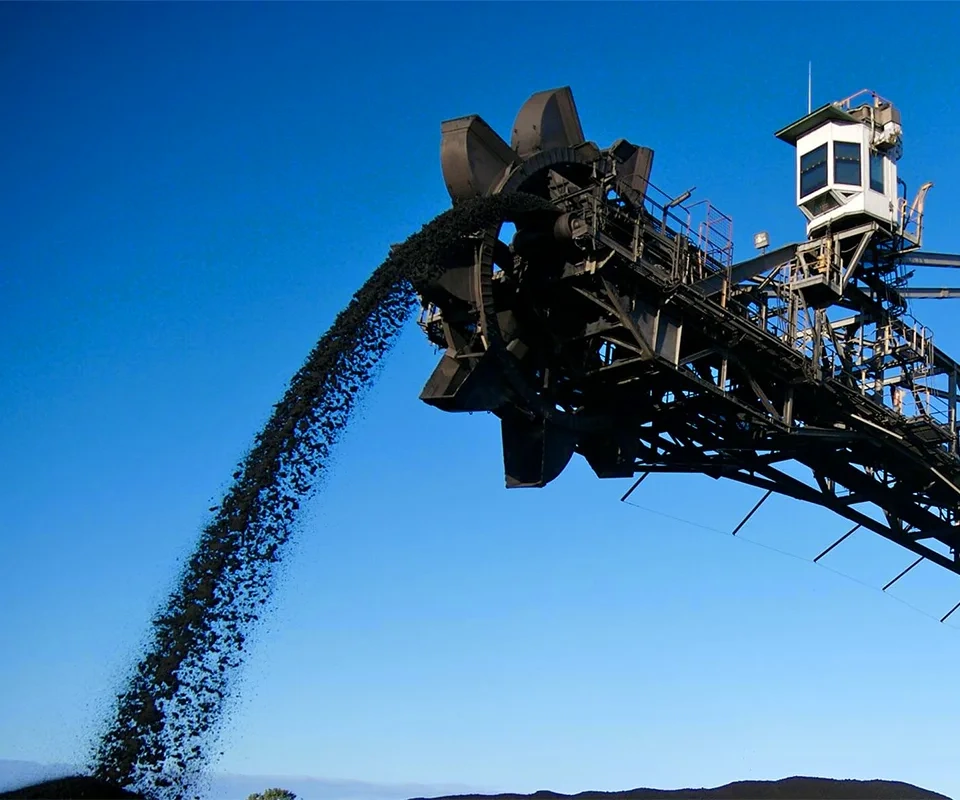
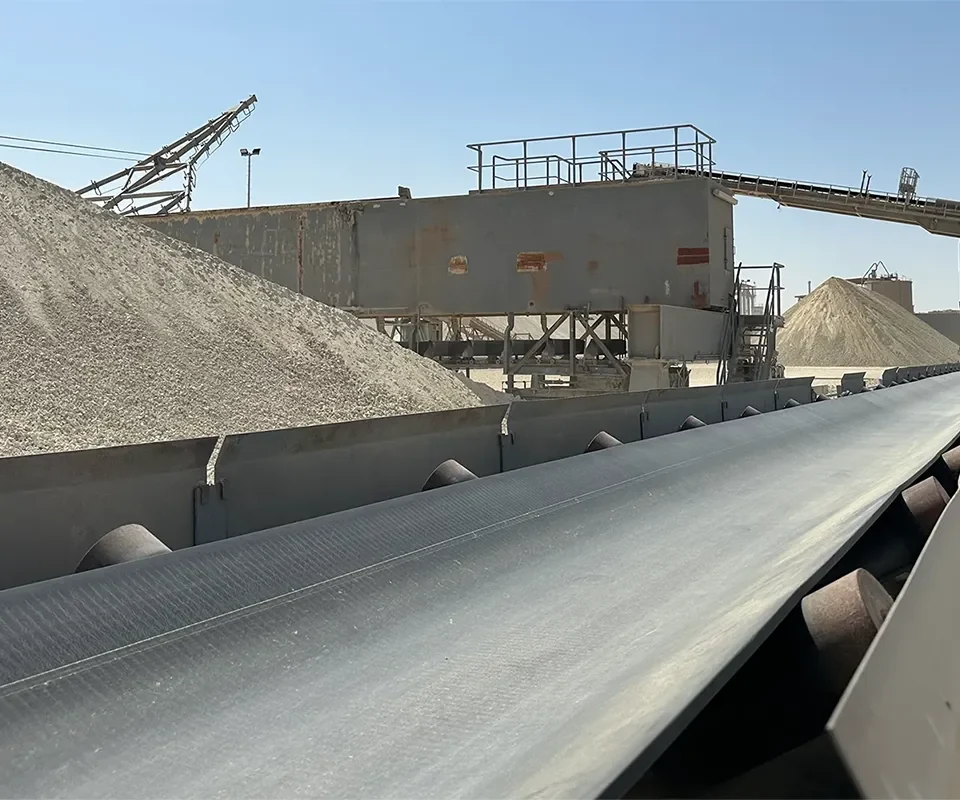
Mining conveyor belts work under some of the most demanding conditions in bulk material handling. They transport ore, coal, limestone, crushed rock, overburden, aggregates, mineral concentrates, and other materials through open-pit mines, underground operations, crushing plants, stockyards, processing facilities, and export terminals. A conveyor belt in these environments may face continuous loading, sharp material edges, impact, dust, moisture, temperature changes, long operating hours, and high belt tension.
For this reason, choosing a mining conveyor belt should never be based on belt width and price alone. The correct selection requires a systematic review of material characteristics, conveyor length, lifting height, capacity, belt speed, tensile strength, carcass type, rubber cover grade, impact conditions, temperature, fire safety requirements, pulley diameter, and maintenance strategy. A belt that is suitable for a short quarry conveyor may not be suitable for a long-distance overland mining conveyor.
The purpose of this guide is to explain how to choose mining conveyor belts for heavy-duty bulk material handling in practical terms. It also explains why the belt must be evaluated together with conveyor rollers, pulleys, loading zones, cleaners, and tensioning equipment rather than treated as an isolated component.
Quick answer: Select a mining conveyor belt by matching the belt carcass, tensile strength, cover grade, width, thickness, impact resistance, temperature resistance, and safety properties with the conveyed material, conveyor capacity, belt tension, route length, pulley system, and operating environment.
Start with the Material Being Conveyed
The conveyed material is the first factor to evaluate because different materials damage belts in different ways. Fine coal behaves differently from large iron ore lumps. Wet clay creates different problems from dry crushed limestone. Hot clinker requires different belt properties from ambient-temperature aggregate.
Important material information includes bulk density, maximum lump size, average particle size, moisture level, material temperature, abrasiveness, sharpness, oil content, and chemical exposure. Buyers should also consider how the material enters the conveyor. A controlled loading chute with a low drop height creates much less impact than uncontrolled large rocks falling directly onto the belt.
| Material Condition | Main Belt Risk | Selection Priority |
| Sharp Ore and Rock | Cuts, gouges and impact damage | Strong carcass and wear-resistant cover |
| Fine Abrasive Material | Continuous cover wear | Abrasion-resistant rubber compound |
| Wet and Sticky Material | Carryback and material buildup | Suitable cover surface and effective cleaning |
| Hot Material | Rubber hardening and cracking | Heat-resistant belt construction |
Choose the Correct Conveyor Belt Type
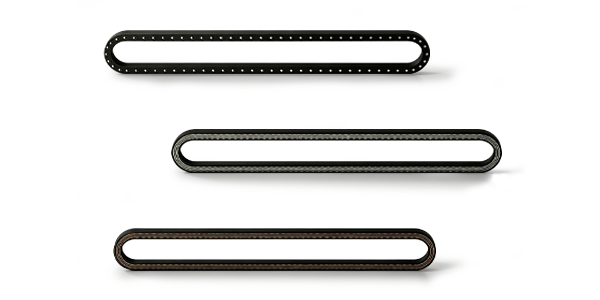
Mining conveyor belts are available in several structures. The best option depends on conveyor length, tension, material load, incline, impact, safety requirements, and maintenance conditions. The conveyor belt range presented by SHENGYUAN includes rubber fabric belts, steel cord belts, chevron belts, sidewall belts, pipe conveyor belts, and PVC/PVG solid woven belts for different bulk handling conditions.
EP Fabric Conveyor Belts
EP fabric belts use polyester in the warp direction and polyamide in the weft direction. They are commonly selected for general mining, quarry, cement, aggregate, and industrial bulk handling conveyors. Their advantages include practical flexibility, dimensional stability, and suitability for a wide range of medium- and heavy-duty applications.
They are often a practical choice for short- and medium-distance conveyors where the required tension does not justify a steel cord construction. However, the exact strength rating and number of plies must still match the calculated operating tension.
NN Nylon Conveyor Belts
Nylon reinforced belts offer good flexibility and impact absorption. They can be useful in applications with repeated impact and demanding loading conditions. At the same time, elongation characteristics should be considered carefully, especially where take-up travel is limited or belt length is significant.
Steel Cord Conveyor Belts
Steel cord belts are generally selected for long-distance, high-tension, and high-capacity conveyors. Their high tensile capacity makes them suitable where fabric belts would require an impractical construction or where belt elongation needs tighter control.
However, selecting a steel cord belt should be based on engineering need rather than the assumption that stronger always means better. The belt, pulleys, splice system, monitoring approach, and maintenance capability must all be suitable for the application.
Practical principle: Do not select the strongest belt available. Select the belt with the correct strength, safety margin, flexibility, and cover protection for the actual conveyor system.
Calculate the Required Belt Strength Carefully
Belt strength is one of the most important specifications in mining applications. It must be sufficient for operating tension, starting tension, incline resistance, frictional resistance, material load, and other forces within the conveyor system.
The required belt rating depends on several connected factors: conveyor length, horizontal distance, vertical lift, material capacity, belt speed, idler resistance, pulley arrangement, drive configuration, loading condition, and take-up system. Increasing capacity or length without reviewing belt strength can create excessive stress at the carcass or splice.
As an illustrative example, consider two conveyors carrying the same material at similar capacity. One operates over a short, nearly horizontal route, while another lifts material over a long incline. Even with the same belt width, their tension requirements can be significantly different. This demonstrates why copying the belt specification from another conveyor based only on width is risky.
Select the Right Rubber Cover Grade
The rubber cover is the belt’s first line of protection against wear and environmental attack. For mining conveyors, cover selection can strongly influence service life because the top surface is continuously exposed to the conveyed material.
Abrasion-resistant covers are important for ore, crushed stone, aggregate, and similar materials. Cut- and gouge-resistant properties are valuable where sharp lumps can penetrate or damage the surface. Heat-resistant covers are needed for elevated-temperature materials. Oil-resistant or chemical-resistant constructions may be required in specialized processing environments.
Cover thickness also requires balance. A thicker top cover may increase potential wear life in severe abrasion conditions, but it also increases belt weight and cost. The correct thickness should reflect actual wear rate, impact level, belt speed, and expected maintenance interval.
Match Belt Width and Speed with Capacity
Belt width and belt speed work together to determine material carrying capacity. A wider belt can carry more material at a given speed, while increasing speed can also raise capacity. However, higher speed is not automatically better. Excessive speed may increase dust generation, material bounce, loading instability, and wear at transfer points.
For large-lump mining material, belt width must provide enough edge clearance to reduce spillage risk. The loading chute should place material near the centre of the belt and accelerate it in the belt travel direction as much as practical. Poor loading can cause mistracking even when the belt itself is correctly selected.
Key Data to Confirm Before Belt Selection
- Conveyed material and bulk density
- Maximum lump size and material shape
- Required conveying capacity
- Belt width and operating speed
- Conveyor length and vertical lift
- Drive power and pulley arrangement
- Material and ambient temperature
- Impact, moisture, abrasion, oil, or chemical exposure
- Operating hours and maintenance schedule
Evaluate Impact Loading and Transfer Points
Many mining belt failures begin at loading zones. Large, heavy, or sharp material falling onto an unsupported belt can cause cuts, punctures, carcass damage, and splice stress. Therefore, belt selection should be reviewed together with chute design and impact support.
Impact rollers, impact idler sets, impact beds, chute liners, skirting systems, and controlled material flow all contribute to belt protection. A more expensive belt cannot fully compensate for a badly designed transfer point.
When repeated damage appears in the same section of a conveyor, engineers should inspect the loading process before simply ordering another belt. Questions should include: Is the drop height excessive? Is material hitting the belt at an angle? Is the impact support damaged? Is the chute loading material away from the centreline? Is trapped material cutting the belt?
Check Pulley Diameter and Belt Compatibility
Every time a conveyor belt passes around a pulley, the belt bends. If pulley diameter is too small for the belt construction, repeated bending can increase internal stress and reduce service life. Belt strength, carcass structure, splice type, and pulley position all influence minimum pulley requirements.
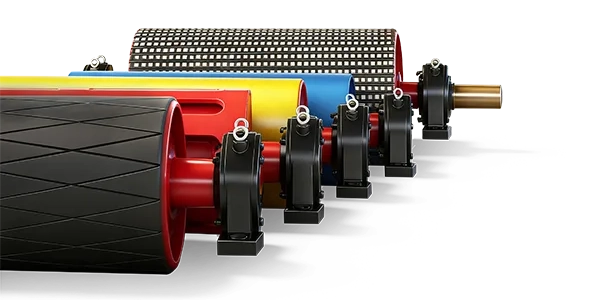
The condition of conveyor pulleys also affects belt performance. Drive pulley traction, lagging wear, pulley alignment, bearing condition, and surface buildup should be inspected as part of belt maintenance. SHENGYUAN’s existing technical guidance similarly emphasizes that pulley selection should consider belt tension, drive load, shaft strength, lagging, alignment, and environment.
Do Not Ignore Conveyor Rollers and Idlers
A mining conveyor belt may travel over hundreds or thousands of rollers during operation. If rollers rotate poorly, seize, become misaligned, or accumulate material, the belt can experience additional drag and localized wear.
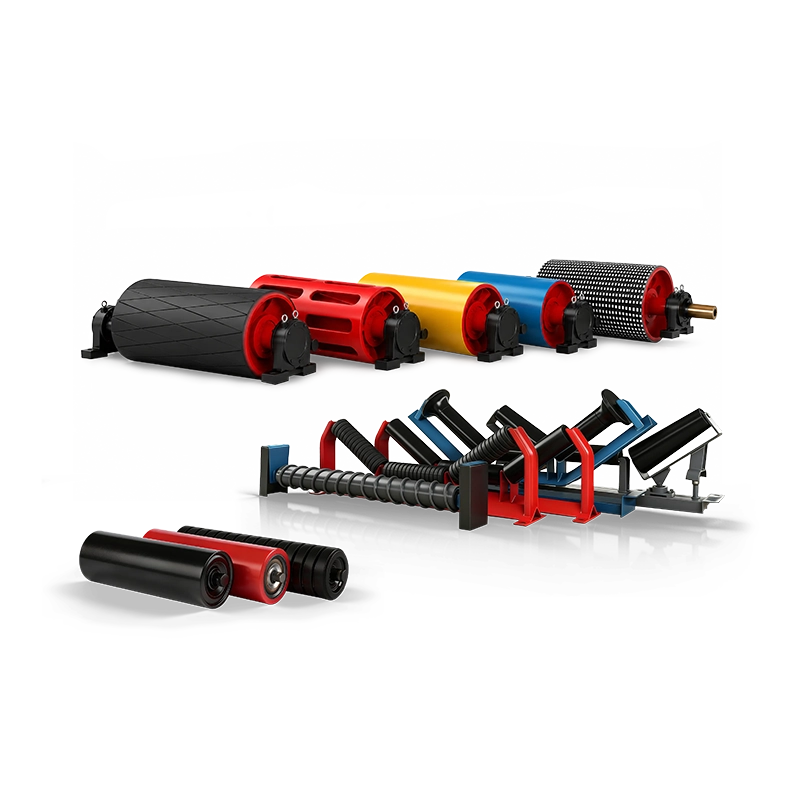
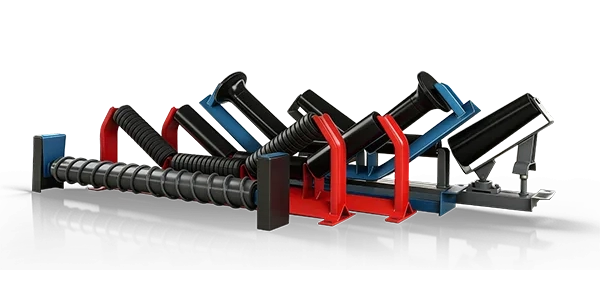
Carrying rollers support the loaded belt. Impact rollers protect loading areas. Return rollers support the empty belt, while spiral or rubber disc return designs can help manage certain carryback conditions. The conveyor roller range on the SHENGYUAN website is positioned for mining, ports, cement plants, power stations, aggregates, and other heavy-duty bulk handling environments.
A premium conveyor belt cannot deliver its expected service life when the supporting rollers are seized, loading is off-centre, pulleys are misaligned, or carryback is allowed to accumulate throughout the return side.
Consider the Mining Environment
Environmental conditions influence both belt selection and supporting component design. Open-pit conveyors may face rain, sunlight, mud, dust, and seasonal temperature changes. Underground operations may have specific fire safety and operational requirements. Coastal mineral terminals may experience moisture and corrosive exposure. Cold-region mines require consideration of low-temperature flexibility.
The correct belt construction should therefore be based on the actual site rather than a generic description such as “mining belt.” A coal mine, copper mine, iron ore operation, limestone quarry, and mineral export terminal may all require different belt characteristics even when the conveyor widths appear similar.
Use Total Cost of Ownership Instead of Purchase Price Alone
The lowest purchase price is not always the lowest-cost solution. Mining conveyor economics should include belt purchase cost, splice installation, planned maintenance, emergency repairs, production loss during downtime, replacement labour, and damage to related components.
A more durable belt may justify a higher initial cost when replacement requires a long shutdown. However, overspecification also wastes capital. The objective is not to buy the most expensive belt available but to select the construction that delivers acceptable risk and service life for the real application.
For procurement teams, this means comparing suppliers on specification accuracy, manufacturing consistency, technical communication, customization, quality documentation, delivery reliability, and support—not only price per metre.
Common Mining Conveyor Belt Selection Mistakes
Copying an Old Specification
Production capacity may have increased since the original belt was selected, making the historical specification unsuitable.
Ignoring Transfer Points
Repeated belt damage may come from poor loading geometry rather than insufficient belt strength.
Selecting by Width Alone
Two belts with the same width may require completely different strength ratings and cover properties.
Ignoring System Components
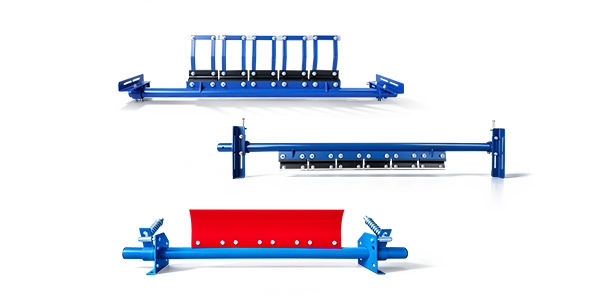
Poor rollers, pulley lagging, cleaners, and alignment can shorten the life of a correctly specified belt.
A Practical Selection Process for Buyers
A practical selection process begins with collecting accurate site data. The buyer should identify the material, required capacity, belt speed, route length, lift, loading conditions, operating schedule, and environment. Existing drawings and belt specifications should be reviewed, but not accepted automatically if the operating conditions have changed.
Next, compare belt constructions and cover properties. Confirm the carcass type, tensile rating, belt width, cover thickness, resistance requirements, and splice method. Then check compatibility with pulley diameters, drive arrangement, take-up travel, idler configuration, impact support, and cleaning system.
For projects requiring non-standard dimensions or coordinated component selection, custom conveyor solutions can help align belt requirements with rollers, pulleys, idler sets, and other system components. SHENGYUAN states that it supports custom manufacturing based on customer drawings and specific application requirements.
Working with SHENGYUAN for Heavy-Duty Conveyor Systems
SHENGYUAN supplies conveyor belts together with conveyor rollers, conveyor pulleys, idler sets, belt cleaners, and related heavy-duty conveyor components. Its website presents belt options for mining, coal, cement, aggregate, power plants, ports, terminals, chemical processing, and other bulk handling applications.
For buyers, the commercial advantage of coordinated sourcing is that compatibility questions can be reviewed across multiple parts of the conveyor. Belt width can be checked against roller and idler arrangements. Pulley dimensions and lagging can be considered together with belt requirements. Loading-zone problems can be evaluated with impact rollers and cleaning requirements.
This approach is particularly useful for mining maintenance programmes, EPC projects, conveyor upgrades, replacement projects, and distributors that need a wider range of bulk material handling components from one supply partner.
Conclusion: Select the Belt as Part of the Complete Conveyor System
Choosing a mining conveyor belt for heavy-duty bulk material handling requires a complete understanding of the application. Material type determines abrasion, cut, impact, heat, and carryback risks. Conveyor length, lift, load, and speed determine strength and capacity requirements. The carcass provides tensile strength, while the cover protects the belt from the working environment.
However, even a correctly selected belt depends on the condition of the full conveyor system. Rollers must rotate reliably and support the belt correctly. Pulleys must remain aligned and provide suitable traction. Loading zones must control impact. Belt cleaners must reduce carryback. The take-up system must maintain suitable tension without unnecessary overload.
The most reliable purchasing decision is therefore based on operating data, engineering compatibility, expected service life, and total cost of ownership. Before ordering, provide the supplier with complete information and confirm how the belt will interact with the entire conveyor system.
Need a mining conveyor belt solution?
Send your material type, belt width, belt speed, conveyor length, capacity, lift height, temperature, abrasion conditions, pulley data, and operating environment. SHENGYUAN can review your project requirements and support conveyor belt selection together with rollers, idlers, pulleys, cleaners, and related bulk material handling components.