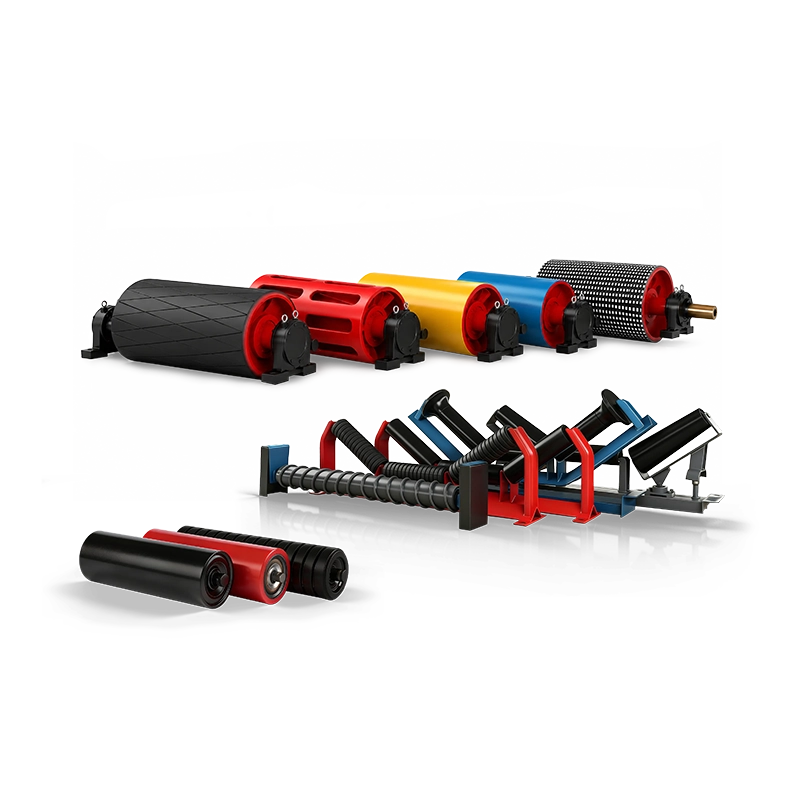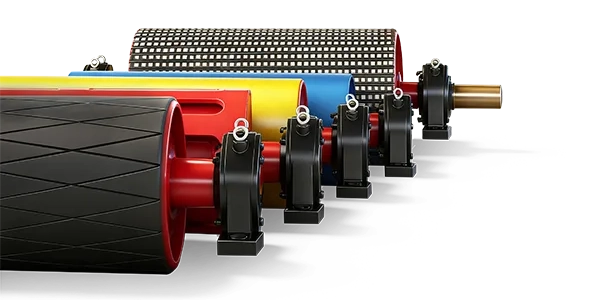
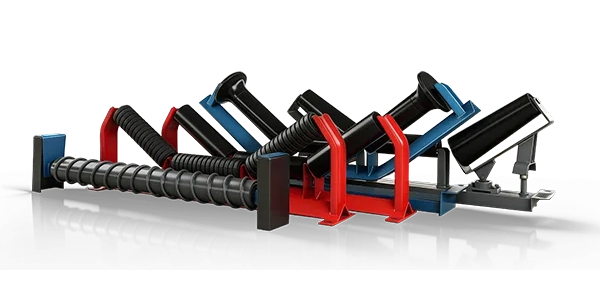
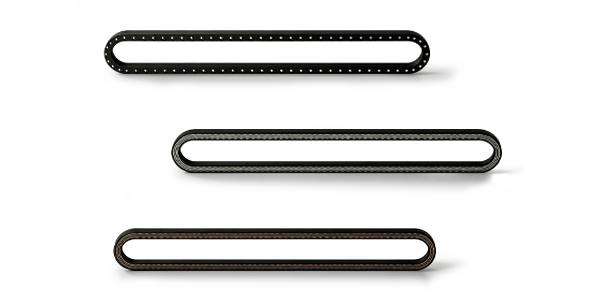




At a bulk terminal, replacing a conveyor pulley is more than a component purchase. The replacement must fit existing equipment, withstand changing cargo and weather conditions, and arrive before the maintenance window. A dimensional error or missing bearing housing can delay recommissioning even when the pulley itself is well manufactured.
The best port and terminal conveyor pulley supplier is therefore the one that can demonstrate a suitable design, confirm installation interfaces, document inspection results, and clearly define delivery responsibilities. There is no single pulley specification that is best for every terminal.
Quick answer: Evaluate suppliers against five requirements: verified operating loads, suitable lagging, exposure-specific corrosion protection, confirmed replacement dimensions, and documented inspection and delivery arrangements. Compare prices only after confirming that each quotation covers the same assembly and technical requirements.
Define the Terminal Duty Before Selecting the Pulley
“Port application” describes a location, not a complete operating specification. A sheltered grain conveyor, an outdoor ore stockyard conveyor, and a fertilizer unloading line expose pulleys to different combinations of moisture, dust, contamination, and loading.
Explain where the pulley operates and which conditions have caused problems. Include loaded restarts, reversing, washdown practices, and seasonal exposure rather than providing only average throughput.
| Terminal Condition | Purchasing Concern | Required Clarification |
| Rain-exposed drive station | Wet traction and lagging adhesion | Lagging specification, wrap angle, and operating tensions |
| Reversible stockyard conveyor | Performance in both directions | Bidirectional lagging suitability and reversing load cases |
| Coastal outdoor installation | Corrosion and moisture ingress | Coating system, seals, and storage protection |
| Multi-cargo handling route | Changing contaminants and cleaning conditions | Cargo list, cleaning agents, and material compatibility |
| Restricted shutdown window | Installation delays | Verified interfaces, assembly scope, and delivery milestones |
Do Not Confuse Drive Power with Pulley Loading
Motor power alone cannot establish shaft, shell, or bearing requirements. A drive pulley transmits torque while also carrying the forces exerted by both belt strands. Starting, braking, and reversing may introduce additional design cases.
As explained in Rulmeca’s conveyor tension guidance, power transferred to the belt equals effective belt tension multiplied by belt speed. Effective tension is the difference between tight-side and slack-side tensions; it is not the complete radial load acting on the pulley.
Illustrative calculation: Transferring 250 kW at 2.5 m/s requires 100 kN of effective belt tension. If tight-side tension is 160 kN and slack-side tension is 60 kN, a simplified 180-degree wrap arrangement produces 220 kN of belt-induced radial force, before other loads are considered. The 100 kN tension difference is therefore not an adequate bearing-load specification.
This example is not a design recommendation. Actual bearing reactions depend on belt geometry, pulley weight, bearing positions, and other applied loads. Ask the supplier which load cases support the proposed design and who is responsible for verifying them.
Select Lagging for Wet Starts and Actual Belt Conditions
A drive that runs successfully when dry may slip during a loaded restart after rain. Before changing lagging, review belt tension, wrap angle, contamination, and the condition of the belt’s pulley-contact surface.
Patterned rubber and ceramic lagging are options to evaluate, not interchangeable upgrades. Flexco’s lagging selection guidance likewise identifies wet or dry belt conditions, maintenance requirements, and expected wear life as selection considerations.
Request the proposed compound, thickness, surface pattern, attachment method, and belt compatibility. For reversible conveyors, obtain explicit confirmation of suitability in both directions. Also distinguish the bare shell diameter from the finished diameter over lagging, because this affects installation geometry.
Specify Corrosion Protection Beyond “Marine Paint”
“Marine paint” is too vague for comparing quotations. Describe whether the pulley is sheltered, rain-exposed, subject to salt deposition, or regularly washed. Fertilizer residues and cleaning chemicals may introduce additional compatibility requirements.
Agree on surface preparation, coating products, dry-film thickness, inspection records, and repair procedures for damaged coatings. Identify areas requiring different treatment, including machined bearing seats and surfaces prepared for lagging adhesion.
Coatings do not replace effective bearing seals or suitable lubrication. For recurring contamination problems, review our guide to reducing conveyor pulley bearing failures before repeating the previous assembly specification.
Verify Replacement Interfaces Before Manufacturing
A replacement can match the original drum diameter and still fail to fit. Shaft shoulders, bearing centers, coupling positions, housing bolt patterns, and extraction space all affect installation.
Use a controlled drawing revision supported by site measurements. Existing drawings may not reflect previous modifications, while worn components should not automatically be copied as nominal dimensions.
01. Confirm shell diameter, finished lagged diameter, face width, and belt centerline.
02. Verify shaft steps, bearing seats, shoulders, keyways, and coupling interfaces.
03. Check bearing-center distance, housing footprint, mounting height, and locating arrangement.
04. Review cleaner, guard, chute, and take-up clearances.
05. Confirm assembly mass, lifting provisions, access, and removal space.
Approve any proposed dimensional change through engineering review. An apparently minor substitution can transfer work to the terminal’s maintenance team during a tightly scheduled shutdown.
Make Supplier Quality Claims Verifiable
Request an inspection plan linked to the approved drawing and purchase specification. “Strict quality control” becomes useful only when the buyer knows what will be checked, the acceptance criteria, and which records will accompany the pulley.
Before Production
Resolve material specifications, load assumptions, bearing and hub selections, lagging details, and technical deviations. Agree on required material certificates and any witness or hold points.
Before Shipment
Review dimensional measurements, specified runout checks, coating records, and lagging inspection results. Where weld examination or balancing is required, define the method, scope, and acceptance criteria in advance. A generic test certificate should not substitute for records identifying the supplied assembly.
At the Terminal
Check identification, transit damage, accessories, and storage instructions. Physical installation checks require isolation and control of stored energy. Qualified personnel should conduct commissioning under site procedures and establish baseline operating records.
Buy for the Shutdown Window, Not Just the Dispatch Date
Factory completion is not the same as installation readiness. The schedule must allow for drawing approval, manufacturing, inspection, freight, customs clearance, site receipt, and any required assembly work.
Clarify whether the offer includes bearings, housings, locking assemblies, couplings, seals, and mounting hardware. A lower-priced bare pulley is not directly comparable with a complete replacement assembly.
Delivery checklist: agreed assembly scope and approved drawing revision.
Inspection release date, shipping responsibilities, and required arrival date.
Protection of machined surfaces, lagging, bearings, and loose accessories.
Packing list, lifting information, preservation period, and storage instructions.
For critical conveyors without a practical bypass, assess whether a ready-to-install spare is justified by replacement lead time and the consequences of an unplanned outage.
Discuss Your Terminal Pulley Requirements with SHENGYUAN
SHENGYUAN supplies conveyor pulleys and related bulk-handling components. Its customization service includes requirement review, technical coordination, production, finished-product inspection, and delivery support.
For terminal buyers, this provides a route to discuss replacement interfaces and manufacturing requirements directly. Project-specific load verification, inspection documents, coating systems, and delivery commitments should still be confirmed in the written proposal.
Prepare a quotation that supports your maintenance schedule
Send the latest drawing, pulley position, operating data, cargo details, exposure conditions, failure photographs, and required arrival date. Identify whether you need a bare pulley, a bearing-mounted assembly, or a ready-to-install spare.
Conclusion
The strongest port pulley proposal connects verified loads, wet-weather performance, corrosion protection, installation dimensions, and delivery readiness. Select a supplier on documented suitability and complete supply scope, not broad claims or drum dimensions alone. This approach reduces uncertainty before the shutdown begins.