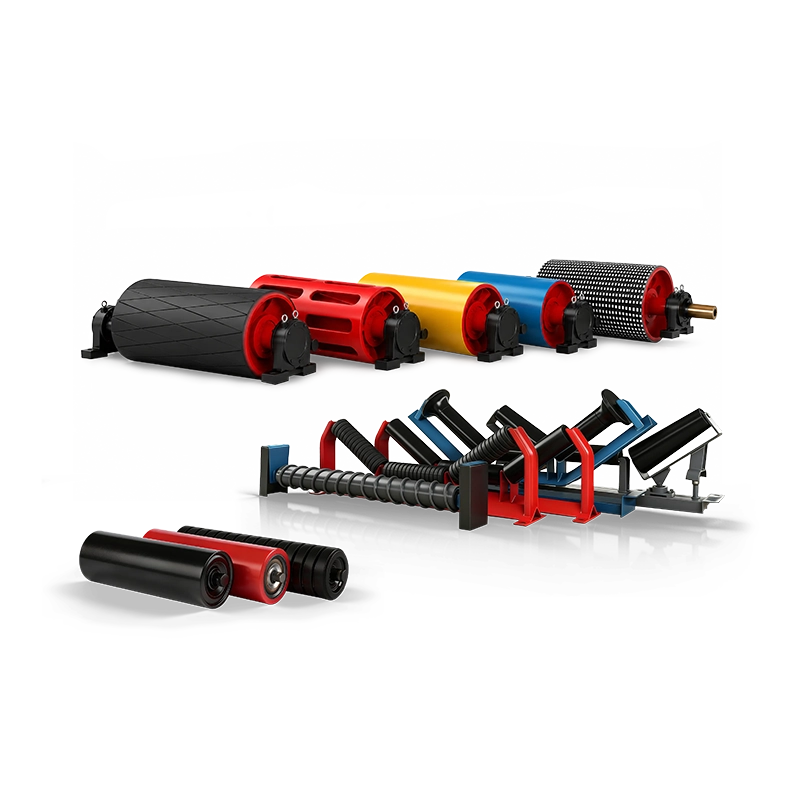



Conveyor pulleys are essential rotating components in belt conveyor systems. They drive the belt, change belt direction, maintain tension, increase wrap angle, support the return path, and help keep bulk material moving continuously. In industries such as mining, quarrying, cement, coal handling, ports, steel plants, power generation, aggregate processing, and chemical material handling, the correct conveyor pulley can directly affect belt life, energy efficiency, maintenance cost, and system reliability.
Although a conveyor pulley may look like a simple steel drum, its performance depends on pulley type, diameter, shell thickness, shaft design, bearing arrangement, lagging material, surface treatment, dynamic balance, installation accuracy, and working environment. Choosing the wrong pulley may lead to belt slip, bearing overheating, shaft wear, lagging failure, belt mistracking, material buildup, and unplanned downtime. This guide explains the main types of conveyor pulleys, important selection factors, and common industrial applications in clear and practical language.
Quick answer: The main conveyor pulley types include drive pulley, head pulley, tail pulley, bend pulley, snub pulley, take-up pulley, wing pulley, self-cleaning pulley, rubber lagged pulley, ceramic lagging pulley, and custom conveyor drum pulley for heavy-duty belt conveyor systems.
What Is a Conveyor Pulley?
A conveyor pulley is a rotating drum installed in a belt conveyor system to support, drive, guide, or tension the conveyor belt. The pulley normally includes a steel shell, shaft, end discs, hubs, bearings, bearing housings, and sometimes rubber lagging, ceramic lagging, polyurethane lagging, or self-cleaning structures. Depending on its position, a pulley may transfer power, change direction, increase belt contact, or maintain correct belt tension.
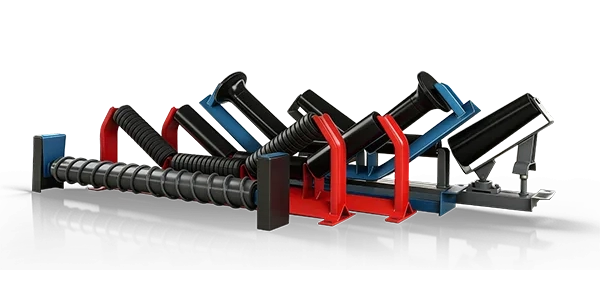
In a complete conveyor system, pulleys work together with conveyor rollers, idler sets, belt cleaners, frames, drive units, and tensioning devices. A problem with one pulley can affect the whole system. For example, a worn drive pulley may cause belt slip, while a misaligned tail pulley may create belt mistracking and edge damage.
Why Conveyor Pulley Selection Matters
In heavy-duty bulk material handling, pulley selection is not only about matching diameter and belt width. A pulley must handle belt tension, material load, drive torque, operating speed, environmental exposure, and long operating hours. If the pulley is under-designed, the shell may deform, the shaft may suffer fatigue, the bearings may overheat, or the lagging may fail early.
From a business perspective, the real cost of a conveyor pulley includes purchase price, installation cost, maintenance labour, belt damage risk, downtime cost, and spare parts management. A reliable conveyor pulley can reduce emergency shutdowns, protect the belt, improve traction, and support stable production. For critical conveyors, service life and operating reliability are often more important than the lowest unit price.
Drive Reliability
A suitable drive pulley improves belt traction and reduces slip under heavy load.
Belt Protection
Correct pulley alignment and lagging reduce belt wear, edge damage, and mistracking.
Lower Downtime Risk
Strong pulley design helps avoid shaft failure, bearing damage, and sudden stoppage.
Main Types of Conveyor Pulleys
Different pulley types are used in different positions of a belt conveyor. Each pulley has a specific function, and the correct choice depends on the conveyor layout, belt tension, belt speed, material type, and working environment. A drive pulley, tail pulley, bend pulley, snub pulley, and take-up pulley should not be treated as interchangeable parts.
| Pulley Type | Main Function | Typical Position |
| Drive Pulley | Transfers motor power to the belt | Drive end or head section |
| Head Pulley | Discharges material and changes belt direction | Discharge end |
| Tail Pulley | Turns the belt back at the loading end | Tail or loading end |
| Bend Pulley | Changes belt direction along the route | Return path or transfer area |
| Snub Pulley | Increases belt wrap around the drive pulley | Near drive pulley |
| Take-up Pulley | Maintains correct belt tension | Take-up system |
Drive Pulley and Head Pulley
The drive pulley is responsible for transmitting power from the motor and gearbox to the conveyor belt. In many systems, the drive pulley is also the head pulley because it is located at the discharge end. This pulley works under high torque and belt tension, so its structure must be strong and accurately manufactured.
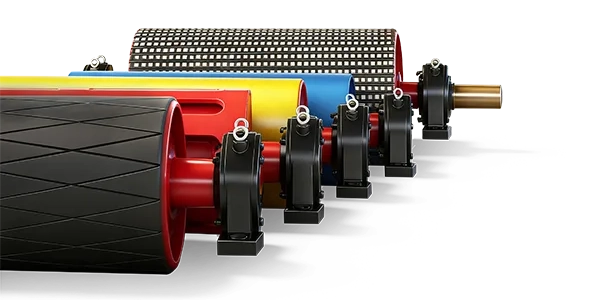
Drive pulley design should consider pulley diameter, shaft strength, bearing capacity, lagging type, wrap angle, belt speed, and starting condition. Rubber lagging, diamond rubber lagging, ceramic lagging, or cold bonded ceramic lagging may be used to improve friction and reduce belt slip. For wet, muddy, or high-tension applications, ceramic lagging can provide stronger grip and better wear resistance than plain rubber lagging.
Tail Pulley for Belt Return and Loading Stability
The tail pulley is normally installed at the opposite end of the conveyor from the head pulley. It turns the belt back toward the carrying side and often works close to the loading zone. Because the tail area may be exposed to carryback material, dust, water, and spillage, tail pulleys need good sealing, proper alignment, and suitable surface protection.
A misaligned tail pulley can cause the belt to enter the loading area off-center. This may result in material spillage, belt mistracking, and uneven wear on rollers and frames. In sticky material applications, a wing pulley or self-cleaning tail pulley may help reduce material buildup between the belt and pulley surface.
Bend Pulley and Snub Pulley
Bend pulleys are used to change the direction of the belt. They may be installed in the return section, near transfer points, or around take-up systems. Although they may not transmit driving power, bend pulleys still carry belt tension and must be properly aligned. Poor alignment can increase belt edge wear and bearing stress.
A snub pulley is usually installed near the drive pulley to increase the belt wrap angle. More wrap angle helps the belt contact more of the drive pulley surface, improving traction and reducing slip risk. Because snub pulleys operate under strong belt contact pressure, their bearings, shaft, shell, and lagging must be selected carefully.
Take-up Pulley for Belt Tension Control
A take-up pulley works with the conveyor tensioning system. Its function is to maintain suitable belt tension as the belt stretches, load changes, or temperature varies. Take-up systems may be gravity type, screw type, or automatic type depending on conveyor design and capacity.
If belt tension is too low, the belt may slip on the drive pulley. If tension is too high, bearings, shafts, pulleys, and belt carcass may experience unnecessary stress. A take-up pulley should move smoothly and remain aligned during operation. If one side of the take-up system moves more than the other, the belt may mistrack and damage surrounding components.
Wing Pulley and Self-Cleaning Pulley
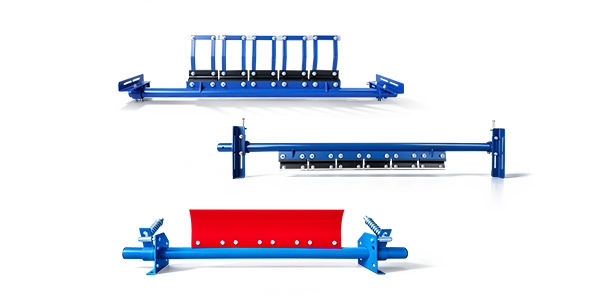
Wing pulleys and self-cleaning pulleys are designed to reduce material buildup on the pulley surface. They are often used at tail positions, return sections, or areas where wet, sticky, or fine material may become trapped between the belt and pulley.
A wing pulley has a structure that allows material to escape rather than being pressed between the belt and a solid pulley face. A self-cleaning pulley may use special surface designs or cleaning structures to reduce accumulation. These pulleys are especially useful in coal, clay, ore fines, cement powder, aggregate, and other difficult bulk material applications. However, selection should consider belt condition, material size, speed, and required belt support.
Pulley Lagging Options
Pulley lagging is the surface layer applied to the pulley shell to increase friction, protect the shell, reduce slip, and improve belt contact. Common options include plain rubber lagging, diamond rubber lagging, ceramic lagging, cold bonded ceramic lagging, and polyurethane lagging. The right choice depends on belt tension, moisture, material abrasiveness, pulley position, and operating environment.
| Lagging Type | Main Advantage | Typical Use |
| Plain Rubber Lagging | Basic friction and shell protection | General conveyors |
| Diamond Rubber Lagging | Improved drainage and traction | Drive pulleys and wet conditions |
| Ceramic Lagging | High grip and wear resistance | Heavy-duty and high-tension conveyors |
| Polyurethane Lagging | Wear resistance and elastic protection | Special belt protection applications |
Key Factors for Selecting Conveyor Pulleys
Selecting the right conveyor pulley starts with understanding the working condition. Important information includes belt width, belt speed, belt tension, conveyor capacity, material type, pulley position, wrap angle, take-up type, operating hours, and environmental exposure. A pulley used in a dry indoor conveyor does not face the same risk as a pulley used in a wet quarry, dusty cement plant, or port terminal.
Selection checklist
- Confirm pulley type: drive, head, tail, bend, snub, take-up, wing, or self-cleaning pulley.
- Match pulley diameter, shell thickness, shaft size, and bearing capacity with belt tension.
- Select lagging according to belt slip risk, moisture, and material abrasiveness.
- Check alignment, bearing housing, shaft fit, and installation dimensions before ordering.
- Review corrosion protection, coating, packaging, and logistics for export projects.
For replacement projects, drawings are very important. Buyers should provide pulley diameter, face width, shaft diameter, shaft length, bearing type, keyway or locking assembly details, lagging requirement, and installation position. For new projects, engineering data such as belt tension and drive power should be reviewed before finalizing the pulley design.
Industrial Applications of Conveyor Pulleys
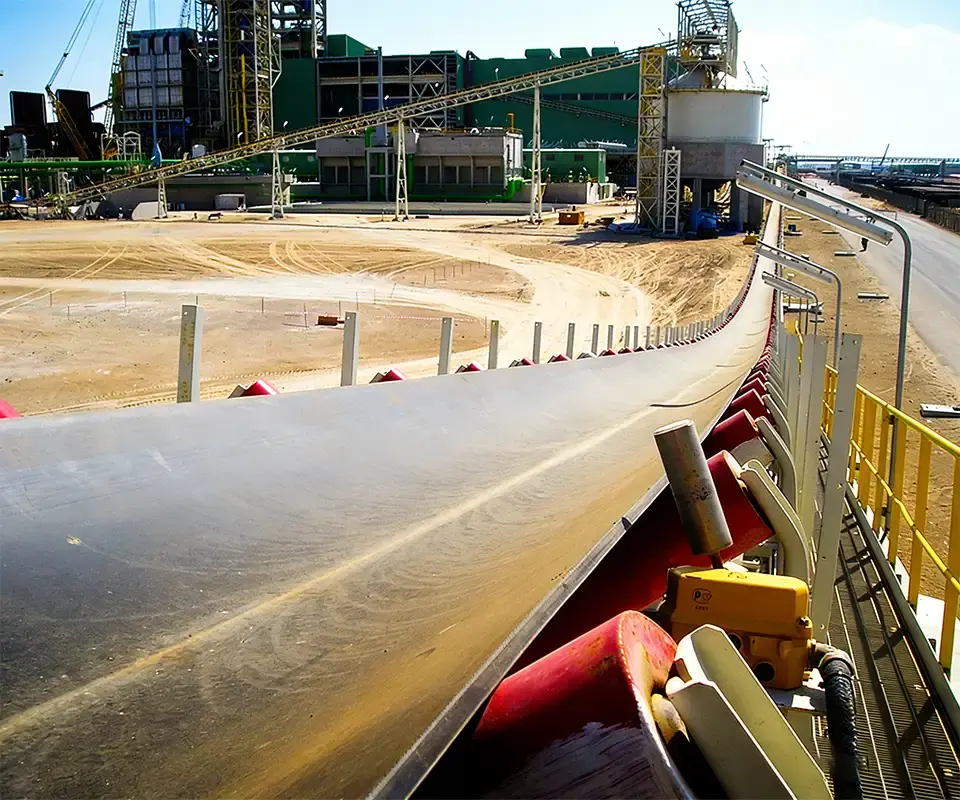
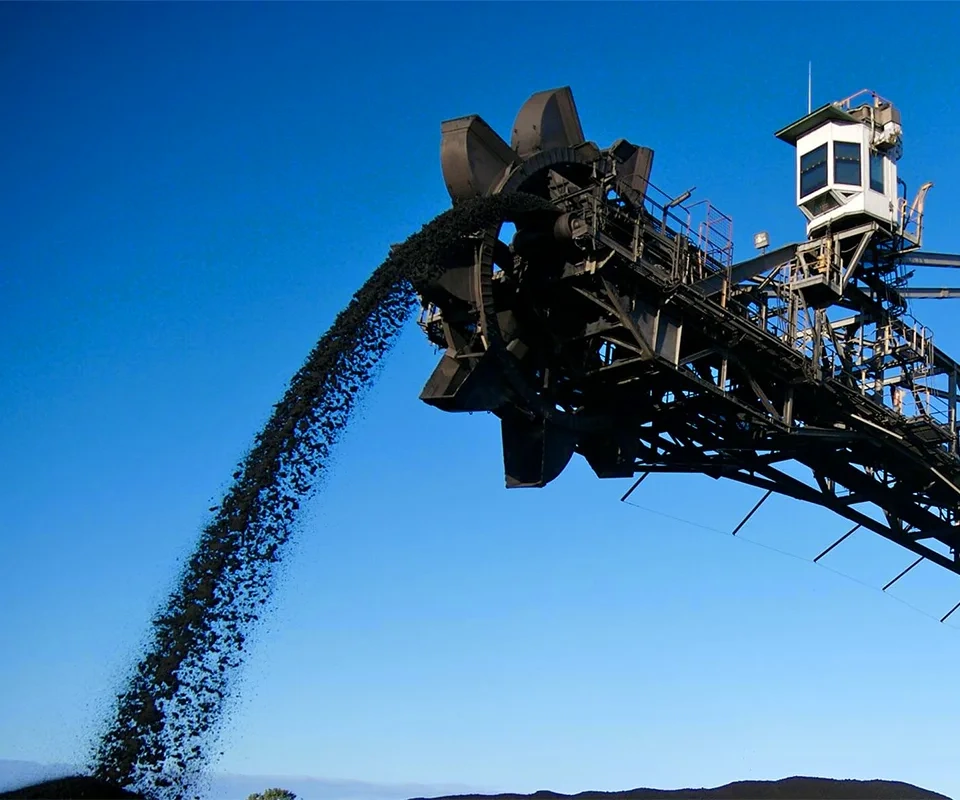
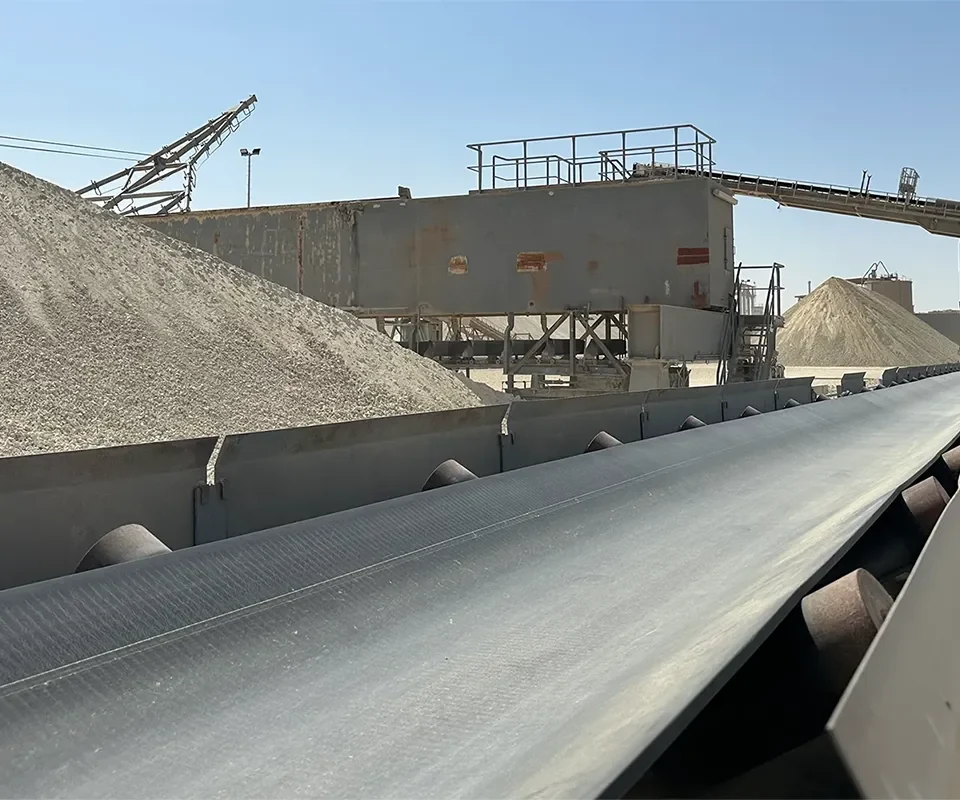
Conveyor pulleys are used wherever belt conveyors move bulk materials. In mining and coal handling, pulleys must withstand heavy loads, dust, long working hours, and impact from large materials. In cement and aggregate plants, pulleys face abrasive materials, fine dust, and continuous operation. In ports and terminals, conveyor pulleys must support high-capacity transfer of coal, ore, grain, fertilizer, and other bulk products.
In steel plants and power plants, conveyor systems often operate for long periods, so pulley reliability is critical. In chemical, salt, sugar, and corrosive environments, pulley coating, sealing, and corrosion protection become especially important. In construction waste and crushing material handling, pulleys may face irregular material flow, vibration, and severe contamination.
| Industry | Typical Pulley Requirement |
| Mining and Coal | Heavy-duty shaft, strong shell, reliable bearings, wear-resistant lagging |
| Cement and Aggregate | Dust resistance, abrasion resistance, stable alignment |
| Ports and Terminals | High-capacity operation, corrosion protection, secure packaging |
| Power and Steel Plants | Continuous operation, long service life, stable bearing performance |
Custom Conveyor Pulley Solutions
Many belt conveyor systems require customized pulleys because conveyor layout, belt tension, shaft connection, bearing arrangement, face width, lagging type, and installation dimensions vary from project to project. Standard pulleys may not fit replacement projects, export projects, or heavy-duty applications. In these cases, custom conveyor solutions can help match pulley design with actual operating conditions.
Custom options may include pulley diameter, face width, shell thickness, shaft diameter, shaft end design, hub structure, bearing type, bearing housing, lagging material, coating, dynamic balance, and packaging. For OEM and replacement work, clear drawings, photos, old pulley dimensions, belt width, and site conditions can reduce design errors and improve delivery efficiency.
Working with SHENGYUAN for Conveyor Pulley Projects
SHENGYUAN specializes in conveyor pulleys, conveyor rollers, idler sets, and related conveyor components for heavy-duty bulk material handling systems. The company serves applications such as mining, coal, cement, quarries, ports, steel plants, power plants, aggregates, chemical handling, and industrial material conveying.
For buyers looking for conveyor pulleys, the most useful information includes belt width, belt speed, pulley position, belt tension, pulley diameter, shaft diameter, lagging type, bearing requirement, material handled, working environment, and drawings if available. SHENGYUAN can support drawing-based manufacturing and customized pulley solutions for different conveyor systems.
For international projects, professional communication, packaging, shipment coordination, and after-sales support are also important. Buyers can review service and logistics support when planning bulk orders, replacement pulleys, or customized conveyor component shipments.
Conclusion: The Right Conveyor Pulley Protects the Whole System
Conveyor pulleys are critical to belt conveyor performance. Drive pulleys transfer power, head pulleys discharge material, tail pulleys return the belt, bend pulleys change direction, snub pulleys increase wrap angle, take-up pulleys control tension, and self-cleaning pulleys help reduce material buildup. Each pulley type must be selected according to its function and working condition.
The best conveyor pulley selection process considers belt width, belt speed, belt tension, material type, operating environment, bearing design, shaft strength, lagging choice, alignment, maintenance access, and total service life. A reliable pulley can reduce belt slip, protect bearings, improve belt tracking, lower maintenance frequency, and support continuous production in heavy-duty bulk material handling systems.
Need conveyor pulleys for your project?
Send your belt width, belt speed, pulley drawings, pulley position, material type, lagging requirement, and working environment. SHENGYUAN can help recommend drive pulleys, tail pulleys, bend pulleys, snub pulleys, take-up pulleys, self-cleaning pulleys, or customized conveyor drum pulley solutions for heavy-duty belt conveyor systems.
FAQ: Conveyor Pulleys
These questions summarize common concerns from conveyor buyers, engineers, and maintenance teams when selecting industrial conveyor pulleys.