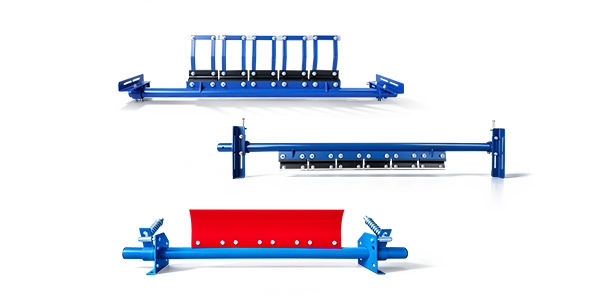


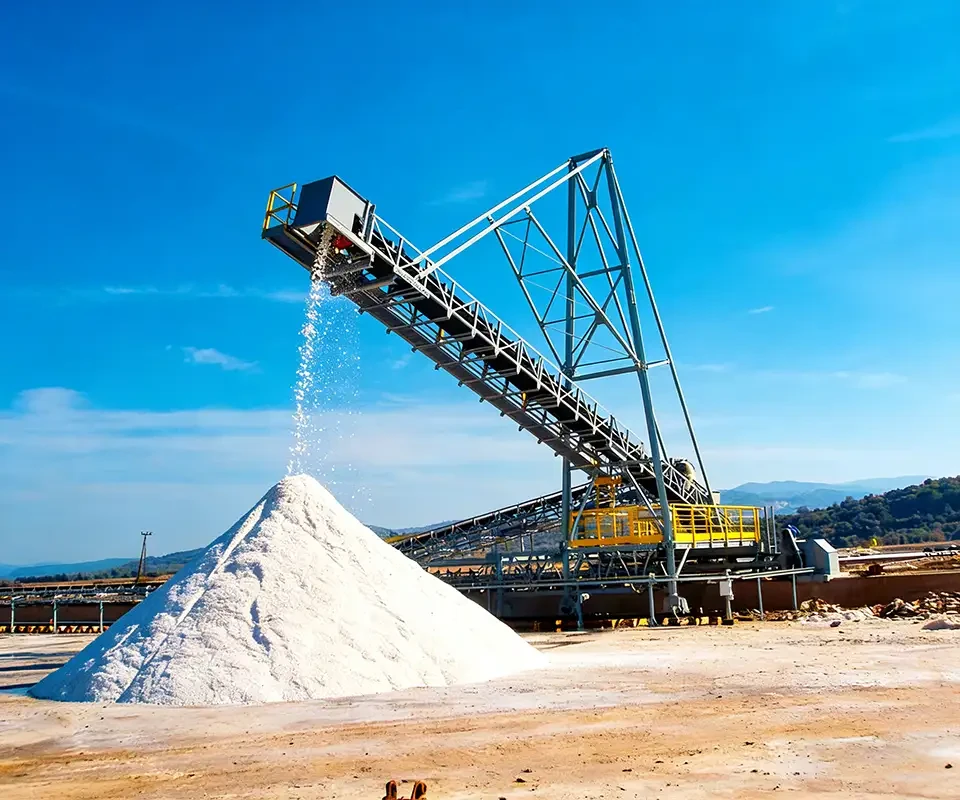
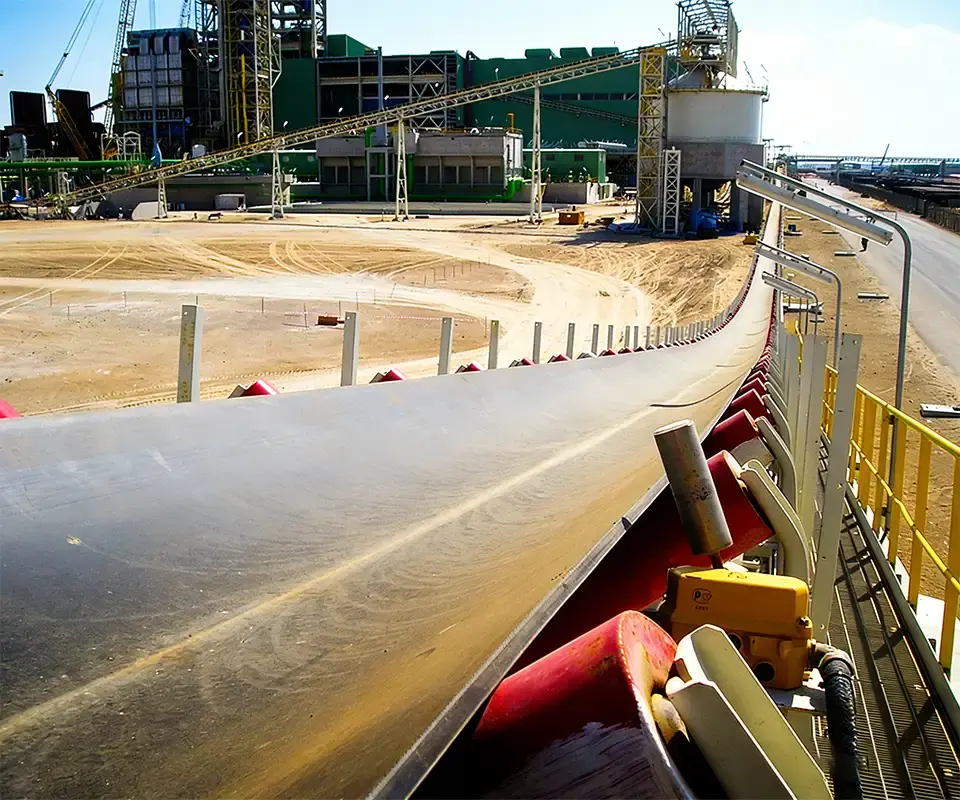
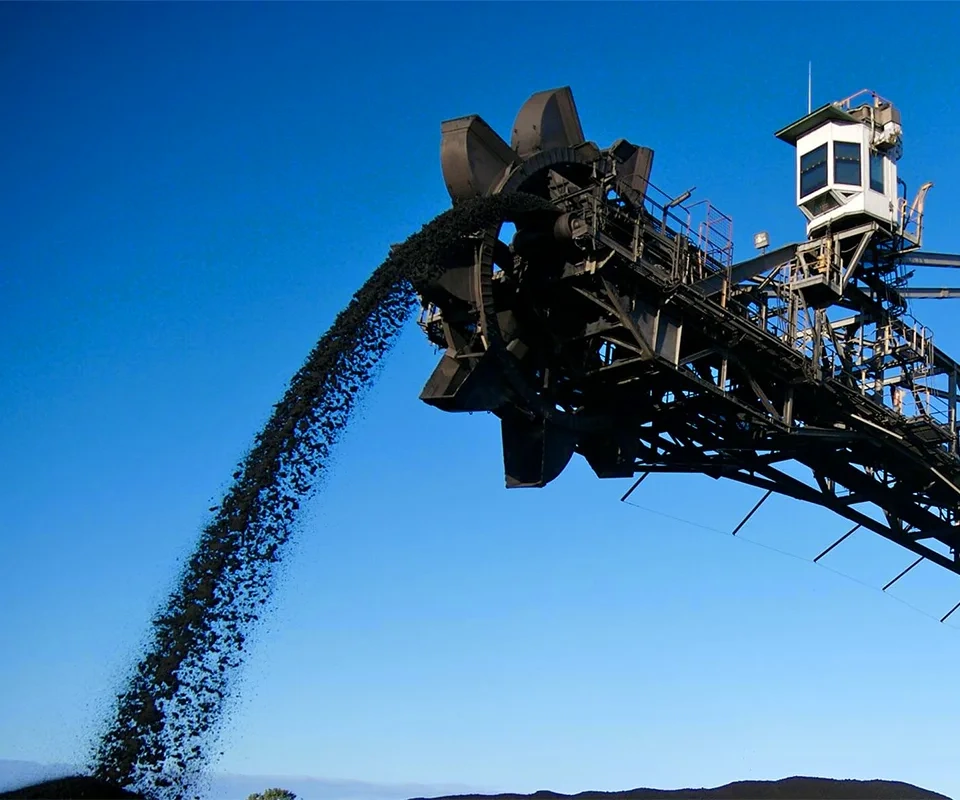
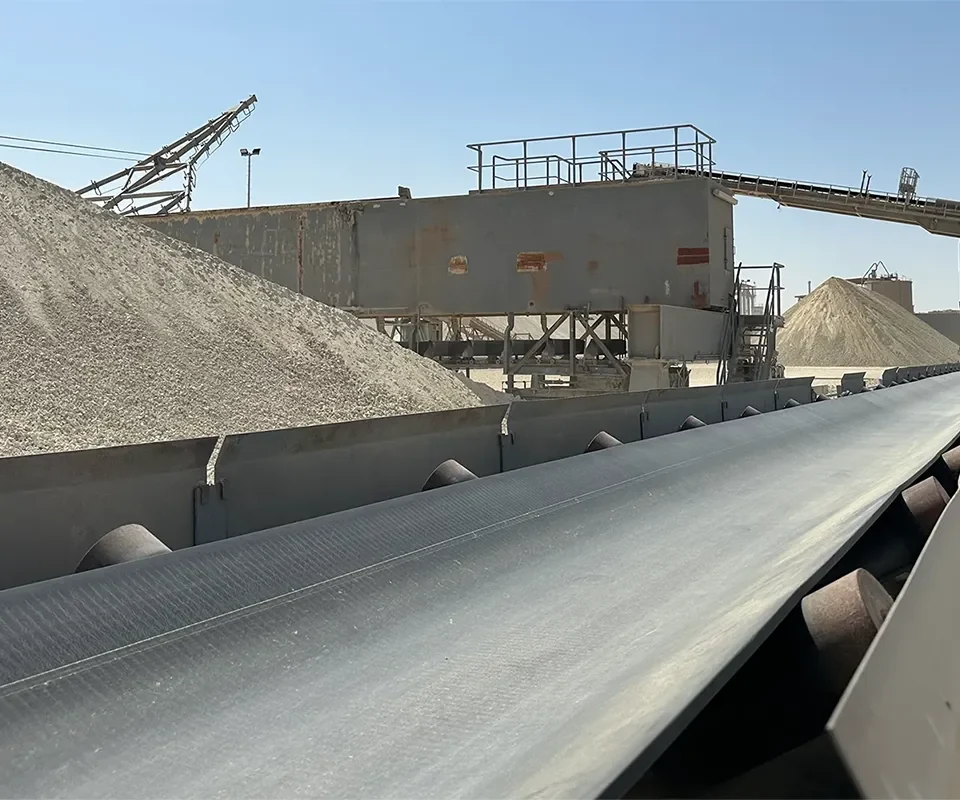
Belt cleaners are small components compared with the conveyor belt, pulleys, or drive system, but their effect on conveyor reliability can be significant. When sticky material remains attached to the belt after discharge, it travels back with the return belt and can fall beneath the conveyor, accumulate on rollers, or become trapped between the belt and a pulley.
For mining, quarrying, cement, coal handling, aggregates, ports, steel plants, and power stations, this carryback can create repeated maintenance problems. The main purpose of a conveyor belt cleaner is therefore to remove material adhering to the belt before that material creates additional problems elsewhere in the conveyor system.
Two important cleaning positions are the head/discharge area and the empty return section. A head cleaner removes material from the belt’s carrying surface around the discharge pulley, while an empty-section cleaner removes material from the non-carrying side of the belt before it can enter a tail pulley or take-up pulley.
Quick answer: Head cleaners and empty-section cleaners solve different contamination problems. The head cleaner removes sticky carryback from the working surface of the belt after discharge. The empty-section cleaner removes material from the non-working surface and helps prevent debris from being pulled between the belt and tail pulley or take-up pulley. In many bulk-material conveyors, both positions are important.
Why Are Conveyor Belt Cleaners Important?
Ideally, all conveyed material leaves the belt at the discharge pulley. In practice, fine, wet, sticky, or cohesive material can remain attached to the belt surface after discharge.
This remaining material is commonly called carryback. As the belt moves onto the return run, carryback travels away from the discharge point instead of entering the chute with the main material stream.
Once carryback enters the return side of the conveyor, it can fall onto walkways and structures, accumulate on return rollers, contaminate pulleys, and increase housekeeping requirements. Effective cleaning removes as much of this material as practical at the correct locations.
The basic cleaning principle: Remove material close to where it should leave the conveyor, and prevent loose material on the return side from entering critical pulleys.
What Problems Does Belt Carryback Cause?
1. Material Accumulation Under the Return Belt
Carryback can gradually fall from the returning belt along the conveyor route. This creates piles of material beneath the structure and increases cleaning and maintenance work.
On long conveyors, even a relatively small amount of material carried back continuously can become a significant housekeeping problem over time.
2. Buildup on Return Rollers
Sticky material can transfer from the belt onto return rollers. If the buildup is uneven across the roller surface, the effective roller diameter can change and the belt may no longer run on a uniform support surface.
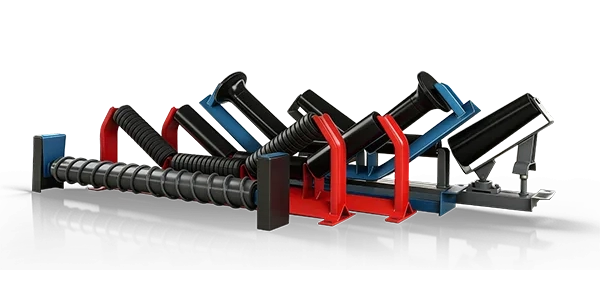
This can contribute to vibration, unstable belt movement, and tracking problems. Spiral or comb-type return rollers can assist in sticky applications, but effective belt cleaning should remain the first line of control.
3. Material Entering the Tail Pulley
Loose material on the non-carrying side of the return belt can travel toward the tail pulley. If it reaches the pulley, it can become trapped between the pulley surface and the conveyor belt.
This is one of the main reasons an empty-section cleaner is installed ahead of the tail pulley. Its job is to remove material before the belt enters the pulley contact zone.
4. Material Entering a Take-Up Pulley
A similar problem can occur around vertical take-up arrangements. Material present on the non-working belt surface can be carried into the take-up pulley area.
An empty-section cleaner positioned before the pulley helps remove this debris before it reaches the belt-pulley interface.
What Is a Head Belt Cleaner?
A head cleaner is installed around the conveyor discharge area, typically associated with the head chute or discharge-pulley structure. Its purpose is to clean material adhering to the working or carrying surface of the conveyor belt.
At the discharge pulley, most bulk material leaves the belt and falls into the receiving chute. The cleaner removes material that remains attached after this main discharge has taken place.
Where the cleaner is installed within the head chute arrangement, removed material can fall directly into the chute instead of being carried onto the return run. This makes the discharge point an efficient location to control carryback.
Main job of a head cleaner: Clean sticky material from the belt’s working surface immediately after discharge and return the removed material to the normal material flow whenever the conveyor arrangement allows it.
What Is an Empty-Section Belt Cleaner?
An empty-section cleaner works on the non-working side of the conveyor belt. It is used to remove loose or adhering material that could otherwise travel into a tail pulley or take-up pulley.
Unlike the head cleaner, its primary purpose is not to remove normal carryback from the carrying surface immediately after discharge. Instead, it provides additional protection for pulleys located along the return belt path.
A typical installation position is on the conveyor structure ahead of the tail pulley or ahead of a vertical take-up pulley. The cleaner diverts material away before the belt reaches the pulley.
Head Cleaner vs Empty-Section Cleaner
| Comparison | Head Cleaner | Empty-Section Cleaner |
| Main Cleaning Surface | Working/carrying side of belt | Non-working side of belt |
| Typical Position | Head chute or discharge-pulley area | Before tail or take-up pulley |
| Main Problem | Carryback after discharge | Material entering pulley contact zone |
| Removed Material | Can normally fall toward the discharge chute | Deflected away from the pulley path |
| Main Protection Target | Return side and overall conveyor cleanliness | Tail pulley and take-up pulley area |
Why a Head Cleaner Alone May Not Be Enough
A head cleaner can significantly reduce material remaining on the carrying surface, but a conveyor can still experience loose material on the return side.
Material can enter the return belt area from spillage, loading-zone leakage, material falling from structures, or residual contamination elsewhere in the conveyor. Once debris reaches the inside surface of the belt, the head cleaner is no longer positioned to remove it.
An empty-section cleaner therefore performs a different protective function. It prevents material from continuing toward a pulley where it could become trapped.
Important: Head cleaners and empty-section cleaners should not be treated as substitutes for one another. They clean different belt surfaces and protect different conveyor positions.
Why Is Material Between the Belt and Tail Pulley a Problem?
The tail pulley changes the direction of the return belt and sends it onto the carrying side. Material trapped at this location enters a confined contact area between the moving belt and pulley surface.
Large or abrasive particles in this position are undesirable because they disturb normal belt-to-pulley contact. Repeated contamination can also contribute to material buildup on the pulley surface.
Keeping this area clean is therefore an important preventive-maintenance measure. An empty-section cleaner provides a simple physical barrier that removes material before the belt reaches the pulley.
Why Is Take-Up Pulley Protection Important?
The take-up system maintains the required conveyor belt tension. In arrangements where the belt travels around a movable take-up pulley, the pulley remains an important belt-contact component.
Debris entering this area can interfere with clean belt-to-pulley contact. An empty-section cleaner installed upstream removes material before it reaches the take-up pulley.
For conveyor systems already experiencing contamination near tail or take-up pulleys, inspecting the return-side cleaner arrangement should be part of the troubleshooting process.
Sticky Material Requires More Attention to Belt Cleaning
Belt cleaning becomes especially important when the conveyed material is wet, fine, cohesive, or naturally sticky. Coal fines, wet ore, clay-containing materials, cement raw materials, and other cohesive bulk solids can remain attached to the belt after discharge.
In these applications, simply increasing the pressure of a cleaner is not always the correct solution. The cleaner should maintain effective contact with the belt without creating unnecessary belt wear.
Material characteristics, belt condition, operating speed, moisture, cleaner blade material, mounting position, and available adjustment should all be considered when selecting the cleaning arrangement.
How Belt Cleaning and Return Rollers Work Together
Belt cleaners and return rollers solve related but different problems. The cleaner removes contamination directly from the belt. Specialized return rollers can help reduce buildup that remains on the return side.
For example, spiral return rollers can assist in removing adhering material and reducing buildup on the roller surface. Comb-type return rollers can also be useful in sticky-material applications.
However, allowing large amounts of carryback to travel down the conveyor and expecting return rollers to remove it is generally less effective than controlling the material close to the discharge point.
Common Belt Cleaner Problems
Problem 1: Carryback Continues After the Head Pulley
Inspect whether the head cleaner maintains consistent contact across the required belt area. Cleaner condition, mounting position, wear, adjustment, and material characteristics should all be reviewed.
Problem 2: Material Builds Up on Return Rollers
This often indicates that too much material is escaping the main cleaning area. Review the head cleaning arrangement first, then evaluate whether specialized return rollers are appropriate.
Problem 3: Material Reaches the Tail Pulley
Check whether an empty-section cleaner is installed ahead of the tail pulley and whether it is correctly positioned to divert loose material away from the belt path.
Problem 4: Material Reaches the Take-Up Pulley
The return-side protection arrangement should be checked before the pulley. A suitable empty-section cleaner can prevent loose debris from being carried into the take-up system.
Problem 5: Cleaner Blade Wears Quickly
Rapid wear can indicate abrasive material, unsuitable blade material, poor adjustment, excessive contact pressure, irregular belt condition, or incorrect installation geometry. Replacing the blade without identifying the reason for premature wear may only repeat the problem.
Common Cleaner Selection Mistakes
Mistake 1: Treating All Belt Cleaners as the Same Component
A cleaner installed at the discharge point does not have the same purpose as one positioned ahead of the tail pulley. Always identify the belt surface and conveyor location that need cleaning.
Mistake 2: Installing Only a Head Cleaner When Tail-Pulley Contamination Exists
If loose material reaches the non-working belt surface farther downstream, a head cleaner cannot remove it. Empty-section protection should also be evaluated.
Mistake 3: Ignoring the Conveyed Material
Dry fine material, wet coal, sticky clay, abrasive ore, and cement raw material can create very different cleaning conditions. Cleaner selection should match the actual material rather than only the belt width.
Mistake 4: Ignoring Maintenance and Adjustment
A cleaner is a wear component. Its performance should be checked periodically, and adjustment should maintain appropriate contact as the cleaning element wears.
A Practical Belt Cleaning Strategy
01. Identify where material should normally leave the belt.
02. Inspect how much material remains on the working surface after discharge.
03. Use a suitable head cleaner to remove carryback at the discharge area.
04. Check whether material is reaching the non-working belt surface.
05. Protect the tail pulley with an empty-section cleaner where required.
06. Protect take-up pulleys from return-side debris where applicable.
07. Inspect return rollers for material buildup.
08. Check cleaner wear and adjustment regularly.
09. Review belt condition and cleaner contact if cleaning remains inconsistent.
10. Treat cleaning as part of the complete conveyor system rather than as an isolated accessory.
What Information Should You Provide When Selecting a Belt Cleaner?
Provide: conveyor belt width;
belt speed;
material type and condition;
whether the material is dry, wet, sticky, or abrasive;
cleaning position;
head, tail, and take-up pulley arrangement;
existing cleaner dimensions;
available installation space;
current problems such as carryback, pulley contamination, or rapid blade wear;
photos and drawings where available.
Why Choose SHENGYUAN for Conveyor Cleaning Components?
SHENGYUAN supplies conveyor cleaning components together with rollers, idlers, pulleys, belts, and related parts for mining, quarrying, cement, aggregates, coal handling, ports, steel plants, power stations, and other bulk material handling applications.
Cleaner configuration can be matched to the required installation position, belt width, material condition, and existing conveyor arrangement. Different cleaning elements and mounting structures can also be considered according to the customer’s actual operating conditions.
Through custom conveyor solutions, replacement components can be produced according to drawings and site dimensions. This is especially useful for older conveyor systems or projects where the original mounting arrangement is non-standard.
For systems experiencing both carryback and pulley contamination, cleaning components can be evaluated together with return rollers, conveyor pulleys, and belt-support components instead of treating each problem separately.
Experiencing carryback or material entering the tail pulley?
Provide the belt width, speed, conveyed material, moisture condition, cleaner position, pulley layout, existing cleaner dimensions, photos, and details of where material buildup occurs. These details make it easier to determine whether the conveyor needs improved head cleaning, empty-section protection, or both.
Conclusion: Head and Empty-Section Cleaners Protect Different Parts of the Conveyor
Effective belt cleaning reduces the amount of material that travels where it should not. The head cleaner removes sticky material from the working surface around the discharge area, helping prevent carryback from travelling down the return side.
The empty-section cleaner performs another important function. It removes material from the non-working belt surface before that material can enter the tail pulley or the take-up pulley.
These two cleaner positions address different contamination paths and should not be treated as interchangeable. A conveyor handling sticky or dusty bulk material may require both to maintain cleaner belt surfaces and protect downstream components.
The most effective cleaning strategy is to remove carryback as close to the discharge point as possible and then prevent any remaining loose material from entering critical return-side pulleys.