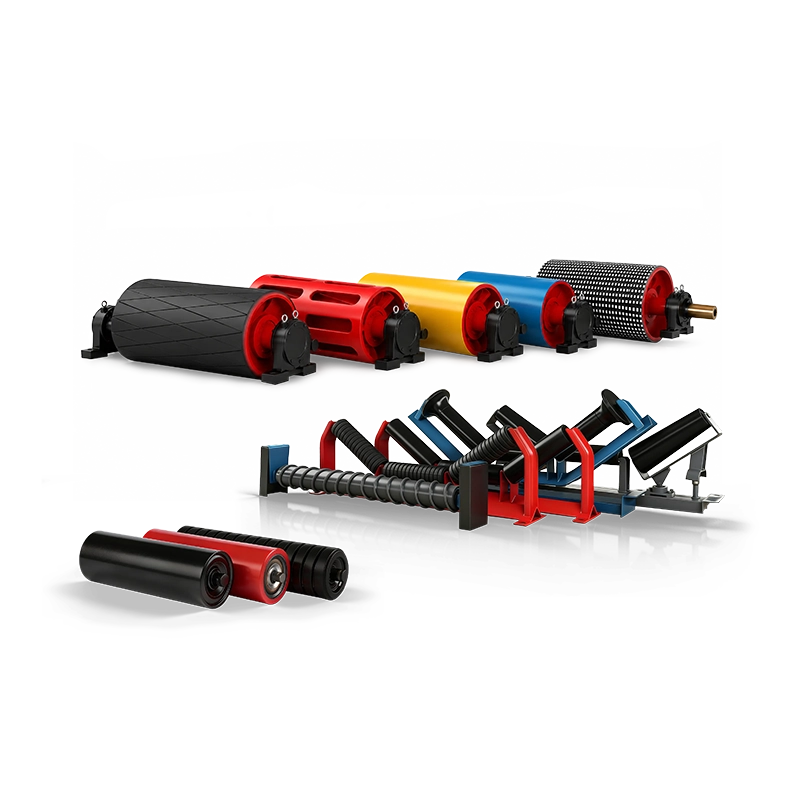

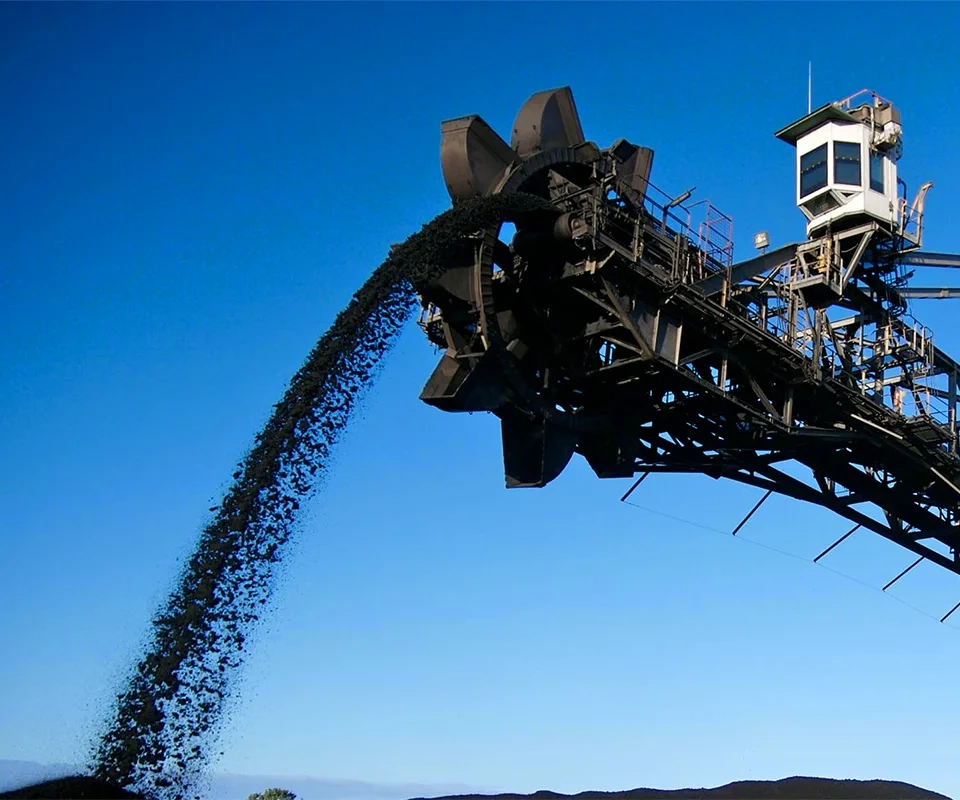
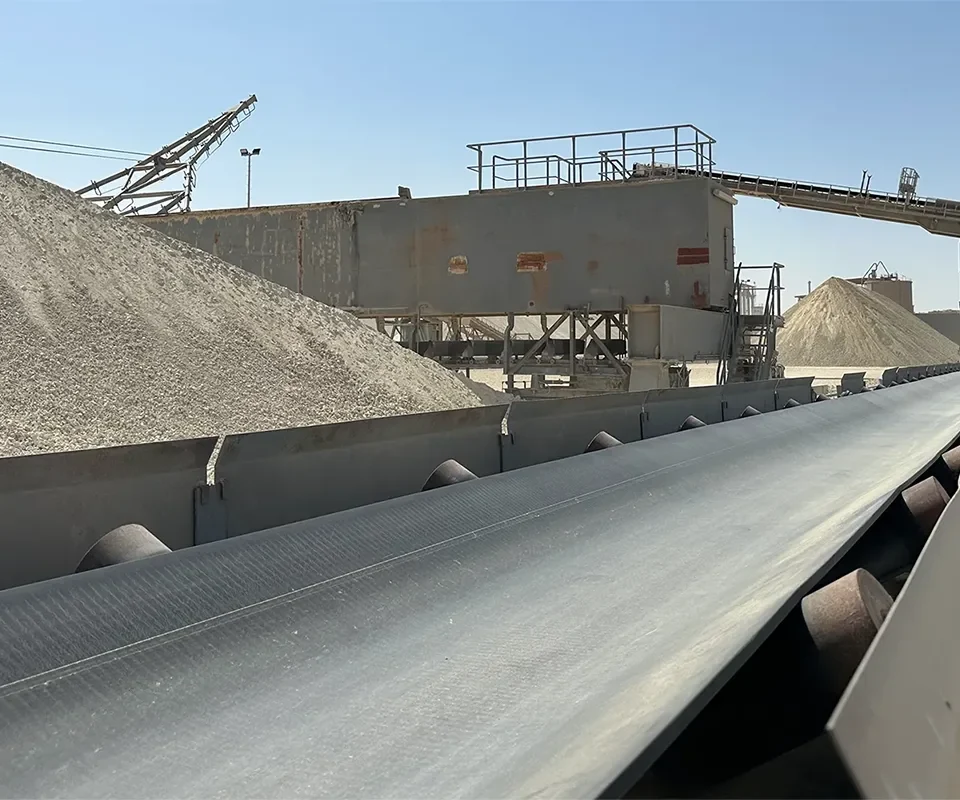
Specifying conveyor belts, idlers, and pulleys for a new quarry crushing line should be treated as one engineering task rather than three separate purchases. These components interact continuously: the belt carries the material, idlers support and guide the belt, and pulleys transmit power, change belt direction, and maintain the required conveyor geometry.
A quarry crushing line can include primary crushing, secondary crushing, screening, stockpiling, recirculation, and final product conveyors. Each conveyor may handle different lump sizes, capacities, belt speeds, impact conditions, and operating duties. A short crusher-discharge conveyor carrying large rock therefore needs a different specification from a long finished-aggregate stockpile conveyor.
For a new project, the most reliable approach is to define the complete conveyor duty first and then coordinate belt width, belt speed, capacity, belt strength, idler type and spacing, pulley diameter, shaft load, lagging, bearings, loading-zone support, and environmental conditions.
Quick answer: For a new quarry crushing line, start with material type, maximum lump size, bulk density, capacity, conveyor length, lift, and transfer-point drop height. Use these values to select belt width and speed, then determine belt strength and cover grade. Specify carrying, impact, return, transition, and self-aligning idlers according to each conveyor zone. Finally, size drive, tail, bend, snub, and take-up pulleys from belt tension, torque, wrap angle, belt construction, and bearing load.
Start with the Complete Quarry Process Flow
Before selecting individual conveyor components, divide the crushing plant into conveyor sections and define what each conveyor must do.
A typical quarry line may include a primary-crusher discharge conveyor, transfer conveyor, secondary-crusher feed conveyor, vibrating-screen feed conveyor, recirculation conveyor, finished-product conveyor, and stockpile conveyor.
The operating conditions can vary substantially between these positions. The conveyor below a primary crusher may receive relatively large and sharp rock with heavy impact. A finished-product conveyor may carry smaller, more uniform aggregate at higher speed and more stable loading.
For a broader overview of how belts, pulleys, idlers, take-up systems, chutes, cleaners, and structures work together, see the Belt Conveyor Components Guide.
1. Define the Material Before Selecting the Conveyor
Quarry operators should provide more than the material name. “Limestone,” “granite,” or “aggregate” alone does not define the conveyor duty.
For each conveyor, record:
material type;
bulk density;
maximum lump size;
typical particle-size distribution;
abrasiveness and particle shape;
moisture condition;
normal and maximum capacity.
Maximum lump size is particularly important around primary and secondary crushing because it affects minimum practical belt width, loading impact, chute design, and impact-idler duty.
2. Select Belt Width from Lump Size and Capacity Together
Belt width should not be chosen from capacity alone. A belt may theoretically carry the required tonnes per hour but still be too narrow for the maximum rock size.
A practical preliminary reference for maximum lump size is shown below. Final selection should still be checked against actual material distribution, loading conditions, trough angle, and capacity.
| Belt Width | Typical Maximum Lump Reference |
| 500 mm | ≈100 mm |
| 650 mm | ≈150 mm |
| 800 mm | ≈200 mm |
| 1000 mm | ≈300 mm |
| 1200–1400 mm | ≈350 mm as a preliminary reference |
If capacity calculations require a wider belt than lump size, use the wider result. Lump size generally establishes a minimum practical width, while throughput may require additional width.
3. Select Belt Speed According to the Conveyor Position
Higher belt speed can increase capacity without increasing belt width, but faster is not always better in a crushing plant.
Primary-crusher discharge conveyors handling large, sharp rock often benefit from relatively conservative speeds because lower speed can reduce impact severity, transfer-point turbulence, material bounce, and wear.
Finished-product and long-distance stockpile conveyors carrying smaller, more uniform material may operate faster if dust, loading stability, and equipment limits allow it.
Selection principle: Use belt speed to balance capacity, lump size, abrasion, dust, transfer behavior, roller rotational speed, and plant layout. Do not increase speed only because a capacity calculation allows it.
4. Select the Conveyor Belt Carcass and Cover Grade
Once belt width and speed are established, the belt construction must be matched to tension and wear conditions.
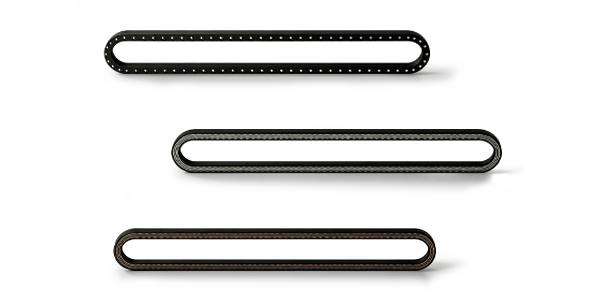
EP fabric belts are widely used in quarry and aggregate applications because they provide practical tensile strength, dimensional stability, flexibility, and impact resistance. Higher-tension or very long conveyors may require a different carcass construction depending on the project.
The top cover should resist abrasion from crushed stone and sharp particles. Primary-crusher and transfer conveyors may require greater attention to impact and cutting, while fine-product conveyors may be dominated more by continuous abrasion.
Belt strength should be calculated from operating tension rather than tonnes per hour alone. Cover thickness should provide useful wear life without making the belt unnecessarily thick or stiff.
For more detailed belt selection factors, see How to Choose Rubber Conveyor Belts for Heavy-Duty Bulk Material Handling.
5. Match the Belt to Existing or Planned Pulley Diameters
Pulley diameter and belt construction should be checked together. Stronger or thicker belts generally require adequate bending radius around drive, tail, bend, snub, and take-up pulleys.
Using pulleys that are too small for the proposed belt construction can increase flexing stress and shorten belt or splice life.
For a new crushing line, belt construction and pulley diameter should therefore be finalized together rather than allowing different suppliers to make independent assumptions.
6. Divide the Idlers by Conveyor Zone
A quarry conveyor should not use one idler type from loading point to discharge. Different zones perform different functions.
| Idler Type | Typical Quarry Application |
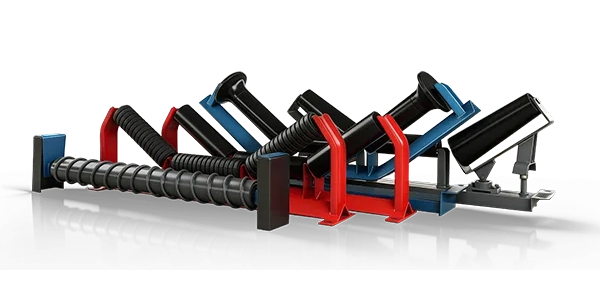
| Troughing Carrying Idler | Normal loaded carrying section |
| Impact Idler | Crusher discharge and transfer loading zones |
| Transition Idler | Between flat pulley profile and full trough |
| Self-Aligning Idler | Selected positions for tracking assistance |
| Flat or V-Return Idler | Return strand support |
| Spiral Return Roller | Selected sticky or carryback-prone return sections |
7. Choose the Trough Angle According to Capacity and Belt Behavior
Common trough angles include 20°, 30°, 35°, and 45°. A 35° trough is widely used in bulk-material conveyors because it provides a practical balance between capacity and stable belt support.
A deeper trough can increase material cross-section, but it also changes belt stress and transition requirements. The selected belt must be capable of troughing correctly at the proposed width, strength, and idler geometry.
For detailed idler-selection considerations, see How to Choose Idlers for Heavy-Duty Belt Conveyors.
8. Use Closer Idler Spacing at Crusher and Transfer Points
Normal carrying sections can use relatively wide spacing because the load is already stable. Loading zones require closer support because material arrives with impact energy.
As practical reference values, normal carrying idlers may commonly be around 1000–1200 mm apart, while impact idlers at loading points may be approximately 300 or 500 mm apart.
These values should not be treated as universal specifications. Large lump size, high drop height, high bulk density, wide belts, or severe crusher discharge may require a more robust support arrangement.
9. Specify Roller Diameter, Shaft, Bearings and Seals Together
Roller selection should not stop at diameter and length. Quarry environments expose idlers to dust, water, mud, impact, and continuous vibration.
The specification should include roller shell construction, shaft diameter, bearing size, sealing arrangement, frame dimensions, belt speed, and expected load.
Poor sealing can allow fine quarry dust to enter the bearing area, while undersized shafts can deform under heavy carrying or impact loads.
10. Size Drive Pulleys from Torque and Belt Tension
The drive pulley is one of the most highly loaded conveyor components. It must transmit motor torque to the belt while supporting belt tension through its shell, hubs, shaft, and bearings.
A drive-pulley specification should include pulley diameter, face width, belt tension, drive power, belt speed, torque, wrap angle, shaft dimensions, bearing arrangement, hub connection, and lagging.
Do not size the drive pulley from belt width alone. Two 1000 mm belt conveyors can have very different power, tension, incline, and operating duty.
11. Select Lagging According to Quarry Conditions
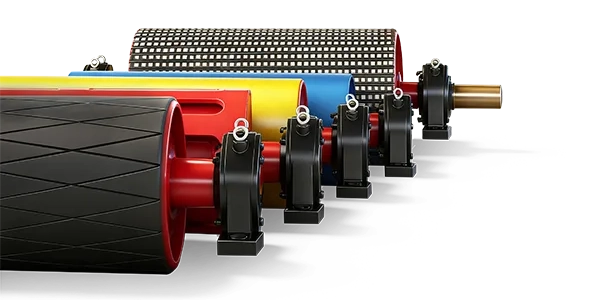
Drive-pulley lagging improves traction and protects the steel shell. Plain rubber may be suitable in moderate dry conditions, while patterned lagging can improve drainage in wet or contaminated applications.
Herringbone lagging is commonly considered for one-direction conveyors where drainage is required. Diamond lagging is useful where non-directional grooves are preferred, including some reversible applications. Ceramic lagging can be evaluated for severe high-tension or slip-sensitive drives.
Lagging should be selected together with belt tension, wrap angle, moisture, contamination, take-up performance, and operating direction.
12. Specify Tail, Bend, Snub and Take-Up Pulleys by Function
Non-drive pulleys should not be treated as simple drums. A bend or take-up pulley may experience very high radial load even though it does not transmit motor torque.
The tail pulley must operate reliably around the loading end where spillage and loose rock may accumulate. Snub pulleys influence drive wrap angle. Take-up pulleys work directly with the belt-tensioning system.
Each pulley should therefore be specified according to its belt tensions, wrap angle, diameter, shaft load, bearing positions, and environmental condition.
For further guidance, see How to Choose Conveyor Pulleys for Heavy-Duty Belt Conveyors.
13. Design Transfer Points Around the Belt and Idlers
A correctly specified belt and impact idler can still fail early if the transfer chute is poorly designed.
Crusher discharge should be guided toward the belt centerline and excessive free-fall height should be reduced where practical. The chute should control material velocity instead of allowing large rocks to strike the belt randomly.
The loading zone should provide stable support beneath skirt boards so sealing remains consistent and the belt does not deflect excessively under impact.
14. Coordinate Belt Tracking from the Beginning
Many tracking problems begin with conveyor geometry rather than the belt itself. Pulleys must be square to the intended belt path, idler frames must be installed correctly, and material should load near the centerline.
Self-aligning idlers can help correct moderate deviation, but they should not be used to compensate for misaligned pulleys, badly installed structures, or off-center loading.
15. Plan Component Standardization Across the Quarry
A new crushing line provides an opportunity to reduce future spare-parts complexity.
Where operating duty allows, standardize roller diameters, bearing types, shaft ends, troughing-frame dimensions, pulley bearings, and other repeat components across multiple conveyors.
Standardization should not override mechanical requirements, but reducing unnecessary variation can simplify purchasing, warehousing, and maintenance for the life of the plant.
Common Specification Mistakes on New Quarry Lines
Mistake 1: Selecting Belt Width from Capacity Only
Maximum lump size can require a wider belt even when throughput calculations suggest a narrower one.
Mistake 2: Using the Same Idler Specification Everywhere
Loading zones, normal carrying sections, transitions, and return runs have different support requirements.
Mistake 3: Buying the Belt Before Confirming Pulleys
Belt construction and minimum pulley diameter must be compatible.
Mistake 4: Selecting Pulleys from Diameter Alone
Shaft, bearings, hubs, shell, lagging, and belt tension determine pulley capability.
Mistake 5: Ignoring Transfer-Point Impact
Large quarry lumps can damage even a correctly rated belt when the loading zone has excessive drop height or poor support.
A Practical Specification Checklist
01. Define material, density, moisture, and maximum lump size.
02. Confirm normal and peak capacity.
03. Define conveyor length, lift, and inclination.
04. Select belt width from lump size and capacity.
05. Select belt speed according to material behavior and conveyor position.
06. Calculate belt tension and select carcass strength.
07. Select cover grade and thickness for abrasion and impact.
08. Define trough angle and idler types by conveyor zone.
09. Set carrying, impact, transition, and return idler spacing.
10. Specify roller shaft, bearings, seals, and frame dimensions.
11. Size drive and non-drive pulleys from actual load.
12. Confirm lagging, wrap angle, take-up, and bearing arrangement.
13. Review loading zones, tracking, standardization, and spare-parts requirements before final approval.
What Information Should Be Included in the RFQ?
| Category | Information Required |
| Material | Type, density, lump size, moisture, abrasiveness |
| Capacity | Normal and peak tonnes per hour |
| Conveyor | Length, lift, angle, belt width, belt speed |
| Belt | Carcass, tensile rating, covers, splice |
| Idlers | Type, trough angle, spacing, diameter, shaft, frame |
| Pulleys | Function, diameter, face width, tension, power, wrap, lagging |
| Transfer Points | Drop height, chute layout, impact conditions |
Coordinating Quarry Conveyor Components with SHENGYUAN
SHENGYUAN supplies conveyor belts, rollers, idlers, pulleys, cleaners, frames, and related components for quarrying, mining, aggregates, cement, coal handling, ports, steel plants, power stations, and other bulk-material handling systems.
For a new quarry crushing line, supplying multiple conveyor component categories from a coordinated specification can reduce dimensional conflicts between belts, idlers, frames, and pulleys.
Through custom conveyor solutions, components can be produced from project drawings and operating data, including different roller arrangements, pulley dimensions, lagging configurations, belt constructions, and replacement-spare requirements.
Planning a new quarry crushing line?
Send the process flow, conveyor layout, material type, bulk density, maximum lump size, normal and peak capacity, conveyor lengths, lifts, belt speeds, loading drop heights, environmental conditions, and preferred component standards. Coordinating belts, idlers, and pulleys from the same operating data reduces specification conflicts later in the project.
Conclusion: Specify the Conveyor as a System
A reliable quarry crushing line starts with accurate material and capacity data. Belt width should match both lump size and throughput, while belt speed should balance capacity with impact, wear, dust, and transfer behavior.
Idlers should then be divided by function: impact support at loading zones, troughing idlers along carrying sections, transition idlers near pulleys, and suitable return and self-aligning arrangements elsewhere.
Pulleys must be specified from belt tension, torque, wrap angle, belt construction, and bearing load rather than from belt width alone. Pulley diameter must also remain compatible with the selected belt.
The best result comes from specifying the belt, idlers, pulleys, loading zones, and take-up system together. When these components are matched to the same quarry duty, the conveyor is easier to install, maintain, and support with spare parts throughout its service life.