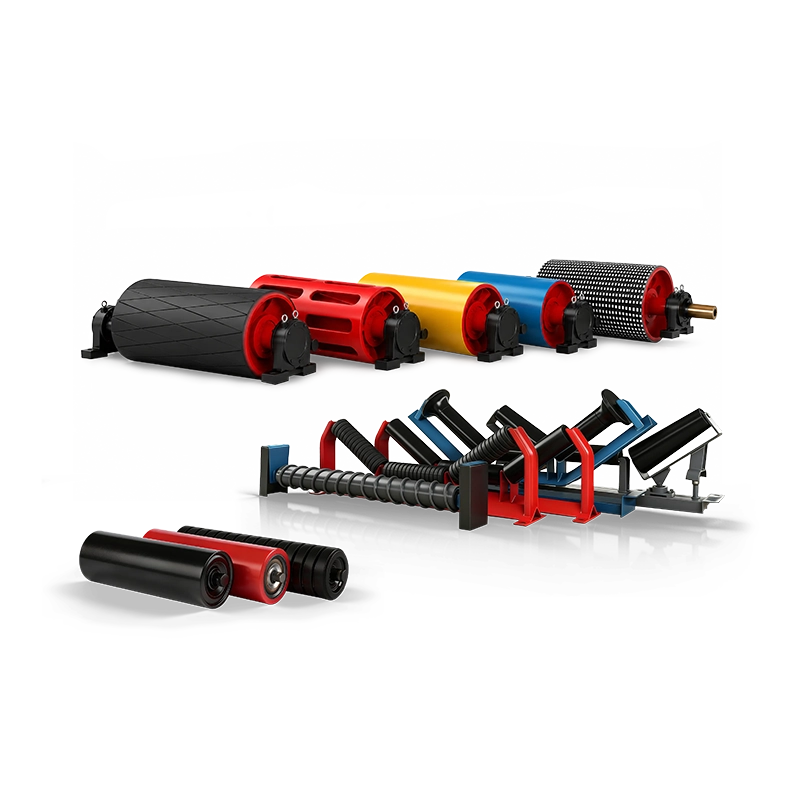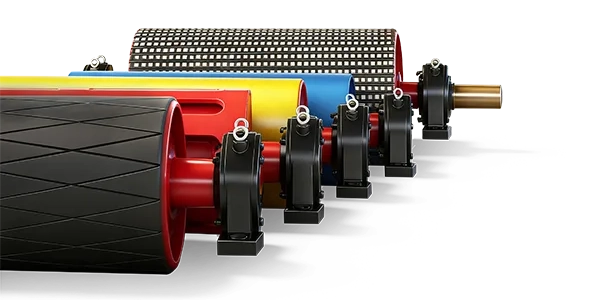
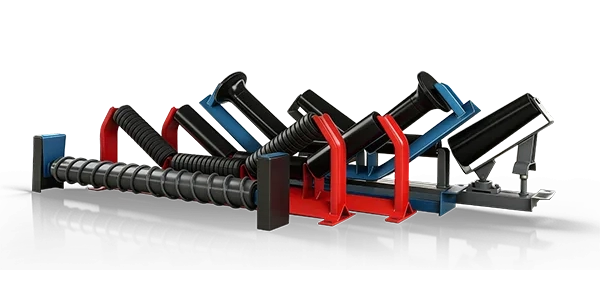




Buying conveyor pulleys from China can offer significant advantages for mining companies, cement plants, ports, steel plants, power stations, EPC contractors, conveyor service companies, and industrial distributors. China has a mature manufacturing base for heavy-duty conveyor components, and buyers can source drive pulleys, tail pulleys, bend pulleys, snub pulleys, take-up pulleys, wing pulleys, and specialized lagged pulleys directly from manufacturers.
However, purchasing a conveyor pulley is very different from buying a standard catalogue item. Two pulleys with the same diameter and face width may have completely different shell thicknesses, shaft designs, hub connections, bearings, lagging systems, welding quality, machining tolerances, balancing requirements, and service life. A quotation that is 15% cheaper can become expensive if the pulley causes belt slip, bearing failure, vibration, installation delays, or an unscheduled shutdown.
For international buyers, successful sourcing therefore depends on three factors: a technically complete specification, a capable manufacturer, and a controlled purchasing process. This guide explains how to buy conveyor pulleys from a Chinese conveyor component manufacturer and how to reduce technical, quality, logistics, and commercial risks before placing an order.
Quick answer: Do not send a Chinese manufacturer only the words “drive pulley” and a diameter. Provide the pulley position, belt width, pulley diameter, face width, belt speed, belt tension, drive power, shaft dimensions, bearing requirements, lagging type, operating environment, drawings, quantity, inspection requirements, and required delivery date. Then compare manufacturers based on construction, engineering support, inspection, customization, packaging, and total delivered value rather than price alone.
Step 1: Identify the Exact Conveyor Pulley Type
The purchasing process begins by confirming what the pulley actually does in the conveyor. Different pulley positions experience different combinations of torque, belt tension, contamination, and wear.
| Pulley Type | Main Function | Important Purchasing Factors |
| Drive Pulley | Transfers drive torque to the belt | Torque, belt tension, shaft, hub, lagging, bearings |
| Tail Pulley | Redirects the return belt at the conveyor tail | Material buildup, cleaning, corrosion, belt tracking |
| Take-Up Pulley | Works with the tensioning system | Belt tension, shaft loading, bearings, travel arrangement |
| Snub Pulley | Increases belt wrap around the drive pulley | Wrap angle, belt tension, surface condition, alignment |
| Bend Pulley | Changes belt direction | Belt tension, pulley diameter, bearing load, installation angle |
A professional manufacturer should ask about pulley position before recommending the structure. A high-torque drive pulley and a lightly loaded bend pulley should not automatically use the same shaft, shell, lagging, or bearing design simply because they have similar external dimensions.
Step 2: Prepare a Complete Technical RFQ
The quality of the quotation usually reflects the quality of the information supplied by the buyer. A request stating only “800 mm conveyor pulley, please quote” forces the manufacturer to make assumptions. Those assumptions may result in quotations that appear comparable but are technically different.
A complete request for quotation should include the following information wherever available:
01. Pulley type and installation position
02. Belt width, belt strength and belt speed
03. Pulley diameter and required face width
04. Conveyor capacity and conveyed material
05. Drive power and torque for drive pulleys
06. Tight-side and slack-side belt tensions where available
07. Shaft dimensions, coupling and hub arrangement
08. Bearing and bearing-housing requirements
09. Rubber, ceramic, polyurethane or plain surface requirement
10. Temperature, moisture, dust and corrosion conditions
11. Required manufacturing or project standard
12. Drawing, quantity, inspection scope and required delivery date
For replacement pulleys, an existing drawing is extremely valuable. If no drawing is available, measure the pulley body, face width, shaft extensions, bearing centres, shaft shoulders, keyways, coupling position, and installation clearances. Photographs should support measurements, not replace them.
Step 3: Compare the Pulley Construction, Not Just Dimensions
Two Chinese factories may quote the same pulley diameter and face width at substantially different prices. Before assuming that one supplier has a better price, compare what is actually being manufactured.
Shell Material and Thickness
The shell carries belt pressure and transmits forces into the end discs and hubs. Buyers should specify or confirm the steel grade and shell thickness. SHENGYUAN’s published pulley information includes carbon-steel options such as Q235 and Q355 grades, together with stainless-steel options for selected applications.
A thicker shell can provide greater structural capacity in the correct design, but thickness should not be evaluated alone. End-disc geometry, hub design, weld quality, shaft stiffness, pulley diameter, and belt tension work together as a complete structure.
Shaft Design
Pulley shafts experience bending and, in drive applications, torque. The manufacturer should review shaft material, diameters, bearing positions, shoulders, stress concentrations, coupling dimensions, keyways, and hub connections.
Do not reduce a shaft decision to “50 mm versus 60 mm.” A properly engineered shaft depends on the complete load case and geometry.
Hub Connection
Keyed hubs remain common, while keyless locking assemblies can be used in demanding applications. Keyless systems transfer torque through friction and avoid cutting a traditional keyway in the shaft, but installation tolerances and tightening procedures must be controlled correctly.
Step 4: Select the Correct Pulley Lagging
Lagging should be specified according to pulley function and operating conditions rather than selected because one material sounds more advanced. The SHENGYUAN conveyor pulley range includes plain steel, rubber-lagged, ceramic-lagged, polyurethane-lagged, drive, self-cleaning, and other customized pulley solutions.
| Surface | Main Benefit | Typical Selection Situation |
| Plain Steel | Simple construction and low surface cost | Non-drive positions where additional traction is unnecessary |
| Rubber Lagging | Improved traction and shell protection | Mining, cement, aggregate and general drive applications |
| Ceramic Lagging | High traction and strong wear resistance | Wet, high-tension and slip-sensitive drive positions |
| Polyurethane | Wear resistance and specialized surface properties | Application-specific industrial conditions |
For ceramic lagging, buyers should compare more than the words “ceramic pulley.” Check tile type, ceramic coverage, dimple design, rubber matrix, bonding method, thickness, and surface preparation. For rubber lagging, confirm rubber type, hardness, thickness, groove pattern, and whether bonding is performed by hot vulcanization or cold bonding.
Buying principle: Ceramic lagging should not automatically be specified for every pulley. Use it where the operating conditions justify the additional traction and wear performance. A well-selected rubber-lagged pulley may provide better total value in moderate applications.
Step 5: Evaluate Bearings, Sealing and Machining
Pulley reliability depends on much more than the shell. Bearing selection should match shaft load, speed, alignment, operating life, contamination, temperature, and maintenance conditions. Heavy-duty applications commonly use spherical roller bearings because they can accommodate high radial loads and limited misalignment.
Buyers should also review shaft machining tolerances, bearing-seat dimensions, housing arrangement, sealing, lubrication, and assembly procedures. Purchasing an expensive bearing brand will not prevent failure if the shaft fit, alignment, sealing, or belt tension is incorrect.
Manufacturing accuracy matters because poor concentricity or imbalance can create vibration. For large or higher-speed pulleys, specify static or dynamic balancing according to the engineering requirement. Shaft runout, pulley runout, bearing positions, and machined surfaces should be inspected before shipment.
Step 6: Audit the Chinese Manufacturer
A polished website does not prove manufacturing capability. Before placing an important order, determine whether the supplier operates its own factory, what processes are performed internally, what is outsourced, and how finished pulleys are inspected.
Important areas to examine include steel preparation, plate rolling, welding, stress control, shaft machining, assembly, lagging, balancing, coating, dimensional inspection, and packaging. Ask to see relevant production equipment, current orders, quality records, and representative products.
A physical factory visit is ideal for important supplier-development programmes. When travel is impractical, a live video factory audit can still help confirm workshops, equipment, production processes, and finished goods.
Step 7: Approve the Manufacturing Drawing
The approved drawing should become the technical reference between buyer and manufacturer. It should identify critical dimensions and major materials so that verbal discussions do not become the final specification.
For customized products, SHENGYUAN supports drawing-based manufacturing through its custom conveyor solutions. The company’s published process covers requirement communication, customized solution development, production, finished-product inspection, delivery, and after-sales service.
Before approving the drawing, verify:
Pulley diameter and face width
Shell and end-disc construction
Shaft diameters and shaft extensions
Bearing centres and housing arrangement
Hub and locking arrangement
Lagging material and thickness
Coating, tolerances, balancing and inspection requirements
Step 8: Define Quality Inspection Before Production
Inspection requirements should be agreed before manufacturing begins. Waiting until the pulley is finished to request additional testing can increase cost and delivery time.
Depending on project importance, inspection may include raw-material verification, dimensional checks, weld inspection, shaft and shell runout, bearing-seat measurement, static or dynamic balancing, lagging inspection, coating thickness, identification, and final visual inspection.
For high-value or critical mining pulleys, third-party inspection can be considered. Another practical approach for a new supplier is a trial order. One pulley produced and inspected successfully can provide valuable information before the buyer commits to a larger spare-part programme.
Step 9: Compare Total Delivered Cost
Purchase price is only one component of sourcing cost. International buyers should compare the complete commercial package.
Product Cost
Pulley body, shaft, bearings, housings, lagging, coating and inspection.
Logistics Cost
Packaging, inland transport, export handling, ocean freight and destination charges.
Operating Cost
Installation, maintenance, bearing replacement, lagging life and energy losses.
Downtime Risk
Production losses caused by premature failure can exceed the original pulley price many times over.
For example, consider two technically different quotations for a critical drive pulley. Supplier A is 12% cheaper but uses a lighter shell, simpler lagging, and a longer replacement lead time. Supplier B has the higher initial price but provides the specified shaft design, stronger lagging system, documented inspection, and replacement compatibility. The second option may offer substantially lower commercial risk even though its purchase price is higher. This example is illustrative, but it demonstrates why technical equivalence must come before price comparison.
Step 10: Plan Packaging and International Shipping
Conveyor pulleys are heavy components with exposed machined surfaces. Poor packaging can damage shafts, bearing seats, coatings, ceramic tiles, or rubber lagging before the pulley reaches the project site.
Specify protection for machined shaft surfaces, moisture prevention, secure supports, lifting points where appropriate, identification labels, and suitable export packaging. Mixed orders should clearly identify every pulley according to purchase order number, drawing number, installation position, and quantity.
SHENGYUAN’s customer service and logistics support includes order tracking and multiple transport options such as land, sea, and air freight. For heavy pulley orders, sea freight is generally the practical choice for international bulk shipments, while urgent smaller components may use faster methods.
Working Effectively with a Chinese Manufacturer
Successful industrial sourcing from China is strongly supported by clear documentation and stable long-term relationships. Chinese manufacturers generally respond well when customers provide detailed specifications, drawings, realistic schedules, and consolidated feedback rather than repeatedly changing technical requirements during production.
For long-term cooperation, consider building an approved product library. Each repeat pulley can have a controlled drawing number and specification so that future quotations become faster and purchasing errors are reduced.
Buyers should also consider the Chinese production calendar. Manufacturing and logistics capacity can become tight before the Lunar New Year holiday. Mining companies and distributors planning annual shutdown maintenance should confirm drawings and orders sufficiently early, especially for large customized pulleys that require steel preparation, machining, welding, lagging, inspection, packaging, and ocean freight.
Why Consider SHENGYUAN as Your China Conveyor Pulley Manufacturer?
SHENGYUAN, the brand of Hebei Shengwen Mining Machinery Co., Ltd., focuses on conveyor pulleys, rollers, idlers, and related heavy-duty bulk material handling components. The company states that its conveyor manufacturing history began in 2005 and that it supports customized production based on customer drawings and specific operating requirements.
Factory-Direct Manufacturing
SHENGYUAN operates its own production workshop and positions itself as an original factory rather than simply a sourcing intermediary. For customized pulleys, direct communication between the customer, technical team, and production workshop can reduce information loss and make drawing changes easier to control.
Multiple Pulley Technologies from One Supplier
The company’s pulley portfolio includes heavy-duty plain steel pulleys, rubber-lagged drive pulleys, ceramic-lagged pulleys, polyurethane-lagged pulleys, self-cleaning wing pulleys, drive pulleys, bend pulleys, take-up pulleys, snub pulleys, and customized configurations.
This enables a buyer to specify different pulley surfaces and structures for different positions rather than applying one expensive design throughout the entire conveyor.
Customization for Replacement and EPC Projects
SHENGYUAN can customize pulley diameter, face width, shaft, steel grade, bearing arrangement, hub connection, lagging, coating, and other details according to the application. This capability is particularly relevant to older mining plants, non-standard conveyor systems, OEM equipment, and EPC projects where dimensional compatibility is essential.
Integrated Conveyor Component Procurement
International buyers can also coordinate pulleys with conveyor rollers, idler sets, belts, and belt cleaners. Consolidating related components can reduce supplier-management work, simplify container planning, and create a clearer technical interface for replacement programmes.
Where SHENGYUAN provides the strongest commercial value:
The factory-direct model is particularly attractive for mines, distributors, EPC contractors, conveyor service companies, and OEMs that need customized dimensions, repeat pulley specifications, mixed conveyor component orders, and export-oriented technical support. Instead of simply supplying a standard drum, SHENGYUAN can work from drawings and operating information to develop a pulley that matches the existing conveyor system.
Final China Conveyor Pulley Buying Checklist
| Before Order | Confirm Before Payment or Production |
| Technical | Pulley type, dimensions, load, shaft, bearings, hubs, lagging and coating |
| Drawing | Approved manufacturing drawing and revision number |
| Quality | Inspection plan, tolerances, balancing and required documentation |
| Commercial | Price, Incoterm, payment conditions, warranty and lead time |
| Logistics | Packaging, gross weight, dimensions, identification and shipping method |
| After-Sales | Technical response procedure, warranty conditions and replacement support |
Conclusion: Buy an Engineered Pulley, Not Just a Steel Drum
Buying conveyor pulleys from China can provide excellent value when the purchasing process is technically controlled. The key is to define the application before requesting the price. Pulley diameter, shell, shaft, hubs, bearings, lagging, machining, balancing, coating, and packaging should all be evaluated against the actual conveyor duty.
Buyers should shortlist genuine manufacturers, approve drawings before production, specify inspection requirements in advance, compare technically equivalent quotations, and calculate total delivered and life-cycle cost instead of choosing the lowest unit price.
For companies that require customized heavy-duty pulleys, direct factory communication, mixed conveyor component sourcing, and international shipping support, SHENGYUAN provides a strong sourcing option. Its focus on conveyor pulleys and rollers, custom manufacturing capability, multiple lagging technologies, and export-oriented service make it particularly suitable for planned mining, cement, port, steel, power plant, distributor, EPC, and OEM procurement.
Request a technically comparable pulley quotation
Send the pulley drawing, belt width, belt speed, pulley position, diameter, face width, shaft dimensions, bearing requirement, belt tension, drive power, lagging type, conveyed material, operating environment, quantity, inspection requirement, and delivery schedule. Complete information allows the manufacturer to prepare a more accurate design and helps you compare Chinese suppliers on an equal technical basis.