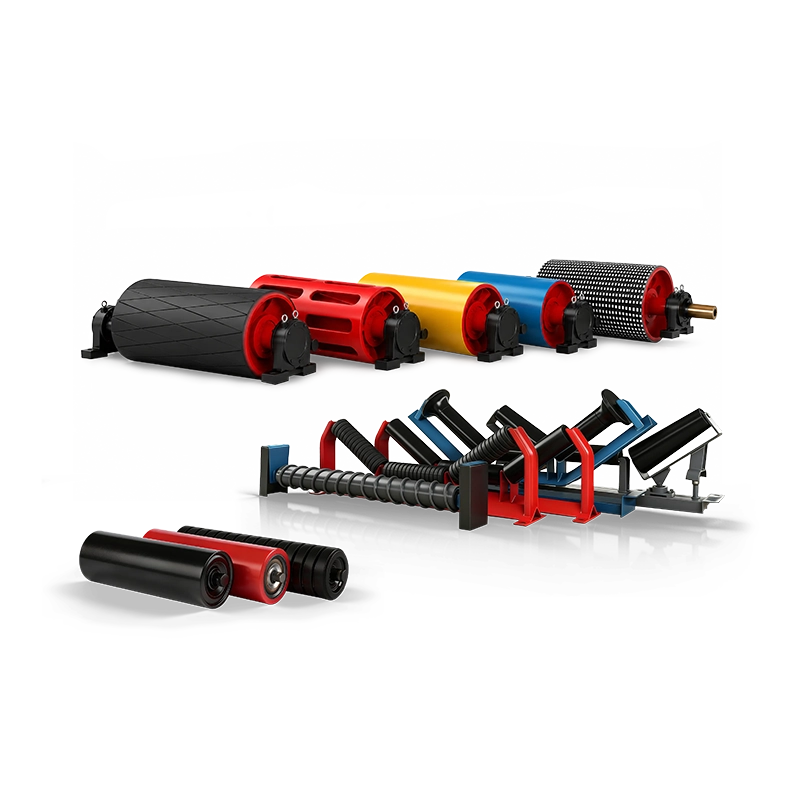



Conveyor pulleys are critical components in heavy-duty belt conveyor systems. They drive the belt, change its direction, maintain tension, increase wrap angle, and help the system move bulk materials continuously. In mining, coal, cement, aggregate, port, steel, and power plant applications, a pulley failure can stop production, damage the belt, and create high maintenance cost.
Choosing conveyor pulleys for heavy-duty belt conveyors requires more than matching belt width and pulley diameter. Buyers must consider pulley function, belt tension, drive torque, shaft strength, bearing load, lagging type, material buildup, working environment, and long-term service requirements. A pulley that is under-designed may suffer from shaft fatigue, bearing overheating, shell deformation, lagging failure, or belt slip.
Quick answer: To choose conveyor pulleys for heavy-duty belt conveyors, identify the pulley position first, then match diameter, shell thickness, shaft size, bearing capacity, lagging material, and sealing protection with belt tension, speed, load, and operating environment.
Identify the Pulley Type and Function
Different conveyor pulleys have different functions. A drive pulley transfers power to the belt. A head pulley discharges material and may also act as the drive pulley. A tail pulley turns the belt back at the loading end. A bend pulley changes belt direction. A snub pulley increases wrap angle around the drive pulley. A take-up pulley maintains belt tension. A wing pulley or self-cleaning pulley helps reduce material buildup.
Because each pulley works under different mechanical conditions, they should not be treated as interchangeable. A drive pulley usually requires stronger shaft design and suitable lagging for traction. A tail pulley may need better cleaning and protection against carryback. A take-up pulley must remain aligned while moving with the tensioning system.
| Pulley Type | Function | Key Risk |
| Drive Pulley | Transfers power to the belt | Belt slip and high torque |
| Tail Pulley | Turns belt at loading end | Material buildup and mistracking |
| Snub Pulley | Increases wrap angle | High contact pressure |
| Take-up Pulley | Controls belt tension | Uneven tension and alignment |
Match Pulley Design with Belt Tension
Belt tension is one of the most important design factors for conveyor pulleys. Higher tension increases load on the shell, shaft, hubs, bearings, and supporting structure. If pulley diameter is too small, the belt may experience excessive bending stress. If the shaft is too weak, fatigue failure may develop over time. If the bearing capacity is insufficient, overheating and early failure may occur.
For heavy-duty systems, pulley selection should consider drive power, belt speed, wrap angle, loaded capacity, start-up condition, and take-up arrangement. Engineers should also review whether the conveyor operates continuously, starts under load, or faces frequent impact and vibration. These conditions all affect pulley service life.
Choose Suitable Pulley Lagging
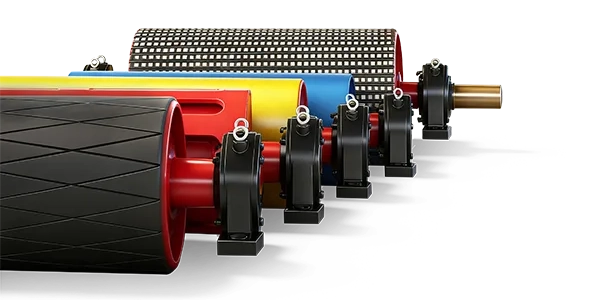
Pulley lagging improves friction between the pulley and the belt. Common options include plain rubber lagging, diamond rubber lagging, ceramic lagging, cold bonded ceramic lagging, and polyurethane lagging. Drive pulleys usually benefit from high-friction lagging because belt slip can create heat, damage the belt, and reduce conveying efficiency.
Rubber lagging is suitable for many general applications. Diamond lagging improves drainage and traction in wet conditions. Ceramic lagging is often used for high-tension, wet, abrasive, or slip-prone conveyors. For a non-drive bend or tail pulley, lagging may be selected mainly for belt protection, wear resistance, and material release.
If belt slip occurs repeatedly, do not only increase belt tension. Check lagging condition, pulley surface contamination, take-up movement, material load, and drive design first.
Control Bearing, Shaft and Shell Quality
A heavy-duty conveyor pulley must have a strong shell, accurate shaft, reliable bearings, and stable bearing housings. The shell should remain round and strong under belt pressure. The shaft should match torque and bending requirements. Bearings should be selected according to load, speed, contamination, and maintenance access.
Dust, moisture, slurry, and fine material can enter the bearing area if seals are weak. Once contamination mixes with grease, bearing wear accelerates. For outdoor mining, port, and cement applications, bearing protection and lubrication planning are essential for extending pulley life.
Consider Cleaning, Alignment and Maintenance
Material buildup on pulleys can cause vibration, belt mistracking, lagging wear, and bearing stress. Tail pulleys are especially exposed to return-side carryback. In sticky applications, a wing pulley, self-cleaning pulley, belt cleaner, or improved chute design may reduce buildup and protect the system.
Pulley alignment also affects service life. A skewed head pulley, tail pulley, bend pulley, or take-up pulley can push the belt sideways and damage belt edges. Alignment should be checked during installation and after structural movement, belt replacement, or major maintenance work.
Custom Conveyor Pulley Selection
Many heavy-duty conveyors need customized pulleys because belt width, shaft ends, bearing arrangements, face width, lagging type, and installation dimensions vary by project. For replacement pulleys, buyers should provide drawings, photos, original dimensions, bearing model, shaft size, pulley position, and working conditions.
For buyers seeking conveyor pulleys, it is useful to communicate with the manufacturer before confirming specifications. If a project needs special dimensions, custom conveyor solutions can help match pulley design with site conditions.
Working with SHENGYUAN
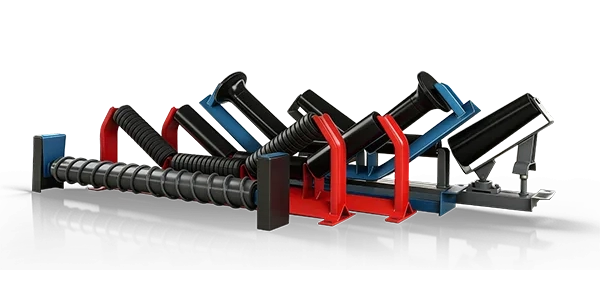
SHENGYUAN manufactures conveyor pulleys, conveyor rollers, idler sets, and related components for heavy-duty bulk material handling. The company supports drive pulleys, tail pulleys, bend pulleys, snub pulleys, take-up pulleys, self-cleaning pulleys, rubber lagged pulleys, ceramic lagging pulleys, and custom conveyor drum pulleys for mining, cement, quarry, port, steel, and power plant applications.
For international orders, packaging and delivery coordination also matter. Buyers can review service and logistics support when planning bulk orders or replacement pulley shipments.
Conclusion
Choosing conveyor pulleys for heavy-duty belt conveyors requires a full review of pulley type, belt tension, drive load, shaft strength, bearing arrangement, lagging, cleaning, alignment, and working environment. A suitable pulley improves traction, protects the belt, reduces bearing failures, and supports continuous material handling.
Need a heavy-duty conveyor pulley?
Send your pulley drawings, belt width, belt speed, pulley position, lagging requirement, material type, and working environment. SHENGYUAN can help recommend or customize the right conveyor pulley for your system.