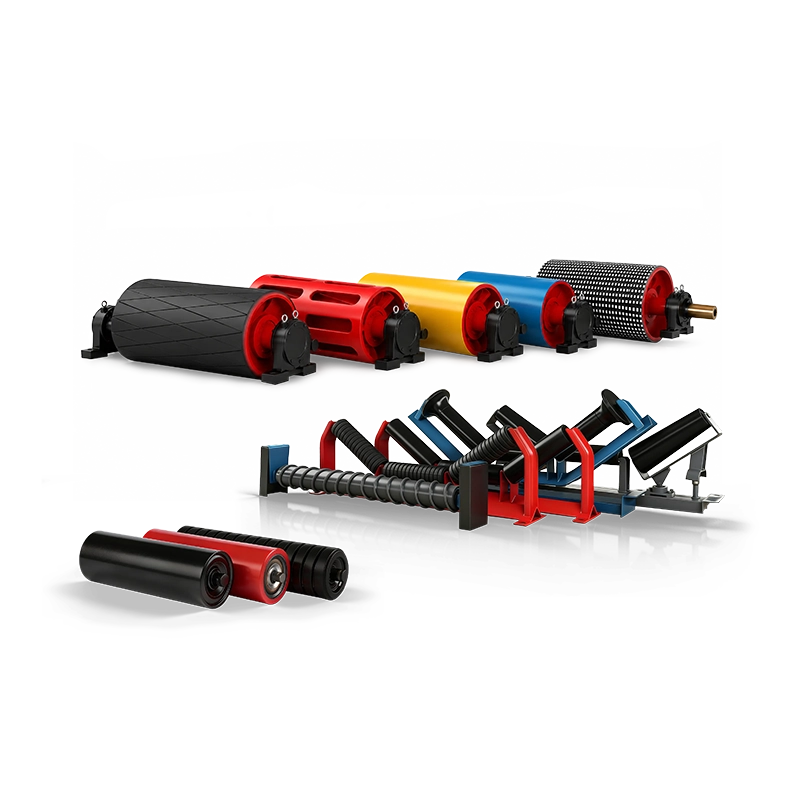




Buying conveyor spare parts for a remote mine is fundamentally different from purchasing parts for a plant located near a major industrial center. When a mine is hundreds or thousands of kilometers from the nearest supplier, an inexpensive roller, bearing, cleaner blade, or pulley component can become a critical production risk if the replacement takes several weeks or months to arrive.
Remote mines may face long international shipping routes, limited road access, seasonal transport restrictions, customs clearance, unpredictable freight schedules, and difficult last-mile delivery. For imported conveyor components, the actual replenishment time is therefore much longer than the manufacturer’s production lead time alone.
The correct spare-parts strategy is not simply to buy large quantities of everything. Mines should identify which components can stop production, calculate realistic replenishment lead times, standardize components where practical, and hold enough critical inventory to cover failures until replacement stock arrives.
Quick answer: For a remote mine with long lead times, classify conveyor spares by failure consequence and replenishment time. Keep higher local stock of critical rollers, bearings, cleaner blades, pulley assemblies, belt repair materials, and other parts that can stop production. Send suppliers accurate drawings and specifications, forecast demand in advance, combine routine shipments, and reserve emergency freight for genuinely critical failures.
Why Remote Mines Need a Different Spare-Parts Strategy
A conveyor failure at a mine close to an industrial supplier may be solved with same-day or next-day delivery. A remote operation may need weeks for manufacturing, international freight, customs clearance, inland transportation, and final delivery to site.
The consequence of insufficient inventory can therefore be much greater than the purchase value of the missing part. A relatively low-cost idler or cleaner component may interrupt a high-capacity conveyor feeding a crusher, stockpile, processing plant, or load-out system.
For this reason, inventory decisions should be based on production criticality, failure frequency, replacement difficulty, lead time, transport risk, and stock value rather than component price alone.
A useful starting point is to understand how belts, pulleys, idlers, cleaners, take-up systems, transfer points, and drives interact. The Belt Conveyor Components Guide provides an overview of the major conveyor components that may need spare-parts planning.
1. Classify Spare Parts by Production Criticality
Not every conveyor component deserves the same inventory level. Start by dividing parts according to what happens when they fail.
| Category | Typical Consequence | Inventory Approach |
| Critical | Failure can stop an important conveyor or production line | Hold strategic stock on site |
| Important | Failure reduces reliability or creates maintenance risk | Maintain planned replenishment stock |
| Routine | Failure can usually be tolerated temporarily | Order through regular consolidated shipments |
A drive pulley for a single critical conveyor may justify keeping a complete spare assembly. A standard return roller used in hundreds of positions may justify larger quantity stock because failures occur regularly. A rarely used bracket may not need the same inventory level.
2. Calculate the Real Replenishment Lead Time
A supplier’s manufacturing lead time is only one part of the replenishment cycle.
For an overseas order, the complete lead time may include technical confirmation, drawing approval, production, inspection, export packing, booking, port handling, sea or air freight, import clearance, inland transport, and delivery to the mine.
Planning rule: Base safety stock on the time from “inventory reorder” to “usable part physically available at the mine,” not simply on the factory production period.
Seasonal road closures, port congestion, customs inspections, public holidays, and mining-site access restrictions should be included where relevant.
3. Use Failure History to Set Stock Levels
Historical consumption is one of the best starting points for spare-parts planning. Review how many rollers, bearings, cleaner blades, pulley components, belt repair materials, and other items were used during the previous 12–24 months.
Then separate routine replacement from unusual failures. A temporary alignment problem may have caused an abnormally high roller consumption rate that should not automatically become the long-term purchasing forecast.
At the same time, repeated failures should not simply be accepted as normal consumption. High failure rates may indicate unsuitable rollers, poor sealing, mistracking, material buildup, inadequate impact protection, or another underlying problem.
4. Stock High-Consumption Conveyor Rollers Strategically
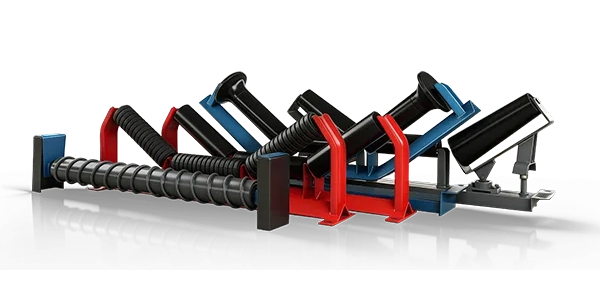
Rollers and idlers are among the most frequently replaced conveyor components in a large mine because a single operation can contain hundreds or thousands of them.
Carrying rollers, return rollers, impact rollers, and self-aligning rollers should be separated by actual type and dimension rather than grouped under one generic description.
For remote sites, standardizing roller diameter, shaft ends, bearing arrangement, and frame interfaces across multiple conveyors can significantly reduce the number of unique spares that must be stocked.
When evaluating heavy-duty roller specifications, the Heavy-Duty Conveyor Idler Selection Guide covers idler type, trough angle, shaft, bearings, seals, spacing, and environmental conditions.
5. Decide Which Pulleys Need Complete Spare Assemblies
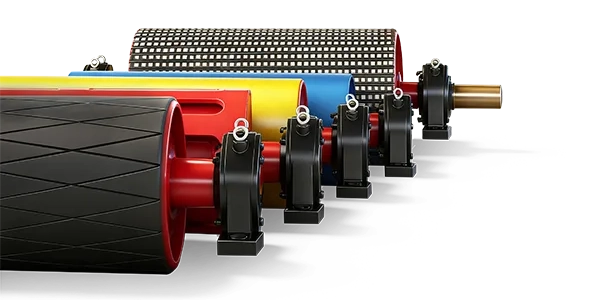
Conveyor pulleys generally fail less frequently than rollers, but their failures can have much greater consequences. They also usually require longer manufacturing times because of shaft machining, shell fabrication, hubs, lagging, bearings, and dimensional inspection.
A remote mine should identify pulleys for which no practical temporary repair or substitute exists. Critical drive, tail, take-up, or bend pulleys may justify holding complete spare assemblies, particularly when a single pulley failure can stop a primary production route.
Where complete assemblies are too expensive to stock for every location, standardizing pulley dimensions or keeping critical shafts, bearings, locking assemblies, and lagging materials may provide an alternative strategy.
The Conveyor Pulleys Guide explains the differences between drive, head, tail, bend, snub, and take-up pulley duties.
6. Keep Belt Repair Materials and Splice Supplies Available
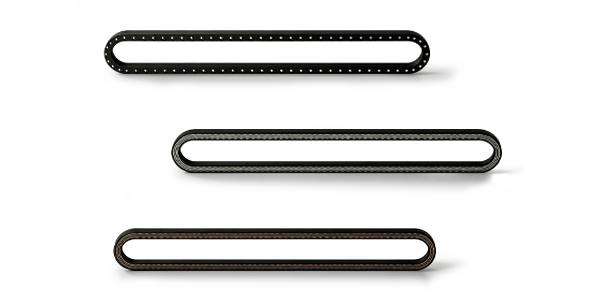
A conveyor belt can suffer cuts, edge damage, splice problems, punctures, or local cover damage without warning. For a remote mine, waiting for repair materials after the damage occurs may create unnecessary downtime.
Keep the materials required for the site’s normal repair and splicing methods. These may include suitable repair rubber, bonding materials, splice materials, fasteners, patching components, and tools according to the belt construction and maintenance procedure.
Storage life and conditions matter. Rubber compounds, adhesives, and other chemical products should be stored according to supplier recommendations rather than purchased in excessive quantities that may expire before use.
7. Do Not Forget Belt Cleaners and Wear Components
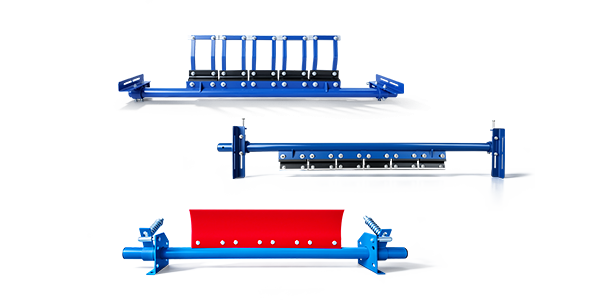
Cleaner blades are relatively small components, but worn cleaners can quickly increase carryback, material buildup, return-roller contamination, housekeeping work, and mistracking.
Remote mines should normally keep replacement blades, tensioning components, mounting hardware, and other wear parts for the cleaning systems already installed.
The same principle applies to skirt rubber, wear liners, impact rings, and other consumable parts around loading and discharge zones.
8. Standardize Components Wherever Practical
One of the most effective ways to reduce remote-site inventory is to reduce the number of unique component specifications.
If ten conveyors use eight different return-roller shaft ends, the warehouse must manage multiple similar parts. If future replacements can be standardized safely, the mine may be able to use one or two common specifications across several conveyor lines.
Standardization may be possible for rollers, bearings, cleaner blades, fasteners, pulley bearings, and selected frame components. However, components should never be standardized by ignoring actual mechanical duty. Drive pulleys, heavily loaded impact idlers, and special belt applications may require dedicated specifications.
9. Build a Reliable Spare-Parts Master List
A spare-parts list should contain enough technical information to reorder the correct component even after maintenance personnel or suppliers change.
For each spare part, record:
internal mine part number;
supplier part number;
component description and installation position;
drawing number and revision;
critical dimensions;
material and special requirements;
normal annual consumption;
minimum and maximum stock level;
typical replenishment lead time;
approved alternative or interchangeable part where applicable.
10. Make Drawings Part of the Spare-Parts System
A common reason spare-parts orders take longer than expected is incomplete technical information. If every order requires maintenance teams to remeasure the old component, valuable time is lost before production even begins.
Keep approved drawings for custom rollers, idler frames, pulleys, shafts, brackets, and other critical parts. Record any site modification so the next order does not repeat an obsolete design.
For older equipment where the original drawing is missing, measurements, photographs, and old samples can be used to establish a new controlled drawing before the next emergency occurs.
11. Use Minimum Stock and Reorder Points
A warehouse should not wait until a critical component reaches zero before placing an order.
The reorder point should consider expected consumption during replenishment plus a safety allowance for unexpected failures and delivery delays.
For example, if a certain return roller is normally consumed every month but replacement shipments require several months, the mine needs enough inventory to cover that entire period plus uncertainty.
High-value pulleys may use a different strategy: one complete strategic spare rather than consumption-based stocking.
12. Forecast Planned Shutdown Requirements Early
Planned shutdowns create predictable spare-parts demand. Bearings, rollers, cleaners, pulley lagging, belt sections, frames, and other components can often be identified during inspections months before the shutdown.
Place these orders early enough to allow drawing approval, manufacturing, inspection, shipping, customs clearance, and delivery before the shutdown date.
Waiting until maintenance work orders are finalized shortly before shutdown can turn normal sea freight into expensive emergency air freight.
13. Consolidate Routine Orders
Remote mines often purchase rollers, pulleys, belts, cleaners, frames, and other parts from multiple suppliers. Small individual shipments can increase freight cost, documentation work, and customs complexity.
Where practical, routine requirements can be consolidated into planned shipments. For example, a container may include rollers, idler frames, pulley spares, cleaner components, and other scheduled items from one supply program.
Consolidation works best when the mine provides forecasts rather than sending unrelated emergency orders throughout the year.
14. Separate Emergency Freight from Normal Freight
Air freight can be valuable when a small component is preventing production, but using expedited freight for routine parts quickly becomes expensive.
The purchasing strategy should distinguish between critical emergency parts and replenishment inventory. Routine heavy items such as large rollers, frames, pulleys, or belt coils are generally better planned well in advance for economical transport.
Small emergency items may be shipped separately when the downtime risk justifies the cost.
15. Specify Export Packaging for Long Storage and Difficult Transport
Remote-mine spare parts may travel by sea, truck, rail, and unsealed mine roads before reaching the warehouse. They may then remain in storage for months or years.
Packaging should therefore protect machined shafts, bearings, lagged pulley surfaces, rubber components, and painted frames from moisture, corrosion, impact, and handling damage.
Large components should have clear lifting points and identification. Crates and pallets should carry visible part numbers so warehouse teams do not need to open every package to identify its contents.
16. Inspect Strategic Spares During Storage
Buying the spare is only part of the strategy. Long-term storage can create its own problems.
Pulley shafts can corrode, bearings can suffer moisture contamination, rubber components can age, and stored belts can be damaged by poor support or unsuitable environmental conditions.
Critical inventory should be included in periodic warehouse inspections so the mine knows the spare is actually ready for installation when required.
Common Spare-Parts Planning Mistakes at Remote Mines
Mistake 1: Buying Only After a Failure
Reactive purchasing is especially risky where international replenishment requires weeks or months.
Mistake 2: Keeping Too Many Unique Specifications
Unnecessary variation in rollers, bearings, and other parts increases warehouse complexity and inventory value.
Mistake 3: Using Purchase Price as the Main Criticality Measure
A low-cost component can have a very high downtime consequence.
Mistake 4: Ignoring Transport and Customs Time
Factory production time alone does not represent actual replenishment lead time.
Mistake 5: Ordering Custom Parts Without Controlled Drawings
Repeated measurement and technical clarification delays production and increases the risk of dimensional errors.
Mistake 6: Buying Excessive Quantities of Aging Materials
Rubber products, adhesives, and some repair materials may deteriorate during long storage. Inventory quantity should consider shelf life as well as lead time.
A Practical Remote-Mine Spare-Parts Checklist
01. Identify conveyors that can stop production.
02. List all critical rollers, pulleys, belts, cleaners, bearings, and wear parts.
03. Record actual annual consumption and failure history.
04. Calculate complete replenishment lead time.
05. Define minimum, maximum, and reorder quantities.
06. Standardize interchangeable components where technically suitable.
07. Maintain approved drawings and part numbers.
08. Forecast shutdown requirements months in advance.
09. Consolidate routine international shipments.
10. Reserve emergency freight for genuine production risks.
11. Specify packaging suitable for sea freight and long storage.
12. Inspect strategic spares periodically in the warehouse.
What Information Should Be Sent to a Conveyor Spare-Parts Supplier?
Provide: conveyor equipment list and installation positions;
part descriptions and existing part numbers;
drawings and critical dimensions;
belt width, belt speed, and conveyor capacity;
material and environmental conditions;
annual consumption or forecast quantity;
criticality of each item;
required delivery date;
preferred shipment method;
packaging and storage requirements;
photos or old samples where drawings are unavailable.
How to Choose a Supplier for Remote-Mine Spare Parts
For a remote operation, supplier capability should be evaluated beyond unit price. The supplier should be able to manage repeat part numbers, retain approved drawings, produce custom dimensions, coordinate multiple conveyor component types, and provide suitable export packaging.
Communication is also important. The supplier should clearly distinguish standard items from custom production and confirm drawings before manufacturing critical parts.
For international projects, shipment coordination and documentation can reduce delays between factory completion and mine-site delivery. More information is available through customer service and logistics support.
Remote-Mine Conveyor Spare Parts from SHENGYUAN
SHENGYUAN supplies conveyor rollers, idlers, pulleys, belts, cleaners, frames, and related components for mining, quarrying, cement, coal handling, ports, steel plants, power stations, and other heavy-duty bulk-material handling applications.
For remote mining projects, multiple conveyor spare-part categories can be planned together rather than ordered as isolated emergency items. Rollers, idler frames, pulley assemblies, cleaning components, belts, and related parts can be coordinated according to drawings, quantities, project schedules, and replacement plans.
Through custom conveyor solutions, replacement components can also be manufactured from customer drawings, old samples, and field measurements where original OEM information is incomplete.
Planning conveyor spares for a remote mine?
Send the conveyor list, critical spare-part categories, drawings, roller and pulley dimensions, belt specifications, annual consumption, required quantities, mine location, required delivery schedule, and preferred shipment plan. Separating critical emergency stock from routine replenishment helps build a more reliable and economical spare-parts program.
Conclusion: Buy Spare Parts Before Lead Time Becomes Downtime
Remote mines cannot manage conveyor spares in the same way as facilities located near local suppliers. Long production, freight, customs, and inland transport times mean that a missing component can become a major production problem.
The best strategy is to classify components by criticality, understand actual consumption, calculate complete replenishment lead time, standardize specifications where practical, and maintain controlled drawings for repeat purchasing.
High-consumption rollers require quantity planning, while critical pulleys may justify complete strategic spares. Belt repair materials, cleaner blades, bearings, seals, and other small components should not be ignored simply because their purchase value is low.
The goal is not to maximize inventory. It is to keep enough of the right parts at the mine so a predictable component failure does not turn a long supply-chain lead time into an avoidable production shutdown.