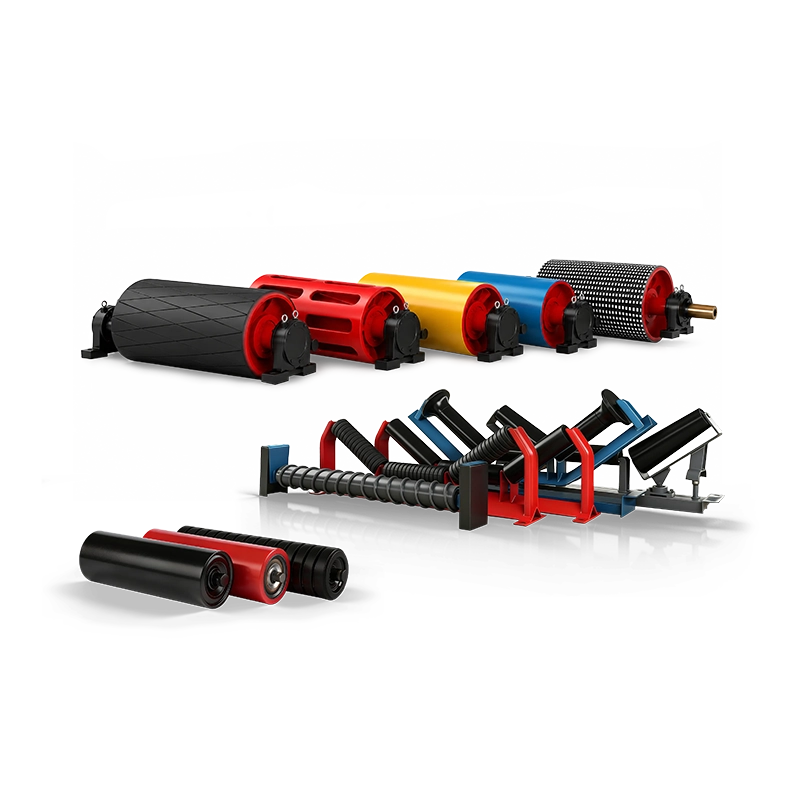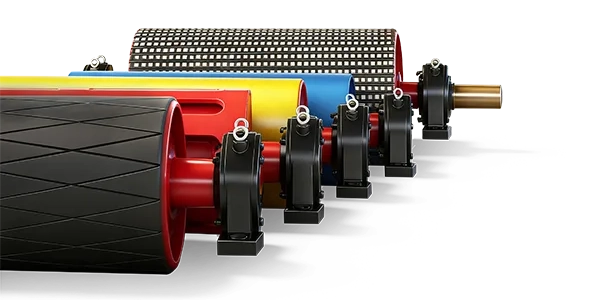
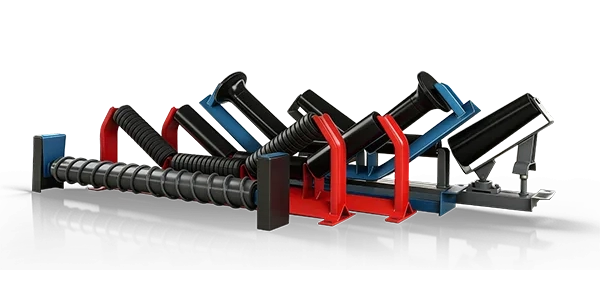

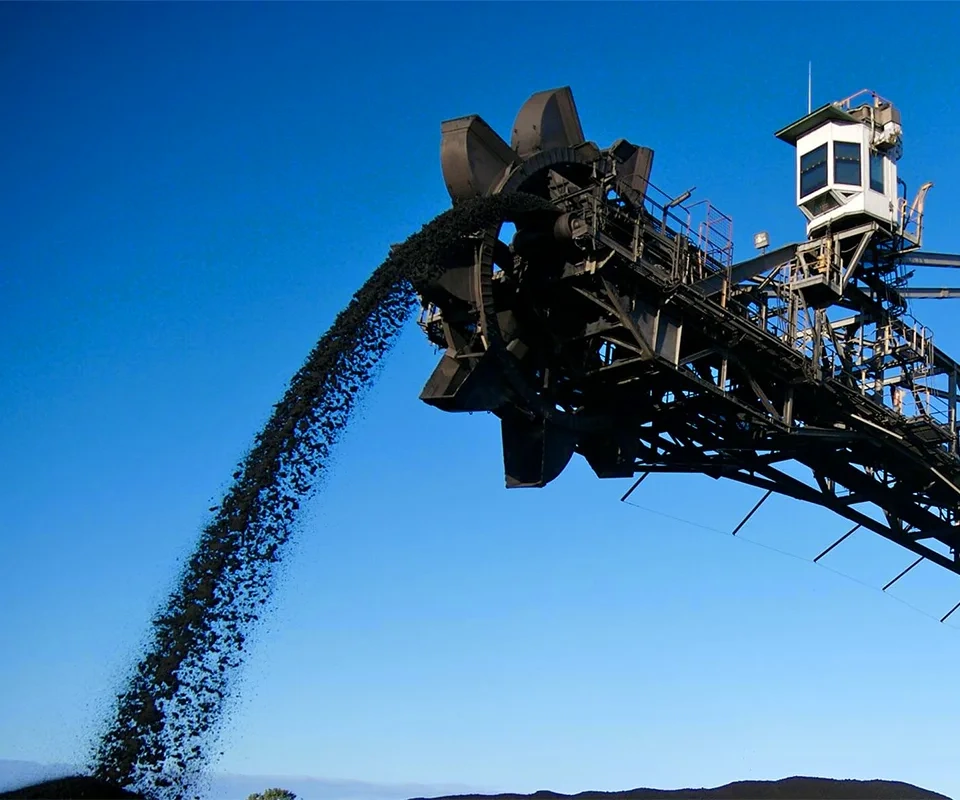
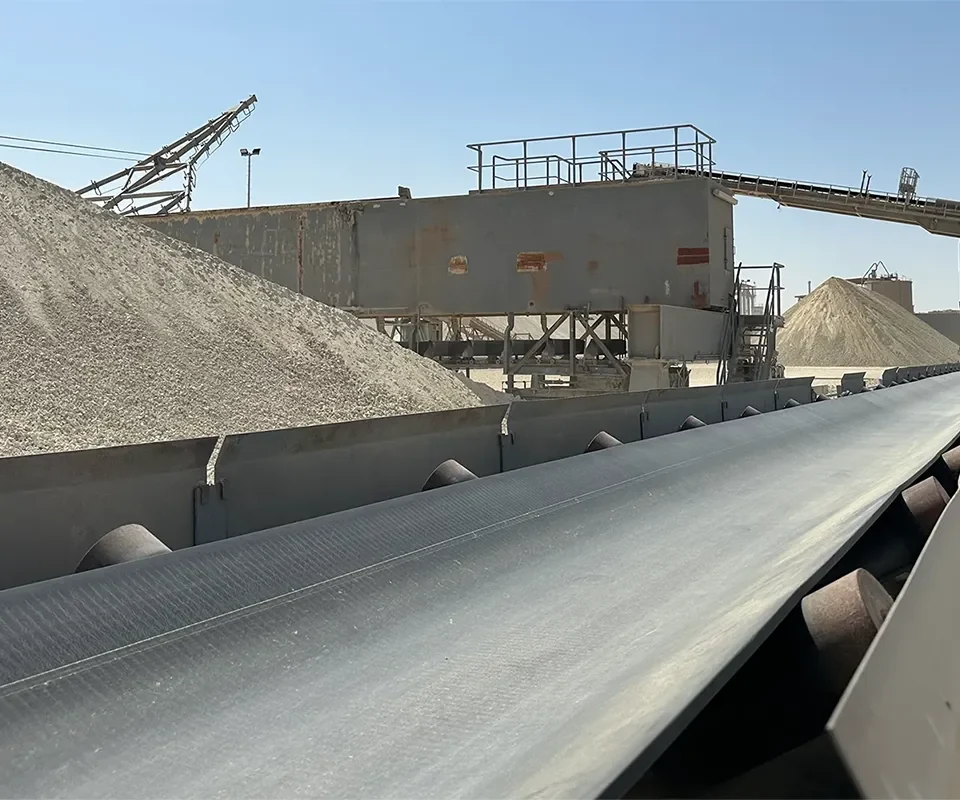
Conveyor idlers are among the most frequently used components in a belt conveyor system. They support the conveyor belt, carry the material load, help form the belt into the required trough, control belt sag, absorb loading impact, and assist with belt tracking and return-side cleanliness.
Although conveyor idlers may look similar from a distance, different positions require different designs. A troughing idler used on the carrying side has a very different function from an impact idler beneath a loading chute, a self-aligning idler used to correct mistracking, or a spiral return roller used to reduce sticky material buildup.
For mining, quarrying, cement, coal handling, aggregates, ports, steel plants, and power stations, selecting the correct idler type can directly influence belt life, power consumption, material spillage, tracking stability, maintenance frequency, and overall conveyor availability.
Quick answer: Troughing idlers support the loaded belt; transition idlers gradually change the belt from flat to troughed; impact idlers protect the belt in loading zones; self-aligning idlers help correct mistracking; return idlers support the empty belt; V-return idlers improve return-belt stability; and spiral return rollers help remove sticky carryback from the belt surface.
What Is a Conveyor Idler?
A conveyor roller is the individual rotating cylindrical component that contacts and supports the belt. An idler normally refers to the complete supporting arrangement, which may include one or more rollers together with a frame, brackets, and mounting structure.
For example, a three-roll troughing idler usually contains one centre roller and two wing rollers installed at an angle. Together, the three rollers and frame form the idler set that supports and shapes the loaded conveyor belt.
A long conveyor may contain hundreds or even thousands of rollers. This means even a relatively small difference in bearing quality, sealing, runout, rotational resistance, tube strength, or installation accuracy can have a significant effect on total maintenance requirements.
Main Conveyor Idler Types at a Glance
| Idler Type | Main Function | Typical Position | Main Problem Addressed |
| Troughing Idler | Supports loaded belt and forms carrying trough | Carrying side | Load support and capacity |
| Transition Idler | Gradually changes belt shape | Near head and tail pulleys | Excessive belt edge stress |
| Impact Idler | Absorbs falling-material impact | Loading zone | Belt and roller impact damage |
| Self-Aligning Idler | Assists belt tracking | Carrying or return side | Moderate belt mistracking |
| Flat Return Idler | Supports empty return belt | Return side | Return-belt support |
| V-Return Idler | Supports and stabilizes return belt | Return side of wider belts | Return-belt tracking stability |
| Spiral Return Roller | Helps remove belt carryback | Return side near discharge area | Sticky material buildup |
1. Troughing Idlers: The Main Carrying-Side Support
Troughing idlers are the most common carrying-side idlers on bulk material belt conveyors. A typical three-roll arrangement uses one horizontal centre roller and two inclined wing rollers. Together, they form the belt into a trough that increases the available material carrying cross-section.
Common trough angles include 20°, 30°, 35°, and 45°, with 35° widely used for general heavy-duty bulk material handling. The correct angle depends on belt construction, capacity, material flow characteristics, conveyor design, and transition requirements.
A deeper trough can increase the material cross-section, but a larger angle should not be selected only to increase capacity. The belt must be flexible enough to form the trough without excessive stress, and transition distances near the pulleys must be appropriate.
Where Are Troughing Idlers Used?
They are installed along the loaded carrying run of mining, quarry, cement, coal, aggregate, port, and other bulk material conveyors. Their primary responsibilities are supporting material weight, controlling belt sag, and maintaining the required carrying profile.
Main selection factors: Belt width, capacity, bulk density, maximum lump size, belt speed, trough angle, idler spacing, roller diameter, shaft strength, bearings, sealing, and operating environment.
2. Transition Idlers: Protecting the Belt Near Pulleys
A conveyor belt is usually flat where it wraps around a head or tail pulley, but it becomes troughed along the carrying run. Changing immediately from a flat belt to a full trough would create uneven tension between the belt centre and edges.
Transition idlers solve this problem by changing the belt shape gradually. Typical transition arrangements may use progressively increasing angles such as 10°, 20°, and 30° before reaching the normal carrying trough.
Correct transition design is particularly important for wide belts, high-tension systems, and steel-cord belts. An inadequate transition can contribute to excessive edge tension, belt fatigue, splice stress, material spillage, and poor tracking.
Where Are Transition Idlers Installed?
They are normally installed between a terminal pulley and the first full-trough carrying idler. They may be required near both the loading end and discharge end depending on the conveyor arrangement.
3. Impact Idlers: Protecting the Loading Zone
The loading zone is one of the most demanding areas of a belt conveyor. Ore, stone, coal, clinker, or other material can fall from a chute and strike the conveyor belt with significant impact energy.
Impact idlers use resilient rubber rings or similar impact-absorbing elements around the roller body. These elements help reduce shock loads transmitted into the belt, bearings, roller shell, and conveyor structure.
They are commonly installed beneath loading chutes and transfer points. In severe loading applications, they may be used together with impact beds or specialized loading-zone support systems.
When Should You Use Heavy-Duty Impact Idlers?
Heavy-duty impact support becomes increasingly important as material lump size, density, and drop height increase. A 300 mm lump of dense ore falling from a significant height creates a very different loading condition from fine coal entering the belt through a controlled chute.
Important: Impact rollers should not be expected to correct poor chute design. Reducing unnecessary drop height and guiding material in the belt travel direction can significantly reduce impact, belt wear, and mistracking.
4. Self-Aligning Idlers: Helping Control Belt Mistracking
Belt mistracking occurs when the conveyor belt moves away from its intended centreline. If the problem becomes severe, the belt edge may contact the frame, material may spill, and belt damage can occur.
Self-aligning or training idlers are designed to react to belt deviation and create a corrective steering effect. Depending on the design, the complete idler assembly may pivot or use specially arranged friction or tapered rollers to influence belt direction.
Both carrying-side and return-side self-aligning idlers are available for different conveyor positions.
Can Self-Aligning Idlers Solve Every Tracking Problem?
No. Self-aligning idlers are useful for correcting moderate deviation, but recurring severe mistracking usually indicates another problem in the conveyor system.
Common causes include off-centre loading, pulley misalignment, incorrectly installed idler frames, material buildup on pulleys, uneven belt tension, structural distortion, seized rollers, or belt splice problems.
Installing more self-aligning idlers without correcting the root cause can increase cost while leaving the real problem unresolved.
5. Flat Return Idlers: Supporting the Empty Belt
After material is discharged at the head pulley, the empty conveyor belt travels back toward the tail. Flat return idlers support this return run and control belt sag between supporting points.
Because the return belt no longer carries bulk material, return idlers are typically spaced farther apart than carrying idlers. However, they often operate in a contaminated environment because the belt surface may still carry residual fines or sticky material after discharge.
This is why return roller design should consider carryback as well as mechanical load. Material buildup on return rollers can change their effective diameter and contribute to belt vibration or mistracking.
6. V-Return Idlers: Improving Return-Belt Stability
A V-return idler normally uses two rollers installed at a shallow angle to create a V-shaped support for the return belt. Compared with a single flat return roller, the V arrangement can provide a mild centring effect and improve belt stability.
V-return idlers are especially useful on wider conveyor belts where return-side tracking requires additional control. Variations can include forward-tilted V-return arrangements and other designs intended to improve belt centring.
However, as with carrying-side self-aligning idlers, V-return arrangements should complement correct conveyor alignment rather than compensate for poorly installed pulleys or structures.
7. Spiral Return Rollers: Reducing Sticky Carryback
Sticky material is a common problem in coal, clay, wet ore, cement raw materials, and other applications where fine particles remain attached to the belt after discharge.
When a conventional smooth return roller contacts this contaminated belt, material can accumulate on the roller surface. Over time, the buildup can create an uneven roller diameter, leading to vibration and belt tracking problems.
A spiral return roller uses a helical surface arrangement that creates a cleaning and shedding action as the belt passes over the roller. This helps reduce the accumulation of sticky material and keeps the return side operating more consistently.
Spiral rollers are often installed on the return side near the head or discharge region where carryback is most likely to remain on the belt.
Important: Spiral return rollers assist with belt cleanliness, but they are not a replacement for correctly selected belt cleaners. The best results usually come from combining effective head-pulley cleaning with suitable return-side support.
Which Idler Should You Choose for Common Conveyor Problems?
| Problem | Idler to Evaluate | Other Factors to Check |
| High carrying load | Heavy-duty troughing idler | Spacing, roller diameter, shaft, bearings, frame |
| Severe loading impact | Impact idler | Drop height, lump size, chute design, impact bed |
| Belt mistracking | Self-aligning idler | Loading, pulley alignment, structure, tension |
| Unstable wide return belt | V-return idler | Frame alignment and belt condition |
| Sticky carryback | Spiral return roller | Primary and secondary belt cleaners |
| Belt stress near pulley | Transition idlers | Transition distance and belt construction |
How Idler Spacing Affects Load Capacity
Selecting the correct idler type is only part of the design. The spacing between idler sets also influences belt sag and load carried by each idler.
Carrying idlers are usually positioned more closely than return idlers because they support both the belt and conveyed material. In loading zones, impact idlers may be installed at even closer spacing because the dynamic force from falling material can be much higher than the normal static load.
Typical carrying-side spacing may be around 1000–1200 mm in many general applications, while loading-zone impact idlers may use much closer spacing such as approximately 300–500 mm. These values are practical starting references only; final spacing should be calculated according to belt width, material density, lump size, loading height, belt tension, and conveyor geometry.
Roller Diameter, Shaft and Bearing Selection
Two troughing idlers of the same belt width can have very different service lives if their rollers are designed differently. Roller diameter, tube wall thickness, shaft diameter, bearing size, bearing quality, seal construction, and manufacturing runout all influence performance.
Higher belt speed increases roller rotational speed. Higher material load increases bearing and shaft load. Larger lumps can increase dynamic impact. Dust, water, mud, and abrasive fines increase the importance of sealing.
For demanding mining applications, buyers should therefore compare the internal roller construction rather than evaluating products only by outside diameter and length.
Why Sealing Is Critical in Mining Conveyor Rollers
Bearing contamination is a major cause of roller failure. Fine dust can enter the bearing system, mix with lubricant, and accelerate wear. Water and moisture can contribute to corrosion and lubrication breakdown.
For this reason, heavy-duty rollers commonly use multi-stage or labyrinth-style sealing arrangements designed to create a difficult path for contaminants before they reach the bearing.
Seal quality becomes especially important in mines, quarries, coal terminals, ports, cement plants, and outdoor conveyors exposed to dust, rain, washdown, or sticky fines.
Steel, HDPE, Rubber, or Polyurethane Rollers?
Roller material can also be adapted to the operating environment. Steel rollers remain widely used because of their strength, durability, and suitability for heavy-duty loads.
HDPE rollers can offer lower weight and corrosion resistance in suitable applications. Rubber-covered or rubber-ring rollers are frequently used where impact absorption or material release is important. Polyurethane surfaces may be selected for applications requiring wear resistance, noise reduction, or specialized belt contact characteristics.
The best material is not universal. Load, speed, temperature, impact, corrosion, abrasion, noise requirements, maintenance practices, and purchase cost should all be considered.
Common Idler Selection Mistakes
Mistake 1: Selecting Only by Belt Width
Belt width is necessary but not sufficient. A 1200 mm belt carrying fine coal at moderate capacity does not create the same roller duty as a 1200 mm belt carrying dense, large-lump iron ore.
Mistake 2: Using Standard Rollers in Severe Impact Zones
Ordinary carrying rollers may experience premature damage beneath an uncontrolled loading chute. Impact conditions should be evaluated separately.
Mistake 3: Using Self-Aligning Idlers as the Only Tracking Solution
Recurring mistracking should trigger inspection of loading, pulleys, frame alignment, belt tension, and buildup. Self-aligning idlers should assist a correctly aligned conveyor, not replace correct installation.
Mistake 4: Ignoring Carryback on Return Rollers
Sticky material can accumulate on smooth return rollers and contribute to vibration or mistracking. Belt cleaners and appropriate return roller designs should be considered together.
What Information Should You Provide When Ordering Conveyor Idlers?
01. Conveyor belt width
02. Belt speed
03. Required conveyor capacity
04. Material type and bulk density
05. Maximum lump size
06. Trough angle and required idler type
07. Roller diameter, length, and shaft-end dimensions
08. Required bearings and sealing system
09. Operating environment, including dust, moisture, corrosion, and temperature
10. Existing drawings, mounting dimensions, quantities, and delivery schedule
Why Choose SHENGYUAN for Conveyor Idlers and Rollers?
SHENGYUAN focuses on conveyor rollers, idlers, pulleys, and related heavy-duty components for mining, quarrying, cement, aggregates, coal handling, ports, steel plants, power stations, and other bulk material handling applications.
Its conveyor roller range includes carrying rollers, return rollers, impact rollers, self-aligning rollers, spiral return rollers, HDPE rollers, rubber rollers, polyurethane rollers, and other customized designs.
For replacement projects, one of the most important advantages is dimensional customization. Through custom conveyor solutions, roller diameter, face length, shaft dimensions, shaft ends, bearing arrangement, sealing, tube construction, rubber rings, coatings, and idler frames can be manufactured according to customer drawings and application requirements.
This can be particularly valuable for older conveyor systems where original replacement parts are difficult to obtain or where multiple roller specifications are used throughout the plant.
SHENGYUAN can also coordinate rollers and idlers with conveyor pulleys and other conveyor components. For distributors, EPC contractors, mines, OEMs, and maintenance companies, consolidated sourcing can simplify technical communication, spare-parts planning, packaging, and international shipping.
Need help selecting an idler type?
Provide the belt width, belt speed, capacity, material, bulk density, maximum lump size, trough angle, loading height, current roller dimensions, idler spacing, operating environment, existing problems such as mistracking or carryback, and drawings where available. These details allow the roller and idler construction to be matched to the actual conveyor duty.
Conclusion: Choose Idlers According to Their Position and Function
There is no single conveyor idler that is suitable for every position. Troughing idlers support the loaded belt and determine the carrying profile. Transition idlers protect the belt as it moves between flat and troughed sections. Impact idlers absorb loading shock. Self-aligning idlers assist with belt tracking. Return and V-return idlers support the empty belt, while spiral return rollers help control sticky carryback.
The correct selection also depends on belt width, speed, capacity, material density, lump size, idler spacing, shaft strength, bearings, seals, environmental contamination, and maintenance requirements.
The most effective approach is to match each idler type to the specific problem it must solve rather than using one standard roller design throughout the conveyor. Correctly selected rollers and idlers can improve belt stability, reduce impact damage, limit carryback-related problems, and reduce the frequency of conveyor maintenance.