
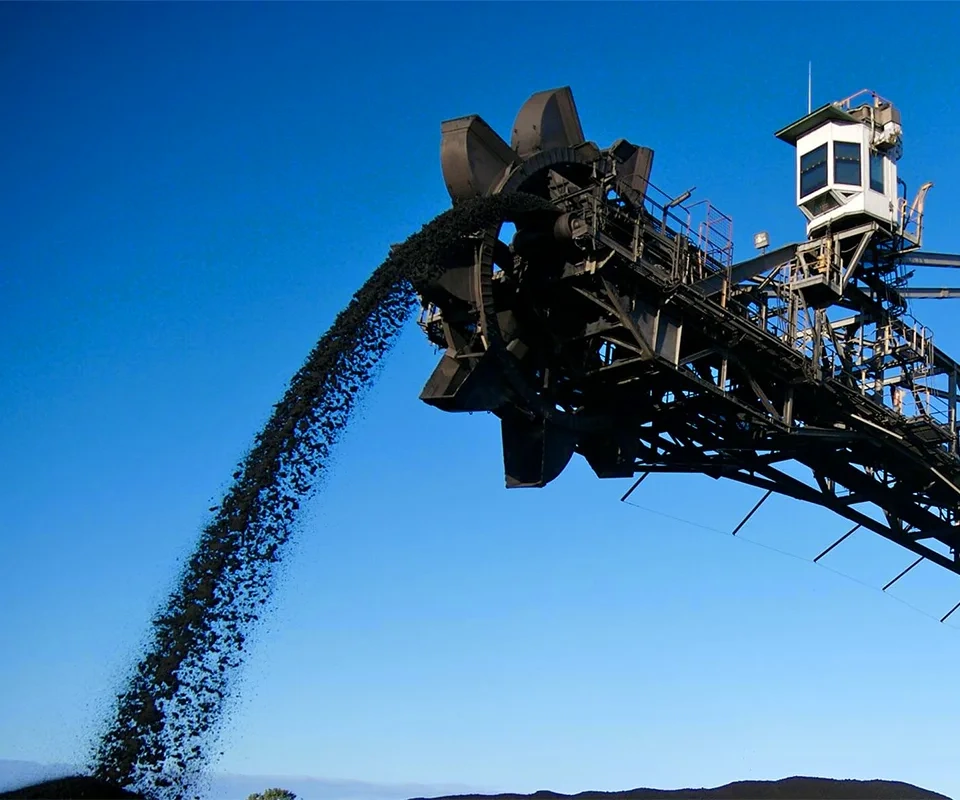
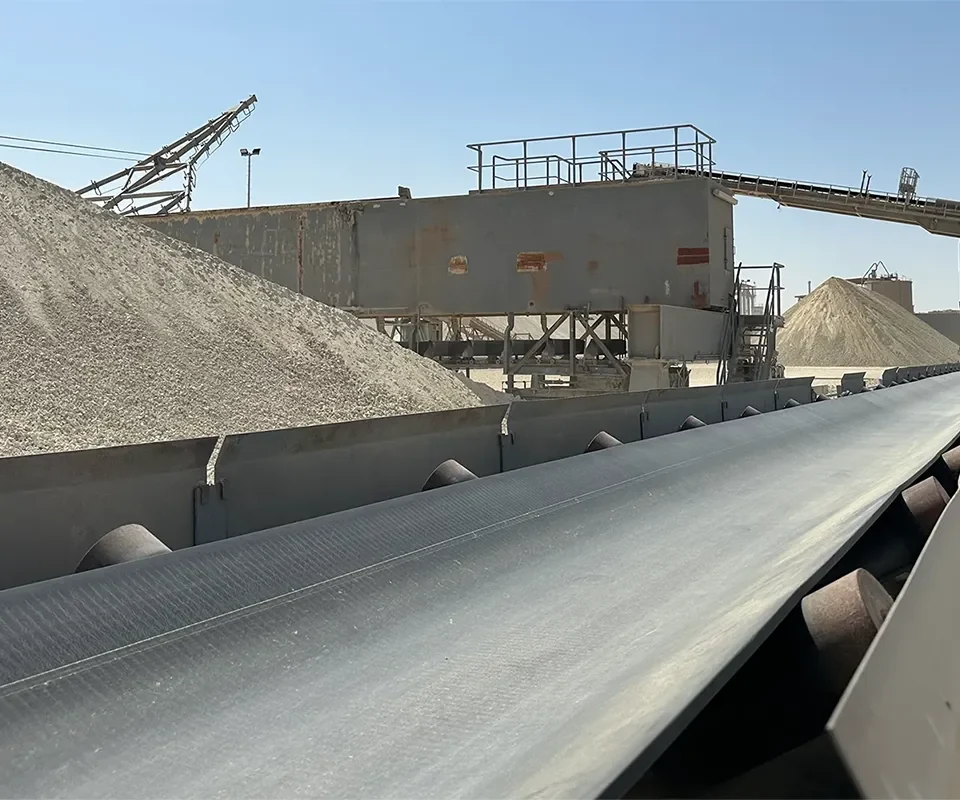
Steel plants and power plants depend on continuous bulk material movement. Iron ore, coal, coke, limestone, sinter, pellets, slag, gypsum, biomass, and other materials must move between unloading areas, storage yards, crushers, preparation systems, production units, and discharge points. Conveyor rollers support this movement and directly influence belt stability, energy consumption, maintenance frequency, and production continuity.
Although conveyor rollers may appear to be simple rotating components, their working conditions can be severe. Steel plant conveyors may face abrasive ore, sharp coke, hot material, metallic dust, heavy impact, and continuous operation. Power plant conveyors often handle coal in dusty or wet conditions, together with limestone, biomass, gypsum, and other materials used in fuel and environmental-control systems.
Selecting the right supplier requires more than requesting a quotation for a particular roller diameter and length. Buyers should evaluate load capacity, tube thickness, shaft strength, bearing quality, sealing structure, temperature resistance, rotational performance, manufacturing accuracy, customization capability, inspection procedures, and delivery reliability.
This guide explains how steel plants and power plants should choose conveyor rollers and evaluate suppliers. It also outlines why a specialized, factory-direct manufacturer can provide strong value for planned maintenance, replacement programmes, EPC projects, and customized conveyor systems.
Quick answer: Choose a conveyor roller supplier that can match the roller type, tube material, wall thickness, shaft, bearings, seals, surface treatment, temperature resistance, load capacity, and mounting dimensions with the actual conveyor duty. The supplier should also provide drawing review, quality inspection, customization, secure packaging, and dependable delivery support.
Why Roller Selection Is Different in Steel and Power Plants
Steel plants and power plants both use heavy-duty belt conveyors, but the materials and operating risks are not identical. The roller design should reflect the conditions of each conveyor rather than relying on one standard specification throughout the facility.
| Application | Typical Materials | Main Roller Challenges |
| Steel Plants | Iron ore, coal, coke, sinter, pellets, limestone, slag | Abrasion, impact, heat, sharp material, metallic dust, heavy load |
| Power Plants | Coal, limestone, biomass, gypsum and handling residues | Fine dust, moisture, carryback, continuous operation, corrosion |
Roller Conditions in Steel Plants
Raw material conveyors in steel plants may carry dense iron ore, pellets, coal, and limestone. These materials create high static loads and may also produce dynamic loading when feeding is uneven. At transfer points, large lumps falling onto the belt can generate repeated impact that affects the belt, impact rollers, shafts, bearings, and idler frames.
Coke and sinter handling creates additional challenges. Coke can be sharp and abrasive, while sinter-related conveyors may operate near elevated-temperature processes. Metallic dust can enter poorly protected bearings, and accumulated material can increase resistance on return rollers.
Steel plant rollers therefore commonly require reinforced construction, suitable tube thickness, strong shafts, effective sealing, wear-resistant surfaces, and careful material selection. Where elevated temperatures are present, the supplier must confirm that the bearings, seals, grease, rubber components, and coating are suitable for the actual temperature range.
Roller Conditions in Power Plants
Coal-handling conveyors in power plants often operate for long periods with limited opportunities for unplanned maintenance. Coal may arrive wet from outdoor storage or produce fine dust after crushing. Moisture and fine particles can penetrate weak seals, contaminate bearings, and shorten roller life.
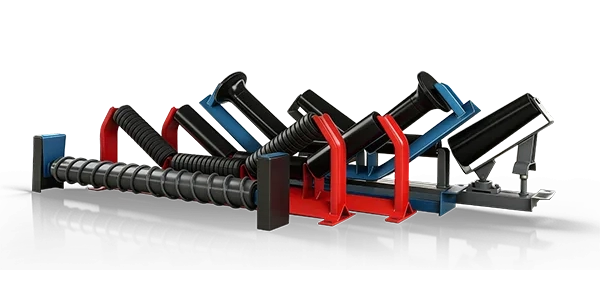
Carryback is another common problem. Material remaining on the return belt may fall around return rollers, build up on structures, and create uneven contact. Spiral return rollers or rubber-disc return rollers can help in appropriate locations, although they should support rather than replace an effective belt-cleaning system.
Power plants may also handle limestone for emission-control processes, gypsum, biomass, and other materials with different moisture and flow characteristics. A supplier should review each conveyor separately instead of treating every roller in the plant as a coal-conveyor component.
Choose the Correct Roller Type for Each Position
Carrying Rollers
Carrying rollers support the loaded side of the conveyor belt. They may be installed as flat rollers or as part of a troughing idler set. Their load capacity must account for the belt, conveyed material, roller spacing, trough angle, belt speed, and uneven material distribution.
For dense materials such as iron ore, the carrying roller shell and shaft must resist bending under continuous load. In long conveyors, rotational resistance is also important because the combined resistance of hundreds or thousands of rollers affects power demand.
Return Rollers
Return rollers support the empty belt after material discharge. They normally carry less weight than loaded-side rollers, but they may experience direct contact with carryback, moisture, and abrasive material attached to the belt surface.
Smooth steel return rollers are suitable for many clean applications. Rubber-disc designs may reduce continuous contact with sticky material, while spiral rollers can assist with certain buildup conditions. The final choice should depend on material behaviour, belt-cleaner performance, belt condition, and maintenance history.
Impact Rollers
Impact rollers are installed beneath loading zones to absorb energy from falling material. Their rubber rings help reduce direct shock on the belt and supporting structure. They are especially important where iron ore, coke, coal, limestone, or other lumps enter the conveyor from a significant height.
Impact rollers should not be selected by rubber ring appearance alone. Buyers should review shaft strength, ring hardness, ring spacing, bearing capacity, loading height, lump size, material weight, and the distance between idler sets. Severe loading zones may also require impact beds and improved chute design.
Self-Aligning and Training Rollers
Training rollers help respond to developing belt deviation. They may be used on carrying or return sections as part of a properly designed tracking arrangement. However, they should not be treated as a permanent solution for incorrect loading, misaligned pulleys, damaged frames, uneven belt tension, or material buildup.
Practical rule: Select roller types according to their position and duty. Installing the same low-cost roller throughout the entire conveyor may simplify purchasing, but it can increase failures at loading zones, wet return sections, high-temperature areas, and heavily loaded sections.
Technical Features That Buyers Must Compare
Tube Material, Diameter and Wall Thickness
Steel rollers are widely used in steel plants and power plants because they provide high structural strength and stable dimensions. The required tube diameter and wall thickness depend on roller length, load, speed, spacing, impact, and expected service life.
A quotation that lists only roller diameter and length is incomplete. Buyers should confirm the tube material grade and actual wall thickness. A thinner tube may reduce the initial price but can increase deflection, wear, vibration, and failure risk under heavy-duty operation.
Shaft Strength and End Design
The shaft transfers the roller load to the idler frame. Its diameter, material, straightness, machining accuracy, and end configuration must match the application. Common end designs include milled flats, slots, threaded ends, and customized mounting arrangements.
For replacement projects, total shaft length is not enough. Buyers should also confirm bearing-centre distance, flat dimensions, slot width, shoulder position, and the way the roller fits into the existing frame.
Bearings and Bearing Housings
Bearings must support the calculated load and operating speed while maintaining low rotational resistance. Supplier evaluation should include the bearing specification, internal clearance, lubrication, housing accuracy, shaft fit, and assembly method.
A recognized bearing brand does not automatically guarantee reliable performance. A good bearing installed in a misaligned or inaccurate housing may still overheat or fail early. The complete roller design and manufacturing process matter more than one branded component.
Sealing Against Dust, Water and Heat
Steel plants produce metallic dust, ore particles, coke fines, and other contaminants. Power plant coal conveyors may face coal dust, rainwater, washdown moisture, and wet carryback. An effective sealing system must protect the bearing chamber without creating excessive friction.
Multi-stage labyrinth seals are commonly used because they create a difficult path for dust and moisture. Buyers should ask for a cross-sectional drawing or a clear explanation of the sealing structure rather than accepting general descriptions such as dustproof or waterproof.
Where heat is present, the supplier must also consider seal materials and lubrication temperature. Conventional rubber and grease may lose performance when the actual operating temperature exceeds their suitable range.
Runout and Rotational Resistance
Radial runout describes how much the roller surface moves away from a true circular path during rotation. Excessive runout can produce vibration, uneven belt support, dynamic loading, and noise. Tube straightness, bearing alignment, welding accuracy, and assembly control all influence this measurement.
Rotational resistance is especially important on long power plant and raw-material conveyors. Small resistance differences across a large roller population can influence energy consumption and operating tension. Buyers should request performance requirements that reflect the conveyor speed and duty.
How to Evaluate the Supplier, Not Just the Product
| Supplier Capability | Questions to Ask |
| Application Review | Does the supplier ask about material, load, speed, temperature, moisture, impact, and operating hours? |
| Manufacturing Control | Are tube cutting, shaft machining, bearing installation, sealing, welding, and inspection controlled? |
| Customization | Can the factory manufacture according to drawings, samples, special shaft ends, and plant standards? |
| Documentation | Can it provide drawings, inspection reports, material information, packing lists, and product identification? |
| Supply Reliability | Are production lead times, packaging, delivery responsibilities, warranty terms, and after-sales support clear? |
Check Industry Experience
A supplier experienced only in light warehouse conveyors may not understand the demands of ore, coke, coal, limestone, and other heavy bulk materials. Ask for information about similar applications and examine whether the proposed roller construction is consistent with the stated duty.
Request Technical Drawings Before Production
Approved drawings reduce misunderstandings. The drawing should identify roller diameter, face length, shaft dimensions, bearing position, mounting details, tube thickness, materials, and special surface requirements. For customized replacements, both the buyer and supplier should confirm the drawing before manufacturing begins.
Use Trial Orders for New Suppliers
A trial batch allows the maintenance team to check dimensional compatibility, rotation, coating, packaging, installation, and operating performance. After the trial rollers have worked under representative conditions, the buyer can make a more informed decision about a larger annual or project order.
Evaluate Total Life-Cycle Cost
Unit price is only one part of roller cost. The full calculation includes freight, inventory, installation labour, replacement frequency, access equipment, belt damage, production interruption, and energy use. For critical steel plant and power plant conveyors, reducing one unplanned maintenance event can be more valuable than achieving a small saving on each roller.
Information to Include in a Roller Enquiry
01. Roller type and installation position
02. Belt width, belt speed and conveyor capacity
03. Material type, bulk density and maximum lump size
04. Roller diameter, face length and shaft dimensions
05. Temperature, dust, moisture and corrosion conditions
06. Bearing, sealing, coating and applicable standard requirements
07. Quantity, drawings, inspection requirements and delivery schedule
Why Choose SHENGYUAN for Steel and Power Plant Rollers?
SHENGYUAN, the brand of Hebei Shengwen Mining Machinery Co., Ltd., specializes in conveyor rollers, idlers, pulleys, and related heavy-duty conveyor components. The company focuses on applications including mining, coal handling, cement, ports, steel plants, power plants, aggregates, and industrial bulk material handling.
For steel plant and power plant applications, SHENGYUAN provides heavy-duty roller and pulley solutions designed around load, dust, heat, moisture, abrasion, and continuous operating requirements.
A Broad Conveyor Roller Range
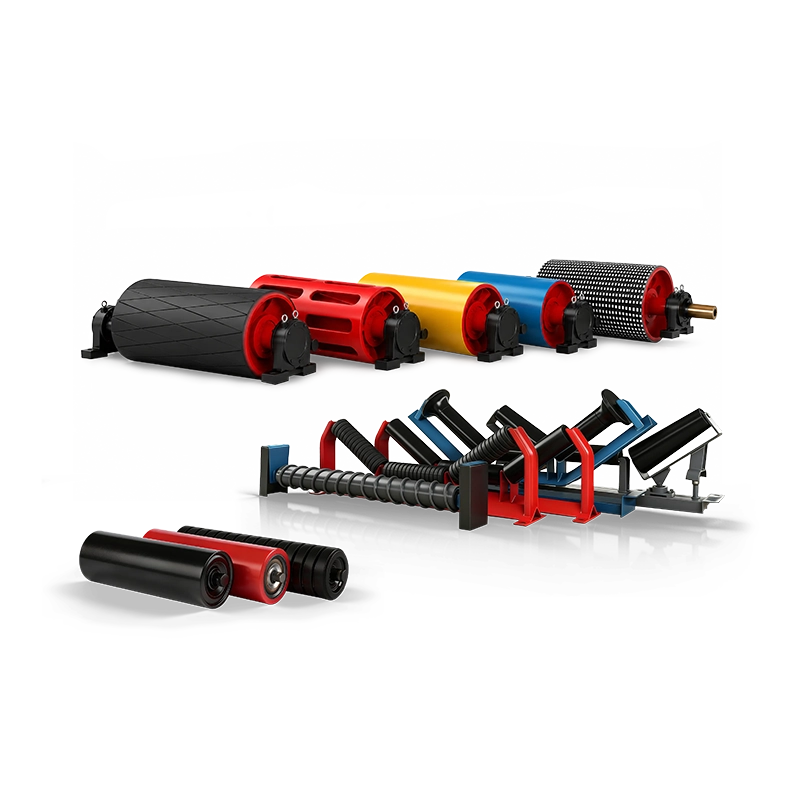
The SHENGYUAN conveyor roller range includes carrying rollers, return rollers, impact rollers, self-aligning rollers, training rollers, spiral return rollers, rubber-disc rollers, steel rollers, HDPE rollers, ceramic options, and customized assemblies.
This product coverage allows buyers to source different roller constructions for loading zones, loaded carrying sections, return sections, tracking positions, dusty coal conveyors, abrasive ore conveyors, and specialized plant applications.
Factory-Direct Customization
SHENGYUAN supports production based on customer drawings, existing dimensions, samples, and operating data. Through its custom conveyor solutions, the technical team can review tube diameter, wall thickness, shaft size, bearing selection, seal structure, roller length, shaft ends, surface treatment, rubber rings, and installation dimensions before manufacturing.
This flexibility is valuable for older steel plants and power plants where original conveyor drawings may be incomplete or where existing frames use non-standard mounting dimensions. It is also useful for EPC contractors that need rollers manufactured according to project specifications.
Integrated Conveyor Component Supply
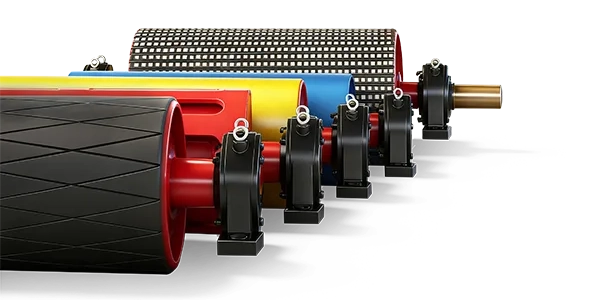
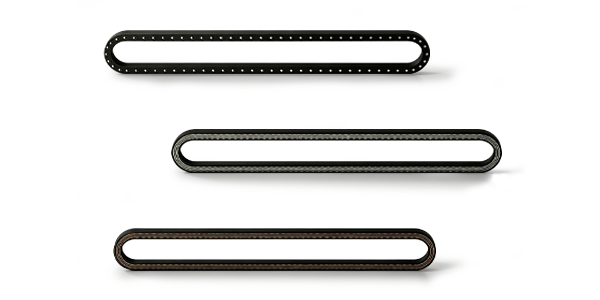
Rollers can be ordered together with idler frames, conveyor pulleys, pulley lagging, belt cleaners, and conveyor belts. Consolidating these components can simplify technical coordination, packing identification, shipping documentation, and container utilization.
For planned shutdowns, customers can prepare a complete replacement package rather than purchasing individual items from several unrelated factories. This reduces administrative work and can improve dimensional compatibility across the supply scope.
Export-Oriented Service
International projects require reliable communication and packaging as well as manufacturing. SHENGYUAN’s service and logistics support covers technical confirmation, order communication, export packaging, product identification, shipment coordination, and after-sales assistance.
Why SHENGYUAN can be a strong supplier choice:
SHENGYUAN combines heavy-duty conveyor specialization, factory-direct communication, drawing-based customization, multiple roller options, coordinated component sourcing, and international shipment support. It is particularly suitable for steel plants, power plants, distributors, EPC contractors, and maintenance companies planning repeat orders or scheduled replacement programmes.
Common Supplier Selection Mistakes
Buying Only by Roller Diameter and Length
Rollers with the same external dimensions may use different wall thicknesses, shafts, bearings, seals, and materials. External size alone does not define load capacity or service life.
Using One Specification for the Entire Plant
A clean indoor return section, an outdoor coal yard, a hot sinter conveyor, and a high-impact ore loading zone do not have the same requirements. Standardization should reduce unnecessary variations without ignoring important duty differences.
Selecting the Lowest Quotation Without Technical Comparison
A price comparison is meaningful only when the proposed products have equivalent materials, tube thickness, shaft sizes, bearings, seals, coatings, inspection requirements, packaging, and warranty terms.
Ignoring Packaging and Identification
Large plant orders may contain many roller dimensions and types. Weak packaging can cause coating or shaft damage, while unclear identification creates installation delays. Packing labels should connect each roller group with the purchase order, drawing number, installation position, or plant reference.
Conclusion: Choose a Supplier That Understands the Conveyor Duty
Rollers used in steel plants and power plants must operate under heavy loads, dust, moisture, abrasion, impact, heat, and long operating cycles. Their performance depends on the complete construction, including the tube, shaft, bearings, seals, housing, surface treatment, manufacturing accuracy, and mounting dimensions.
The right supplier should ask detailed application questions, recommend suitable roller types, provide clear drawings, control manufacturing quality, support customization, and deliver products with reliable identification and packaging. Buyers should compare technically equivalent proposals and calculate total life-cycle value rather than focusing only on the unit price.
For plants requiring factory-direct heavy-duty rollers, non-standard replacements, mixed component orders, or long-term supply programmes, SHENGYUAN provides a practical combination of product specialization, customization flexibility, cost control, and export-oriented support.
Request a technically accurate roller quotation
Provide the roller position, belt width, belt speed, conveyed material, capacity, temperature, dust and moisture conditions, roller diameter, tube thickness, face length, shaft dimensions, bearing preference, seal requirement, drawings, quantity, and delivery schedule. Complete information allows the supplier to propose a safer and more economical solution.