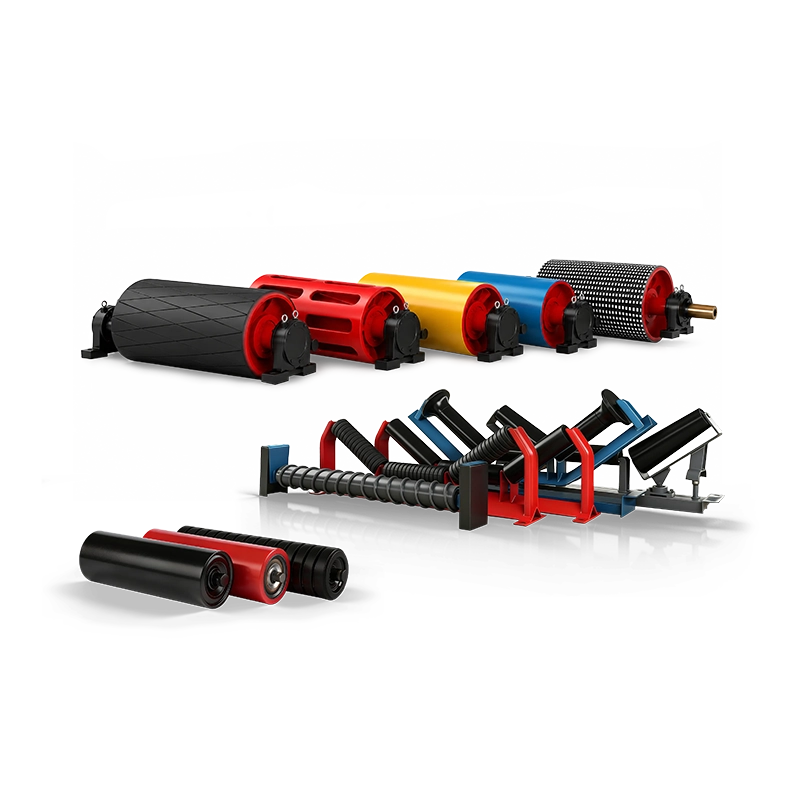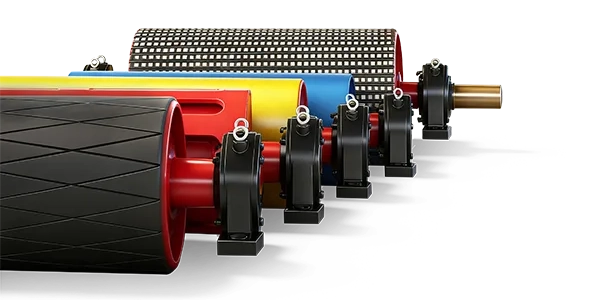

In a belt conveyor system, rollers are not simply rotating parts under the belt. They support the belt, carry material weight, reduce friction, guide belt movement, absorb impact, and help keep the whole conveyor running safely. Choosing the wrong roller type can lead to belt mistracking, material spillage, roller seizure, bearing failure, excessive energy use, and unexpected downtime. For mining, quarrying, cement, coal, ports, power plants, steel plants, and bulk material handling operations, understanding the different types of conveyor belt rollers is a practical step toward better reliability and lower maintenance cost.
The most common rollers used in conveyor belts include carrying rollers, return rollers, impact rollers, training rollers, troughing idlers, flat return rollers, rubber disc return rollers, spiral return rollers, guide rollers, and transition rollers. Each type is designed for a specific position and function. A complete conveyor system may use several roller types together, because the loaded side, return side, loading point, curve area, and belt tracking zone all face different operating conditions.
Quick answer: Conveyor belts mainly use carrying rollers to support loaded belts, return rollers to support empty belts, impact rollers to absorb loading shock, training rollers to correct mistracking, and special rollers such as rubber disc, spiral, guide, and transition rollers for specific working conditions.
Why Different Conveyor Roller Types Are Needed
A belt conveyor does not work under one single condition along its entire length. At the loading point, material may fall from a chute and hit the belt with strong impact. Along the carrying side, the belt must support continuous material weight. On the return side, the belt is usually empty but may carry sticky fines back from the discharge point. Near pulleys and curves, the belt may need additional guidance and support. Because each area has different mechanical demands, one standard roller type cannot solve every problem.
From a business perspective, roller selection affects both capital cost and operating cost. A low-cost roller may reduce the initial purchase budget, but if it fails early, it can damage the belt and increase shutdown risk. A correctly selected roller improves belt support, reduces friction, protects bearings, controls carryback, and helps maintain stable production. This is especially important in high-capacity conveyors where a short stoppage can interrupt large volumes of material handling.
| Roller Type | Main Function | Typical Position |
| Carrying Roller | Supports the loaded belt and conveyed material | Carrying side |
| Return Roller | Supports the empty belt on the return path | Return side |
| Impact Roller | Absorbs shock from falling material | Loading point |
| Training Roller | Helps correct belt mistracking | Tracking-sensitive areas |
1. Carrying Rollers: Supporting the Loaded Belt
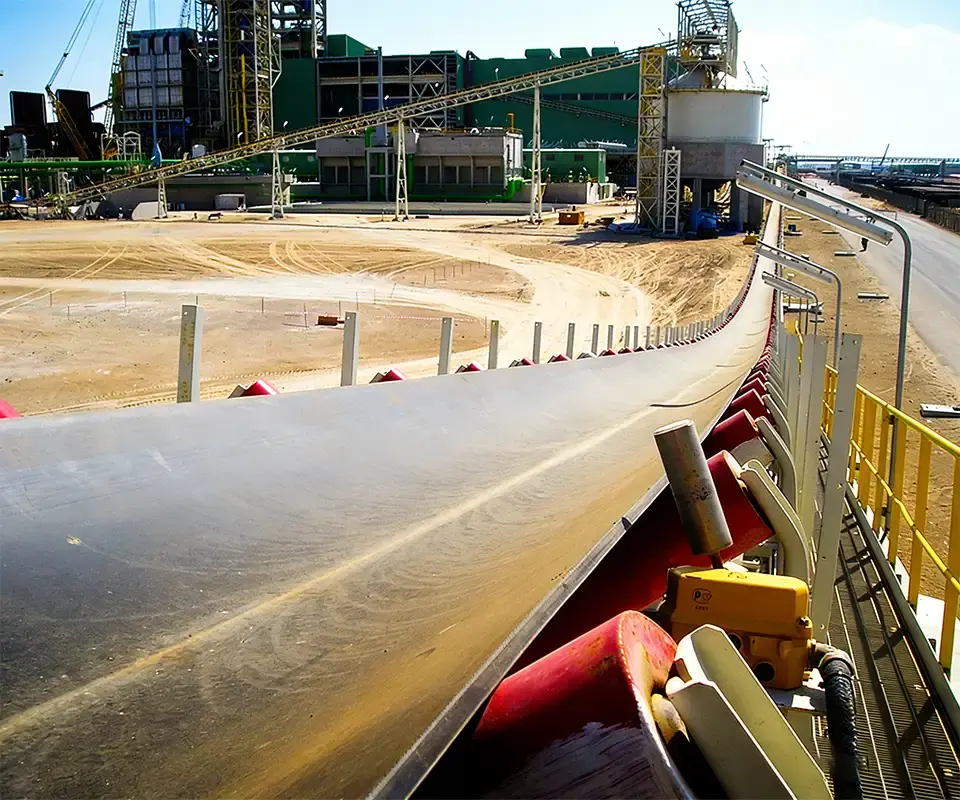
Carrying rollers are installed on the loaded side of the conveyor. Their main role is to support the belt and the material being transported. In many bulk handling systems, carrying rollers are arranged in a trough shape to help the belt hold more material and reduce spillage. These roller sets are often called carrying idlers or troughing idlers.
The correct carrying roller should be selected according to belt width, material weight, belt speed, roller spacing, troughing angle, and working environment. If the roller is too weak, it may bend, seize, or damage the belt. If the spacing is too wide, the belt may sag between rollers and cause material instability. For heavy-duty industries such as mining, aggregate, coal, cement, and ports, carrying rollers must have strong shells, reliable bearings, effective seals, and accurate dimensions.
2. Return Rollers: Supporting the Empty Belt
Return rollers support the belt after material has been discharged and the belt is travelling back toward the tail pulley. Although the belt is usually empty on the return side, return rollers are still important because they influence belt stability, running resistance, and carryback control.
In clean applications, a standard flat return roller may be enough. In dusty, wet, or sticky environments, material remaining on the belt can fall onto return rollers and build up around the roller surface. This may change the roller diameter, create vibration, contaminate bearings, and cause belt mistracking. For these conditions, rubber disc return rollers or spiral return rollers may be more suitable.
Return rollers are often overlooked because they carry less load than carrying rollers. However, failed return rollers can still damage the belt, increase friction, and cause tracking problems along the conveyor route.
3. Impact Rollers: Protecting the Loading Zone
Impact rollers are installed at loading points where material falls onto the conveyor belt. Their purpose is to absorb impact energy and protect the belt from direct damage. These rollers usually have rubber rings or impact-resistant covering around the steel roller body. The rubber helps cushion falling material and reduce stress on the belt carcass.
Impact rollers are especially important for conveyors handling large lumps, sharp stone, ore, coal, clinker, and heavy aggregate. Without proper impact support, the belt may develop cuts, punctures, cover damage, or early fatigue. The frame supporting impact rollers should also be strong enough to handle repeated shock. If impact rollers fail frequently, the loading chute, material drop height, impact angle, and feed control should be reviewed.
4. Troughing Idlers: Forming the Belt into a Carrying Shape
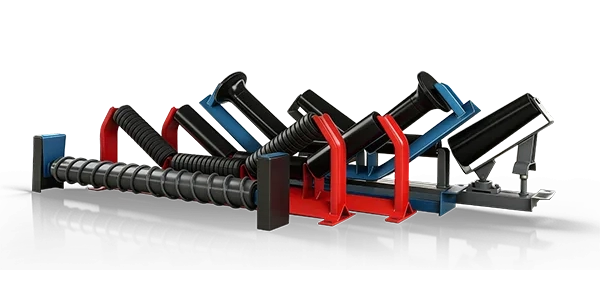
Troughing idlers are roller sets that form the belt into a trough shape. A typical arrangement may use three rollers: one centre roller and two wing rollers. The trough shape increases carrying capacity and helps keep material centred on the belt. This design is widely used in bulk material handling conveyors.
The troughing angle should match the conveyor design and belt characteristics. Common angles include 20°, 35°, and 45°, depending on the application. A larger trough angle may increase carrying capacity, but it also requires correct belt flexibility, stable loading, and proper transition design near pulleys. If the troughing idler is misaligned or uneven, it may push the belt sideways and create mistracking.
5. Training Rollers: Helping Correct Belt Mistracking
Training rollers, also called self-aligning rollers or tracking idlers, are designed to help guide the belt back toward the centreline when it begins to run off track. They are used on both carrying and return sides, especially in long conveyors, outdoor conveyors, and systems where material loading or environmental conditions may change.
Training rollers can reduce minor belt deviation, but they should not be used as the only solution for serious tracking problems. If the belt constantly moves to one side, the real cause may be pulley misalignment, skewed idlers, off-centre loading, belt splice error, frame distortion, or material buildup. Training rollers work best when the conveyor structure is already properly aligned.
When to consider training rollers
- The conveyor is long and small belt movement is difficult to avoid.
- The belt path is affected by changing load or outdoor conditions.
- Minor mistracking occurs after the main alignment issues have been corrected.
- The return side needs additional belt guidance.
6. Rubber Disc Return Rollers: Reducing Sticky Material Buildup
Rubber disc return rollers are designed with separate rubber discs instead of a fully smooth steel surface. The rubber discs help reduce the contact area where sticky material can accumulate. They are commonly used on the return side of conveyors that handle wet, sticky, or fine materials.
These rollers are useful for coal, clay, cement, limestone powder, ore fines, and other materials that may remain on the belt after discharge. By reducing buildup, rubber disc return rollers help protect the return belt, reduce mistracking, and lower cleaning requirements. They are not a replacement for good belt cleaners, but they support a cleaner return-side operation.
7. Spiral Return Rollers: Cleaning and Supporting the Return Belt
Spiral return rollers have a helical structure around the roller surface. This design can help shed sticky material from the return belt and reduce buildup on the roller. Spiral rollers are often used where ordinary return rollers become covered with carryback material.
The main value of spiral return rollers is improved cleanliness and more stable return belt support. They are especially useful in wet or dusty environments where material accumulation can create imbalance and tracking problems. However, the working condition should be reviewed before selection, because not every conveyor needs a spiral design.
8. Guide Rollers: Preventing Excessive Belt Side Movement
Guide rollers are installed near the belt edge to limit excessive side movement. They are often used in specific positions where the belt needs additional control. Their purpose is to prevent the belt from moving too far and contacting the conveyor frame or surrounding structure.
Guide rollers should be applied carefully. If the belt constantly pushes hard against guide rollers, the belt edge may wear quickly. This means the main tracking issue has not been corrected. Guide rollers should act as a protective control device, not as a permanent force to hold a badly aligned belt in place.
9. Transition Rollers: Supporting the Belt Near Pulleys
Transition rollers are used near head and tail pulleys where the belt changes from a troughed shape to a flat shape, or from flat to troughed. This transition area is important because the belt edges and centre experience different stresses. If the transition is too short or poorly supported, the belt may suffer edge stress, cover wear, or tracking instability.
A properly designed transition zone helps the belt move smoothly between pulley and troughing sections. The correct roller spacing, angle, and frame position depend on belt width, belt construction, trough angle, and conveyor layout. For heavy-duty conveyors, transition design should be reviewed carefully during engineering and replacement projects.
10. Roller Material Options: Steel, Rubber, HDPE, and Ceramic
Conveyor belt rollers can be made from different materials depending on load, environment, noise requirements, corrosion risk, and wear conditions. Steel rollers are widely used in heavy-duty systems because they provide high strength and good load-bearing performance. Rubber-covered or rubber-ring rollers are used where impact absorption or belt protection is needed.
HDPE rollers may be selected for corrosion resistance, lower weight, and reduced noise in certain applications. Ceramic rollers or ceramic-coated rollers may be used where abrasion resistance is important. The best material choice depends on the conveyed material, belt speed, operating temperature, moisture, dust, chemical exposure, and maintenance expectations.
| Material | Main Advantage | Common Use |
| Steel | High strength and heavy-load capacity | Mining, cement, coal, ports, aggregate |
| Rubber | Impact absorption and belt protection | Loading zones and return side |
| HDPE | Corrosion resistance and lower weight | Wet or corrosive environments |
| Ceramic | Abrasion resistance | Abrasive material handling |
How to Choose the Right Roller Type
Selecting the right conveyor belt roller should begin with the actual working condition. Buyers should confirm the belt width, belt speed, conveyed material, material density, lump size, moisture level, loading method, roller position, operating hours, and environmental conditions. A roller for a dry indoor conveyor may not be suitable for a wet quarry or dusty cement plant.
Important technical factors include roller diameter, shell thickness, shaft diameter, bearing type, seal design, frame structure, surface material, and installation dimensions. Bearing and seal quality are especially important because dust and water contamination are common causes of roller failure. For export and replacement projects, drawings or original dimensions should be checked carefully to avoid installation problems.
Selection checklist for conveyor belt rollers
- Confirm whether the roller is for carrying side, return side, loading point, or tracking area.
- Match roller strength with belt width, material load, and operating speed.
- Select suitable bearing and sealing for dust, water, and abrasive conditions.
- Choose surface design according to impact, carryback, corrosion, or cleaning needs.
- Provide drawings or site dimensions when replacing non-standard rollers.
Working with SWCONS for Conveyor Roller Solutions
SWCONS supplies conveyor rollers, conveyor pulleys, idler sets, and related components for bulk material handling applications. For industries such as mining, coal, cement, quarrying, ports, steel, power generation, and aggregate processing, roller selection should be connected with the entire conveyor system rather than treated as a simple spare part purchase.
When customers provide belt width, belt speed, material type, roller position, working environment, drawings, and target service requirements, SWCONS can help evaluate suitable roller types and provide customized manufacturing options. This is valuable for both new conveyor projects and replacement work where existing rollers fail too frequently or do not match current production demands.
Conclusion: Roller Type Should Match Conveyor Function
The main types of rollers used in conveyor belts include carrying rollers, return rollers, impact rollers, troughing idlers, training rollers, rubber disc return rollers, spiral return rollers, guide rollers, and transition rollers. Each type has a specific role in supporting the belt, carrying material, absorbing impact, controlling carryback, or improving belt tracking.
The most reliable conveyor systems do not use one roller type for every position. They use the right roller in the right place, based on load, speed, environment, material behavior, and maintenance requirements. For plant managers, engineers, and purchasing teams, this approach helps reduce belt damage, improve safety, control operating cost, and maintain stable production over time.
Need help selecting conveyor belt rollers?
Send SWCONS your belt width, belt speed, material type, roller drawings, installation position, and working environment. Our team can help recommend suitable carrying rollers, return rollers, impact rollers, training rollers, or customized idler solutions for your conveyor system.
FAQ: Types of Rollers Used in Conveyor Belts
These questions summarize common concerns from conveyor buyers, maintenance teams, and engineers when selecting rollers for belt conveyor systems.