
Conveyor rollers are among the most frequently installed and replaced components in bulk material handling systems. A single mining, quarry, cement, port, power plant, or aggregate conveyor may use hundreds or even thousands of rollers to support the belt and the conveyed material. Although each roller appears relatively simple, its material, bearing arrangement, sealing system, shaft strength, dimensional accuracy, and surface condition can directly affect belt life, energy consumption, tracking stability, noise, and maintenance frequency.
The lowest-priced conveyor roller is not always the most economical choice. A roller that develops excessive resistance, allows dust or water into its bearings, wears unevenly, or seizes during operation can damage a conveyor belt that costs far more than the roller itself. For heavy-duty bulk handling, buyers should compare rollers according to operating conditions and total life-cycle value rather than purchase price alone.
This guide explains the main conveyor roller materials, important structural features, common roller types, and practical buying considerations. It also shows how application-based customization can help mines, engineering contractors, distributors, and maintenance teams select rollers that fit existing equipment and perform reliably in demanding environments.
Quick answer: Select conveyor rollers by matching the tube material, diameter, wall thickness, shaft, bearings, seals, surface treatment, roller length, load capacity, speed, and resistance to abrasion, impact, moisture, corrosion, and material buildup with the actual conveyor duty.
What Does a Conveyor Roller Do?
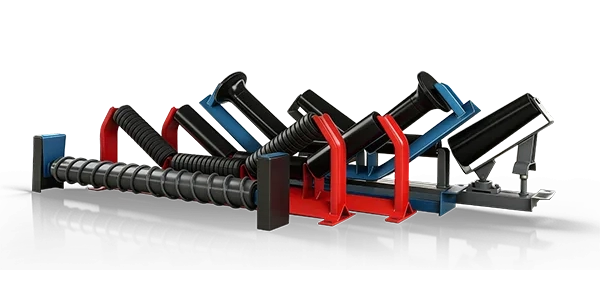
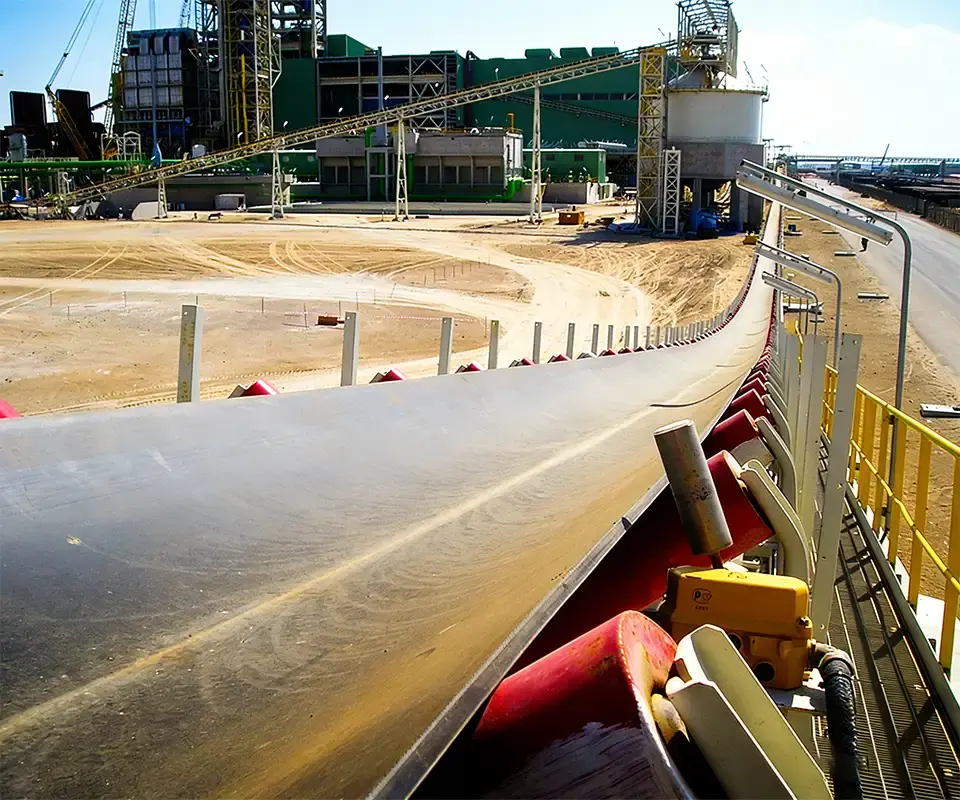
A conveyor roller supports the belt while allowing it to move with controlled resistance. Carrying rollers support the loaded side of the belt, while return rollers support the empty belt on its return journey. Impact rollers protect the belt at loading zones, and training or self-aligning rollers help manage belt deviation.
A correctly selected roller distributes load, maintains the intended belt profile, reduces friction, and helps prevent contact between the belt and conveyor structure. A poorly selected roller may rotate unevenly, deflect under load, damage the belt cover, increase power demand, or fail before the planned maintenance interval.
Roller performance should therefore be assessed as part of the complete conveyor system. Belt width, material capacity, trough angle, roller spacing, belt speed, loading impact, environmental exposure, and maintenance access all influence the required construction.
Common Conveyor Roller Materials
Steel Conveyor Rollers
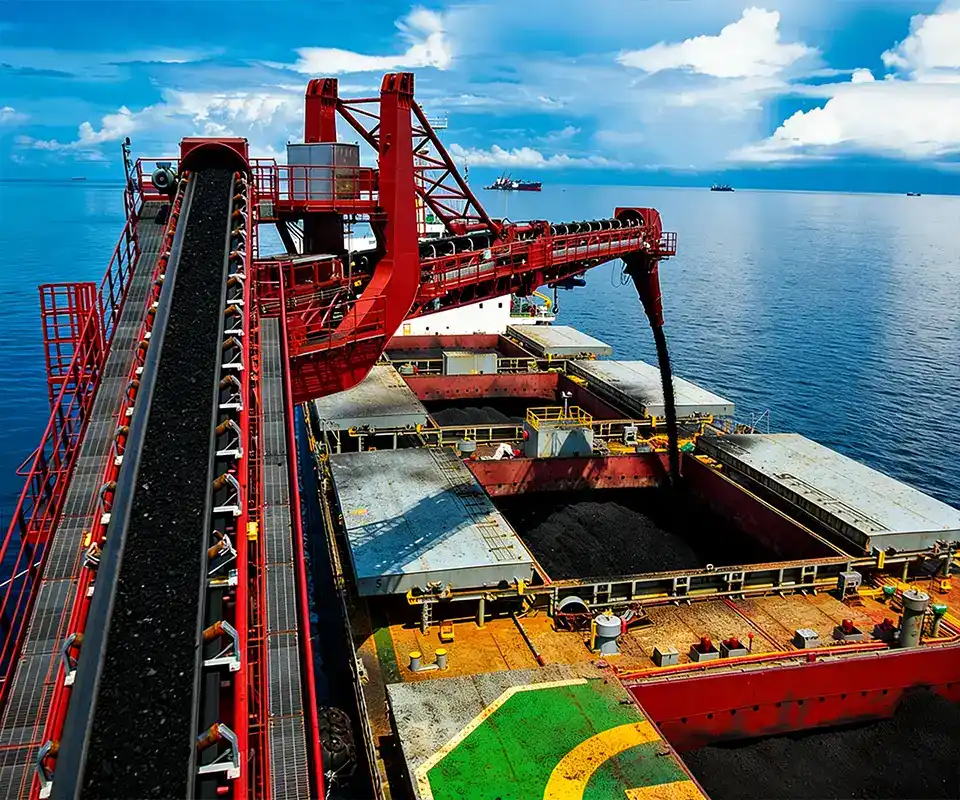
Steel is the most widely used roller material in heavy-duty bulk handling. A properly designed steel roller provides high load capacity, structural strength, dimensional stability, and resistance to impact. It is commonly used in mining, coal, quarrying, cement, steelmaking, ports, power plants, and aggregate processing.
Steel rollers can be manufactured with different tube diameters, wall thicknesses, shaft sizes, and surface treatments. Painting, powder coating, galvanizing, and other protective finishes may be selected according to corrosion exposure and required service life.
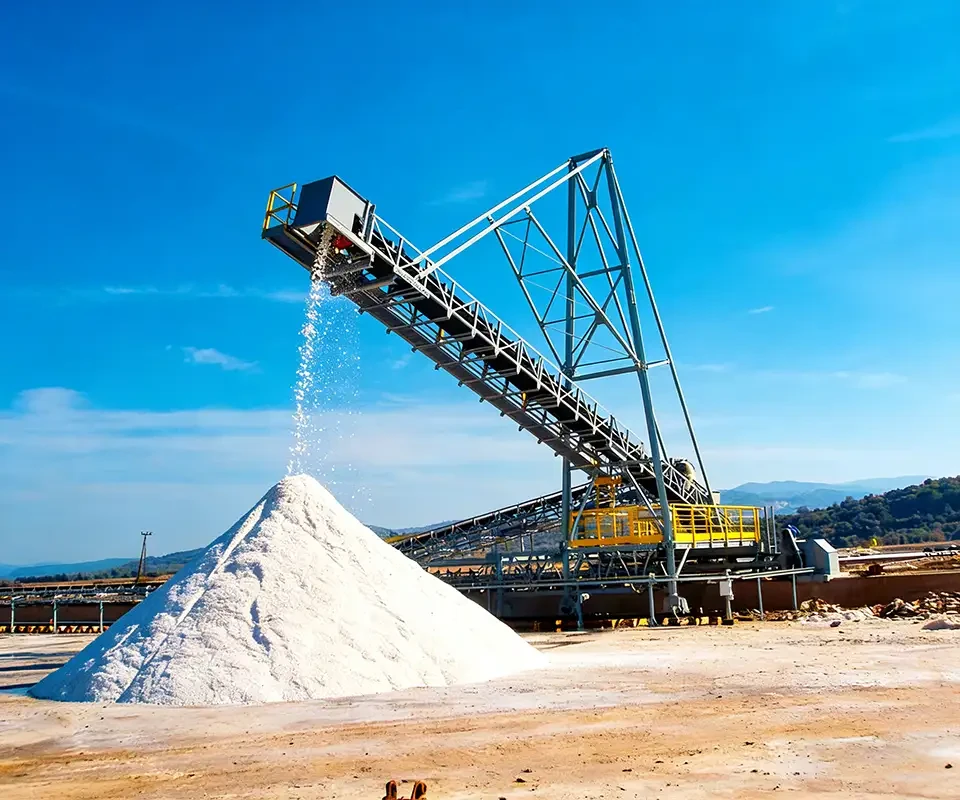
The main limitations are weight and corrosion risk. A heavy steel roller may require more effort during installation and replacement. In wet, chemical, coastal, or salt-processing environments, inadequate surface protection or sealing can shorten service life.
Best suited for: High-load conveyors, large lump material, impact-prone applications, mining systems, and projects where strength and dimensional stability are primary requirements.
HDPE Conveyor Rollers
High-density polyethylene rollers are lighter than conventional steel rollers and offer strong resistance to moisture and many corrosive environments. Their reduced weight can make manual handling easier, especially on long conveyors where maintenance teams replace large quantities of rollers.
HDPE rollers may also produce less operating noise and are less likely to develop sharp corroded surfaces that can cut the belt. They are often considered for ports, fertilizer plants, salt handling, chemical processing, wet aggregate systems, and outdoor conveyors.
However, buyers should not assume that every plastic roller is suitable for heavy-duty service. Load, temperature, belt speed, tube stiffness, bearing housing design, shaft construction, and material quality must be checked carefully. A poorly designed lightweight roller may deform or wear prematurely under excessive load.
Rubber and Polyurethane Rollers
Rubber-covered and polyurethane rollers are used where cushioning, grip, wear resistance, noise reduction, or protection of the conveyed product is required. Impact rollers commonly use rubber rings to absorb energy at loading points. Rubber-disc return rollers can help reduce contact with sticky material and may limit buildup on the return side.
Polyurethane offers good resistance to abrasion, cutting, and repeated deformation. It can be useful in specialized industrial environments, but the compound hardness and thickness should match the application. A surface that is too soft may deform excessively, while a surface that is too hard may provide insufficient impact absorption.
Ceramic Conveyor Rollers
Ceramic rollers or ceramic-coated roller surfaces may be selected for highly abrasive applications. Ceramic materials provide strong wear resistance and can deliver long service life where fine, hard particles continuously attack the roller surface.
Their higher initial cost means they should be applied selectively. They are most valuable where conventional roller surfaces wear rapidly and replacement access is difficult. Impact sensitivity, shaft design, bearing protection, and the complete roller construction should still be evaluated.
Material Comparison at a Glance
| Material | Main Advantages | Typical Applications |
| Steel | High strength, stable dimensions, heavy-load capability | Mining, coal, cement, steel, aggregates |
| HDPE | Low weight, corrosion resistance, reduced noise | Ports, salt, fertilizer, wet and corrosive sites |
| Rubber or PU | Impact absorption, cushioning, wear protection | Loading zones, return belts, specialist conveyors |
| Ceramic | Excellent resistance to severe abrasive wear | Highly abrasive minerals and difficult-access areas |
Features That Determine Roller Performance
Tube Diameter and Wall Thickness
The roller tube must resist bending and local deformation under the belt load. Diameter and wall thickness should be selected according to roller length, spacing, material load, belt speed, impact, and required service life. Increasing wall thickness can improve strength, but it also increases weight and cost.
For heavy-duty conveyors, undersized tubes may deflect or lose dimensional accuracy. Excessive runout can cause vibration, belt movement, noise, and uneven bearing loading. Buyers should therefore confirm both material thickness and finished dimensional tolerances.
Shaft Strength and Mounting Dimensions
The shaft supports the roller and transfers the load to the idler frame. Shaft diameter, material, machining accuracy, and end design must suit the load and installation arrangement. Common mounting details include flats, slots, threaded ends, and special machined profiles.
Replacement rollers should match existing frame dimensions accurately. Even a high-quality roller can create installation problems when the shaft length, slot width, flat dimensions, or bearing centres do not match the conveyor structure.
Bearings and Bearing Housings
Bearings influence rotational resistance, operating temperature, load capacity, and service life. The correct bearing should be selected according to roller load, speed, shaft size, expected operating hours, impact, and environmental contamination.
Bearing brand alone does not guarantee a reliable roller. Housing accuracy, installation method, internal clearance, lubrication, sealing, shaft fit, and alignment are equally important. A premium bearing installed in a poorly machined housing may still fail early.
Sealing System
Dust and water contamination are common causes of roller failure. Effective sealing protects the bearing chamber while allowing the roller to rotate with low resistance. Labyrinth seals use multiple paths and barriers to reduce the entry of contaminants without creating excessive contact friction.
Seal selection should reflect the site environment. Dry cement dust, wet coal, coastal salt, outdoor rain, fine mineral particles, and washdown conditions create different risks. Buyers should ask how the sealing system is constructed rather than accepting a general statement such as “dustproof.”
Rotational Resistance and Runout
Every roller contributes resistance to the conveyor. On a long conveyor containing thousands of rollers, small differences in rotational resistance can influence power demand and belt tension. Rollers should start smoothly and rotate consistently without abnormal noise, binding, or vibration.
Radial runout describes how much the roller surface moves away from a true circular path during rotation. Excessive runout can produce repeated belt movement and dynamic loading. Manufacturing accuracy, tube straightness, bearing alignment, and assembly control all affect this measurement.
Choose the Correct Roller Type
Carrying Rollers
Support the loaded belt and form the required flat or troughed carrying profile.
Return Rollers
Support the empty belt and may use smooth, spiral, rubber-disc, or self-cleaning designs.
Impact Rollers
Use resilient rings or coverings to absorb repeated loading-zone impact and protect the belt.
Training Rollers
Help correct developing belt deviation when installed and adjusted as part of a suitable tracking system.
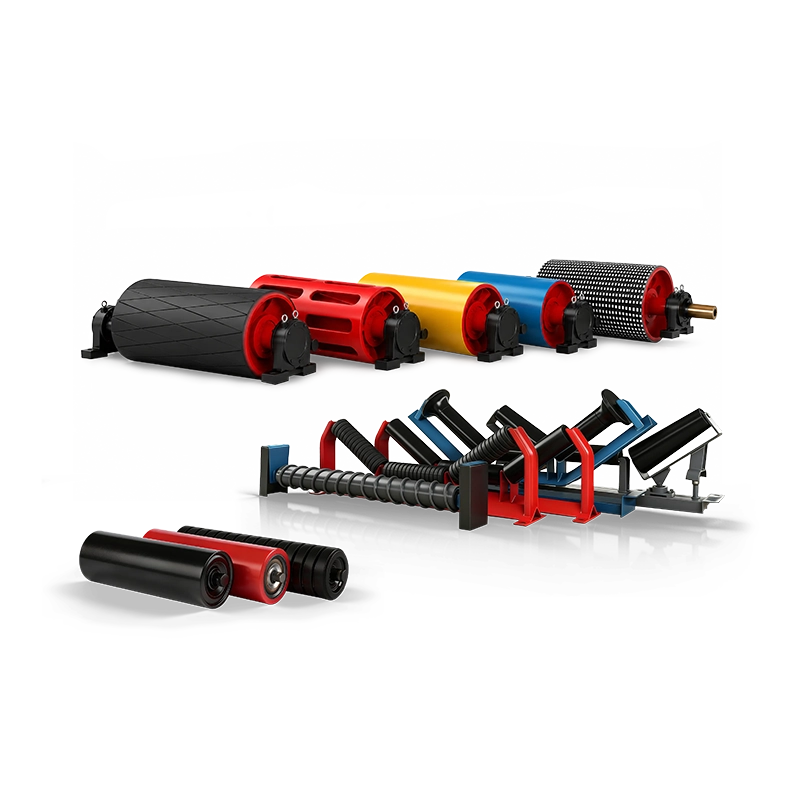
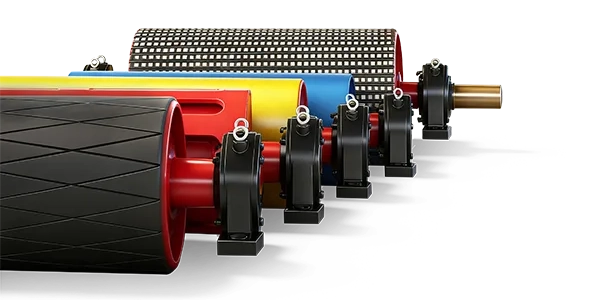
The complete SHENGYUAN conveyor roller range includes carrying, return, impact, self-aligning, spiral return, tapered, steel, HDPE, rubber, and customized roller solutions for heavy-duty bulk handling.
Practical Buying Tips for Conveyor Rollers
Provide Complete Application Data
A reliable quotation begins with accurate information. Buyers should provide belt width, roller type, roller diameter, face length, shaft dimensions, frame mounting details, belt speed, material capacity, bulk density, lump size, operating hours, ambient conditions, and required quantity.
For replacement projects, drawings and photographs should be combined with physical measurements. An old roller may have worn surfaces, damaged shafts, or dimensions that no longer represent the original design. Measurements should be taken from several samples where possible.
Compare Equivalent Specifications
Two rollers with the same diameter and length may have very different performance. Compare tube material, wall thickness, shaft diameter, bearing type, seal structure, housing construction, coating, runout, rotational resistance, inspection scope, packaging, and warranty terms.
A lower quotation may be based on lighter construction or a reduced quality-control scope. Request a clear technical data sheet so that each supplier is quoting the same requirement.
Consider Life-Cycle Cost
The economic value of a roller includes purchase cost, freight, installation labour, replacement frequency, belt damage risk, power consumption, inventory requirements, and downtime exposure. A slightly more expensive roller may provide better value when it lasts longer or reduces maintenance interventions.
Consider an illustrative conveyor using 1,500 rollers. If a low-cost design creates only a small increase in yearly replacement rate, the additional labour, access equipment, production interruption, and spare inventory can exceed the original purchasing saving. This is why large operators often evaluate cost per operating hour rather than unit price alone.
Use Trial Orders for New Suppliers
For a new supplier relationship, a trial batch can reduce risk. Inspect dimensions, rotation, coating, markings, packaging, and installation compatibility before placing a large order. Where practical, monitor the trial rollers under representative operating conditions.
Trial orders are especially valuable when replacing an established specification, introducing a new material such as HDPE, or purchasing customized rollers from an overseas factory.
Why Choose SHENGYUAN Conveyor Rollers?
SHENGYUAN, the brand of Hebei Shengwen Mining Machinery Co., Ltd., specializes in conveyor rollers, pulleys, idlers, and related components for heavy-duty bulk material handling. According to the company’s published information, its manufacturing experience extends for nearly two decades and its applications include mining, coal, cement, aggregates, ports, steel plants, power generation, and industrial material handling.
Factory-Direct Manufacturing
Direct communication with the manufacturing factory helps buyers confirm dimensions, materials, bearing options, sealing structures, and packaging requirements without unnecessary information loss between multiple trading layers. This model can also improve cost control for repeat orders, distributor inventory, and large replacement programmes.
Drawing-Based Customization
Standard rollers do not fit every conveyor. Through its custom conveyor solutions, SHENGYUAN can review drawings, old samples, shaft ends, frame dimensions, bearing preferences, and application requirements before production.
Customization may include tube diameter, wall thickness, roller length, shaft material, shaft ends, bearings, sealing systems, rubber rings, polyurethane surfaces, HDPE construction, ceramic surfaces, coating, and special identification.
Coordinated Conveyor Component Supply
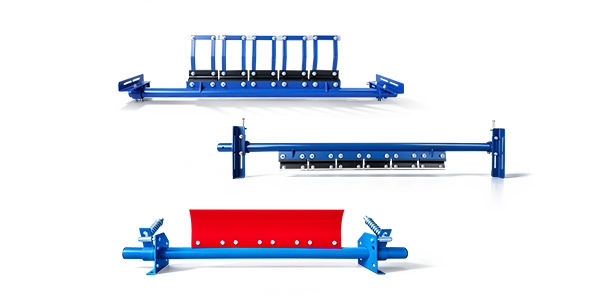
Rollers can be sourced together with idler frames, conveyor pulleys, belt cleaners, and related components. Coordinating these products through one supplier can simplify technical communication, container planning, documentation, and replacement compatibility for international projects.
Export-Oriented Support
International orders require more than production. Buyers need clear packing lists, durable packaging, product identification, delivery coordination, and responsive communication. SHENGYUAN’s service and logistics support helps customers plan customized roller shipments and bulk replacement orders.
Best purchasing fit:
SHENGYUAN is particularly suitable for mining and industrial projects requiring customized rollers, factory-direct pricing, mixed product orders, repeatable specifications, export packaging, and planned delivery. It is also relevant to distributors, EPC contractors, conveyor service companies, and OEM customers developing long-term supply programmes.
Conclusion: Buy the Roller for the Application, Not the Catalogue
Conveyor roller selection should begin with the operating duty. Steel rollers provide strength for heavy loading. HDPE rollers can reduce weight and improve corrosion resistance. Rubber and polyurethane surfaces offer impact absorption and wear protection, while ceramic products may suit extremely abrasive conditions.
Material selection is only one part of the decision. Tube thickness, shaft strength, bearings, seals, housing accuracy, runout, rotational resistance, mounting dimensions, surface treatment, and quality inspection all influence performance.
The most reliable buying approach is to provide complete operating data, compare equivalent specifications, test new suppliers carefully, and evaluate total life-cycle cost. Buyers who need customized heavy-duty rollers can also work with a focused factory such as SHENGYUAN to match product construction with drawings, conveyor duty, environmental conditions, and long-term maintenance objectives.
Request an accurate conveyor roller quotation
Provide the roller type, belt width, tube diameter, face length, shaft dimensions, bearing preference, sealing requirement, material load, belt speed, working environment, quantity, drawings, and required delivery date. Complete information allows the manufacturer to recommend a technically suitable and commercially realistic solution.