



When a Conveyor Pulley Fails, the Real Cost Is Not Only the Pulley
In a bulk material conveyor system, the pulley is not a minor accessory. It transfers power, changes belt direction, maintains belt tension, and directly affects belt tracking. When a drive pulley, tail pulley, bend pulley, snub pulley, or take-up pulley begins to wear, plant managers often face a difficult question: should the pulley be refurbished, or should it be replaced with a new one?
At first glance, refurbishment may seem more economical because it keeps the existing pulley body and focuses on repairing worn parts such as lagging, bearings, or surface coating. However, replacement may be safer and more cost-effective when the pulley has structural damage, repeated failures, incorrect design, or a short remaining service life. The best decision is not based on price alone. It should be based on safety, downtime risk, pulley condition, conveyor duty, and long-term operating cost.
Core conclusion: Refurbish the conveyor pulley when the shell, shaft, welds, and bearing seats are structurally sound. Replace it when the pulley has cracks, deformation, severe corrosion, poor design, or repeated performance problems that refurbishment cannot solve.
Why Conveyor Pulley Decisions Matter in Bulk Material Handling
Conveyor pulleys work under continuous tension and rotating load. In mining, coal handling, cement plants, ports, steel plants, sand and aggregate production, and power plants, pulley failure can stop the entire conveying line. This may interrupt production, delay loading schedules, increase maintenance labor, and damage the conveyor belt. In many cases, the belt itself is more expensive than a single pulley, so any pulley problem that causes belt wear or tracking failure should be treated seriously.
A conveyor pulley is also a safety-related component. If the shell cracks, the shaft bends, or the bearing seat becomes loose, the failure may develop quickly under load. A pulley that looks acceptable from the outside may still have internal fatigue, hidden weld defects, or shaft damage. Therefore, the decision to refurbish or replace should begin with inspection, not assumption.
For buyers and maintenance teams, the business goal is simple: keep the conveyor running safely at the lowest reasonable life-cycle cost. This means balancing three elements: the cost of the pulley, the cost of downtime, and the risk of future failure. A low-cost repair is not economical if it leads to another shutdown within a short period.
What Does Conveyor Pulley Refurbishment Usually Include?
Conveyor pulley refurbishment means restoring an existing pulley to a usable and reliable condition. The exact scope depends on the pulley type and damage level. For a lagged drive pulley, refurbishment may include removing old rubber or ceramic lagging, cleaning the shell surface, checking the shell thickness, inspecting welds, repairing minor surface defects, applying new lagging, replacing bearings, and repainting or coating the exposed metal surface.
For a non-drive pulley such as a tail pulley, bend pulley, or take-up pulley, refurbishment may focus more on shell condition, bearing condition, shaft alignment, surface wear, and corrosion protection. If the pulley has a wing structure or self-cleaning design, the condition of the wings, ribs, welds, and cleaning gaps should also be checked carefully.
Typical refurbishment work
- Remove worn rubber, ceramic, or polyurethane lagging.
- Inspect the shell, end discs, welds, shaft, and bearing seats.
- Check runout, balance, and surface condition.
- Replace bearings, seals, locking elements, or related accessories if needed.
- Apply new lagging or anti-corrosion coating.
- Reassemble, test, package, and return the pulley for installation.
Refurbishment is often attractive when the original pulley was well designed and manufactured, and only the wearing surface has reached the end of its service life. In this case, renewing the lagging or replacing bearings can extend service life without the cost of a completely new pulley.
When Refurbishment Is the Better Choice
Refurbishment is usually the better choice when the main pulley structure is still strong. For example, if the pulley shell has no cracks, the shaft is not bent, the welds are intact, and the bearing seats are still accurate, refurbishing the pulley can be a practical and cost-effective solution. This is especially true for large-diameter conveyor pulleys where manufacturing, transportation, and installation costs are high.
Refurbishment is also suitable when the problem is clearly limited to wear parts. Worn lagging, surface corrosion, aging rubber, or bearing fatigue can often be corrected without replacing the full pulley. In drive pulley applications, relagging can restore friction between the pulley and belt, reduce belt slippage, and improve power transmission. In wet or dusty environments, upgrading to ceramic lagging or high-wear rubber lagging may also improve performance compared with the original design.
Good refurbishment candidate: A heavy-duty drive pulley with sound shell and shaft, but worn rubber lagging and aging bearings. In this case, relagging and bearing replacement may restore reliable operation at a lower cost than a new pulley.
Another reason to refurbish is lead time. If a plant has a planned shutdown window and the existing pulley can be removed, repaired, and reinstalled quickly, refurbishment may reduce operational disruption. However, this depends on the availability of workshop capacity, spare parts, lagging materials, and inspection equipment. If refurbishment takes longer than producing or stocking a new pulley, the expected advantage may disappear.
When Replacement Is the Safer and More Economical Decision
Replacement becomes the better decision when the pulley has structural damage or repeated operational problems. If inspection finds cracks in the shell, end disc, hub, or weld area, refurbishment should be approached with caution. A crack may indicate fatigue caused by excessive tension, poor design, overloading, misalignment, or long-term cyclic stress. Simply replacing lagging will not solve this type of problem.
A bent shaft is another strong reason for replacement. A bent or damaged shaft can cause vibration, uneven bearing load, seal failure, and belt tracking problems. If the bearing seat is worn or loose, the pulley may continue to damage new bearings even after repair. In these cases, the cost of repeated maintenance can quickly exceed the cost of a new conveyor pulley.
Replace the pulley if inspection shows:
- Cracks on the shell, end disc, hub, or welds.
- Bent shaft, damaged keyway, or loose bearing seat.
- Severe shell thinning, deformation, or out-of-round condition.
- Heavy corrosion that affects structural strength.
- Repeated bearing failure caused by poor alignment or weak design.
- Incorrect pulley diameter, face width, lagging type, or duty rating for the conveyor.
Replacement is also recommended when the original pulley is underspecified. If a conveyor has been upgraded to carry more material, run at higher belt tension, or operate for longer hours, the old pulley may no longer match the current duty. In such cases, refurbishing the old pulley only preserves an outdated design. A new pulley can be engineered with a stronger shell, larger shaft, better bearing arrangement, suitable lagging, improved sealing, and more accurate dynamic balance.
The Role of Lagging: Repair Surface Wear or Upgrade Performance?
Pulley lagging is one of the most common reasons for refurbishment. Lagging improves friction, protects the shell, reduces belt slippage, and helps extend belt service life. Rubber lagging is widely used for general drive pulley applications. Ceramic lagging is often selected for wet, muddy, high-tension, or high-slip risk environments. Polyurethane lagging may be considered where abrasion resistance and special surface performance are required.
If the lagging is worn but the pulley body is structurally sound, refurbishment is often reasonable. However, if the lagging fails repeatedly, the cause should be investigated before relagging again. Possible causes include insufficient belt tension, wrong lagging material, poor bonding, pulley misalignment, belt contamination, inadequate cleaning, excessive moisture, or pulley diameter that is too small for the belt construction.
Selection tip: Relagging should not be treated as a simple surface repair. It is also an opportunity to upgrade friction, wear resistance, corrosion protection, and belt protection according to the actual working conditions.
Inspection Standards and Technical Checks Before Decision-Making
A professional decision should be supported by inspection data. Visual inspection is useful, but it is not enough for critical pulleys. Maintenance teams should check the pulley surface, shaft, welds, bearing seats, locking devices, lagging condition, and signs of abnormal vibration or heat. For critical or high-tension pulleys, non-destructive testing may be used to detect hidden cracks or defects.
Relevant conveyor design references such as ISO 3684, DIN 22101, CEMA recommendations, and GB/T 10595 may be used during technical review, depending on project requirements and regional standards. These references help engineers consider pulley diameter, belt tension, conveyor duty, and overall belt conveyor design. In export projects, buyers should also confirm whether the project specification requires ISO, DIN, CEMA, AS, or GB/T compliance.
Recommended inspection checklist
- Shell: check wear, corrosion, cracks, thickness, and roundness.
- Shaft: check bending, wear, keyway damage, and bearing fit.
- Welds: check visible cracks and fatigue signs around end discs and hubs.
- Lagging: check wear depth, bonding condition, hardness, and surface pattern.
- Bearings: check noise, temperature, lubrication, contamination, and seal failure.
- Operation: check slippage, vibration, belt tracking, abnormal heat, and repeated downtime history.
Business Comparison: Refurbishment Cost vs Replacement Value
From a purchasing perspective, refurbishment usually has a lower direct cost than buying a new pulley. However, the direct repair price is only one part of the decision. The full cost includes removal, transport, inspection, workshop repair, spare parts, installation, production loss, and the risk of another failure. If a refurbished pulley fails during peak production, the real loss can be far higher than the initial saving.
Replacement has a higher initial cost, but it may deliver better value when the conveyor is critical, the existing pulley is old, or the original design is not suitable for current operating conditions. A new pulley can be customized for belt width, belt speed, tension, face width, shaft diameter, lagging material, bearing type, sealing system, and surface protection. For long-distance conveyors or heavy-load applications, this engineering flexibility can be more valuable than short-term repair savings.
| Decision Factor | Refurbish | Replace |
|---|---|---|
| Initial cost | Usually lower | Usually higher |
| Best condition | Sound structure with worn lagging or bearings | Structural damage, outdated design, or high failure risk |
| Lead time | Can be faster if repair capacity is available | Depends on design complexity and production schedule |
| Performance upgrade | Limited by existing structure | Can be fully redesigned for current working conditions |
| Risk level | Low only if inspection confirms structural safety | Lower long-term risk when old pulley condition is uncertain |
A Practical Decision Framework for Maintenance Teams
A simple decision framework can help avoid emotional or price-only decisions. First, classify the pulley by criticality. A main drive pulley on a high-capacity conveyor deserves stricter evaluation than a small low-tension bend pulley. Second, inspect the pulley structure. If structural integrity is uncertain, replacement is usually safer. Third, review the failure history. Repeated bearing failures, lagging failures, or belt tracking problems often indicate a deeper design or installation issue.
Fourth, compare downtime cost with pulley cost. If the conveyor is part of a critical production route, a new pulley may be justified even when refurbishment is technically possible. Fifth, consider whether the conveyor duty has changed. If capacity, belt speed, material abrasiveness, or operating hours have increased, the old pulley may no longer be suitable.
Fast decision rule
Choose refurbishment for a structurally healthy pulley with replaceable wear problems. Choose replacement for any pulley with structural damage, incorrect design, high criticality, or repeated failure history.
How a Conveyor Pulley Manufacturer Can Support the Decision
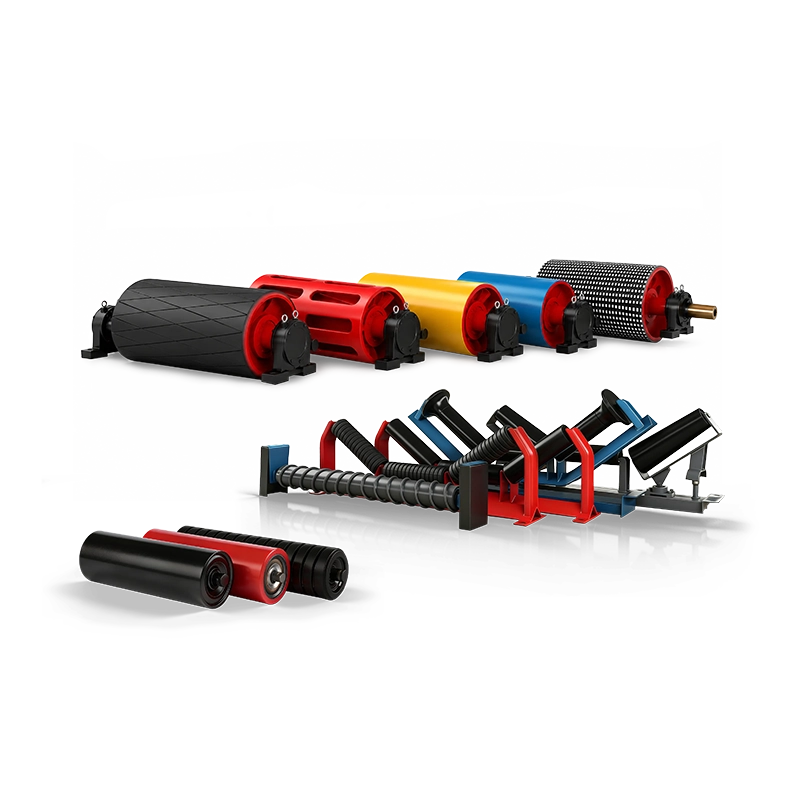
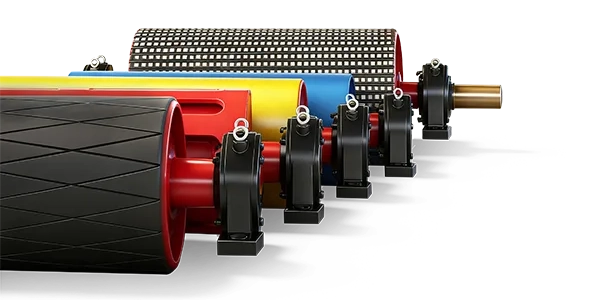
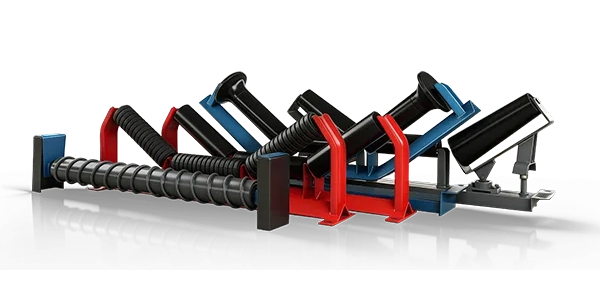
A reliable conveyor pulley manufacturer should not only sell a new product; it should help customers evaluate the application. SHENGYUAN focuses on conveyor pulleys, conveyor rollers, idler sets, and related components for bulk material handling industries. Its conveyor pulley range includes drive pulleys, bend pulleys, take-up pulleys, snub pulleys, wing pulleys, rubber lagged pulleys, ceramic lagged pulleys, and polyurethane lagged pulleys for mining, cement, port, steel plant, power plant, sand, aggregate, and other heavy-duty applications.
For a replacement project, buyers should provide key information such as belt width, face width, pulley diameter, shaft diameter, bearing model, belt speed, belt tension, material type, working environment, lagging type, drawings, and photos of the existing pulley. If the old pulley failed early, the cause should be reviewed before producing a replacement. Otherwise, the same problem may appear again on the new pulley.
When the application requires a custom conveyor pulley, the manufacturer can adjust shell thickness, shaft design, hub connection, lagging type, surface treatment, bearing arrangement, and packaging method. This is especially important for export projects where transport, installation, and site maintenance conditions must be considered in advance.
Conclusion: Refurbish for Wear, Replace for Risk
The decision to refurbish or replace a conveyor pulley should be made through technical inspection and life-cycle cost analysis. Refurbishment is a good solution when the pulley body is structurally sound and the main problems are worn lagging, aged bearings, surface corrosion, or normal wear. It can reduce cost, extend service life, and support planned maintenance.
Replacement is the better solution when the pulley has cracks, deformation, shaft damage, severe corrosion, poor bearing fits, repeated failures, or an outdated design. It is also the safer choice for critical conveyors where downtime is expensive and failure risk must be minimized.
Final recommendation: Do not choose refurbishment simply because it is cheaper, and do not choose replacement simply because it is new. Inspect the pulley, calculate the downtime risk, review the conveyor duty, and select the option that delivers the safest and lowest life-cycle cost.
FAQ: Conveyor Pulley Refurbishment and Replacement
The following questions summarize the most common concerns from conveyor maintenance teams, purchasing managers, and project engineers when comparing pulley refurbishment with full replacement.
Q1How do I know if a conveyor pulley can be refurbished?
A pulley can usually be refurbished if the shell, shaft, welds, end discs, hubs, and bearing seats are structurally sound. If the main problem is worn lagging, bearing wear, or surface corrosion, refurbishment may be practical. If cracks, deformation, severe corrosion, or shaft damage are found, replacement is normally safer.
Q2Is relagging the same as full pulley refurbishment?
No. Relagging only replaces the pulley surface covering, such as rubber or ceramic lagging. Full refurbishment may also include inspection, bearing replacement, shaft checks, surface repair, repainting, balancing, and other mechanical work. Relagging should be done only after confirming that the pulley structure is still reliable.
Q3When is a new conveyor pulley more cost-effective?
A new pulley is more cost-effective when the old pulley has structural risk, repeated failure history, or an outdated design. It is also preferred when conveyor downtime is very expensive, the conveyor capacity has increased, or the project requires stronger design, improved lagging, better sealing, or compliance with updated technical specifications.
Q4What information should I provide for a replacement pulley quotation?
You should provide pulley type, belt width, face width, pulley diameter, shaft diameter, bearing type, belt speed, belt tension, material handled, working environment, lagging type, drawings, photos, and any required standards. Complete information helps the supplier recommend a suitable heavy-duty conveyor pulley instead of only matching the old dimensions.
Q5Can ceramic lagging be used when replacing a drive pulley?
Yes, ceramic lagging can be considered for drive pulleys working in wet, muddy, high-tension, or high-slip conditions. It can improve traction and wear resistance, but it should be selected according to belt type, tension, working environment, and cleaning condition. For general applications, rubber lagging may still be sufficient and more economical.