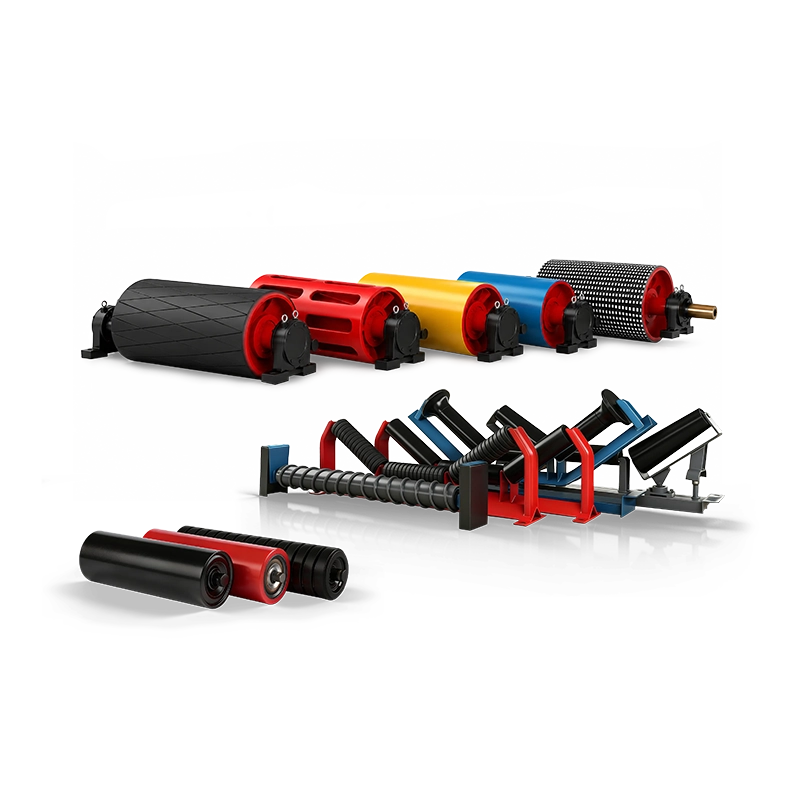

The Return Roller Is Small, but the Selection Decision Is Strategic
In a bulk material conveyor, the return roller may appear to be a simple component. It supports the empty side of the belt after material has been discharged and helps the belt run back smoothly to the tail pulley. However, in real operating conditions, return rollers are exposed to dust, moisture, carryback material, belt misalignment, corrosion, vibration, and continuous rotation. A poor roller choice can increase belt wear, create unexpected shutdowns, raise power consumption, and generate hidden maintenance costs.
For this reason, the question is not simply “Which return roller is cheapest?” but “Which roller material offers the best life-cycle value for this conveyor section?” Steel, high-density polyethylene (HDPE), and polyurethane (PU) all have valid applications. The correct choice depends on the material being conveyed, belt speed, environmental conditions, carryback level, load, maintenance strategy, and total cost of ownership.
Core view: Steel rollers remain the standard choice for heavy-duty and high-load conveyors; HDPE rollers are suitable for corrosion resistance, lower weight, and quieter operation; PU rollers are usually preferred where carryback, sticky material, abrasion, or belt protection are the main concerns.
What Does a Return Roller Actually Do?
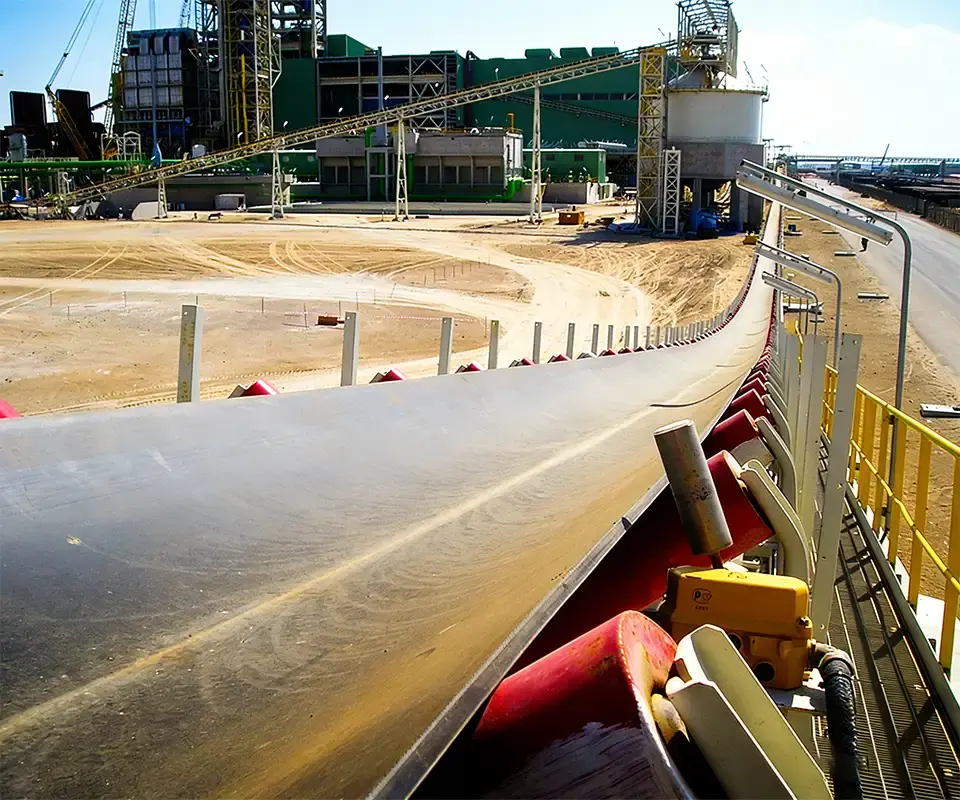
A return roller supports the return run of the conveyor belt. Unlike carrying rollers, which directly support the loaded belt and bulk material, return rollers support the empty belt. This does not mean their working condition is easy. On many conveyors, the return side is where residual material sticks to the belt surface, falls onto the roller, accumulates around the shell, and gradually affects rotation.
In mining, cement, aggregate, port, power plant, and steel plant applications, return rollers often work in harsh environments. Wet coal, clay, limestone dust, iron ore fines, fertilizer, salt, and other materials may create different wear and corrosion problems. If carryback builds up on the roller surface, the roller diameter becomes uneven, belt tracking becomes unstable, and the belt may suffer edge damage or local abrasion.
International and national standards are often used as references when specifying conveyor idlers and belt conveyor systems. For example, ISO 1537 covers dimensions and arrangements for idlers on troughed belt conveyors, while GB/T 10595-2017 specifies technical requirements, test methods, inspection rules, marking, packaging, and storage for belt conveyors used for bulk materials and finished articles.
Steel Return Rollers: Reliable Strength for Heavy-Duty Conveyors
Steel return rollers are the traditional and widely used option in bulk material handling. Their main advantage is mechanical strength. A properly designed steel roller can handle high belt tension, large belt width, long conveyor distance, and severe impact from operating vibration. For heavy-duty conveyors in mining, quarrying, cement, and port terminals, steel remains a dependable baseline choice.
Steel rollers are especially suitable when the conveyor has high structural load requirements, large belt width, high belt speed, or relatively clean return conditions. They are also easy to standardize, source, and replace. Many return idler product ranges in the market still use steel as the standard roll material for mining, aggregates, and bulk material handling applications.
When steel is usually the right choice
- Heavy-duty conveyors with high belt tension and demanding structural requirements.
- Dry or relatively clean environments where corrosion and sticky carryback are limited.
- Projects requiring standard sizes, competitive cost, and easy replacement.
- Applications where strength, rigidity, and proven durability are more important than weight reduction.
The limitation of steel is also clear. In wet, acidic, salty, or chemically aggressive environments, steel may corrode if surface treatment and sealing are not suitable. Steel rollers are also heavier than HDPE or PU alternatives, which may make installation and replacement more labor-intensive. If sticky material accumulates on the shell, a conventional steel return roller may create belt vibration or tracking problems.
HDPE Return Rollers: Lightweight, Corrosion-Resistant, and Quiet
HDPE return rollers are often selected when corrosion resistance, lower noise, and reduced roller weight are important. HDPE does not rust, which makes it useful in damp environments, fertilizer plants, coastal terminals, chemical-related conveying areas, and applications where water or humidity is present. Compared with steel, HDPE rollers are generally easier to handle during installation and replacement because of their lower weight.
Another practical advantage is noise reduction. In enclosed plants, urban aggregate facilities, or conveyors near working areas, lower operating noise can support a better working environment. HDPE also has good resistance to many chemicals and moisture, which gives it an advantage over untreated steel in corrosive service.
Practical note: HDPE is not chosen only because it is “plastic.” It is chosen when the working environment makes rust, noise, roller weight, or maintenance access more important than maximum structural rigidity.
HDPE rollers are not the best answer for every conveyor. In very high-load, high-temperature, high-impact, or sharp abrasive conditions, their suitability should be carefully checked. The roller shaft, bearing, sealing system, wall thickness, and operating temperature range are just as important as the shell material. A low-quality HDPE roller may fail early if the internal bearing structure is weak or the sealing design is poor.
PU Return Rollers: Strong Performance for Carryback and Belt Protection
Polyurethane return rollers are commonly used where carryback, sticky material, abrasion, or belt protection is a major concern. PU has good wear resistance and elastic recovery. In return roller applications, PU is often used in disc rollers, spiral rollers, or other special structures designed to reduce material build-up on the return belt.
For conveyors handling wet clay, fine coal, sticky ore, fertilizer, or materials that easily adhere to the belt, PU disc return rollers can help break up carryback and reduce continuous material accumulation. In high carryback areas, some manufacturers recommend PU disc rollers because they can help manage build-up, reduce the risk of seized rollers, and protect the belt from serious damage.
The main advantage of PU is not only wear resistance. It also offers a softer contact surface compared with bare steel, which can reduce belt surface damage in certain conditions. This makes PU attractive for conveyors where belt replacement is expensive, downtime is costly, or carryback control is difficult.
When PU is usually the right choice
- Return side has serious material carryback.
- Material is sticky, wet, or abrasive.
- Belt protection is more important than the lowest purchase price.
- Cleaning performance and reduced build-up are required.
- Disc, spiral, or self-cleaning return roller designs are needed.
The trade-off is cost. PU rollers or PU disc rollers are usually more expensive than standard steel rollers. However, if they reduce belt damage, cleaning labor, emergency downtime, and replacement frequency, the life-cycle cost may be lower. For this reason, PU is often used selectively in problem areas rather than across the entire conveyor line.
Steel vs HDPE vs PU: A Practical Selection Matrix
| Selection Factor | Steel Return Roller | HDPE Return Roller | PU Return Roller |
|---|---|---|---|
| Load capacity | Excellent for heavy-duty use | Good, depending on design | Good for selected return applications |
| Corrosion resistance | Requires coating or surface protection | Very good | Good |
| Carryback control | Limited unless special design is used | Moderate | Excellent, especially disc or spiral types |
| Weight | Heavier | Lightweight | Medium, depending on structure |
| Noise performance | Moderate | Good | Good |
| Typical best use | Mining, cement, quarry, port, high-load systems | Wet, corrosive, low-noise, easier-maintenance areas | Sticky, abrasive, high-carryback return sections |
The Best Choice May Be a Mixed Roller Strategy
Many conveyor problems occur because one roller type is applied everywhere. In practice, different sections of the same conveyor may need different return roller solutions. A long-distance conveyor may use standard steel return rollers in clean and dry sections, HDPE rollers in wet or corrosive zones, and PU disc rollers near loading points or after the discharge pulley where carryback is severe.
This mixed strategy is often more economical than replacing all rollers with the most expensive option. It places performance where the problem exists and controls cost where standard rollers are sufficient. For example, a quarry conveyor carrying wet limestone may use PU disc return rollers near the head pulley to reduce build-up, while using steel return rollers on cleaner sections of the return run.
This is also consistent with the practical view that roller selection should match operating conditions, not only product category. Return roller performance is affected by belt speed, belt width, material abrasiveness, moisture level, cleaning system efficiency, bearing quality, sealing design, and installation accuracy.
How to Choose: Five Questions Before Ordering
1. What material is being conveyed?
Coal, ore, limestone, sand, cement, fertilizer, salt, and grain create different wear and corrosion risks. Abrasive and sticky materials usually require stronger attention to PU or self-cleaning structures.
2. How serious is carryback?
If material sticks to the return belt and builds up on rollers, standard steel rollers may not solve the problem. PU disc rollers or spiral return rollers may be more suitable.
3. Is the environment wet, corrosive, or coastal?
In humid, salty, or chemical environments, HDPE or specially protected rollers can reduce corrosion-related failure.
4. What is the belt width, speed, and tension?
Large belt width and high tension generally require stronger roller structure, reliable shaft design, and high-quality bearings. Steel is often preferred for heavy-duty baseline performance.
5. What is the real cost of downtime?
If downtime is expensive, the cheapest roller may become the most costly choice. Life-cycle cost should include purchase price, replacement labor, belt damage risk, cleaning frequency, energy consumption, and production loss.
Do Not Ignore Bearing and Sealing Quality
Although this article focuses on roller shell materials, the bearing and sealing system often determines the actual service life. A well-designed steel, HDPE, or PU roller should have stable bearing seats, accurate concentricity, low rotational resistance, and reliable sealing against dust and moisture. In coal mine applications, MT/T 821-2006 specifies requirements, test methods, inspection rules, marking, packing, transport, and storage for belt conveyor idlers used in coal mines, showing that roller quality is not only about material selection but also about manufacturing and testing control.
Poor sealing allows dust and water to enter the bearing, which can cause noise, heat, seizure, and belt damage. Poor concentricity can create vibration and uneven belt contact. For long conveyors, even small rotational resistance differences may influence energy consumption over time. Therefore, buyers should request clear technical information, including roller diameter, shaft diameter, bearing model, sealing type, shell material, wall thickness, dynamic balance requirement if applicable, and applicable standard.
Brand and Manufacturing Considerations
For project buyers, the supplier’s manufacturing experience and customization capability are also important. SHENGYUAN presents itself as a China manufacturer focused on conveyor rollers, pulleys, idlers, and bulk material handling, with customized conveyor pulley and roller solutions for heavy-duty projects worldwide.
When selecting return rollers for a new project or replacement program, buyers should not only ask for a quotation. They should provide working conditions and request a technical recommendation. A qualified supplier should be able to discuss the conveyor application, material characteristics, belt width, site environment, roller spacing, bearing selection, sealing design, and packaging requirements for export delivery.
Conclusion: Match the Roller to the Problem, Not to a Habit
There is no single return roller material that is best for every bulk material conveyor. Steel is the preferred choice for many heavy-duty, high-load, and standard industrial conveyors because of its strength, availability, and proven performance. HDPE is a strong option where corrosion resistance, lower weight, and quieter operation are important. PU is often the most effective choice for difficult return-side conditions involving sticky material, carryback, abrasion, and belt protection.
The most reliable selection method is to evaluate the operating condition first, then match the roller material and structure to the actual problem. For many conveyors, the best answer is not one material across the whole line, but a mixed strategy: steel for standard heavy-duty sections, HDPE for wet or corrosive areas, and PU disc or self-cleaning rollers where carryback is severe.
FAQ: Choosing the Right Return Roller
Below are common questions buyers and maintenance teams often ask when comparing steel, HDPE, and PU return rollers for bulk material conveyor systems.
Q1
Are steel return rollers always better for mining conveyors?
Not always. Steel return rollers are an excellent choice for heavy-duty mining conveyors because they offer high strength, good rigidity, and proven durability. However, they may not be the best solution in every section of the conveyor. If the return side has severe material carryback, PU disc rollers may provide better cleaning performance. If the site is wet, humid, or corrosive, HDPE rollers may offer better resistance to rust. The best choice depends on the actual working conditions, not only the industry name.
Q2
When should I choose HDPE return rollers?
HDPE return rollers are suitable when corrosion resistance, lower roller weight, and quieter operation are important. They are often considered for humid environments, coastal terminals, fertilizer plants, chemical-related conveying areas, and conveyor sections where easier handling is required. However, for very high-load or high-temperature applications, the roller structure, shaft design, bearing quality, and operating temperature range should be carefully checked before selection.
Q3
Why are PU disc return rollers used for sticky materials?
PU disc return rollers are designed to reduce material build-up on the return side of the belt. Their elastic polyurethane surface can help break up sticky carryback and reduce continuous material accumulation on the roller shell. This makes them useful for wet coal, clay, fine ore, fertilizer, and other materials that easily adhere to the belt. In many cases, PU disc rollers help improve belt tracking, reduce cleaning work, and lower the risk of belt surface damage.
Q4
Is the cheapest return roller a good choice?
The cheapest return roller is not always the most economical choice. A low-price roller may increase hidden costs if it causes frequent replacement, belt wear, unexpected downtime, or additional cleaning work. For bulk material conveyors, buyers should compare the total life-cycle cost, including purchase price, service life, maintenance labor, belt protection, and production loss caused by shutdowns.
Q5
What information should I provide before asking for a return roller quotation?
To receive an accurate recommendation, you should provide belt width, roller diameter, shaft diameter, belt speed, material type, moisture level, carryback condition, working environment, roller spacing, frame dimensions, and required standards such as GB/T, ISO, CEMA, DIN, or project-specific specifications. The more complete the working condition information is, the easier it is to select the correct roller material and structure.
Selection tip: For most bulk material conveyors, the best solution is not always one roller material across the whole line. A mixed strategy can often deliver better performance: steel for standard heavy-duty sections, HDPE for wet or corrosive areas, and PU disc rollers for high-carryback zones.