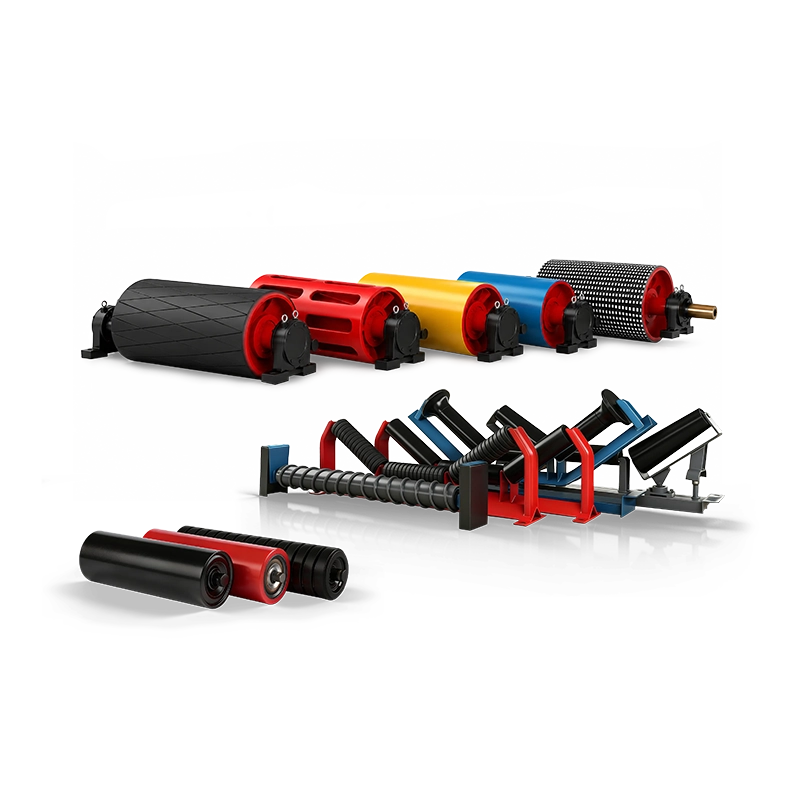
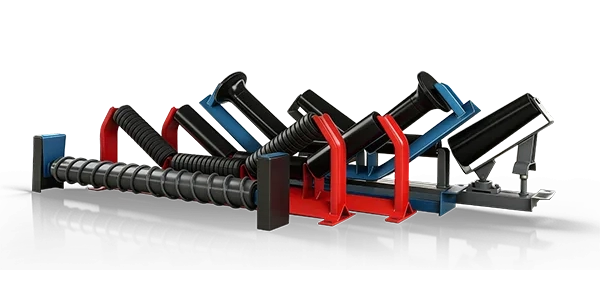
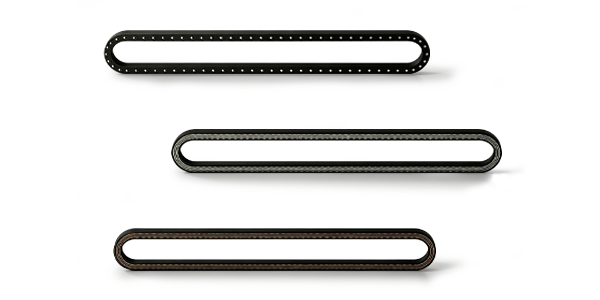

In modern bulk material handling systems, conveyor pulleys are among the most important yet often underestimated components. While belts and rollers usually receive greater attention, the pulley is the element responsible for transmitting power, maintaining belt tension, redirecting belt movement, and supporting overall conveying efficiency. A poorly selected pulley can lead to belt slippage, uneven wear, excessive downtime, and rising maintenance costs.
Different operating environments require different pulley designs. Mining conveyors carrying abrasive ore, steel plants exposed to high temperatures, ports operating under humid conditions, and aggregate systems handling crushed material all place unique demands on conveyor pulleys. This is why industrial operators increasingly choose specialized pulley types rather than relying on standard configurations for every application.
Core Insight:
The correct conveyor pulley does more than rotate a belt. It directly influences traction, operational stability, belt lifespan, maintenance frequency, and long-term energy efficiency.
Why Conveyor Pulley Selection Matters
A conveyor pulley works continuously under load, tension, friction, and environmental exposure. In heavy-duty conveying systems, pulleys may operate for thousands of hours every year while handling high tonnage materials such as coal, iron ore, limestone, clinker, or aggregates. Under these conditions, pulley surface condition and structural integrity become critical.
Pulley failure rarely occurs suddenly without warning. Instead, performance problems often begin gradually through belt slipping, lagging wear, material buildup, corrosion, or uneven belt tracking. Over time, these issues increase operational resistance and maintenance workload.
Research related to conveyor energy efficiency shows that friction behavior and mechanical resistance within conveyor systems significantly affect overall operating cost. Improving traction and reducing unnecessary resistance through optimized pulley design can therefore contribute to more efficient conveyor operation in demanding industries. ([mdpi.com](https://www.mdpi.com/1996-1073/16/1/26))
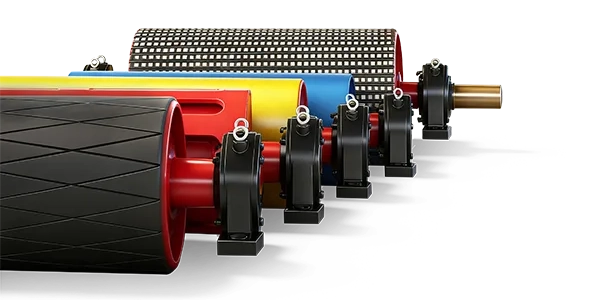
The following five conveyor pulley types are commonly used in modern industrial conveying systems because each one addresses a different operational challenge.
1. Ceramic Lagged Pulley: Maximum Grip for Heavy-Duty Conveying
The Ceramic Lagged Pulley is designed for applications where high traction and wear resistance are essential. Ceramic lagging consists of ceramic tiles embedded into a rubber base layer, creating a highly durable surface with strong friction performance.
In mining and bulk handling operations, moisture, slurry, and abrasive particles can reduce friction between the belt and pulley surface. Conventional smooth pulleys may then experience slippage, particularly under high load conditions. Ceramic lagging helps maintain stronger belt grip even in wet or contaminated environments.
SHENGYUAN’s ceramic lagged pulley is manufactured for mining, quarry, and heavy bulk conveying systems where reliability under extreme wear conditions is critical. The ceramic surface improves friction coefficient while also extending service life compared with traditional rubber-only lagging. This makes the pulley especially valuable in high-torque drive applications.
Unique Advantages of Ceramic Lagged Pulleys
① Excellent traction performance in wet and abrasive conditions
② Strong resistance to wear and surface damage
③ Reduced risk of belt slippage in high-load systems
④ Longer service life under severe operating conditions
2. Plain Steel Conveyor Pulley: A Reliable Standard Solution
The Plain Steel Conveyor Pulley represents one of the most widely used pulley types in industrial conveying systems. Its structure is straightforward: a steel shell combined with end discs, shaft assemblies, and bearings designed to support belt movement and load transfer.
Despite its simpler appearance, the quality of a plain steel pulley depends heavily on manufacturing accuracy, shell strength, welding quality, and dynamic balance. In large conveyor systems, even minor imbalance may increase vibration and shorten bearing life.
SHENGYUAN’s heavy-duty plain steel conveyor pulley is developed for bulk material handling systems requiring stable performance and structural durability. It is suitable for mining, cement plants, ports, coal conveying, and aggregate applications where operating reliability is more important than advanced surface treatment.
One major advantage of the plain steel pulley is versatility. It can serve as a drive pulley, bend pulley, tail pulley, or take-up pulley depending on conveyor design requirements.
Engineering Perspective:
Plain steel pulleys remain highly valuable because they provide dependable structural performance with relatively simple maintenance requirements.
3. Polyurethane Lagged Pulley: Durability with Reduced Belt Wear
The Polyurethane Lagged Pulley is designed to balance traction performance, wear resistance, and belt protection. Polyurethane lagging offers higher elasticity than ceramic surfaces while maintaining strong abrasion resistance.
This type of pulley is particularly suitable for long-distance conveyor systems where stable belt contact and reduced surface wear are important. Because polyurethane has good resilience, it can distribute contact pressure more evenly across the belt surface.
SHENGYUAN’s polyurethane lagged pulley is developed for long conveyor applications where operators require stable traction combined with improved lagging durability. Compared with conventional rubber lagging, polyurethane can provide stronger resistance to abrasion and chemical exposure in certain industrial environments.
Another practical advantage is reduced maintenance frequency. Because polyurethane surfaces generally resist cracking and chunking more effectively under repeated load cycles, maintenance intervals may become longer in appropriate applications.
Key Benefits of Polyurethane Lagging
① Improved abrasion resistance
② Better elasticity and belt protection
③ Suitable for long-distance conveying systems
④ Reduced lagging deterioration under repeated operation
4. Rubber Lagging Pulley: A Practical Balance of Cost and Performance
The Rubber Lagging Pulley remains one of the most common pulley solutions in mining and steel plant conveyors. Rubber lagging improves friction between the pulley and belt while also helping absorb shock and vibration during operation.
Compared with plain steel surfaces, rubber lagging significantly reduces the possibility of belt slippage under moderate moisture and load conditions. The rubber layer also helps protect the pulley shell from direct abrasive contact.
SHENGYUAN’s wear-resistant rubber lagging pulley is developed for demanding industrial conveying environments such as mining and steel manufacturing. The design focuses on maintaining reliable traction while extending pulley service life under continuous heavy-duty operation.
From an economic perspective, rubber lagged pulleys are often selected because they provide a balanced combination of traction improvement, reasonable cost, and operational durability. For many conveyor systems, they represent a highly practical middle-ground solution.
Practical Observation:
Rubber lagged pulleys are especially suitable for industrial operators seeking reliable traction performance without the higher investment associated with ceramic lagging systems.
5. Wing Pulley: A Self-Cleaning Solution for Sticky Materials
Material buildup is one of the most common causes of pulley-related conveyor problems. Sticky fines, wet aggregates, mud, and crushed materials can accumulate on conventional pulley surfaces and eventually create belt misalignment or uneven wear.
The Wing Pulley addresses this issue through its open-wing structure. Instead of using a continuous drum surface, the pulley includes spaced steel fins or wings that allow loose material to fall away naturally during rotation.
SHENGYUAN’s self-cleaning conveyor wing pulley is specifically designed for crushed material handling applications where material carryback and buildup are common. By reducing accumulation beneath the belt, the pulley helps improve tracking stability and reduce maintenance requirements.
Wing pulleys are especially valuable in quarrying, recycling, aggregate production, and mining systems where wet or sticky material conditions create persistent cleaning challenges.
Why Wing Pulleys Improve Conveyor Reliability
① Minimize material buildup on pulley surfaces
② Reduce belt mistracking caused by uneven accumulation
③ Lower cleaning and maintenance requirements
④ Improve operation in sticky or wet conveying environments
Choosing the Right Conveyor Pulley for Different Industries
Different industries prioritize different pulley characteristics. Mining operations often focus on wear resistance and traction stability. Steel plants require heat resistance and heavy structural strength. Ports emphasize corrosion resistance under humid conditions, while quarry and recycling facilities often need strong self-cleaning capability.
For this reason, conveyor pulley selection should consider:
① Material abrasiveness and moisture level
② Conveyor length and belt tension
③ Environmental conditions such as dust or corrosion
④ Required traction performance
⑤ Maintenance strategy and expected service life
International standards related to conveyor pulleys and belt conveyor systems also emphasize the importance of proper mechanical design and component matching in ensuring safe and efficient operation. ([iso.org](https://www.iso.org))
Conclusion
Conveyor pulleys are fundamental to the efficiency and reliability of industrial conveying systems. However, different pulley types serve different operational purposes. Ceramic lagged pulleys maximize traction under severe conditions. Plain steel pulleys provide reliable structural performance. Polyurethane lagged pulleys combine durability with belt protection. Rubber lagging pulleys offer balanced cost-performance advantages, while wing pulleys improve self-cleaning capability in sticky material applications.
Selecting the right pulley requires more than comparing dimensions or initial price. Engineers and operators should evaluate material conditions, conveyor layout, environmental exposure, maintenance expectations, and operational priorities before making a final decision.
Final Recommendation:
A properly selected conveyor pulley improves not only belt performance, but also the long-term productivity, stability, and profitability of the entire conveying system.
FAQ
1. What is the main purpose of conveyor pulley lagging?
Lagging improves friction between the pulley and conveyor belt, helping reduce slippage and improving traction performance.
2. Which pulley type is best for wet mining environments?
Ceramic lagged pulleys are often preferred because they maintain strong traction even under wet and abrasive conditions.
3. Why are wing pulleys used in aggregate handling?
Wing pulleys help prevent material buildup by allowing loose material to fall away during rotation.
4. Are plain steel pulleys still widely used?
Yes. Plain steel pulleys remain common because of their structural reliability, versatility, and relatively simple maintenance.
5. What factors should be considered when selecting a conveyor pulley?
Important factors include material type, moisture level, belt tension, operating environment, required traction, and maintenance expectations.