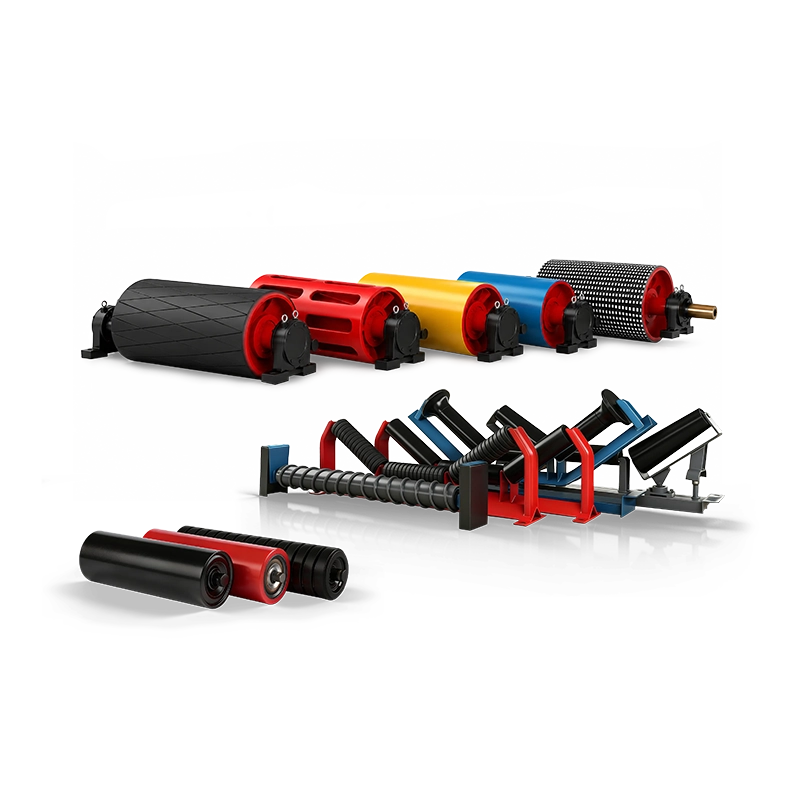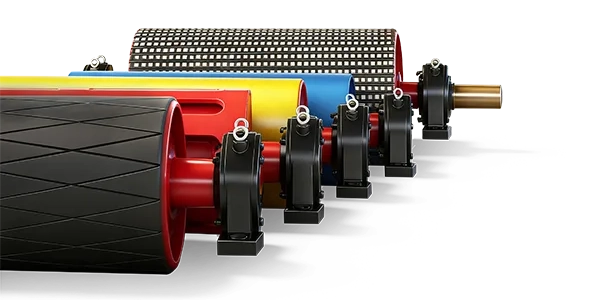
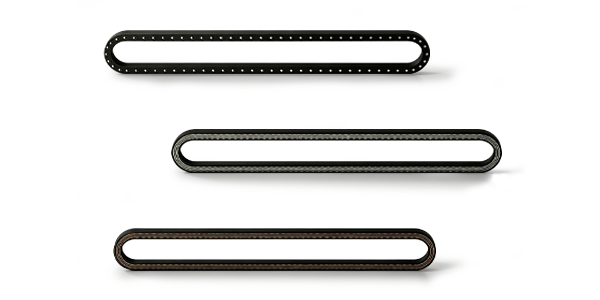

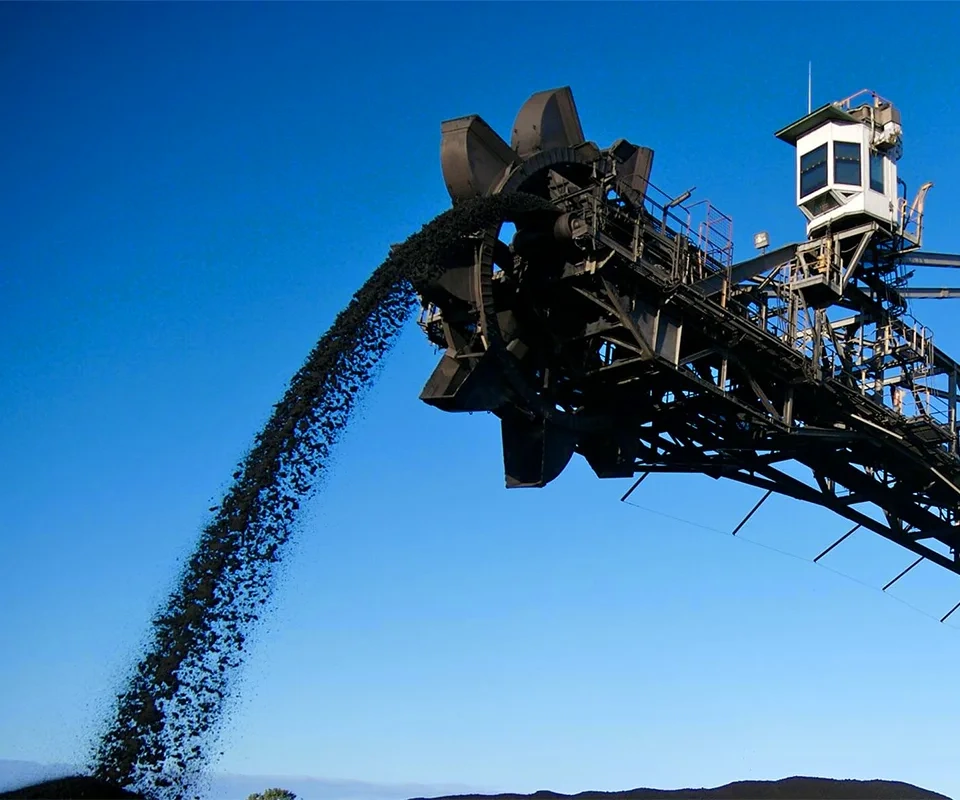
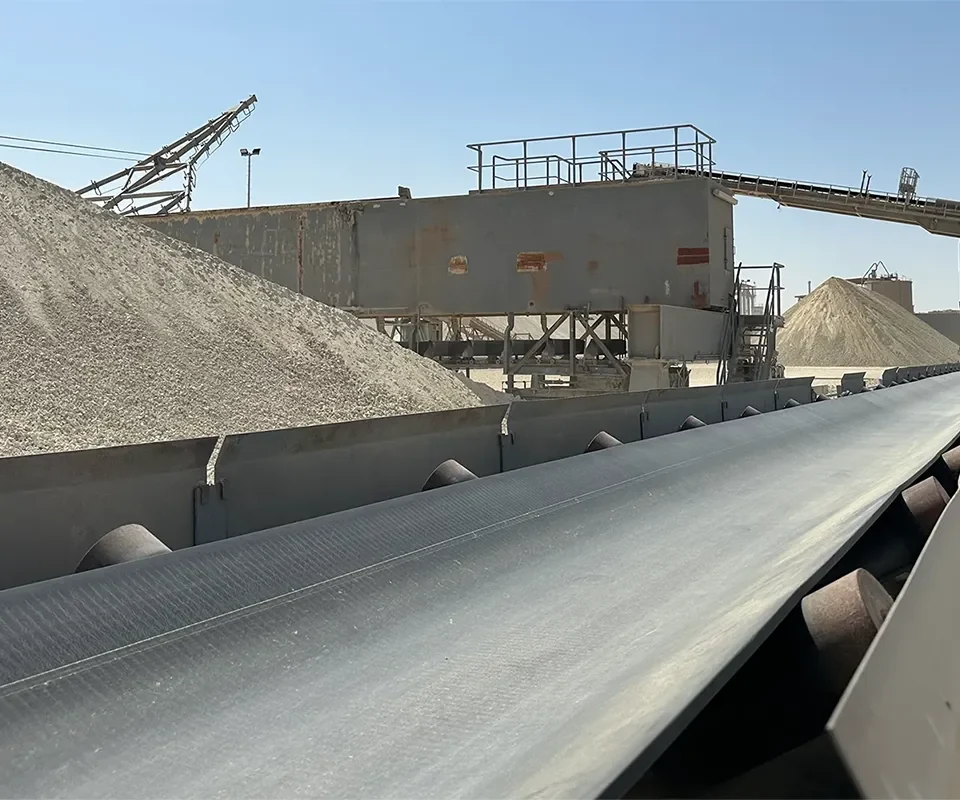
In bulk material handling, a conveyor system functions like the circulation network of an industrial plant, while the Conveyor Roller acts as one of its most critical supporting components. It carries belt load, reduces running resistance, stabilizes belt movement, and helps protect the entire conveying line from premature wear. However, not every roller is suitable for every working condition. A roller that performs well in a light-duty packaging line may fail quickly in a mining conveyor exposed to impact, dust, humidity, and abrasive materials.
For operators, engineers, and purchasing teams, selecting the correct conveyor roller is not simply a matter of choosing a diameter or material. It requires a full understanding of conveyed materials, loading points, belt width, running speed, environmental conditions, maintenance expectations, and long-term operating cost. A poor selection may lead to belt mistracking, roller seizure, higher energy consumption, frequent shutdowns, and increased maintenance budgets.
Key Insight: The best conveyor roller is not always the most expensive one. It is the roller that matches the material, environment, load, and operating objective of the system.
What Is a Conveyor Roller and Why Does It Matter?
A conveyor roller is a cylindrical rotating component installed along a belt conveyor to support the belt and the materials carried on it. In bulk conveying systems, rollers are often arranged in idler sets or specialized support structures. Their core mission is to maintain smooth belt travel while minimizing friction and reducing local stress on the conveyor belt.
From a mechanical perspective, the roller does far more than “hold up the belt.” It directly influences the reliability of the full conveyor. When a roller rotates smoothly, the belt runs with less resistance, system power demand is lower, and bearing temperature remains more stable. When a roller becomes jammed or poorly aligned, the belt can drag across the surface, causing abnormal wear, deviation, and even fire risk in severe high-friction situations.
Core Functions of Conveyor Rollers
● Support the conveyor belt and conveyed materials under continuous loading.
● Reduce operating friction and help lower unnecessary energy loss.
● Guide belt movement and improve tracking stability.
● Protect the belt by reducing impact, vibration, and localized abrasion.
In this sense, understanding the function of the Conveyor Roller is the foundation of scientific selection. A roller is not an isolated accessory; it is a dynamic element that interacts continuously with the belt, load, frame, pulley system, and external environment.
Key Parameters That Determine Roller Performance
Before comparing roller types, it is necessary to understand the parameters that govern roller performance. These parameters form the technical basis for evaluating whether a roller is appropriate for a specific bulk material conveyor.
1. Roller Material
Steel is the most widely used material for heavy-duty bulk material conveying because of its strength, impact resistance, and suitability for large load applications. Engineering plastics, polymer composites, rubber-coated designs, and polyurethane structures may also be selected where corrosion resistance, reduced noise, or special surface performance is needed.
2. Roller Diameter
Roller diameter affects load capacity, rotational speed, bearing stress, and service life. Larger diameters generally provide stronger support for high-capacity conveyors and help reduce rotational speed at the same belt velocity. This can benefit bearing life and lower the risk of overheating in demanding applications.
3. Bearing and Sealing System
Bearings are at the heart of roller reliability. In dusty, wet, or corrosive environments, the sealing structure often determines the actual service life more than the shell thickness itself. Multi-stage labyrinth seals, high-quality bearing seats, and stable internal lubrication help protect rollers against dust ingress and moisture contamination.
4. Surface Treatment
Surface treatment influences corrosion resistance, cleanliness, adhesion, and abrasion behavior. Depending on the environment, rollers may use galvanizing, powder coating, anti-rust treatment, rubber rings, polyurethane layers, or specially textured surfaces.
5. Operating Environment
Ambient humidity, salt exposure, coal dust, ore particles, high temperature, chemical corrosion, and outdoor weathering all influence roller design. A roller selected for an indoor dry cement plant cannot simply be copied into a port terminal or underground mining system without technical review.
Selection Principle: Roller material, diameter, bearing structure, sealing level, and surface treatment should be considered together rather than evaluated independently.
Main Conveyor Roller Types for Bulk Material Handling
Standard Steel Conveyor Roller
The standard steel conveyor roller is the most common choice in mining, quarrying, coal handling, aggregate processing, and general heavy-duty industrial conveying. It usually consists of a steel tube, shaft, bearing housings, precision bearings, and end sealing elements. Its main advantages are high mechanical strength, mature manufacturing technology, stable cost control, and broad adaptability.
Steel rollers are especially suitable for transporting hard, heavy, or abrasive materials such as coal, iron ore, limestone, crushed stone, and sand. They can be designed for different diameters, shaft sizes, belt widths, and load classes. For outdoor or humid applications, anti-corrosion treatment such as galvanizing or protective coating helps extend service life.
Best Suited For
✓ Mining belt conveyors
✓ Cement and aggregate plants
✓ Coal and bulk material transfer lines
✓ Long-distance and high-load conveying systems
Impact Conveyor Roller
Impact conveyor rollers are designed for loading points where falling material creates repeated shock loads. Instead of relying only on a bare steel shell, the roller surface is fitted with rubber rings, resilient discs, or polyurethane cushioning elements. These outer structures absorb part of the impact energy before it reaches the belt.
Their function is not only to protect the belt but also to stabilize the receiving area of the conveyor. At transfer stations, crusher outlets, and feed chutes, heavy lumps can strike the belt with high force. Without proper buffering, the belt carcass, splice area, and surrounding idler frame may suffer accelerated damage.
Impact rollers are often used for limestone, ore, coal, construction waste, and other materials with irregular lump size. They are also useful in applications where the drop height is significant or where the belt receives concentrated loading.
Practical Note: At transfer points, upgrading from ordinary carrying rollers to impact rollers can help reduce belt damage, minimize unplanned maintenance, and improve receiving stability.
Self-Aligning Conveyor Roller
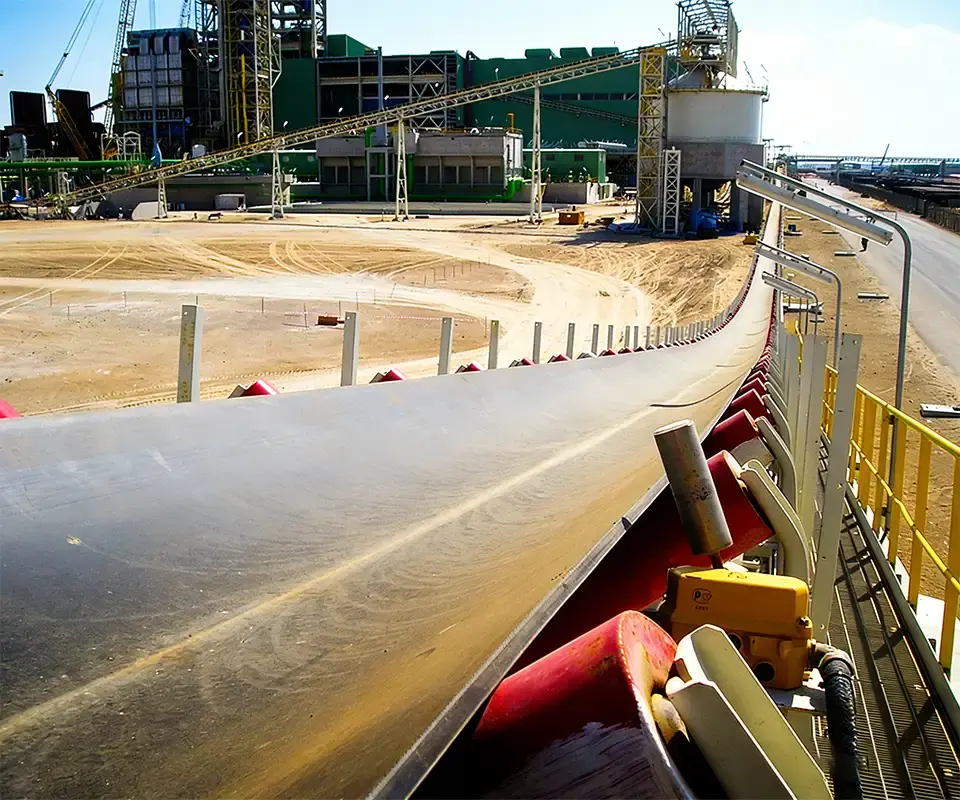
Belt mistracking is one of the most common operating problems in long conveyor systems. Self-aligning conveyor rollers are developed to correct or reduce belt deviation during operation. Depending on the design, they may use tapered roller geometry, pivoting frames, friction-based adjustment, or cone-shaped structures that create corrective guiding forces.
These rollers are particularly valuable on long-distance conveyors, systems with inconsistent loading, or lines exposed to outdoor wind, material buildup, or structural misalignment. When belt tracking becomes unstable, material spillage increases, belt edge wear accelerates, and the risk of emergency shutdown rises.
In practical layout design, self-aligning roller groups are often installed near areas prone to belt deviation, such as before and after loading points, in long middle sections, and near return belt areas where tracking problems are frequently observed.
Troughing, Flat, and Transition Idler Roller Sets
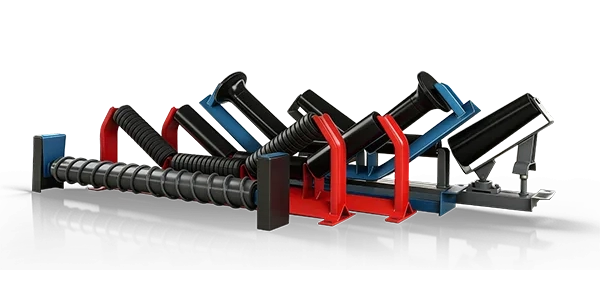
In bulk conveying, rollers are not always used individually. They are often arranged into idler groups that define the belt shape and load-carrying profile. The three most common configurations are troughing idler sets, flat idler sets, and transition idler sets.
Troughing Roller Sets
Troughing sets typically use three or more rollers arranged to form a V-shaped or trough-shaped belt profile. This increases the cross-sectional carrying area of the belt and is highly suitable for bulk solids such as ore, coal, clinker, sand, and fertilizer. They are among the most important support structures in heavy-duty belt conveyors.
Flat Roller Sets
Flat rollers support a straight belt surface. They are commonly used on return sides, in certain low-angle conveying areas, or where the conveyed material or packaged units do not require a trough profile. For return belt systems, flat return rollers must offer stable rotation and good anti-dust performance because they are continuously exposed to residue and belt contamination.
Transition Roller Sets
Transition roller sets are arranged between the pulley zone and the fully troughed carrying section. Their purpose is to gradually change the belt profile, preventing excessive stress, edge distortion, and belt wrinkling. They play an important role in protecting the belt structure, especially on wide or high-tension conveyors.
Quick Comparison
Troughing set: increases material carrying capacity.
Flat set: supports flat belt sections and return belts.
Transition set: protects the belt during profile change.
Non-Metallic Conveyor Roller
Non-metallic conveyor rollers are typically made from engineering plastics, high-performance polymers, or polyurethane-based materials. Compared with traditional steel rollers, they are lighter in weight, naturally resistant to corrosion, and often produce lower operating noise. Their elastic behavior may also help reduce contact vibration in specific environments.
These rollers are more commonly used in industries where corrosion resistance, cleanliness, or low noise is important. Examples include chemical processing, salt handling, fertilizer conveying, food-related auxiliary material movement, and selected light-to-medium industrial applications. For heavy mining systems, however, their use must be carefully reviewed against actual impact and load requirements.
In cleanliness-sensitive applications, choosing a non-metallic Conveyor Roller may help reduce corrosion-related contamination concerns while lowering maintenance demand in appropriate operating conditions.
Application Case: Roller Upgrade in a Bulk Port Conveyor Line
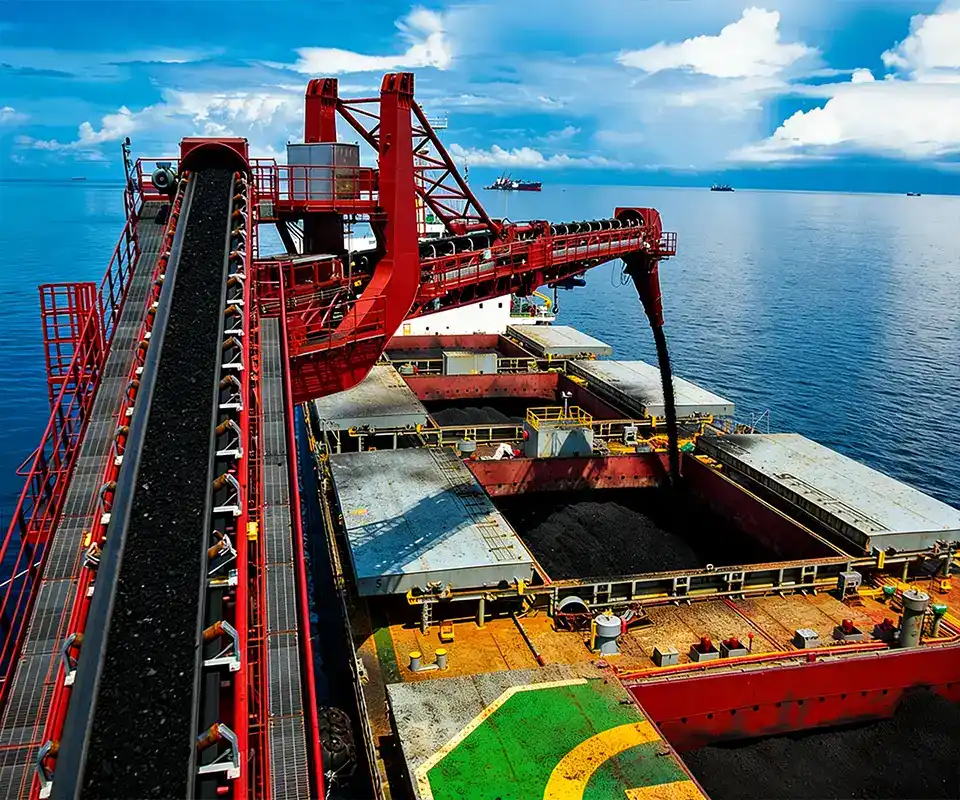
Consider a large bulk terminal operating a long-distance conveyor line for iron ore. The system handles humid material with a high fine-particle content. During continuous operation, the original roller arrangement suffered from frequent jamming in dusty zones, recurring belt deviation, and accelerated wear at transfer points. Maintenance teams found that ordinary guiding rollers could not sufficiently respond to the combined effects of dust, moisture, and uneven loading.
The improvement plan focused on environmental matching rather than simply replacing old rollers with similar products. The terminal upgraded critical tracking sections with sealed self-aligning roller groups, while the transfer zones received impact rollers designed to better absorb falling material energy. The updated arrangement also emphasized stronger bearing protection and improved sealing performance.
As a result, belt tracking became more stable, local roller failures were reduced, and the maintenance interval was extended. The key lesson was clear: roller selection should be based on actual operating conditions, not on a one-size-fits-all purchasing habit. In heavy bulk material handling, “matching the environment” often creates more value than “selecting the highest-priced specification.”
Engineering Takeaway: High humidity, mineral fines, transfer impact, and belt tracking behavior should all be evaluated before finalizing roller configuration.
How to Select the Right Conveyor Roller in Practice
Choose According to Material Characteristics
Hard and abrasive materials such as ore, coal, and aggregate generally require strong steel rollers with reliable bearings and robust shells. Corrosive or chemically active materials may call for enhanced anti-corrosion treatment or non-metallic options. Sticky or moisture-rich materials require attention to surface contamination and self-cleaning considerations.
Choose According to Conveyor Environment
Outdoor conveyors need better protection against rain, dust, and ultraviolet exposure. Port and salt-handling systems often need higher corrosion resistance. Underground mining conveyors require consistent reliability under demanding dusty conditions. Cement and power plant systems may require a balance between sealing, wear resistance, and stable long-term rotation.
Choose According to Maintenance Philosophy
Some operators focus on initial purchase cost, while others prioritize total cost of ownership. For demanding systems, the latter approach is often more rational. A roller with better sealing, more stable bearing performance, and a longer maintenance interval may reduce downtime, manpower, and belt replacement cost over time.
Use Different Rollers for Different Conveyor Zones
A mature conveyor design rarely uses one roller type everywhere. Standard carrying rollers may be used in the main transport section, impact rollers at loading zones, self-aligning rollers in tracking-sensitive sections, transition idlers near pulley zones, and specialized return rollers where belt residue is a concern.
Recommended Selection Logic
① Identify material properties: density, lump size, abrasiveness, moisture, and corrosiveness.
② Confirm conveyor conditions: belt width, speed, conveying distance, and incline.
③ Evaluate environmental risks: dust, rain, salt, chemicals, and temperature.
④ Define roller roles: carrying, impact, alignment, transition, or return support.
⑤ Review maintenance expectations: access, spare strategy, and replacement frequency.
Conclusion
Conveyor rollers are not interchangeable accessories; they are application-specific components that influence belt stability, conveying efficiency, maintenance cost, and overall plant reliability. Standard steel rollers, impact rollers, self-aligning rollers, troughing sets, transition roller groups, and non-metallic rollers each serve different engineering purposes.
The right selection should be based on a combined evaluation of material behavior, system layout, environmental conditions, impact zones, tracking risk, and maintenance strategy. In practical projects, the most effective conveying systems often use multiple roller types together rather than relying on a single solution across all conveyor sections.
Choosing the right Conveyor Roller is not just about selecting a component. It is about improving system stability, protecting valuable equipment, and building a more efficient bulk material handling process.
SHENGYUAN is a reliable conveyor component brand specializing in heavy-duty conveyor rollers, idlers, and pulleys for bulk material handling systems. With factory-based production capability, customizable solutions, and experience in mining, cement, port, power plant, and aggregate applications, SHENGYUAN helps customers improve conveyor stability, reduce maintenance costs, and achieve long-term operating efficiency.
Contact us today to get professional product recommendations and a customized conveyor component solution for your project.
FAQ
1. What is the main function of a conveyor roller?
A conveyor roller supports the belt and conveyed material, reduces friction, stabilizes belt travel, and helps improve the operating efficiency and service life of the conveyor system.
2. When should impact rollers be used?
Impact rollers should be installed at loading and transfer points where falling material creates repeated shock loads. They help protect the belt and reduce damage caused by heavy or irregular bulk materials.
3. Why does a conveyor belt need self-aligning rollers?
Self-aligning rollers help correct belt deviation and improve tracking stability. They are especially useful on long conveyors, irregularly loaded systems, and sections where belt mistracking frequently occurs.
4. Are non-metallic conveyor rollers suitable for mining applications?
Non-metallic rollers can provide benefits such as corrosion resistance and lower weight, but their suitability for mining depends on load, impact intensity, and operating conditions. Heavy-duty mining systems still commonly rely on robust steel roller designs.
5. What information should be provided before selecting conveyor rollers?
Useful information includes belt width, belt speed, conveyed material, lump size, load capacity, operating environment, conveyor length, installation position, and whether the roller is for carrying, return, impact, or alignment use.