


Conveyor belt tracking problems are among the most common causes of belt damage, material spillage, unplanned downtime, and unnecessary maintenance cost in bulk material handling systems. A belt that runs slightly off-centre may appear manageable at first, but if the root cause is not corrected, the problem can quickly lead to edge wear, damaged rollers, overloaded bearings, pulley lagging wear, frame damage, and even belt tearing. For mining, quarrying, cement, coal, ports, power plants, steel plants, and aggregate operations, stable belt tracking is essential for safe and continuous production.
The challenge is that conveyor belt mistracking is rarely caused by one single factor. It may be related to pulley alignment, idler condition, loading point design, belt tension, material buildup, damaged rollers, frame distortion, or incorrect maintenance adjustments. Solving the problem requires a systematic approach: identify where the belt moves off-centre, understand when it happens, inspect the surrounding components, and correct the real cause rather than only adjusting the nearest roller.
Core message: Effective conveyor belt tracking is not achieved by repeated temporary adjustment. It depends on correct conveyor structure, accurate pulley and idler alignment, stable loading, suitable belt tension, clean components, and a disciplined inspection process.
Why Conveyor Belt Tracking Matters
A properly tracked conveyor belt should run near the centre of the pulley and idler structure throughout the conveying route. When the belt moves consistently to one side, the edge may rub against the frame, guards, chute plates, or nearby components. Over time, this friction can cut the belt edge, damage the carcass, increase belt temperature, and reduce service life.
Tracking issues also affect production efficiency. When the belt is not centred, material may spill from one side, especially at loading points or transfer points. Spillage increases cleanup labour, creates safety risks, and may contaminate rollers and pulley surfaces. In a high-capacity conveyor, even a short stoppage can interrupt a large volume of material movement. For this reason, belt tracking should be treated as a reliability issue, not only a maintenance inconvenience.
Belt Protection
Good tracking reduces edge damage, belt rubbing, uneven wear, and accidental belt tearing.
Cleaner Operation
A centred belt helps reduce spillage, carryback, material buildup, and housekeeping pressure.
Lower Downtime Risk
Stable tracking protects rollers, pulleys, bearings, frames, and other conveyor components.
1. Identify Where the Belt Starts to Move Off-Centre
The first step is to locate where the tracking problem begins. A belt may be off-centre at the tail pulley, loading zone, carrying side, return side, bend pulley, take-up pulley, or head pulley. The key is to observe the belt carefully along the conveyor route and identify the first point where it begins to move sideways.
If the belt runs normally for most of the conveyor but shifts at one specific point, the cause is likely near that location. If the belt is off-centre along the entire length, the issue may be related to frame alignment, pulley alignment, belt splice quality, or tension distribution. If the mistracking appears only when the conveyor is loaded, the loading point or material flow is likely involved.
A practical rule is to inspect upstream of the point where the belt first moves sideways. The visible tracking problem may appear downstream, but the cause is often located before it.
2. Check Conveyor Pulley Alignment
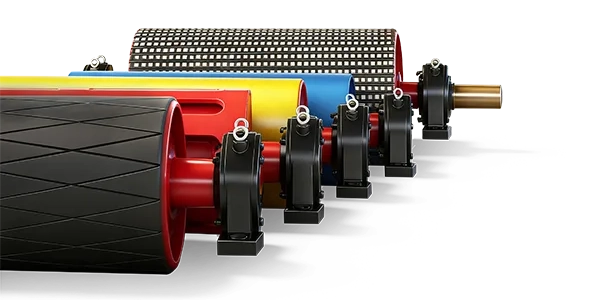
Pulleys have a major influence on belt tracking. The head pulley, tail pulley, bend pulley, snub pulley, and take-up pulley must be correctly aligned with the conveyor centreline. If a pulley is skewed, the belt will naturally move toward one side. This can create repeated edge rubbing, uneven pulley lagging wear, and tracking instability across the whole system.
Pulley alignment should not be checked only by visual inspection. Maintenance teams should measure pulley squareness, shaft level, bearing housing position, and frame reference points. A small alignment error can become a serious tracking issue on long-distance conveyors or high-speed systems. It is also important to confirm that bearing housings are properly secured and that the pulley shaft is not moving during operation.
| Pulley Area | Tracking Risk | Recommended Check |
| Head pulley | Belt discharge misalignment and edge wear | Check pulley squareness, lagging wear, and shaft position. |
| Tail pulley | Belt enters the loading zone off-centre | Inspect tail pulley alignment and material buildup. |
| Take-up pulley | Uneven tension and unstable belt path | Confirm take-up movement is straight and balanced. |
3. Inspect Idlers and Conveyor Rollers
Idlers and conveyor rollers support and guide the belt. If they are misaligned, seized, worn, bent, or covered with material buildup, they can push the belt away from the centreline. This is especially common in harsh environments where dust, moisture, and abrasive material accelerate roller wear.
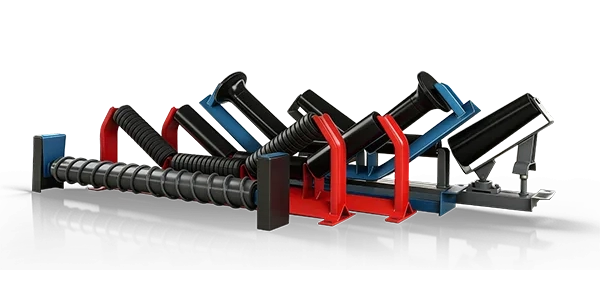
Carrying idlers should be square to the belt path and properly positioned. Return rollers should rotate freely and should not have uneven buildup. Impact idlers in the loading zone should be checked for damaged rubber rings, broken frames, and uneven support. Training idlers or self-aligning idlers can help correct minor deviation, but they should not be used as a substitute for fixing serious structural misalignment.
Roller inspection checklist
- Check whether each roller rotates freely without noise or seizure.
- Inspect roller frames for bending, deformation, or loose bolts.
- Confirm that idler sets are square to the conveyor centreline.
- Remove material buildup from return rollers and pulley areas.
- Replace damaged rollers before they cut or drag against the belt.
4. Review the Loading Point and Material Flow
Many belt tracking problems begin at the loading point. If material is not loaded in the centre of the belt, the impact force and material weight may push the belt to one side. This is common when the chute is poorly positioned, the material stream is uneven, or the transfer point is not designed for the actual material volume.
When the belt tracks correctly while empty but shifts when loaded, the loading point should be inspected first. The material should land near the belt centreline and move in the same direction as the belt. Side loading, sharp impact angles, and uneven chute wear can all create tracking problems. Impact rollers, impact beds, skirting systems, and chute liners must work together to control loading force and material direction.
For example, in a quarry conveyor carrying crushed stone, the belt may run normally during light operation but move toward one side during peak production. After inspection, the cause may be uneven material discharge from the transfer chute, not the belt itself. Correcting the chute liner and centralising the material flow may solve the tracking issue more effectively than repeated idler adjustment.
5. Confirm Correct Belt Tension
Belt tension affects how the belt contacts pulleys and idlers. If the belt is too loose, it may slip, sag, and wander. If the belt is too tight, it may overload bearings, pulleys, idlers, and the belt itself. Uneven tension can also pull the belt toward one side, especially near the take-up system.
The take-up system should move freely and maintain balanced tension. Gravity take-ups should not be obstructed. Screw take-ups should be adjusted evenly on both sides. If one side is tightened more than the other, the tail pulley or take-up pulley may become skewed, causing the belt to drift. Operators should avoid using excessive tension as a quick solution because it may hide the tracking problem while increasing component stress.
Maintenance insight: Correct belt tension should allow stable operation without slip or excessive sag. Over-tensioning may reduce tracking problems temporarily, but it can shorten the service life of bearings, pulleys, rollers, and the belt.
6. Look for Material Buildup on Pulleys and Rollers
Material buildup is a frequent cause of conveyor belt tracking issues. Sticky fines, wet coal, clay, cement powder, or aggregate dust can accumulate on pulleys, return rollers, and belt cleaners. When buildup is uneven, it changes the effective diameter of the pulley or roller and creates a steering effect that pushes the belt to one side.
Tail pulleys and return rollers are especially vulnerable because carryback material from the belt can fall onto these components. Over time, buildup may also damage seals, contaminate bearings, increase vibration, and accelerate surface wear. In wet or sticky applications, self-cleaning pulley designs, spiral return rollers, rubber disc return rollers, better belt cleaners, and improved housekeeping may be needed.
7. Check Belt Splice Quality and Belt Condition
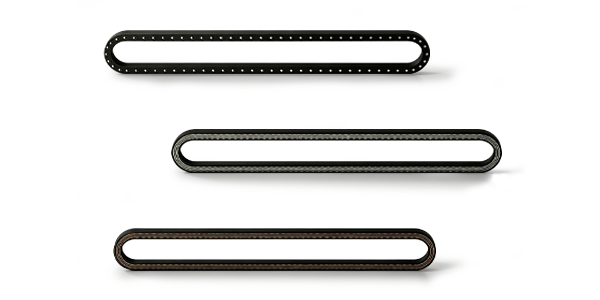
The belt itself can also cause tracking problems. A poor splice may create uneven tension across the belt width. If the splice is not square, the belt may pull to one side every time the splice passes over pulleys and idlers. Belt edge damage, uneven wear, carcass deformation, or stretched sections can also make stable tracking difficult.
If mistracking appears rhythmically or becomes worse when a specific belt section passes through the conveyor, the belt and splice should be inspected closely. In some cases, repairing or replacing a damaged belt section may be necessary. Adjusting rollers will not solve a tracking problem caused by a defective belt splice.
8. Avoid Common Adjustment Mistakes
When a belt starts to mistrack, the common reaction is to adjust nearby idlers immediately. While idler adjustment can help, random adjustment often makes the problem worse. If too many idlers are angled in different directions, the belt may become unstable and difficult to control.
Adjustments should be small, controlled, and documented. Maintenance teams should change one area at a time and observe the result before making further corrections. It is also important to adjust the belt while it is running under normal operating conditions because an empty belt may behave differently from a loaded belt.
| Problem | Possible Cause | Better Solution |
| Belt shifts only when loaded | Off-centre material loading | Correct chute alignment and centralise material flow. |
| Belt drifts near tail pulley | Tail pulley misalignment or buildup | Clean pulley and check pulley squareness. |
| Belt moves side to side | Multiple uncontrolled adjustments | Reset alignment and adjust systematically. |
| Repeated edge damage | Frame contact, mistracking, or skewed components | Inspect full conveyor path and remove contact points. |
9. Use Training Idlers Correctly
Training idlers, self-aligning idlers, and guide rollers can help manage moderate tracking problems. They are useful in systems where small belt movement is expected due to load variation, long conveyor distance, or changing operating conditions. However, these devices should support tracking control, not replace proper alignment.
If a conveyor needs many training idlers to keep the belt on track, the system likely has an unresolved root cause. Excessive guide roller contact can also damage belt edges. Training devices should be selected according to belt width, belt speed, load, installation position, and environmental conditions. For heavy-duty conveyors, strong frames, reliable bearings, and suitable roller materials are important for long service life.
10. Build a Preventive Belt Tracking Inspection Program
The most effective way to reduce tracking problems is to inspect the conveyor regularly before the belt is damaged. A practical inspection program should include pulley alignment, idler condition, roller rotation, frame condition, belt cleaner performance, belt tension, loading point condition, material buildup, splice quality, and belt edge wear.
Records are important. If maintenance teams record where mistracking occurs, when it happens, and which adjustments were made, they can identify patterns more easily. A belt that mistracks only after rain may indicate material buildup or slip. A belt that mistracks only at high load may indicate loading imbalance or insufficient support. A belt that always shifts near the same pulley may point to pulley or frame alignment.
Recommended inspection routine
- Observe belt position at start-up, normal load, and full-load operation.
- Inspect loading point material direction and belt impact area.
- Check head, tail, bend, snub, and take-up pulley alignment.
- Inspect carrying idlers, return rollers, impact rollers, and training idlers.
- Record adjustments and confirm whether the belt response is stable.
Choosing the Right Components Helps Prevent Tracking Problems
Component quality has a direct effect on belt tracking reliability. Poorly manufactured rollers, weak idler frames, inaccurate pulley machining, unreliable bearings, and inconsistent lagging quality may all create tracking issues over time. For heavy-duty bulk material handling, components should be selected according to real working conditions, not only catalogue dimensions.
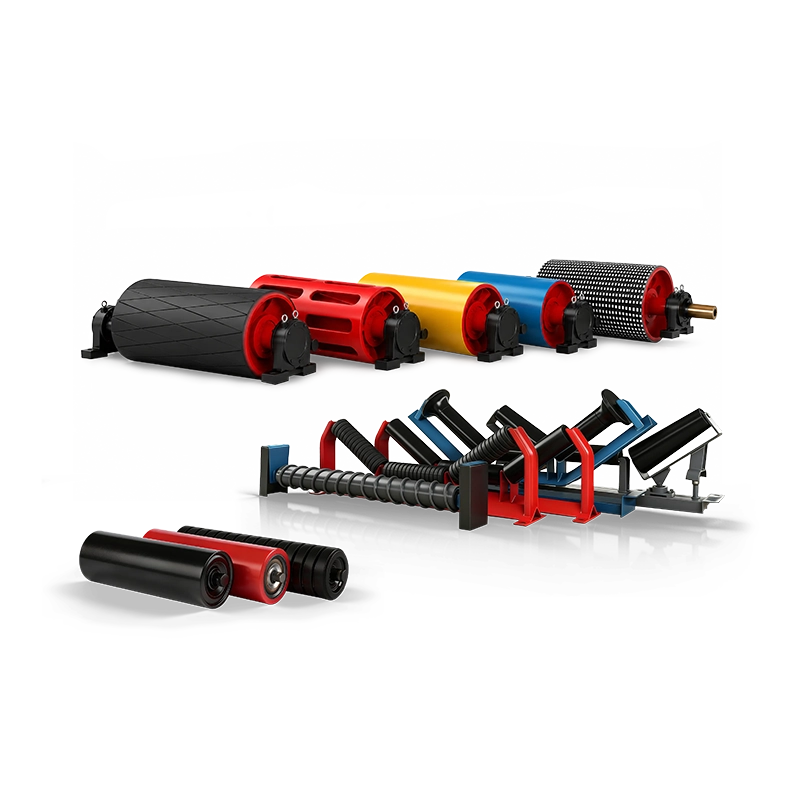
SWCONS supplies conveyor pulleys, conveyor rollers, idler sets, and related conveyor components for demanding belt conveyor applications. For industries such as mining, coal, cement, ports, aggregates, steel, power plants, and chemical handling, customized component selection can help improve belt stability, reduce maintenance frequency, and support long-term conveyor reliability. When providing project details such as belt width, belt speed, material type, conveyor layout, pulley position, and working environment, buyers can receive more suitable recommendations for their actual operating conditions.
Conclusion: Solve the Cause, Not Only the Symptom
Common conveyor belt tracking issues can be identified and solved through a structured process. First, find where the belt begins to move off-centre. Then inspect pulley alignment, idler condition, loading point design, belt tension, material buildup, belt splice quality, and frame condition. Each factor should be checked logically because the visible problem is often downstream from the real cause.
For maintenance teams and plant managers, the most important principle is to avoid repeated temporary correction. A belt that needs constant adjustment is sending a warning signal. By correcting the root cause and using reliable conveyor pulleys, rollers, idlers, and support structures, operators can reduce belt damage, spillage, downtime, and long-term maintenance cost.
Need help improving conveyor belt tracking?
Send us your conveyor layout, belt width, belt speed, pulley position, roller specifications, material type, working environment, and photos of the tracking problem. Our team can help review your application and recommend suitable conveyor pulleys, rollers, idlers, or customized components for your belt conveyor system.
FAQ: Conveyor Belt Tracking Issues
The following questions summarize common concerns from maintenance teams, engineers, and purchasing managers when dealing with conveyor belt tracking problems.